

- Why Senior and Injured Dogs Need a Different Kind of Best Dog Stroller
- A Note on Timing: What Stage Is Your Dog In?
- The Features Checklist (Before You Look at Any Brand)
- Best Dog Strollers for Senior & Injured Dogs: My 2026 Picks
- Best Overall for Arthritis & Hip Issues: Pet Gear No-Zip NV
- Best for IVDD Recovery & Spinal Issues: A Low-Profile Four-Wheel Stroller
- Best for Large Senior Dogs (50–110 lbs): Ibiyaya Grand Cruiser
- Best for Medium Dogs or Multi-Dog Families: HPZ Pet Rover Premium
- Best Budget Option for Small Senior Dogs: Standard Four-Wheel Folding Stroller (Under $100)
- How to Actually Get Your Dog Used to the Stroller
- Frequently Asked Questions
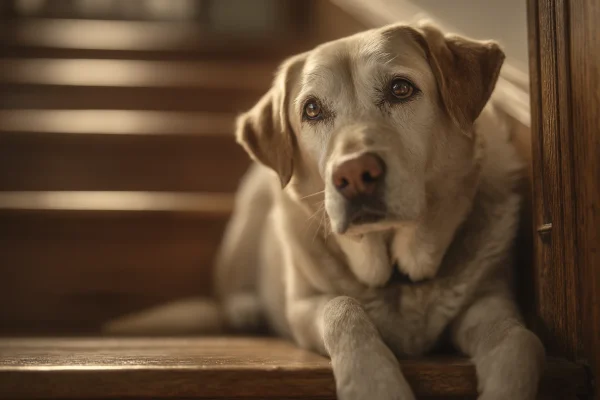
My dog Rosie stopped wanting to walk at around age twelve. Not in a dramatic way. She’d just slow down halfway through our usual loop, look up at me, and sit. Her back legs were giving her trouble — early hip dysplasia — and the vet had already told me that long walks were doing more harm than good. But Rosie still wanted to be outside. She wanted to sniff things. She wanted to watch squirrels.
That’s when I started looking at dog strollers and quickly realized most of the advice out there was aimed at people with healthy small dogs who just don’t want to walk. Not dogs like Rosie.
The best dog stroller for a senior or injured dog is a completely different thing from a general-purpose pet stroller — and most guides don’t explain why.
Why Senior and Injured Dogs Need a Different Kind of Best Dog Stroller
A healthy young dog in a stroller mainly needs space, ventilation, and a smooth ride so they don’t hop out. That’s it.
A senior dog with arthritis needs something different. So does a dog recovering from IVDD surgery, a French bulldog with a slipped disc, or a dachshund three weeks post-op.
Here’s what actually matters for these dogs:
Entry height. Dogs with joint pain or hind-leg weakness cannot step up into a high-platform stroller. Getting in and out of an elevated cabin is painful, and it risks a fall. Low-entry or side-loading strollers are essential here — not a nice-to-have.
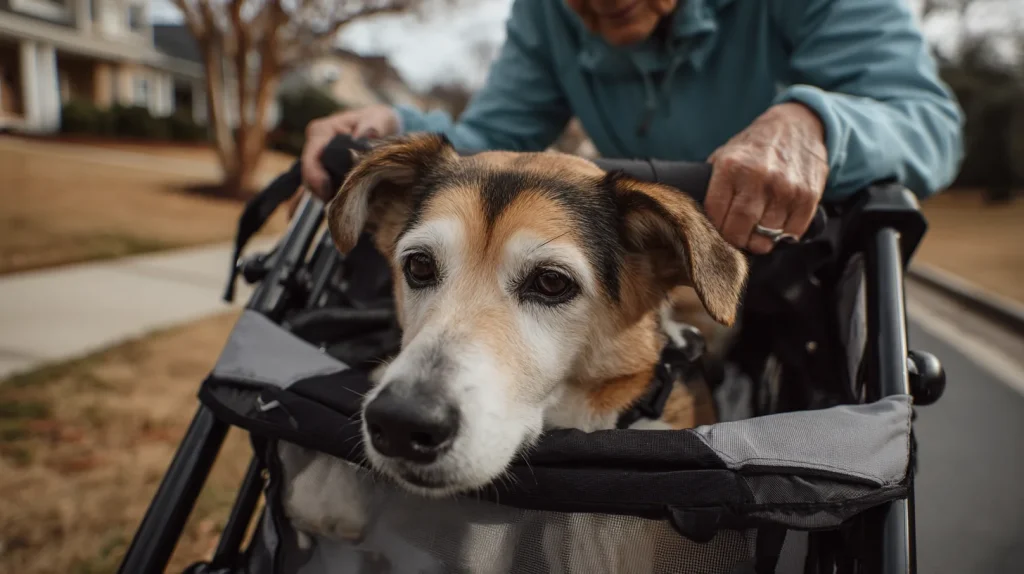
Floor padding. Thin nylon bottoms are fine for a healthy dog taking a short ride. A senior dog sitting for 45 minutes on a hard surface puts pressure on bony hips and elbows. Memory foam inserts or thick quilted padding aren’t luxury features for these dogs — they’re what makes the difference between a comfortable outing and an uncomfortable one.
Suspension. Cracked sidewalks, bumpy paths, curb drops — every jolt transmits through the frame to your dog. Dogs recovering from spinal surgery (like IVDD) are especially sensitive. A stroller with shock-absorbing wheels or a sprung suspension system cuts that vibration down significantly.
Interior length. This one surprises people. Measure your dog from nose to tail and add six inches. That’s the minimum interior length you need. Dogs with back problems often can’t curl up tightly — they need room to lie flat. Most compact strollers designed for small dogs won’t accommodate this even if the weight limit seems fine.
Secure closure. Dogs in pain or on pain medication can behave unpredictably. They may try to jump out suddenly. A stroller with zipped mesh closures — and ideally a safety tether that clips to their harness — keeps them safe even if they startle.
A Note on Timing: What Stage Is Your Dog In?
This matters more than most people realize, and almost no buying guide addresses it.
If your dog just had surgery — especially spinal surgery — a stroller is a controlled indoor tool first. The guidance from IVDD communities is clear: in the first six to eight weeks of post-op recovery, stroller rides should be limited to smooth indoor floors or a flat deck. No cracked sidewalks. No bumpy terrain. The vibration from an uneven outdoor path can disturb a healing disc.
That changes after recovery graduation. Once your vet clears your dog for outdoor activity, a stroller becomes a way to give them fresh air and environmental enrichment without forcing them to walk distances their body can’t handle.
A dog with chronic arthritis or hip dysplasia — not in surgical recovery — is a different situation. These dogs can generally handle outdoor stroller walks from day one. The goal is taking weight and impact off the affected joints while still getting them outside.
Know which category your dog is in before you buy. It affects which features matter most.
[PHOTO: realistic photography, small dachshund with a gentle cone collar resting on a fleece pad inside a dog stroller in a living room, soft indoor lighting from a nearby window, calm recovery atmosphere, shot on Canon EOS R5 50mm lens, warm tones, mood: quiet and healing –ar 16:9 –style raw –v 6.1 | Alt text: Dachshund recovering from surgery resting in a dog stroller indoors]
The Features Checklist (Before You Look at Any Brand)
Run every stroller through this before buying:
- Weight limit with room to spare. If your dog is 40 lbs, don’t buy a stroller rated for 44 lbs. Size up. The listed weight limit is often the engineering maximum, not the comfortable daily-use maximum.
- Interior length vs. your dog’s body length. Measure first. Most product pages list this — check it.
- Entry style. Side door or fold-down front ramp wins for mobility-impaired dogs. Top-only entry is a problem.
- Wheel size. Larger wheels (10+ inches) roll over bumps with less impact than small wheels. For rough terrain or jogging, this matters a lot.
- Harness tether clip inside. Non-negotiable for dogs who might bolt or fall.
- Folding mechanism. One-hand folds are more useful than they sound when you’re managing a dog who can’t walk well on their own.
Best Dog Strollers for Senior & Injured Dogs: My 2026 Picks
Best Overall for Arthritis & Hip Issues: Pet Gear No-Zip NV
This is the one I’d recommend to most people in Rosie’s situation — a senior dog with joint problems who still wants to be outside.
The three-wheel jogger design gives it exceptional maneuverability. The large air-filled tires absorb far more ground vibration than the standard four-wheel strollers with plastic or foam wheels. And the no-zip entry means getting your dog in and out doesn’t involve fumbling with zippers while managing a stiff, slow-moving dog.

Weight capacity: Up to 70 lbs. Interior: Roomy enough for most medium dogs lying flat. The canopy latches closed for dogs who like to peek out but shouldn’t be jumping.
The one thing I’ll be honest about: it’s heavier than most strollers at around 32 lbs. If you’re lifting it into a car regularly, that matters. But for the quality of ride it gives a dog with joint pain, it’s worth it.
Best for IVDD Recovery & Spinal Issues: A Low-Profile Four-Wheel Stroller
For dogs in spinal recovery, three-wheel jogger-style strollers can actually feel like too much. They’re built for movement and speed, not controlled, gentle indoor transport.
What works better for IVDD dogs — especially in the early indoor-use phase — is a stable four-wheel stroller with a very low entry point and a flat, padded floor. The Walmart-sold low-profile four-wheel strollers (several brands make these, with 55 lb capacity and fixed roof canopies) are purpose-built for exactly this. Lower center of gravity, less tipping risk, easier to roll from room to room without vibration.
The key features to look for specifically for spinal recovery:
- No rocking or swaying when the dog shifts weight
- Interior pad that supports the full length of the spine
- Minimal vibration on indoor smooth floors
- A secure zippered mesh enclosure that your dog can’t nose open
One honest note: for strict rest recovery, some vets actually prefer a wheeled carrier crate over a pet stroller. Ask your vet what they recommend for your specific dog’s recovery phase before buying.
Best for Large Senior Dogs (50–110 lbs): Ibiyaya Grand Cruiser
Most stroller guides give large dog owners one or two options buried near the end. The Ibiyaya Grand Cruiser deserves more attention than that.
The interior dimensions are genuinely large: 39 x 31 x 42 inches. A senior Labrador or Golden Retriever can lie fully flat and turn around. The air-fiber cushion on the floor is designed specifically to support spinal alignment — that’s not marketing language, it’s a real feature that matters for dogs with back or hip problems.
The entry is low, which is exactly what a large dog with mobility issues needs. Two safety tethers. Airless rubber-plastic tires that are slip-resistant and won’t go flat.
It folds compactly enough for most car trunks, which surprised me given the size.
The trade-off: it weighs 37 lbs. Pushing it is easy. Lifting it is not. If you have any back issues yourself, factor that in.
Best for Medium Dogs or Multi-Dog Families: HPZ Pet Rover Premium
The HPZ Pet Rover line has a strong reputation for a reason. The Premium model handles up to 75 lbs and has automotive-grade rubber tires — not the foam or plastic wheels that make cheap strollers feel like shopping carts on gravel.
The reversible handle is genuinely useful for senior dog owners. Face your dog toward you when you want to monitor how they’re doing. Face them outward when they’re stable and just want to watch the world go by.
The interior padding is stain-resistant and machine-washable. That matters for dogs with incontinence issues, which is common in senior and post-surgery dogs.
A few reviews mention durability concerns with the plastic parts over time — that’s worth knowing. But for most people using it a few times a week for neighborhood walks, it holds up well.
Best Budget Option for Small Senior Dogs: Standard Four-Wheel Folding Stroller (Under $100)
I want to be careful here because “budget” can mean flimsy for a dog who genuinely needs support.
That said, if your dog is under 25 lbs and has arthritis or joint fatigue — not a surgical recovery — a basic four-wheel folding stroller from brands like Paws & Pals or PetLuv can work well for short neighborhood walks. Look for one with a padded floor (many now include this), a harness tether, and mesh ventilation panels.
What to avoid: strollers with very small plastic wheels (under 6 inches). They vibrate over every crack. Your arthritic dog will feel every one.
How to Actually Get Your Dog Used to the Stroller
Some dogs walk right in. Others won’t go near it.
Senior dogs, especially those in pain, are often more anxious about new things. Don’t force it. Put the stroller in your living room with the door open for a day or two. Toss treats inside. Let them investigate at their own speed.
Once they’re going in voluntarily, try short five-minute trips inside the house. Then a short walk down the driveway. Build up slowly.
Dogs who are used to walking everywhere may initially be confused or frustrated by the stroller. That’s normal. Within a week or two, most dogs figure out that the stroller means outside — and they start looking for it by the door.
Frequently Asked Questions
Is it okay to use a dog stroller for a dog recovering from surgery?
Yes, but timing matters. During strict crate rest — usually the first six to eight weeks after spinal surgery — stroller use should stay on smooth indoor floors only. Outdoor terrain, even a nice sidewalk, creates vibration that can disturb healing tissue. After your vet clears outdoor activity, a stroller is a great low-impact way to get your dog outside.
My dog is 60 lbs and has hip dysplasia. Are there strollers that actually fit?
Yes, but you have to look specifically for large-dog strollers, not general pet strollers. The Ibiyaya Grand Cruiser supports up to 110 lbs and has a genuinely large interior. Don’t try to fit a large dog into a stroller rated for medium dogs — even if they technically fit by weight, the length is usually too short for a dog who needs to lie flat.
What’s the difference between a jogging stroller and a regular dog stroller for a senior dog?
Jogging strollers have larger wheels and better suspension — which actually makes them better for senior dogs outdoors, not worse. The bigger the wheel, the smoother the ride over cracks and uneven surfaces. The Pet Gear No-Zip NV is technically a jogger, but it’s one of the most recommended strollers for arthritic dogs precisely because of its ride quality.
How do I stop my dog from trying to jump out of the stroller?
Use the internal harness tether — clip it to your dog’s harness, not their collar. Keep the mesh zipped while moving. If your dog is on pain medication, they may be more disoriented than usual, so check the tether before every outing. Never leave any dog unattended in a stroller.
Do I really need to spend a lot on a stroller for a senior dog?
For a healthy young dog who just gets tired? No. For a dog in IVDD recovery, post-surgical healing, or with significant joint disease? Spend more. A cheap stroller with hard plastic wheels and thin floor padding gives a dog with joint pain an uncomfortable ride. The features that matter for mobility-impaired dogs — suspension, low entry, thick padding, large interior — tend to cost more. It’s one of those cases where the price difference is real.
Rosie passed away at fourteen, but she spent her last two years going on walks she couldn’t have taken on her own. We’d do half the loop on foot, she’d climb in, and we’d finish the other half together. She still got to smell everything. She still got to watch those squirrels.
That’s what the right stroller does. It doesn’t replace the walk. It just makes sure the walk doesn’t end too early.