

My neighbor’s Golden Retriever slipped under the fence on a Tuesday afternoon. No warning. No bark. Just gone.
She spent four hours driving the neighborhood, calling his name, posting on Facebook. He turned up two miles away, sitting calmly outside a gas station. But those four hours? She said they were the longest of her life.
That’s the exact kind of story that sells GPS trackers. And the Whistle Go Explore shows up in almost every “best budget dog tracker” list as the obvious answer. I’ve used one. I know people who swear by them and people who threw theirs in a drawer.
Here’s what the other reviews won’t say plainly: the Whistle Go Explore is a solid tracker with a real asterisk attached. That asterisk is the subscription fee — and once you do the math, “budget” starts to feel like a stretch.
What You Actually Get With the Whistle Go Explore
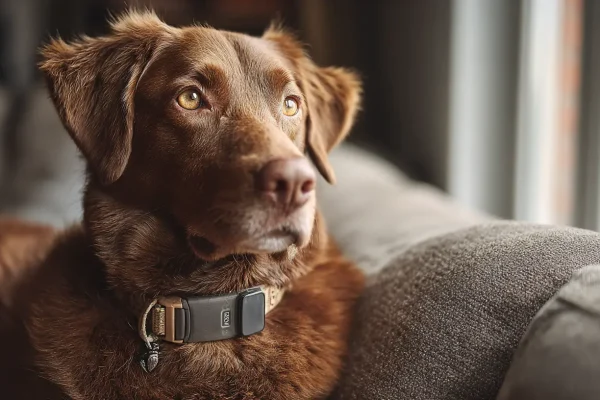
The device itself is a small, rectangular gadget that clips directly onto your dog’s existing collar. It runs on AT&T’s LTE-M cellular network combined with GPS satellite data. When your dog is home and near your Wi-Fi, it syncs over Wi-Fi to save battery. The moment your dog leaves your defined safe zone — a virtual boundary you set in the app — you get an alert on your phone.
Setup is genuinely easy. Download the app, follow the prompts, clip it on. Most people are up and running in under 10 minutes.
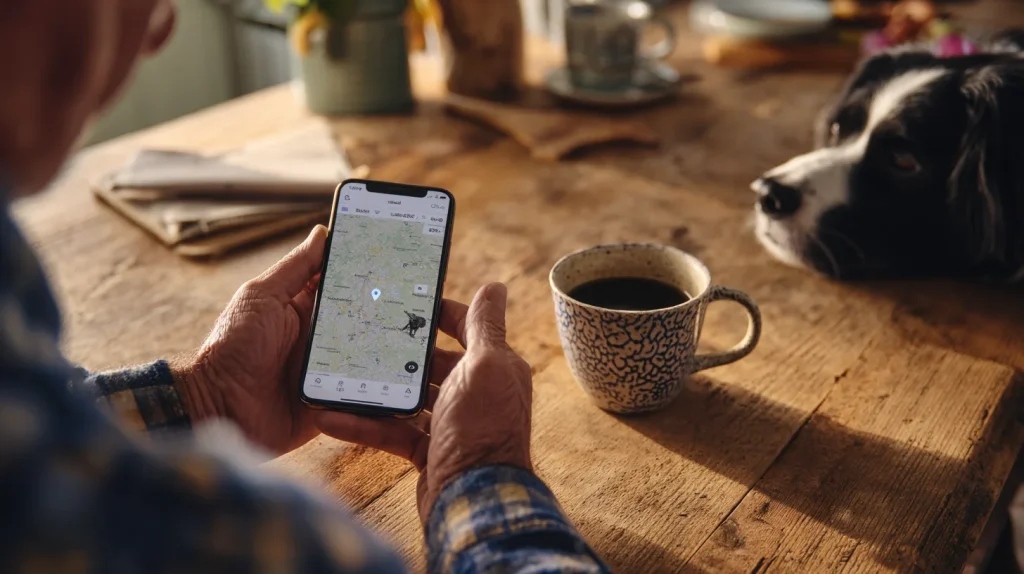
The device tracks:
- Real-time GPS location
- Daily steps and activity minutes
- Sleep quality
- Behaviors like licking, scratching, and drinking
That last part — the behavior monitoring — is where Whistle tries to stand apart from pure GPS trackers. The idea is that sudden changes in scratching or licking could signal allergies, skin issues, or anxiety. It uses motion sensors to detect patterns. Whether that data is actually useful depends on how closely you pay attention to it. More on that in a minute.
The Whistle Go Explore is rated IP67 waterproof. That means it handles rain, puddles, and the occasional creek crossing. It’s not designed for deep or prolonged submersion, but for everyday outdoor use it holds up fine.
Battery life is one of its stronger points. Most users get 7–10 days per charge depending on how much GPS tracking it’s doing. If your dog roams a lot, expect closer to 5–7 days.
The Subscription Math Nobody Talks About
Here’s the part that changes the whole picture.
The device costs around $99–$130 depending on where you buy it. That’s the price most reviews lead with. But the Whistle Go Explore requires a monthly subscription to use the GPS tracking. Without it, you’ve got a step counter. That’s it.
Plans run roughly $7.99–$12.99 per month depending on whether you pay monthly or annually. Call it $10 as a reasonable middle number.
Over two years, that’s $240 in subscription fees alone. Add the device cost and you’re looking at $340–$370 total.
The Fi collar — Whistle’s biggest competition — costs around $150 upfront with a subscription around the same price range. But Fi’s GPS accuracy is faster (updates more frequently) and its battery lasts up to three months per charge. The two-year cost ends up comparable.
This doesn’t make Whistle a bad choice. But it does make the “best budget tracker” label misleading. You’re not buying a cheap tracker. You’re buying into a subscription product. Know that going in.
GPS Accuracy: Good Enough, or Actually Good?
This is where I’ll give you a real answer instead of a marketing one.
The Whistle Go Explore works well in open areas. Parks, fields, suburban backyards. In those conditions, location updates are reasonably accurate — usually within 30–60 feet of where your dog actually is.
In rural or low-signal areas, it struggles. The device depends on AT&T’s network coverage. No signal means no GPS updates. If you live in a rural area or take your dog hiking in remote terrain, that’s a serious limitation.
The update frequency also matters. Whistle updates location roughly every 30 seconds to 2 minutes during active tracking. That lag is fine for “my dog wandered into the neighbor’s yard.” It’s not ideal if your dog is running at full speed through the woods. By the time you see the update, they’ve moved significantly.
One common complaint in real user reviews: the safe zone alert sometimes fires late. Your dog leaves the boundary, but the notification arrives a couple of minutes after. Again — usually fine. Occasionally nerve-wracking.
Honestly, if GPS accuracy is your top priority and you have an escape-prone dog, the Fi collar is the better tracker. If you want a solid GPS combined with health monitoring and you’re in good AT&T coverage, Whistle holds its own.
The Health Tracking: Useful or Just Noise?
My honest opinion: the health tracking is more useful than I expected, but less useful than Whistle’s marketing suggests.
Here’s what it actually does well. After your dog wears the tracker for a couple of weeks, it builds a baseline of their normal behavior. How much they sleep. How active they are on an average day. If those patterns shift — say your dog starts sleeping significantly more or scratching twice as much — the app flags it.

That early warning function has real value. Behavioral changes are often the first sign that something’s wrong with a dog. Vets will tell you this. The problem is that most owners either ignore the data or get overwhelmed by it.
The tracker also logs licking and drinking. If your dog gets into something outside, a spike in licking might show up in the data. Whether you catch it early enough to matter is a different question.
What the health tracking doesn’t do: it won’t tell you your dog has an ear infection. It won’t diagnose anything. It gives you data trends. You still have to connect the dots and call your vet.
If you’re the type of owner who checks the app regularly and takes abnormal readings seriously, the health features add real value. If you’re going to set it up and forget about it, you’ll mostly be using it as a GPS tracker with extra steps.
Who It’s Actually Right For
The Whistle Go Explore makes the most sense for a specific type of dog owner.
You’re a good fit if:
- Your dog lives in a suburban or urban area with solid AT&T coverage
- You want GPS tracking combined with health monitoring in one device
- You’re willing to pay a monthly subscription
- Your dog is medium to large (the device isn’t heavy, but it’s noticeable on a very small dog)
It’s probably not the right choice if your dog roams in rural or remote areas, if you need instant GPS updates during fast escapes, or if you’re genuinely looking for the cheapest possible option. A Tractive tracker runs cheaper per month and covers over 150 countries. If cost is the actual priority, Tractive undercuts Whistle on the subscription side.
The Whistle GPS review landscape loves to call this a budget option. I’d call it a mid-range tracker with a clean app, decent health features, and reliable-but-not-exceptional GPS. For the right owner, that’s more than enough.
Real Durability: Does It Hold Up?
Most dogs treat their collar like it’s been through a war. The Whistle Go Explore holds up reasonably well for average use — walks, yard time, rain, the occasional rough play session.
Users with very active dogs, though — think hunting dogs, trail dogs, dogs that swim constantly — report faster wear and tear. A few Chewy reviews mention units dying around the 7-month mark. When that happens outside the warranty window, you’re buying a new device and the subscription keeps running.
The clip mechanism that attaches the tracker to the collar is secure. It takes real effort to remove, which is exactly what you want. The device itself doesn’t have a separate collar — it attaches to whatever collar your dog already wears, which is convenient.
One real-world note: Whistle only works in the US and Canada. The network depends on AT&T coverage. If you travel internationally with your dog, the tracker becomes a basic step counter the moment you leave the country.
Whistle Go Explore vs. Fi: The Short Version
This comparison comes up constantly, and the answer depends on what you need most.
Whistle Go Explore wins on: health monitoring depth, behavioral tracking, vet consultation access through the app, and multiple safe zone notifications.
Fi wins on: GPS accuracy and update speed, battery life (weeks vs. days), and network reliability. Fi uses LTE-M, which gets roughly 30% further signal reach than standard LTE.
Both have comparable total cost of ownership over two years. Neither is dramatically cheaper. The choice is really about whether you want a primarily health-focused device that also tracks location, or a primarily location-focused device that also logs steps.
FAQ
Does the Whistle Go Explore work without a subscription? Not for GPS tracking. Without an active subscription, the GPS won’t function. You’ll still get some activity data through Bluetooth when you’re near the device, but real-time location requires the paid plan. Factor that into your budget before you buy.
How accurate is the Whistle GPS? In good coverage areas, it’s reasonably accurate — usually within 30–60 feet. It updates every 30 seconds to a couple of minutes during active tracking. It’s not instantaneous, so if your dog bolts fast, expect a slight delay before the map reflects their position.
Can the Whistle Go Explore track cats? Technically yes — the device works on cats. Practically, it’s on the larger and heavier side for most cats. Small breeds and cats may find it uncomfortable. Tractive makes a lighter option that works better for cats.
What happens if my dog leaves AT&T coverage? The GPS stops updating. You’ll lose real-time location tracking. The device will pick back up when it reconnects to the network, but in a true emergency in a dead zone, you’d be without updates. This is a real limitation for rural or wilderness use.
Is the Whistle app easy to use? Yes — setup is straightforward and the app interface is clean. The health dashboard takes a bit of time to learn, but most users find it intuitive within the first week. Alerts for safe zone exits come through as push notifications, which work reliably in good signal areas.
The Whistle Go Explore isn’t the cheapest way to track your dog. But for someone who wants real behavioral health data alongside GPS and doesn’t mind the subscription, it does a lot in one small device.
If your dog ever disappears on a Tuesday afternoon and you’re in good coverage, you’ll be glad you have it.