

A 90-pound Labrador with early hip dysplasia needs roughly 1,500mg of glucosamine a day to get anywhere near the dose used in clinical research. The “5-star rated” joint chew sitting at the top of every bestseller list — the one dosed at 250mg per treat, one treat for dogs over 50 lbs — delivers less than 20% of that.
That gap is the real story behind most joint supplement guides for large dogs. The products with the most reviews are usually formulated with medium and small dogs in mind, packaged in a way that implies “one size fits all,” and bought by large-breed owners who never stop to check whether the dose on the label has anything to do with their dog’s weight. Get the dose wrong and it doesn’t matter how good the ingredients are — the product simply won’t do enough.
So before we get to specific products, let’s fix the dose problem first.
If You’re Short on Time
“If you’re short on time: most off-the-shelf joint chews underdose large dogs badly — check grams per kilogram, not the front of the label. For structural support, Nutramax Cosequin DS Plus MSM (tablets, dosed precisely by weight) or Dasuquin with MSM (soft chews, more palatable) are the most research-backed choices. Add an omega-3 like Nordic Naturals Omega-3 Pet if your dog has active inflammation, and talk to your vet before dosing a puppy.”
Best Picks at a Glance
Nutramax Cosequin DS Plus MSM – 9.4/10 The most clinically studied glucosamine-chondroitin supplement in veterinary use, and the one that lets you hit the exact dose your dog’s weight requires. The trade-off is that it’s a tablet, and some large dogs are stubborn about tablets.
Nutramax Dasuquin with MSM – 9.2/10 Same evidence-based foundation as Cosequin, in a soft chew large dogs will actually eat, plus added ASU. Costs more per day, and the extra ingredient’s benefit over plain Cosequin is real but modest.
Vetri-Science GlycoFlex 3 – 8.8/10 A step up in dose and formulation for dogs with more advanced joint disease, built around green-lipped mussel. Harder to find in stores, and mussel quality varies by supplier.
Nordic Naturals Omega-3 Pet – 9.0/10 The Tier 2 anti-inflammatory pick — high EPA/DHA, IFOS 5-star certified, and precise dosing by weight. It’s a liquid that needs refrigeration and gets expensive at large-dog doses, but it does a job glucosamine can’t.
Zesty Paws Mobility Bites – 7.8/10 The most palatable option and the easiest to find, but the standard serving underdoses many large dogs unless you do the math and adjust.
Detailed Reviews
Nutramax Cosequin DS Plus MSM
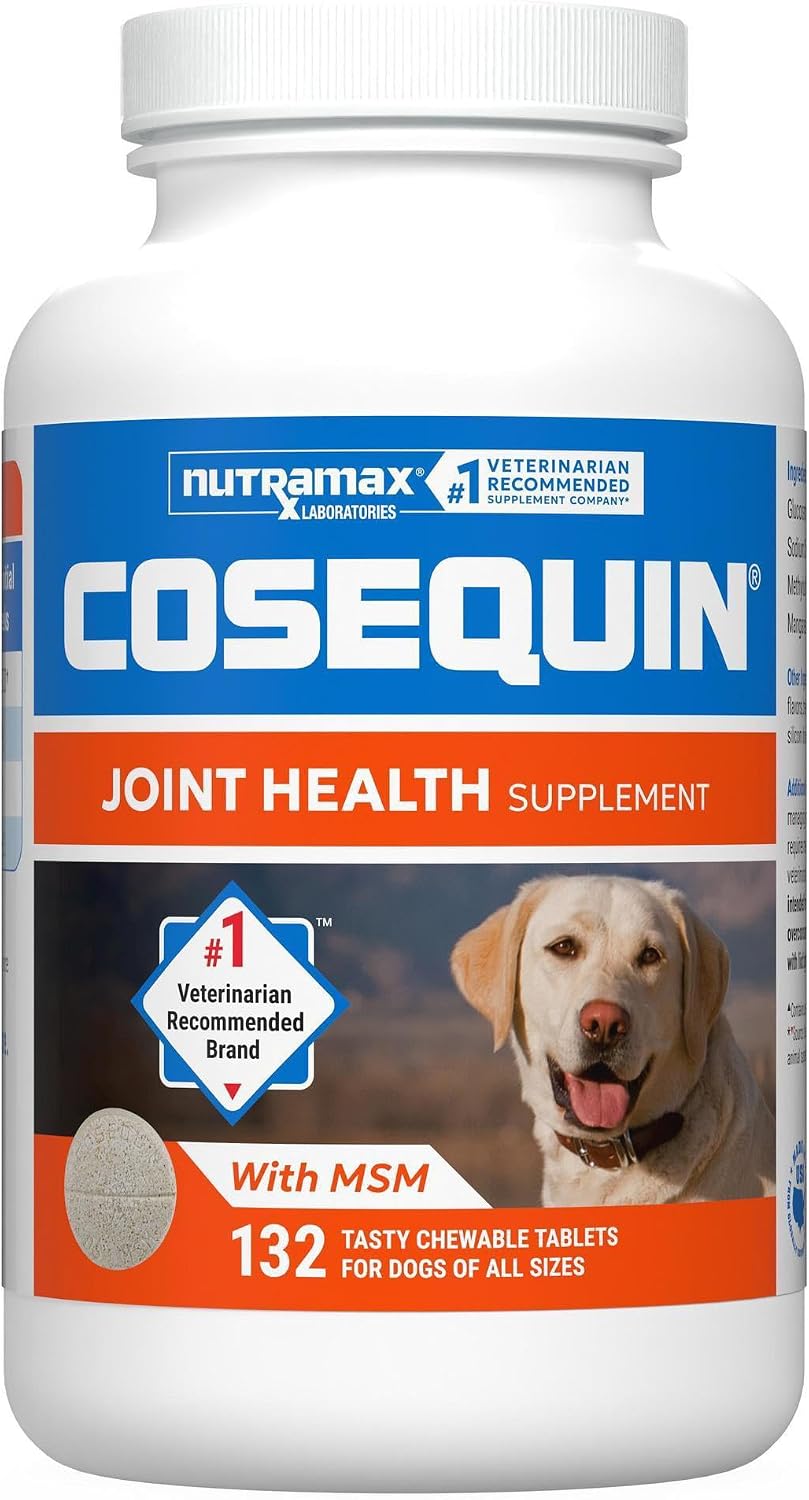
Rating: 9.4/10
Cosequin is the closest thing this category has to a gold standard. It’s the formulation most frequently referenced in veterinary literature on canine joint supplementation, and the tablet format is actually an advantage here, not a limitation — you can calculate exactly how many tablets a 90-pound dog needs and give that number, rather than guessing based on a “large dog” label that was written for a 50-pound dog.
Pros
- Most clinically researched glucosamine-chondroitin combination in veterinary use
- Tablet form allows exact dose-by-weight adjustment
- Cost-effective at the doses large dogs actually require
Cons
- Some large dogs refuse tablets outright
- Requires the owner to calculate the correct daily count
- Less palatable than chew-based competitors
Best for: owners who want the most evidence-backed option and are comfortable doing a little math, or dogs that already take tablets without a fuss. If your dog spits out anything that isn’t wrapped in food, this may be more effort than it’s worth — Dasuquin solves that problem below.
Nutramax Dasuquin with MSM (Soft Chews)
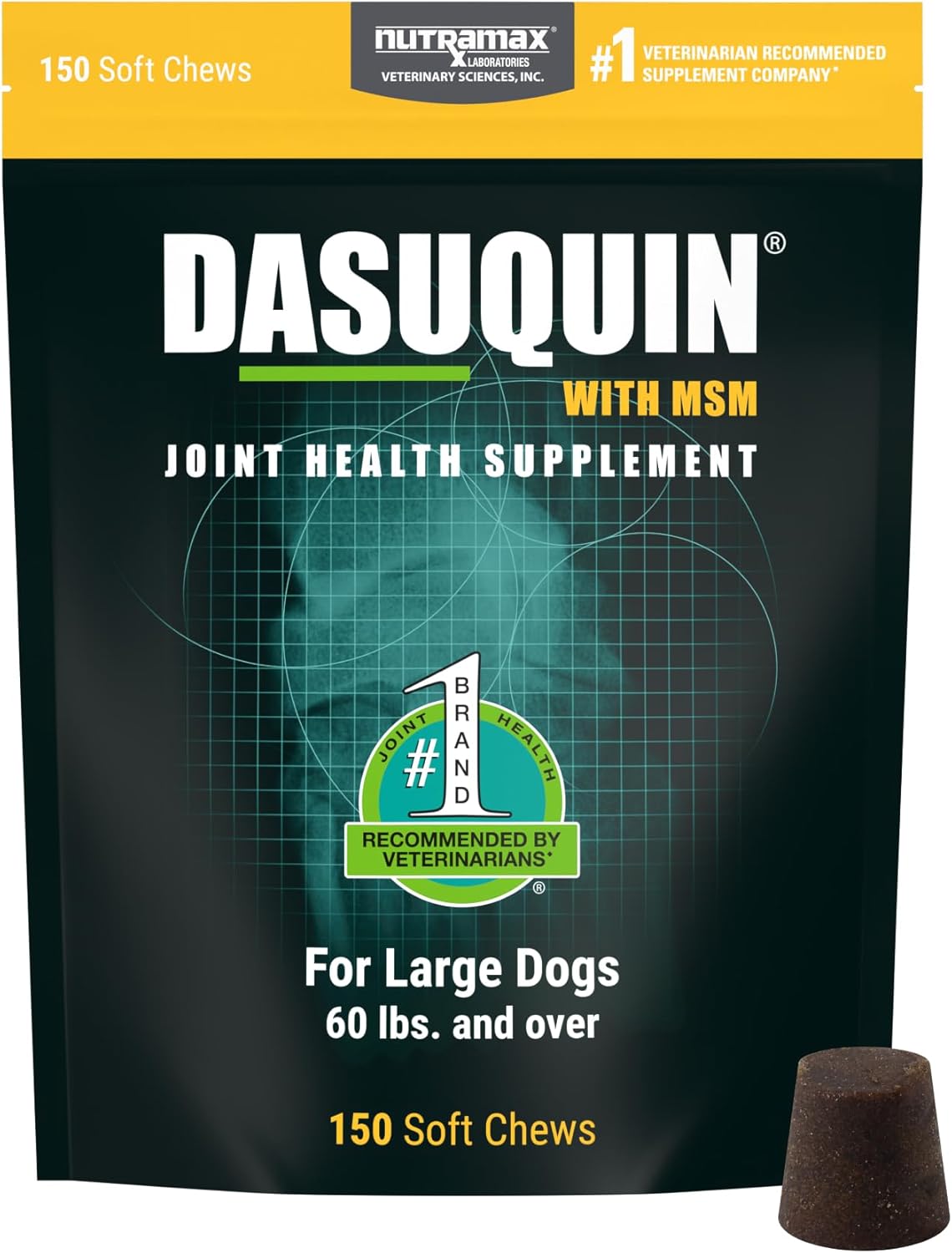
Rating: 9.2/10
Dasuquin takes the Cosequin foundation and adds avocado/soybean unsaponifiables (ASU), then puts the whole thing in a soft chew. For large dogs that won’t tolerate tablets, this is usually the first product worth trying — it carries more published research behind it than most soft-chew competitors, which matters more than it sounds like it should in a category full of thinly tested products.
The honest caveat: ASU’s added benefit over Cosequin alone is documented, but it’s marginal for most dogs. You’re paying more per day mainly for the chew format and palatability, not a dramatically different clinical outcome.
Pros
- Same research-backed glucosamine/chondroitin base as Cosequin
- Soft chew format most large dogs eat without a fight
- Most complete published evidence base among soft chews specifically
Cons
- More expensive per day than the Cosequin tablet
- ASU’s incremental benefit over Cosequin DS is modest for most dogs
Best for: large dogs who reject tablets and owners who want evidence-based support without the daily battle of pilling a 90-pound Lab.
Vetri-Science GlycoFlex 3
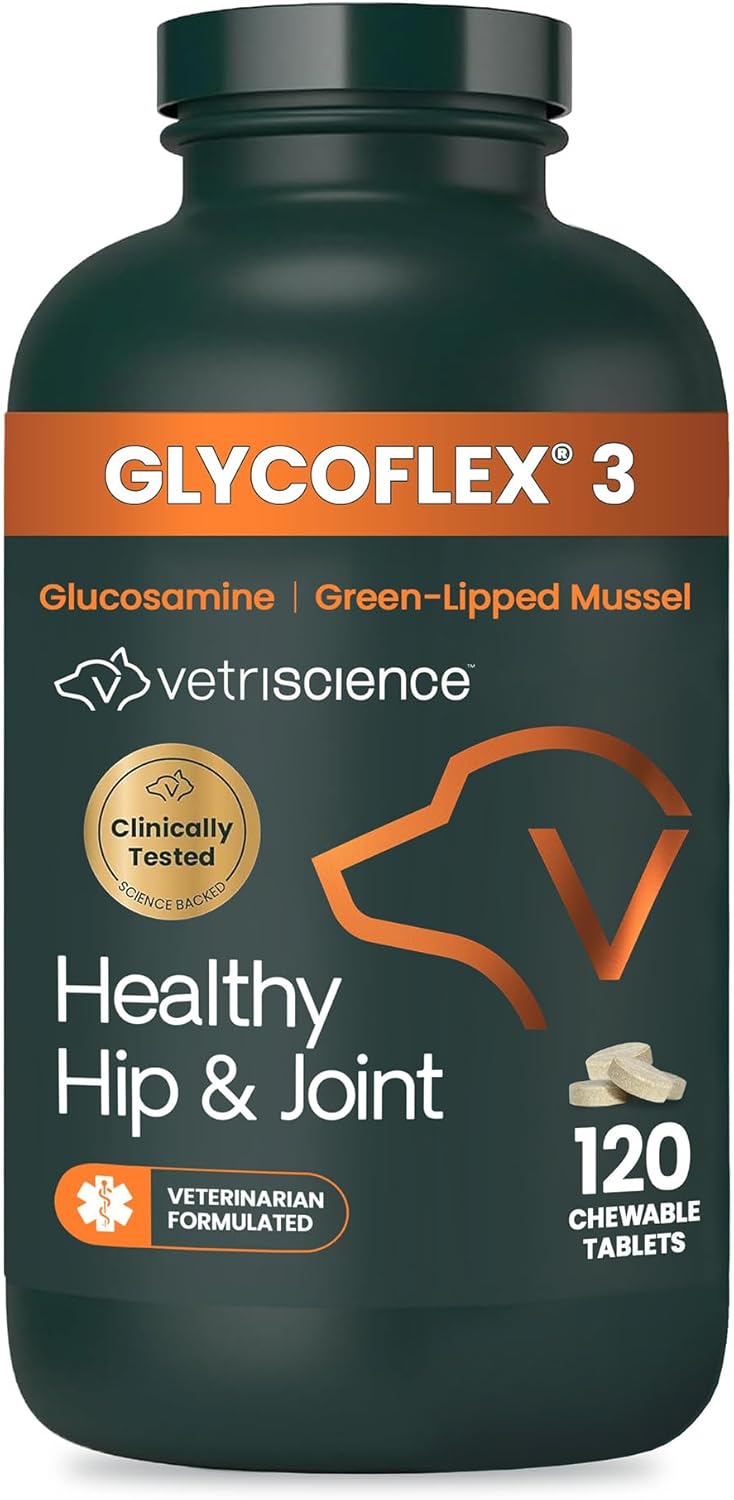
Rating: 8.8/10
GlycoFlex 3 is built for dogs further along in joint disease, or dogs already on a standard Cosequin/Dasuquin regimen whose owners and vets feel more support is warranted. The green-lipped mussel (Perna canaliculus) contributes glucosamine, chondroitin, and omega-3s together in a natural matrix, and the formulation runs at a higher dose than entry-level joint products.
Availability is the main practical friction — it’s not a product you’ll typically find on a pharmacy shelf, and it’s usually sourced through veterinary channels or specialty retailers online. Green-lipped mussel quality also isn’t standardized across brands, so sourcing matters more here than with a straightforward glucosamine tablet.
Pros
- Higher-dose formulation suited to more advanced cases
- Green-lipped mussel adds multiple joint-support compounds in one ingredient
- Strong presence in veterinary-recommended channels
Cons
- Not always available in retail stores
- Needs weeks of consistent dosing before you can judge whether it’s working
- Mussel sourcing quality varies between manufacturers
Best for: dogs with diagnosed, more advanced joint disease, or as a step-up when a standard Cosequin/Dasuquin regimen isn’t providing enough support on its own.
Nordic Naturals Omega-3 Pet
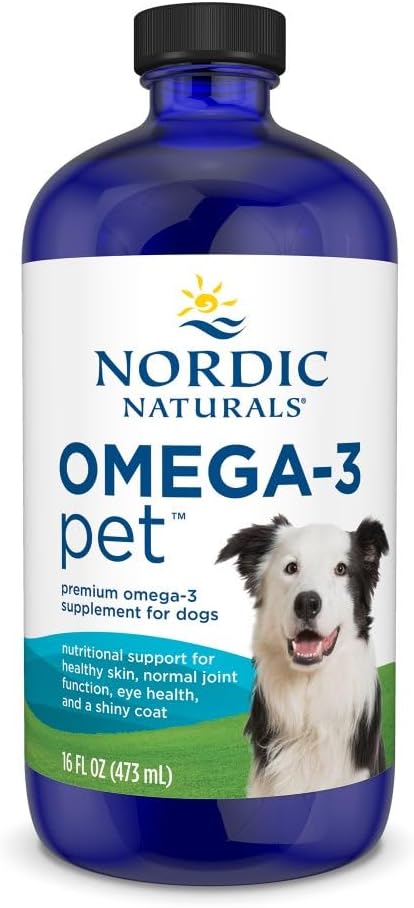
Rating: 9.0/10
This one isn’t competing with the glucosamine products above — it’s doing a different job. Omega-3s (EPA and DHA) work on the inflammatory side of joint disease rather than the structural, cartilage side, which is exactly why the three-tier approach below treats them as complementary rather than either/or.
Nordic Naturals’ IFOS 5-star certification means the fish oil has been independently tested for purity and potency, which matters in a supplement category where contamination and mislabeled concentration are genuine, documented problems. The liquid format also makes it realistic to hit a therapeutic EPA+DHA dose in a 70kg dog without force-feeding a fistful of capsules.
Pros
- High EPA+DHA concentration suitable for large-dog dosing
- IFOS 5-star certified for purity and potency
- Liquid format avoids excessive capsule counts at large-dog doses
Cons
- Requires refrigeration
- Noticeable fish odor
- Monthly cost adds up at therapeutic doses for large dogs
Best for: any large dog with active joint inflammation, used alongside — not instead of — a glucosamine/chondroitin product.
Zesty Paws Mobility Bites
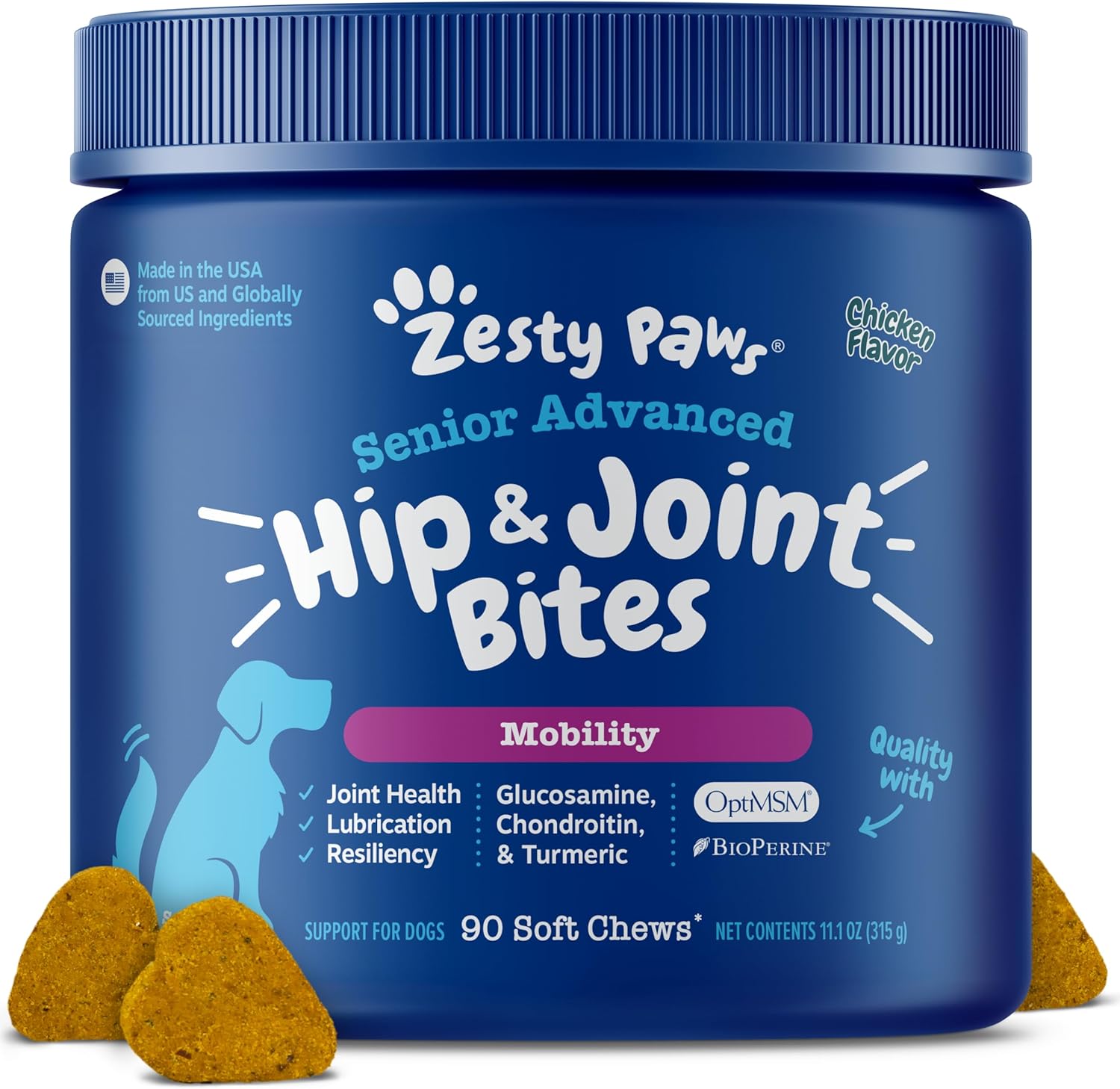
Rating: 7.8/10
Zesty Paws wins on palatability and availability — it’s the product most dogs will eat without hesitation, and you can find it in almost any pet store or big-box retail chain. That’s genuinely useful for dogs that have refused every Nutramax product an owner has tried.
The catch is the same one that opened this article: check the actual dose against your dog’s weight before assuming it’s enough. A standard two-chew serving delivers roughly 600mg of glucosamine, which may be adequate for a dog on the smaller end of “large breed” but falls short for anything approaching 90–100 lbs. It also carries less published research than Dasuquin, so treat it as a palatability-first option rather than a first-line evidence-based pick.
Pros
- Highly palatable — most dogs eat it voluntarily
- Broad ingredient spectrum
- Widely available in retail stores
Cons
- Standard serving underdoses many large dogs without adjustment
- Less clinical research behind it than Dasuquin or Cosequin
- Requires the owner to verify dose against actual body weight
Best for: dogs who’ve refused Nutramax products and owners prioritizing convenience — provided you check the label math against your dog’s weight first.
🏆 Editor’s Pick
Nutramax Cosequin DS Plus MSM is the pick here, and the reasoning goes back to the entire premise of this guide: the dosing problem is the problem. A product that’s slightly less palatable but lets you dose precisely by weight beats a product that’s easier to feed but quietly underdoses your dog every single day. For a large or giant breed dog, that precision compounds over months of use in a way palatability alone can’t make up for.
If your dog simply won’t take tablets, Dasuquin with MSM is the right fallback — not a downgrade, just a different way to solve the same problem.
Practical Buying Advice
Calculate the dose before you buy anything. Use 20mg/kg glucosamine and 16mg/kg chondroitin per day as your reference point, then check how many servings of a given product you’d need to hit that number for your dog’s actual weight. If the math requires four servings a day of something dosed for a 30-pound dog, that product isn’t a fit — regardless of its reviews.
Don’t treat Tier 1 and Tier 2 as substitutes. Glucosamine/chondroitin supports cartilage structure. Omega-3s reduce inflammation. A dog with active joint inflammation benefits from both, working through different mechanisms — one doesn’t replace the other.
Expect a loading period. Most products designed around real research build in a loading dose — often double the maintenance amount — for the first 4 to 6 weeks, meant to saturate joint tissue faster. Don’t judge a supplement’s effectiveness inside the first month.
Weight management isn’t optional, especially with hip dysplasia. Every extra kilogram increases load on joints that are already compromised. No supplement compensates for a dog carrying 10–15% more weight than it should.
Don’t guess with puppies. The concern with supplementing large-breed puppies isn’t toxicity — it’s that interfering with a still-developing joint, without clear evidence of benefit at that age, is a real risk. Growth-plate closure is the more reasonable point to start, and it’s worth a conversation with your vet first.
Consider surgical and physical options for severe hip dysplasia. Supplements manage inflammation and slow progression; they don’t correct a structural problem. For advanced cases, hydrotherapy, controlled exercise, and — in severe cases — surgical intervention (FHO or total hip replacement) may do more than any product on this list.
FAQ
What is the best joint supplement for large dogs with hip dysplasia? Nutramax Dasuquin with MSM (soft chews, for palatability) or Cosequin DS Plus MSM (tablets, for dose precision), combined with an omega-3 fish oil dosed around 30mg EPA+DHA per kg of body weight. This pairs structural cartilage support with anti-inflammatory support. Weight management matters just as much — even 5–10% overweight meaningfully increases joint loading and pain in a dog with hip dysplasia.
How long before joint supplements work in large dogs? Generally 4 to 8 weeks of consistent daily dosing before you’ll notice a difference, though some dogs respond by week 4 and others take up to 12 weeks. That’s why many Cosequin-line products build in a loading dose for the first several weeks — it’s designed to saturate joint tissue faster than maintenance dosing alone would.
Can I give my dog human glucosamine supplements? Yes, provided you adjust for body weight and confirm the product doesn’t contain xylitol. A human triple-strength formula (1,500mg glucosamine + 1,200mg chondroitin per serving) can work well for a large dog at the right dose — just read the full ingredient list, since some human joint formulas include herbs or sweeteners that aren’t appropriate for dogs.
Is green-lipped mussel better than glucosamine for dogs? Green-lipped mussel (Perna canaliculus) naturally contains glucosamine, chondroitin, and omega-3s together, and it has real clinical support — just fewer published trials than Cosequin specifically. It’s a reasonable complementary option, or an alternative for dogs that haven’t responded well to standard glucosamine/chondroitin, rather than an automatic upgrade over established first-line products.
Do joint supplements prevent hip dysplasia? No. Hip dysplasia is driven largely by genetics and developmental factors that supplementation doesn’t touch. Responsible breeding and appropriate growth-rate nutrition in puppies are what actually influence whether the condition develops. Supplements manage the progression and symptoms of joint disease that’s already present — they don’t prevent the structural condition from forming in the first place.
Getting This Right
The single biggest lever an owner has here isn’t which brand they choose — it’s whether the dose on the label actually matches their dog’s weight. Do that math first. From there, Cosequin or Dasuquin as a structural foundation, an omega-3 if inflammation is active, and honest weight management will do more for a large dog’s joints than chasing the next product with a five-star badge on the box.