


- Best Picks at a Glance
- Why Ear Thermometers Underperform in Pets
- Accuracy Hierarchy for Pet Thermometers
- Normal Temperature Ranges
- Detailed Reviews
- iProven DMT-489 Digital Rectal Thermometer
- Vicks Speed Read Digital Thermometer (Used Rectally)
- Pet-Temp Instant Ear Thermometer (Jorgensen Laboratories)
- Vet-Temp VT-102 Ear Thermometer
- Non-Contact Infrared Thermometer (Various Brands)
- 🏆 Editor's Pick
- Practical Buying Advice
- How to Take a Rectal Temperature Correctly
- When to Take Your Pet's Temperature
- FAQ
- Choosing With Confidence
An ear thermometer designed for pet use reads 102.1°F. A rectal reading taken immediately after reads 104.6°F. The first reading says your dog has a normal temperature. The second reading says your dog has a potentially serious fever and needs a vet today.
That’s not a defective thermometer. It’s a design limitation almost every pet owner discovers too late — usually in the middle of a scare, at 11 p.m., staring at two different numbers and not knowing which one to trust.
The gap between ear readings and rectal readings in dogs and cats is large enough to matter clinically, and it comes down to anatomy, not product quality. Once you understand why, choosing the right thermometer — and trusting the number it gives you — gets a lot simpler.
“If you’re short on time: get a digital rectal thermometer — it’s the only method vets actually rely on. The iProven DMT-489 and the Vicks Speed Read (used rectally) both deliver accurate readings for under $15. Ear thermometers are fine for a quick trend check, but a dog or cat’s L-shaped ear canal means they consistently read 1–3°F lower than reality — never use one to rule out a fever.”
Best Picks at a Glance
iProven DMT-489 Digital Rectal Thermometer – 9.6/10 The most accurate option on this list and the one that matches what your vet actually uses. Ten-second readings, a memory function, and a low price make it the easiest first purchase for any pet owner.
Vicks Speed Read Digital Thermometer (used rectally) – 9.4/10 A human-grade thermometer that performs identically to pet-branded rectal models at the same price. If you already own one, you likely don’t need to buy anything else.
Pet-Temp Instant Ear Thermometer (Jorgensen Laboratories) – 7.2/10 The best of the ear-thermometer category, with an insertion depth built around pet ear canal shape rather than a human one. Good for fast screening, not for a real diagnosis.
Vet-Temp VT-102 Ear Thermometer – 6.8/10 A reasonable low-restraint option for trend tracking in pets who won’t tolerate rectal handling, as long as you confirm any concerning reading rectally.
Non-Contact Infrared Thermometer (various brands) – 2.0/10 Built for human foreheads, not fur. Skip this one entirely for fever assessment in pets.
Why Ear Thermometers Underperform in Pets
In humans, the ear canal runs in a fairly straight line, so an infrared thermometer can point directly at the eardrum, and tympanic temperature is a solid proxy for core body temperature.
Dogs and cats don’t share that anatomy. Their ear canal is L-shaped: it runs horizontally before turning downward to reach the eardrum. Point an infrared thermometer into that canal and it reads the canal wall, not the tympanic membrane. That’s the structural reason every pet ear thermometer — regardless of brand or price — tends to underread actual core temperature.
Veterinarians have known this for years, which is why rectal readings are what actually shows up on a vet chart. It’s not that ear thermometers are poorly made. It’s that the shape of the ear itself works against the technology.
Accuracy Hierarchy for Pet Thermometers
Rectal (most accurate). The gold standard, and the method that measures actual core body temperature. It takes a bit of tolerance from your pet and correct technique from you, but the accuracy trade-off is worth the mild discomfort.
Ear infrared (lower accuracy in pets). Fast and far less intrusive, but expect readings 1–3°F lower than the real number in many dogs and cats because of ear canal shape. Fine for watching a trend over several days — not fine for deciding whether your pet needs a vet visit tonight.
Axillary/armpit (least accurate). Reads 1–2°F below actual core temperature. Some guides list it as a fallback for animals who won’t tolerate anything else. It can help you rule out severe hypothermia or confirm a very high fever, but it won’t give you a precise number.
Non-contact infrared. Designed for human skin, and it shows: these read surface temperature only and aren’t accurate for pets at all.
Normal Temperature Ranges
Dogs: 101.0–102.5°F (38.3–39.2°C)
Cats: 100.5–102.5°F (38.1–39.2°C)
Above 104°F (40°C): call your vet regardless of the cause.
Above 106°F (41.1°C): this is an emergency — organ damage from heat can begin around this point, so head to an emergency vet.
Below 99°F (37.2°C) in dogs or 100°F (37.8°C) in cats: a hypothermia concern worth a call to your vet.
Detailed Reviews
iProven DMT-489 Digital Rectal Thermometer
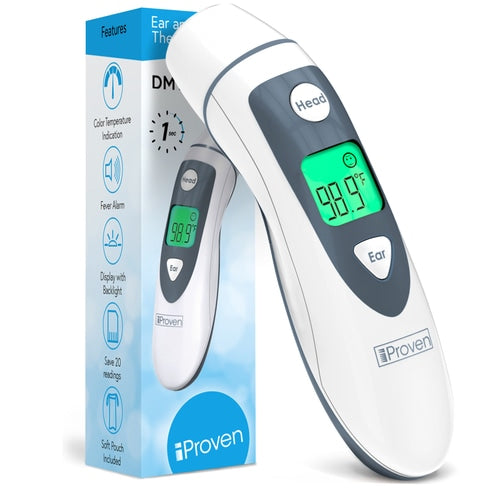
Rating: 9.6/10
This is the thermometer to buy if you’re only going to own one. It’s a flexible-tip digital rectal thermometer built specifically with pets in mind, and it delivers a reading in about 10 seconds.
Pros
- Fast 10-second reading
- Accurate, matching the method vets use in clinic
- Inexpensive relative to its accuracy
- Memory function shows the previous reading for comparison
- Meets the veterinary accuracy standard
Cons
- Requires rectal insertion, which means restraint and patience
- Needs lubrication before every use
- Uncomfortable for pet and owner, even when done correctly
Where the DMT-489 earns its price is consistency. Because it’s purpose-built for animals, the flexible tip and shape are more forgiving during insertion than a rigid human thermometer, which matters most with a squirming cat or an anxious dog. If you’re monitoring a pet through an illness or post-surgery recovery, the memory function saves you from having to write every reading down by hand.
Vicks Speed Read Digital Thermometer (Used Rectally)
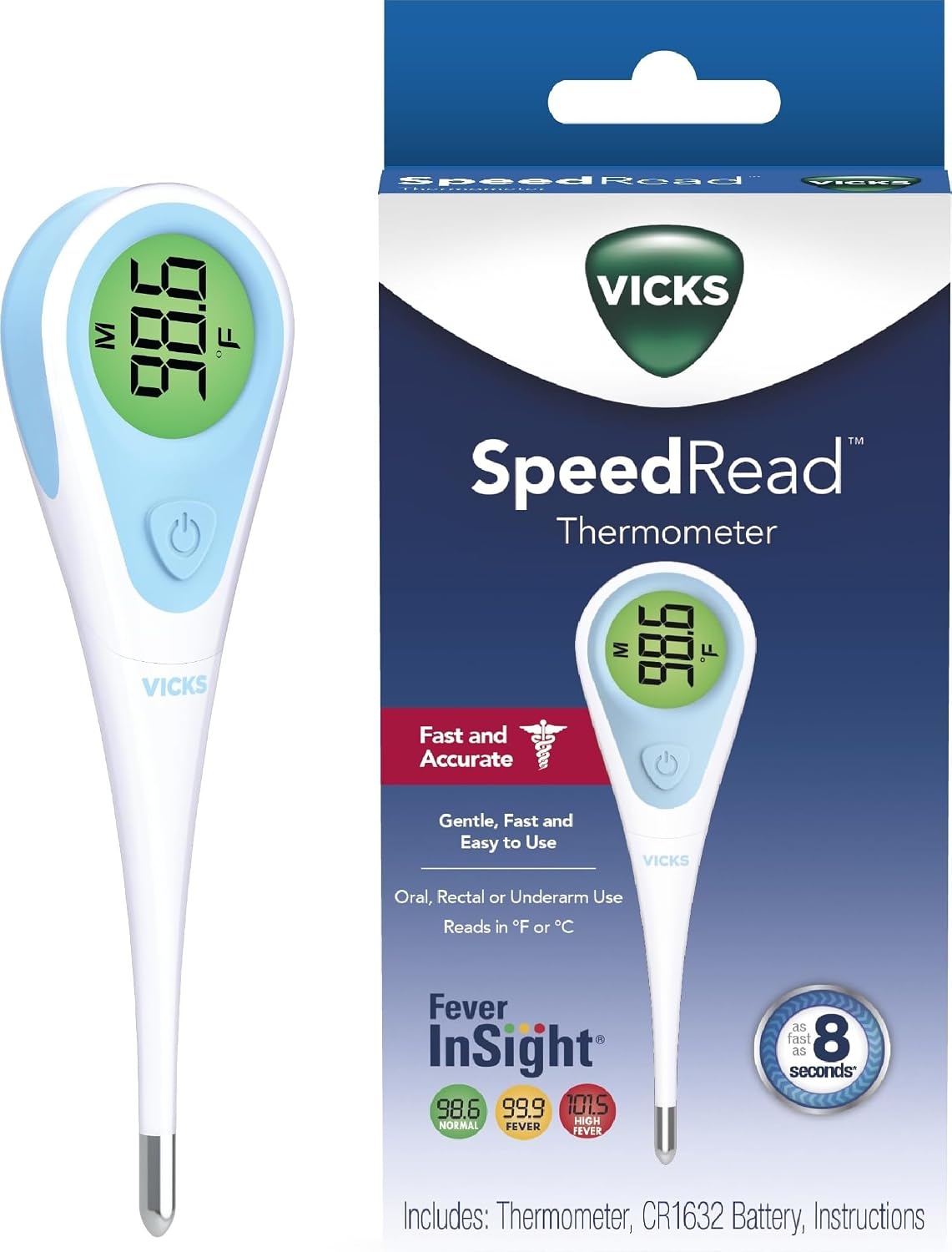
Rating: 9.4/10
There’s a persistent myth that pets need a “pet-specific” thermometer to get an accurate rectal reading. They don’t. A standard human digital rectal thermometer, like the Vicks Speed Read, performs just as accurately in dogs and cats using the exact same technique.
Pros
- Human-grade accuracy at the same price as pet-branded versions
- Widely available at any pharmacy
- No premium for “pet” branding
Cons
- Rigid tip is slightly less forgiving than a flexible pet-designed tip
- Doesn’t include pet-specific memory or trend features
If you already have one of these in a bathroom drawer, there’s a real case for not buying anything else. The only reason to upgrade to a pet-marketed rectal thermometer is comfort features like a flexible tip or a memory function — not accuracy, which is identical.
Pet-Temp Instant Ear Thermometer (Jorgensen Laboratories)
Rating: 7.2/10
Of the ear thermometers built for animals, this one does the most to work around the anatomy problem. It’s designed with an insertion depth calibrated for a dog or cat’s ear canal rather than repurposed from a human product, which puts it a step ahead of generic ear thermometers.
Pros
- Insertion depth designed around pet anatomy
- Fast, low-restraint readings for cooperative pets
- Good for repeated screening where a trend matters more than a single precise number
Cons
- Still limited by the L-shaped ear canal — reads lower than actual core temperature
- Not suitable for a reading you’re using to make a clinical decision
Think of this one as a screening tool, not a diagnostic one. It’s genuinely useful for daily monitoring during a known illness where you’re watching for a trend, but any reading that looks concerning should be confirmed rectally before you act on it.
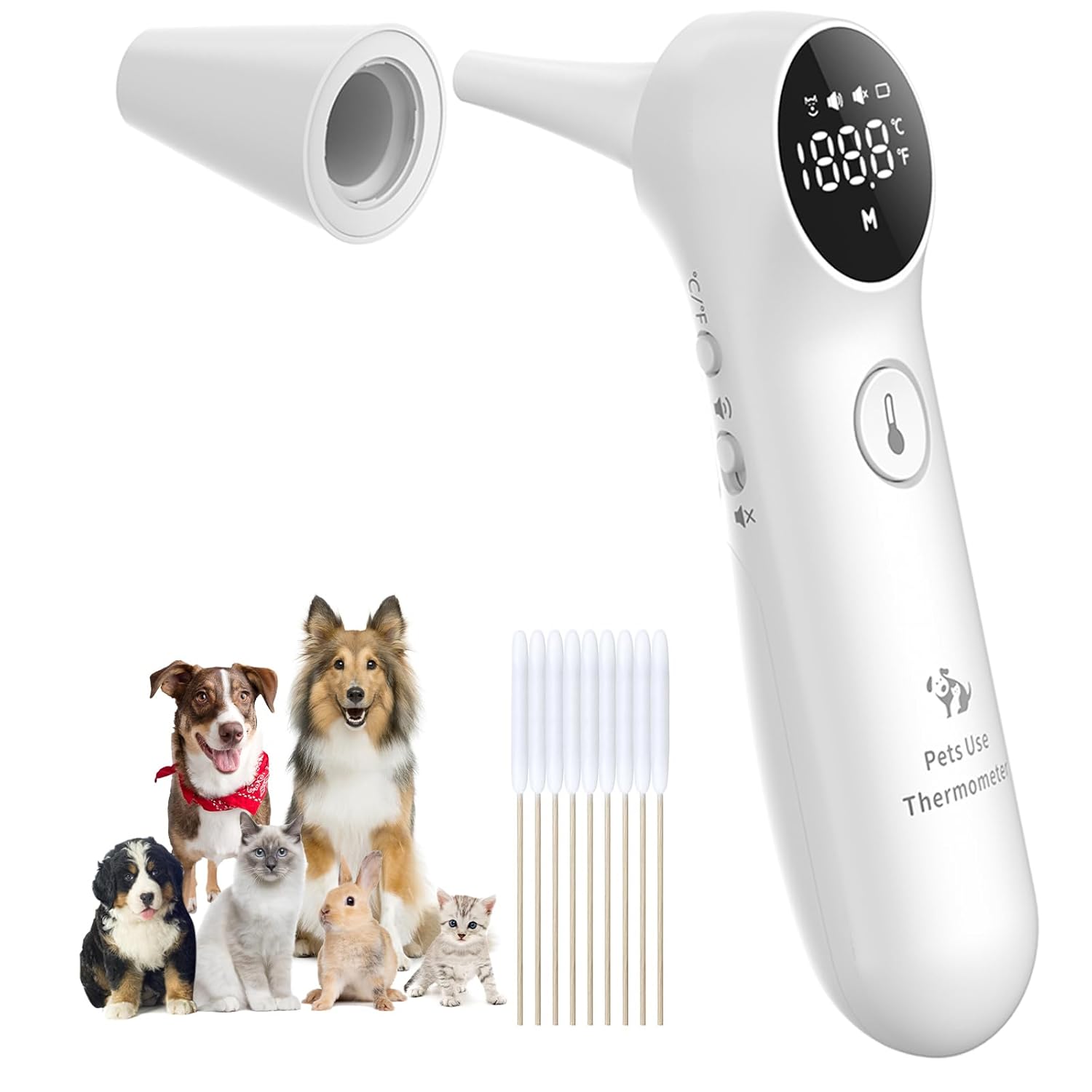
Vet-Temp VT-102 Ear Thermometer
Rating: 6.8/10
Best for: owners who can’t manage rectal temperature-taking at all and need something better than a guess.
This model shares the same core limitation as every ear thermometer in this category — the underlying anatomy doesn’t change based on the device. What it offers instead is low restraint and quick use, which matters if your pet genuinely cannot tolerate rectal handling.
Pros
- Minimal restraint required
- Faster than rectal methods
- Better than having no data at all
Cons
- Same 1–3°F underread common to all pet ear thermometers
- Not appropriate as a standalone method for a critical reading
Who should avoid it: anyone who needs a precise number for a vet consult or a treatment decision. Use it for day-to-day trend tracking, then confirm anything unusual with a rectal reading before calling your vet.
Non-Contact Infrared Thermometer (Various Brands)
Rating: 2.0/10
These are built for human foreheads and skin surfaces, and that’s exactly what they measure in pets too — surface temperature, not core temperature. There’s no version of this device that gives you a clinically meaningful number for a dog or cat’s fever. Skip it for this purpose entirely.
🏆 Editor’s Pick
The iProven DMT-489 wins this comparison because it removes the one variable that actually matters: whether you can trust the number. Ear thermometers introduce a built-in 1–3°F blind spot no amount of design can fully solve, which means every ear reading comes with an asterisk. A rectal reading doesn’t. The DMT-489 gives you that same vet-standard accuracy at home, fast enough that the discomfort is over in about 10 seconds, with a memory function that makes tracking a sick pet’s recovery easier. If you want one thermometer that will never leave you guessing whether 102°F is actually 104°F, this is it.
Practical Buying Advice
Features that actually matter: rectal accuracy, read speed, and a flexible tip for comfort. A memory function is genuinely useful if you’re tracking an illness over several days.
Features that don’t matter as much as they sound: “pet-specific” branding on a rectal thermometer. As the Vicks Speed Read shows, a human rectal thermometer performs identically.
Common buying mistake: choosing an ear thermometer because it seems less stressful, then trusting the number for a real medical decision. It’s fine for routine trend-watching, not for deciding whether your pet needs urgent care.
Setup and technique tips: always lubricate a rectal thermometer before use, and let your pet rest indoors for 10–15 minutes before taking a reading if they’ve just come in from cold weather or exercise — both will skew the result.
Safety consideration: never force insertion if your pet is fighting hard against it. A cat or dog who violently resists is better served by a vet visit than a home attempt that risks injury to either of you.
How to Take a Rectal Temperature Correctly
Most owners avoid this because it sounds harder than it is. With the right approach, it takes under 30 seconds.
What you need: a digital rectal thermometer, petroleum jelly or a water-based lubricant, and ideally a second person to hold your pet (helpful, though not always necessary for a calm animal).
Dog technique:
- Apply lubricant to the thermometer tip.
- Gently lift the tail upward.
- Insert the thermometer about 1 inch into the rectum, angled slightly downward toward the animal’s navel.
- Hold in place until it beeps.
- Remove, wipe, read, and record the number.
Cat technique: Cats tend to resist this more than dogs. Having a second person wrap the cat in a towel — hindquarters left accessible — cuts down on movement significantly. The technique itself is the same: about 1 inch of insertion, held gently until the beep. If a cat fights hard against it, a vet visit is the safer route rather than repeated home attempts.
One more thing: don’t take a temperature reading right after outdoor winter exposure or vigorous exercise. Let your pet rest indoors for 10–15 minutes first, or the reading will be skewed.
When to Take Your Pet’s Temperature
Check temperature if your pet shows:
- Lethargy or unusual behavior
- Loss of appetite
- Shivering or acting cold in a warm environment
- Rapid breathing at rest
- A known infection, or during post-surgery recovery monitoring
Don’t take a temperature speculatively. A pet who’s active, eating normally, and behaving like themselves doesn’t need to be checked — doing so anyway just adds handling stress with no real benefit.
FAQ
Are pet ear thermometers accurate? Less accurate than rectal thermometers in dogs and cats, because the L-shaped ear canal keeps the infrared beam from reaching the eardrum. Expect readings 1–3°F lower than actual core temperature. They’re useful for quick screening and trend monitoring, but any concerning reading should be confirmed rectally before you act on it.
What temperature is a fever in a dog? Anything above 103°F (39.4°C) at rest is elevated and worth watching. Above 104°F (40°C), call your vet. Above 106°F (41.1°C) is an emergency — go to an emergency vet immediately, since organ damage from heat becomes a risk at that level.
Can I use a human thermometer on my dog? Yes. A standard human digital rectal thermometer works just as accurately in dogs and cats, using the same technique. Human ear thermometers offer no accuracy advantage over pet-labeled ones — the same anatomical limitation applies either way. Human non-contact thermometers aren’t useful for pet core temperature at all.
My cat has a temperature of 103.5°F — should I be worried? That’s above the normal upper limit of 102.5°F for cats. Call your vet and describe the full picture: appetite, behavior, other symptoms, and how long it’s been going on. A single 103.5°F reading in a cat who’s otherwise eating and acting normal may just need monitoring and a recheck in 2–4 hours. The same reading in a lethargic cat who isn’t eating warrants a same-day vet visit.
How often should I take my pet’s temperature during illness recovery? Every 12 hours for a pet recovering from illness or surgery, unless your vet gives you a different interval. Once daily, same time each day, for a pet on antibiotics, so you can track whether the trend is moving downward as expected. A healthy pet needs no routine monitoring at all.
Choosing With Confidence
The right thermometer isn’t the one that’s easiest to use — it’s the one you can trust when it actually matters. Ear thermometers have a real place in a pet owner’s routine for quick trend checks between vet visits, but they were never built to give you the number a real fever decision depends on. A rectal reading, taken correctly, removes that guesswork entirely. Keep one in the house, know the 30-second technique, and you’ll never be stuck at 11 p.m. staring at two conflicting numbers wondering which one to believe