

- Best Picks at a Glance
- The Real Size Problem
- Detailed Reviews
- DIY NIC/CUBES Enclosure (Custom)
- PawHut 79" Rabbit Hutch with Large Run
- X-Pen Exercise Enclosure (as Primary Housing)
- Aivituvin 62" Rabbit Hutch with Run
- Living World Deluxe Habitat (XL)
- MidWest Homes Wabbitat Deluxe
- 🏆 Editor's Pick: DIY NIC/CUBES Enclosure
- Outdoor Hutch Safety
- Indoor vs. Outdoor: The Welfare Debate
- Practical Buying Advice
- FAQ
- Choosing With Confidence
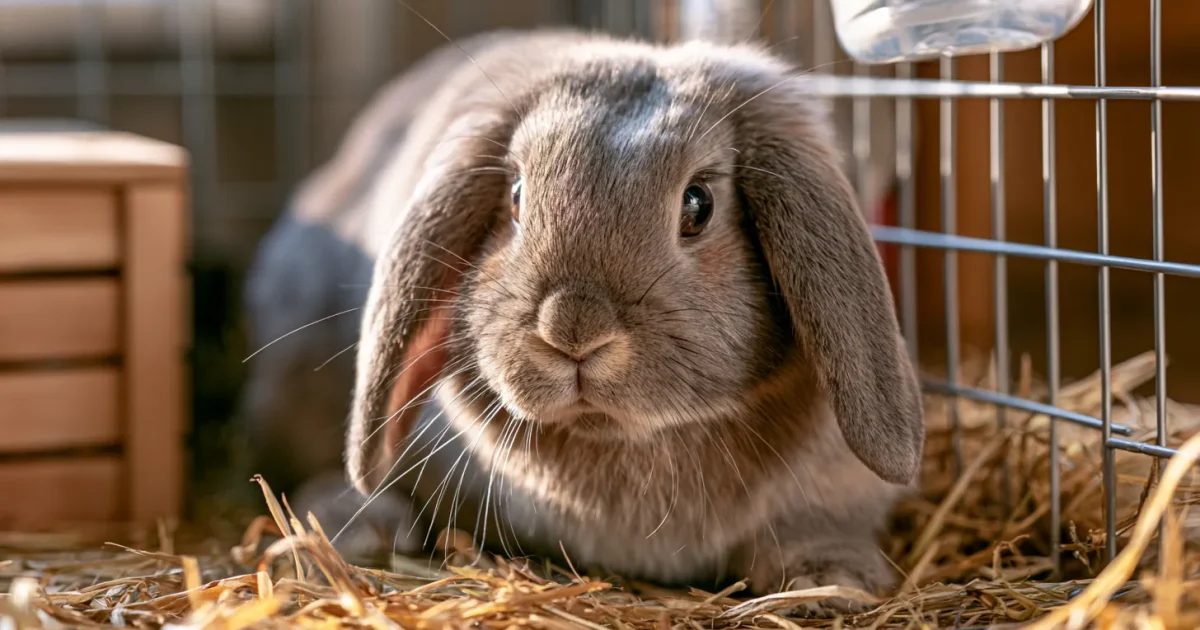
Most rabbit hutches sold at major pet retailers aren’t just a little too small. They’re significantly too small for a rabbit to live a behaviorally healthy life in. A rabbit that can’t do a full binky — that bounding, twisting leap they do when they’re happy — can’t stand fully upright on their hind legs, and can’t string together even 3–4 consecutive hops, is a rabbit heading toward health and behavioral problems down the line.
The Rabbit Welfare Association recommends a minimum of 6 feet long x 2 feet wide x 2 feet tall for one medium rabbit — most commercial hutches are 24–36 inches, roughly a third to half of that. The PawHut 79″ is the best pre-built hutch that gets close to the welfare standard out of the box, while a DIY NIC cube enclosure or X-pen setup gives you fully customizable space at a lower cost. If you’re housing a rabbit long-term, plan on either a hutch-plus-run system or daily free-roaming time — the hutch alone is rarely enough space on its own.
Best Picks at a Glance
DIY NIC/CUBES Enclosure (Custom) – 9.6/10 The true welfare-standard option, and what most dedicated rabbit owners eventually build. Fully customizable size and layout, at a fraction of commercial hutch prices — best for anyone willing to spend an afternoon assembling it.
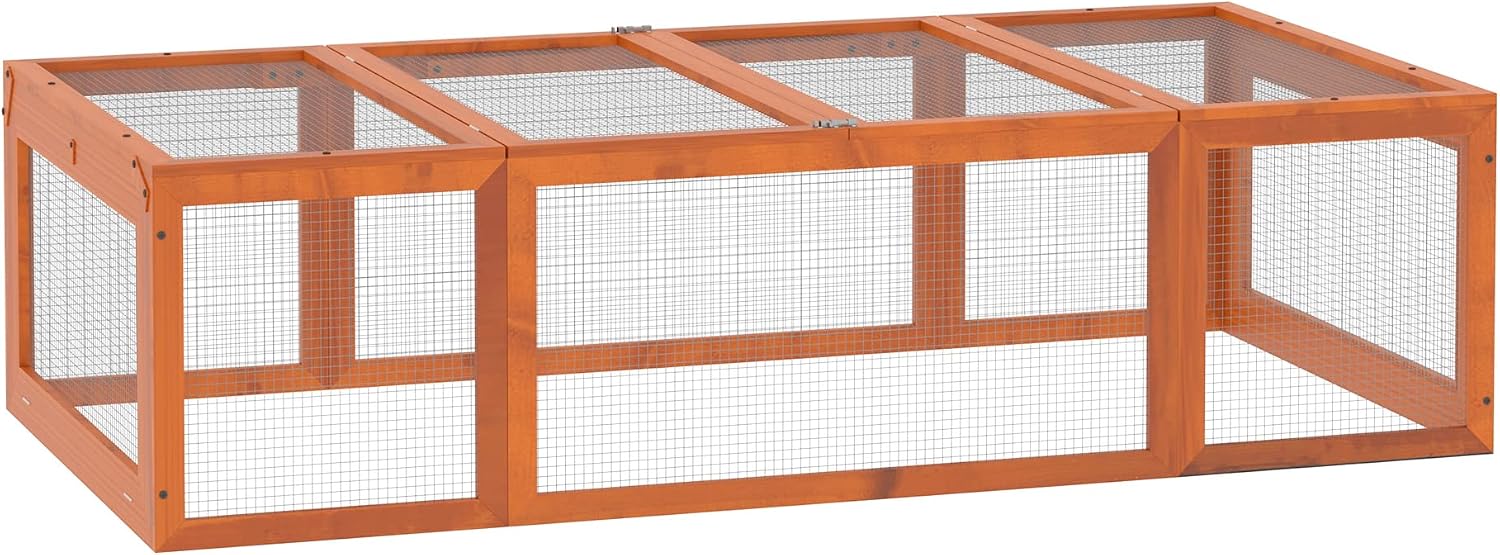
PawHut 79″ Rabbit Hutch with Large Run – 9.4/10 The best pre-built hutch on the market, full stop. Its 79-inch main body and substantial attached run get closer to the welfare minimum than any other commercial option, with divided compartments that support proper litter training.
X-Pen Exercise Enclosure (as primary housing) – 8.9/10 The most practical indoor setup for free-roaming rabbits. Easy to configure, easy to expand, and it beats most commercial hutches on floor space — just watch for jumpers, since it has no roof.
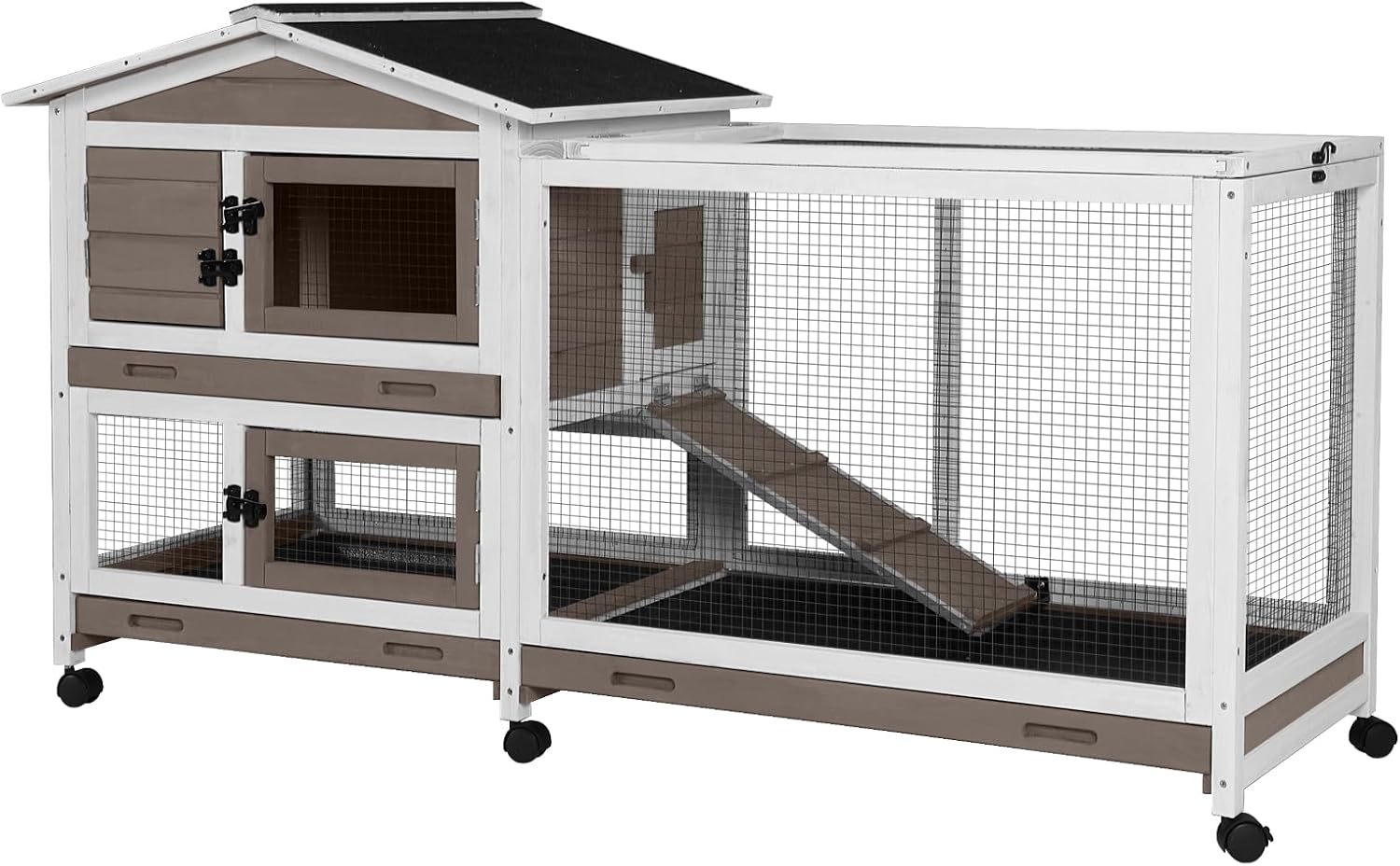
Aivituvin 62″ Rabbit Hutch with Run – 8.7/10 A solid mid-range outdoor option. Its 62-inch body with attached run is a real step up from typical pet-store hutches, though it still falls short of the ideal minimum on its own.
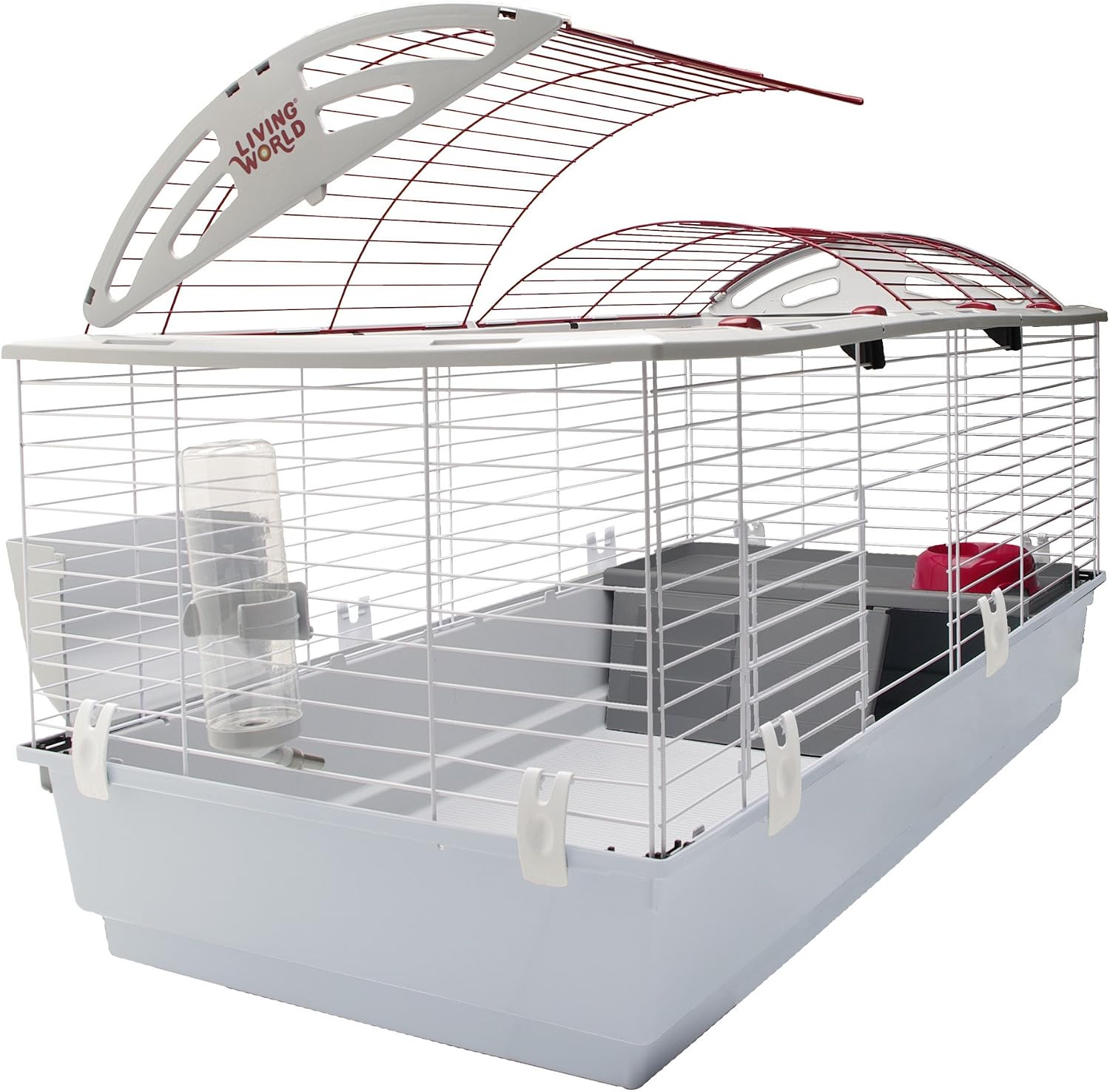
Living World Deluxe Habitat (XL) – 7.5/10 Best treated as a sleeping base for an indoor rabbit that also gets supervised free-roam time, not as standalone housing. Solid build and easy to clean, but undersized for permanent use.
MidWest Homes Wabbitat Deluxe – 7.2/10 A budget-friendly indoor option with a solid floor included, which is a real plus — but at 47 inches, it’s not adequate as a rabbit’s only living space.
The Real Size Problem
Here’s the practical math behind all of this. A medium rabbit — 5 to 7 pounds, think Dutch or mini rex — covers roughly 3–4 feet of horizontal space per binky. A standard 36-inch hutch is barely one binky-length. The rabbit physically cannot complete the motion that signals it’s happy and healthy.
Ideally, a rabbit should be able to string together 3 consecutive binkies in its living space — at 3–4 feet each, that’s 9–12 feet of run space. That’s an exercise-run benchmark, not a minimum cage size, but it reframes what “enough space” actually looks like in practice.
The 6-foot by 2-foot welfare minimum covers sleeping, feeding, litter, and minimal movement — exercise beyond that should happen in an attached run or through daily free-roaming time. A hutch-and-run system, where a sleeping compartment connects to a larger exercise area the rabbit can access on its own, is the closest most keepers get to ideal housing without going fully free-roam.
To be fair, not every rabbit kept in an undersized hutch will develop obvious clinical problems — there’s individual variation. But the behavioral research on rabbits housed below minimum standards consistently turns up elevated stress markers, reduced play behavior, and higher rates of stereotypies (repetitive behaviors tied to psychological stress). That’s a strong enough pattern to take seriously when you’re choosing a hutch.
Detailed Reviews
DIY NIC/CUBES Enclosure (Custom)
Rating: 9.6/10
Pros
- Fully customizable size, height, and layout
- Can include a roof, multiple levels, and ramps
- Far more economical than commercial alternatives for the amount of space it provides
Cons
- Requires buying cube panels and zip ties and assembling them yourself
- Not pre-made — no out-of-box convenience
This is the DIY standard in rabbit welfare communities for a reason. Cube-style wire storage panels, zip-tied together, let you build an enclosure at literally any size or configuration — many owners settle on a 4×2 or 6×2 footprint with a second level connected by a ramp. It’s the setup that most closely matches true welfare recommendations, and it costs less than most commercial hutches that offer a fraction of the space.
One requirement applies here regardless of setup: a solid floor. Carpet squares, fleece blankets, or rubber puzzle mats over the wire base prevent sore hocks — pressure sores on the hind feet that develop in rabbits spending hours daily on wire flooring.
PawHut 79″ Rabbit Hutch with Large Run
Rating: 9.4/10
Pros
- One of the longest pre-built hutches available
- Divided compartments separate sleeping, eating, and litter zones
- Adequate weatherproofing for most climates
Cons
- Still short of the ideal minimum for a large rabbit
- Assembly is involved — plan on a full afternoon
Best for: outdoor rabbit keepers who want the best available pre-built option without going custom.
The 79-inch main body paired with a substantial attached run makes this the closest a commercial hutch gets to welfare standards straight out of the box. It’s still not a perfect match for an ideal minimum if you’re housing a large breed, but it’s genuinely defensible for welfare purposes with a medium rabbit.
The divided compartments matter more than they might seem — separating sleeping, eating, and litter areas supports rabbit psychology and makes litter training noticeably easier, since rabbits naturally keep distinct zones cleaner. Read the full instructions before you start assembling; it saves time later.
X-Pen Exercise Enclosure (as Primary Housing)
Rating: 8.9/10
Pros
- Large footprint that’s easy to expand or reconfigure
- No new purchase needed to resize — panels fold and rearrange
- More floor space than most commercial hutches
Cons
- No roof, so a rabbit that learns to jump out will escape
- Needs a taller pen or added roof panel for persistent jumpers
A dog exercise pen configured as an open-top enclosure in a room corner creates a floor-level rabbit zone sized however large the room allows. A 6-panel setup gives roughly 9–12 square feet of floor space — more than most commercial hutches offer. Most rabbits won’t clear a correctly configured X-pen above 30 inches, but some do eventually figure out the jump, sometimes after years of not trying. If your rabbit turns out to be a jumper, add a roof panel or move to a taller pen.
Like the DIY cube setup, this needs a solid floor covering — wire flooring causes the same sore-hock issues regardless of enclosure type.
Aivituvin 62″ Rabbit Hutch with Run
Rating: 8.7/10
Pros
- Substantially more space than typical 24–36″ pet-store hutches
- Waterproof-coated fir wood construction, suitable for most outdoor climates
- Pull-out cleaning tray under the wire floor
Cons
- Still below the ideal minimum even with the attached run
- Very wet climates may need annual sealant touch-ups for longevity
This is the closest thing to a welfare-standard commercial hutch you’ll find without going full custom or free-roam. The 62-inch body connected to a run beats the pet-store standard by a wide margin, and the ramp between sleeping compartment and run is a nice practical touch.
The honest limitation: it’s better than most alternatives, but still below ideal. If this hutch is the only unsupervised space your rabbit has access to, it covers sleeping and basic movement — not full welfare fulfillment. Plan on supplementing with free-roaming exercise time outside the hutch.
Living World Deluxe Habitat (XL)
Rating: 7.5/10
Pros
- Full 46″x24″ footprint, reasonable for indoor use
- Removable top makes cleaning easy
- Solid, sturdy base
Cons
- Undersized for permanent, sole housing
Best for: an indoor rabbit’s sleeping area when paired with supervised free-roam time — not as a stand-alone home.
MidWest Homes Wabbitat Deluxe
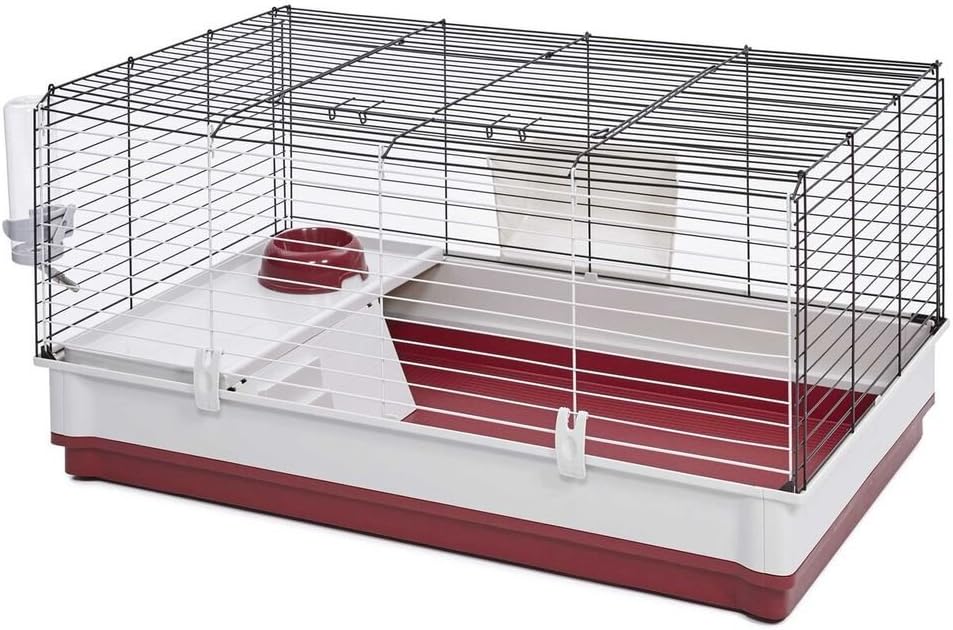
Rating: 7.2/10
Pros
- Solid floor included, avoiding wire-floor issues entirely
- Reasonably priced for the floor space it offers
Cons
- 47″ length is below what’s adequate as sole housing
Best for: budget-conscious indoor setups, used as a home base rather than the rabbit’s entire living space.
🏆 Editor’s Pick: DIY NIC/CUBES Enclosure
If you’re genuinely trying to hit the welfare standard rather than just improve on the pet-store default, build the cube enclosure. It’s the only option on this list that lets you actually reach — or exceed — the recommended 6x2x2 foot minimum without compromise, and it costs less than most of the pre-built alternatives here. The PawHut 79″ is the better choice if you want something pre-assembled and don’t mind spending more for the convenience, but if you’re willing to put in an afternoon with cube panels and zip ties, the DIY route gives your rabbit more space, more customization, and more long-term flexibility than anything you can buy off the shelf.
Outdoor Hutch Safety
If you’re housing a rabbit outdoors, predator access has to be taken seriously — a fox or raccoon can pull open a simple latch or tear through thin wire mesh without much effort.
- Wire mesh gauge: use 16-gauge hardware cloth, not chicken wire, anywhere a predator could reach. Chicken wire’s openings are large enough for predator paws to reach through; hardware cloth blocks that.
- Double-latch doors: add a carabiner clip or padlock to any door a predator might target. Single latches can be manipulated by raccoons.
- Solid floor or apron: predators dig under hutch walls, so use either a solid floor inside the run or a hardware cloth apron extending 12–18 inches outward from the hutch perimeter.
- Cover from aerial predators: the run roof needs to be solid or fully wire-covered — hawks and owls do take rabbits.
Indoor vs. Outdoor: The Welfare Debate
Here’s a place I’ll give you a direct opinion: indoor rabbits live longer, healthier lives on average than outdoor hutch rabbits, and the reasons stack up.
Outdoor rabbits deal with temperature extremes — rabbits are notably heat-sensitive above 80°F and struggle in high humidity — along with predator stress. Even a predator that can’t get in still triggers physiological stress in a prey animal: elevated cortisol, reduced food intake, GI disruption. Outdoor hutch rabbits also tend to be less socialized, with fewer environmental enrichment opportunities than indoor rabbits typically get.
Indoor rabbits, by contrast, can be free-roamed in a rabbit-proofed room, bond more closely with the people around them, and get noticed faster when something’s wrong — you’ll spot a rabbit that isn’t eating one morning, where an outdoor rabbit might go unobserved for much longer.
If outdoor housing is genuinely your situation — space constraints, a rental agreement, a family member’s allergies — a high-quality outdoor hutch with the security features above, plus daily human interaction, is workable. But indoor housing with free-roaming time is the objectively better setup for the rabbit.
Practical Buying Advice
Features that actually matter: total floor space (including any attached run), wire gauge and latch security for outdoor units, and whether a solid floor or resting surface is included.
Features that don’t matter as much: aesthetic details like decorative trim or color options — none of that affects the rabbit’s day-to-day welfare.
Common mistakes to avoid: buying based on the “single rabbit” label without checking actual dimensions, treating a hutch as the rabbit’s entire world instead of a home base, and skipping the solid-floor addition on any wire-bottomed enclosure.
Setup tip: whatever hutch or enclosure you choose, plan for a solid resting surface covering most of the wire flooring from day one — retrofitting it later is more work than building it in up front.
FAQ
What size rabbit hutch do I need for one rabbit? At absolute minimum: 6 feet x 2 feet x 2 feet tall for a medium rabbit (5–7 lbs), plus additional exercise space attached or through daily free-roaming. Most hutches sold as “single rabbit” housing run 24–36 inches — significantly too small. If you can’t provide at least the 6×2 foot minimum plus exercise space, a free-roaming setup like an X-pen or rabbit-proofed room is the better choice.
Can rabbits stay in a hutch all day? No — rabbits need at least 3–4 hours of exercise outside the hutch daily, ideally more. A rabbit confined to a standard commercial hutch around the clock tends to develop GI problems from inactivity along with significant behavioral issues. Think of the hutch as a sleeping and feeding base, not the entirety of the rabbit’s world.
How do I keep an outdoor rabbit hutch warm in winter? Rabbits handle temperatures well below freezing better than they handle heat, but drafts and damp conditions are genuinely dangerous. Weatherproof the hutch sides with clear polycarbonate panels or heavy canvas over wire sections, add extra bedding (straw insulates better than hay), and position the hutch out of prevailing wind. If temperatures consistently drop below 20°F, indoor housing is the safer call.
Is a wire floor bad for rabbits? Yes, consistently. Wire flooring causes sore hocks — pressure ulcers on the hind feet — in rabbits that spend extended time on it. Any wire-floor hutch needs solid resting areas (wooden boards, ceramic tiles, or mat inserts) covering most of the wire surface, so the rabbit always has solid footing available.
Can two rabbits share one hutch? Bonded pairs need 25–50% more space than the single-rabbit minimum. Unbonded rabbits should never be housed together — fights between unbonded rabbits can turn fatal. Bonding is a gradual process that takes weeks to months of introductions in neutral territory, and it’s worth doing under experienced guidance if you haven’t bonded rabbits before.
Choosing With Confidence
The honest takeaway here is that almost no hutch sold as “complete housing” at a pet store actually is complete housing. Decide first whether you’re building custom (cube enclosure or X-pen) or buying pre-built (PawHut or Aivituvin), then check the real dimensions against the 6x2x2 minimum rather than trusting the “single rabbit” label. Whatever you land on, budget for daily exercise time outside the hutch — that’s what turns an undersized cage into a genuinely workable home.