

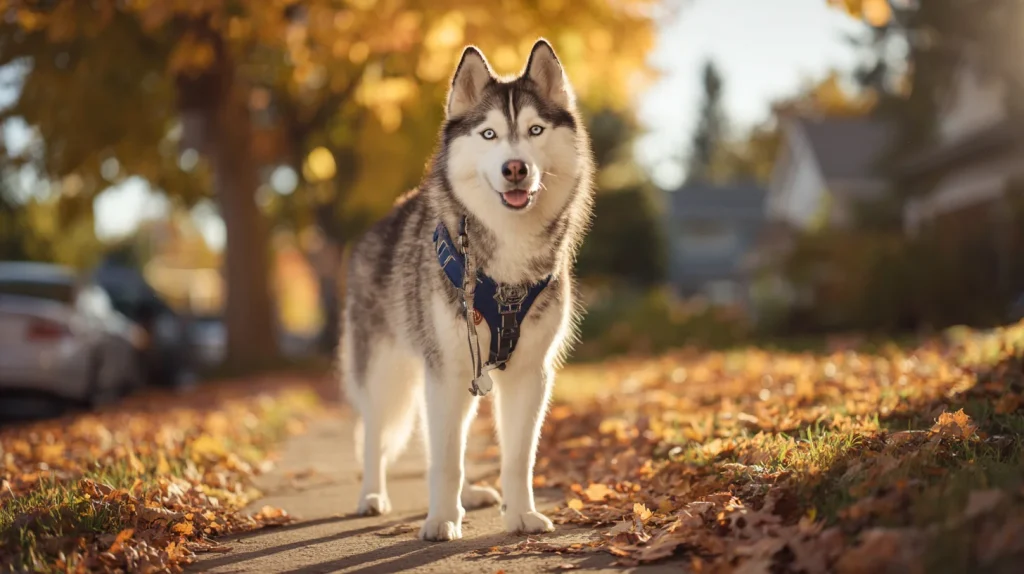
My neighbor’s husky, Koda, went through four harnesses in one year. Not because they broke. Because Koda would calmly back out of them the moment she spotted a squirrel. Her owner would be standing there, leash in hand, while Koda sprinted across the yard. Free. Unbothered. Victorious.
That’s what this post is really about. Not just finding the best no-pull dog harness — but finding one that actually stays on your dog’s body and does what it promises.
I’ve owned dogs for over 20 years — everything from a 12-pound beagle mix to a 90-pound lab. I’ve tested harnesses on my own dogs, borrowed my sister’s boxer for a few trial walks, and spent way too much money on gear that looked great in photos and fell apart in the rain. Here’s what I actually think about the nine brands I tried this year.
Why Most No-Pull Harnesses Fail (It’s Not the Brand)
Before the picks, let’s talk about something no one wants to say: a lot of harness problems aren’t about quality. They’re about fit.
A harness that doesn’t fit your dog’s body won’t stop pulling. It’ll just sit wrong, rub the wrong spots, and frustrate you both.
Dogs have wildly different builds. A French bulldog has a wide barrel chest and almost no neck. A greyhound is the opposite — narrow chest, long neck, tiny waist. A pitbull is pure muscle with thick shoulders that make standard sizing useless. A golden retriever is basically just fur with a dog inside, which means sizing by weight gets you nowhere.
Most harness guides pick one size category — “medium” or “large” — and call it done. But two dogs can both be “large” and need completely different harness shapes.
Here’s how no-pull harnesses actually work: the front clip, also called a chest ring, attaches your leash to the front of your dog’s chest instead of the back. When your dog lunges forward, the leash pulls their front body sideways. That sideways redirect breaks the momentum of pulling. It doesn’t hurt them. It just makes pulling less effective. Over time, most dogs figure this out and stop trying.
The catch? That front ring has to sit right in the center of the chest. If the harness is too big, the ring drifts. Too small, and it sits too high and puts pressure on the wrong spot. Either way, you lose the mechanical advantage that makes the harness work.
The 9 Harnesses I Tested — And What I Found
Blue-9 Balance Harness — Best Overall
This is the one I recommend to almost everyone. Six adjustment points. That’s more than any other harness on this list. You can adjust the neck, both sides of the body, and both sides of the chest independently. For dogs with unusual builds — deep-chested breeds, barrel-chested breeds, dogs with narrow waists — that matters.
My honest opinion: this harness is what all other harnesses should be measured against. It’s not the flashiest. It’s not the cheapest. But it fits more dogs correctly than anything else I’ve tried.
It works best for: reactive dogs, dogs that escape standard harnesses, and any breed where nothing ever seems to fit right. French bulldogs, greyhounds, whippets — these dogs often have owners who’ve given up on harnesses. The Balance Harness is usually the fix.
Price range: $45–$60
Ruffwear Front Range — Best for Active Dogs
This one gets recommended a lot, and for good reason. It’s built for hiking and trail running, but it works just as well for daily neighborhood walks. Four adjustment points. Breathable mesh panels. A back clip and a front clip. Durable aluminum hardware.
The padding on the chest is real padding, not a thin layer of foam that flattens after two weeks.
One thing to know: it runs slightly large. Size down if your dog is between sizes.
Best for: active dogs, owners who hike or run with their dogs, labs, golden retrievers, huskies.
Price range: $50–$65
PetSafe Easy Walk — Best for Mild Pullers
This is the harness I’d hand to someone who’s never used a front-clip harness before. It goes on in about 20 seconds. The martingale loop — a loop that tightens slightly when the dog pulls, then releases — sits at the chest and gives you good control without any complicated setup.
It’s not built for a 90-pound dog that drags you across parking lots. But for a medium-sized dog who pulls enthusiastically rather than desperately? It works well and costs around $25.
The downside: the plastic buckles wear faster than metal ones. After about a year of daily use, I noticed the chest buckle getting loose. Not broken, just less snug.
Best for: small-to-medium dogs, first-time harness users, mild-to-moderate pullers.
Rabbitgoo No-Pull Harness — Best Budget Pick
Over 100,000 Amazon reviews. That number tells you something. This harness is adjustable, has both front and back clips, and fits a surprisingly wide range of body types. It snaps on quickly. The mesh is breathable.
Is it as durable as the Ruffwear? No. But at around $20–$25, it doesn’t need to be. If you’ve never used a no-pull harness and you’re not sure your dog will tolerate it, this is a low-risk way to find out.
One note: the sizing runs inconsistent. I’d suggest measuring your dog’s chest girth before ordering and checking the brand’s actual size chart, not just small/medium/large.
Julius-K9 IDC Powerharness — Best for Strong Pullers
This is the harness for dogs that make other harnesses look like suggestions. The Julius-K9 uses a wide velcro chest strap plus buckles, which means it stays put on dogs with thick necks and deep chests. Pitbulls, boxers, rottweilers, American bullies — this is the harness I’d reach for.
It has a handle on the back, which is useful in situations where you need to physically guide or steady your dog. Near traffic. Around other dogs. At the vet.
The front clip on this one is positioned well for broad-chested dogs. On deep-chested breeds, some harnesses let the front ring drift too far down, which kills the redirect effect. This one holds its position.
It costs more — usually $60–$80 — but for a 70-pound dog that takes you for a walk instead of the other way around, it’s worth it.
Eagloo No-Pull Harness — Best for Nighttime Walkers
Reflective strips. Actual reflective strips, not the decorative kind that do nothing in headlights. If you walk your dog at dusk or dawn, this matters.
The padding is solid. The price is low (around $20–$30). Four adjustment points. It fits medium and large breeds well. The design is a bit plain, but plain means nothing if it works.
Where it falls short: very deep-chested dogs often find the chest strap gaps. If your dog is notably broad-shouldered, the Julius-K9 or the Blue-9 will serve you better.
2 Hounds Design Freedom Harness — Best Dual-Clip Setup
This harness lets you attach a leash to both the front and back rings at the same time using a double-ended leash. The idea is that you get more control without putting all the pressure on one point.
Trainers recommend this one a lot. It distributes leash pressure across two attachment points, which is gentler on dogs who are sensitive to front-clip redirection.
For large dogs especially, the dual attachment genuinely changes the feel of the walk. More control, but not harsher.
The velvet lining on the chest strap is a nice touch — especially for dogs who’ve had chafing issues with webbing-only harnesses.
Best for: large dogs, sensitive dogs, dogs in active training.
Price range: $40–$55.
Kurgo Tru-Fit Smart Harness — Best for Car Travel
Most harnesses are designed for walking. This one is also crash-tested for use in cars, which means the webbing is reinforced and the buckles are rated for impact.
If your dog rides in the car regularly and you clip them to a seat belt attachment, this is the one to get. For regular walks, it works fine too — but you’re paying for the safety rating, not any special no-pull performance.
The adjustment buckles are double-back style, similar to a climbing harness. They’re secure but slightly finicky until you get used to them.
Sporn Mesh No-Pull Harness — Best for Small Dogs
Different design from all the others on this list. Instead of a front-clip redirect, this one uses loops that run under the dog’s front legs. When the dog pulls, the loops apply gentle pressure behind the armpits. That pressure discourages forward lunging without redirecting them sideways.
It works well on small dogs because small dogs often don’t have the chest width for a traditional front clip to sit correctly. On a 9-pound dog, even a “small” front-clip harness can look like a shipping container.
The downside: it doesn’t work well for dogs who are already sensitive under the arms. And if the loops aren’t sized precisely, they can rub.
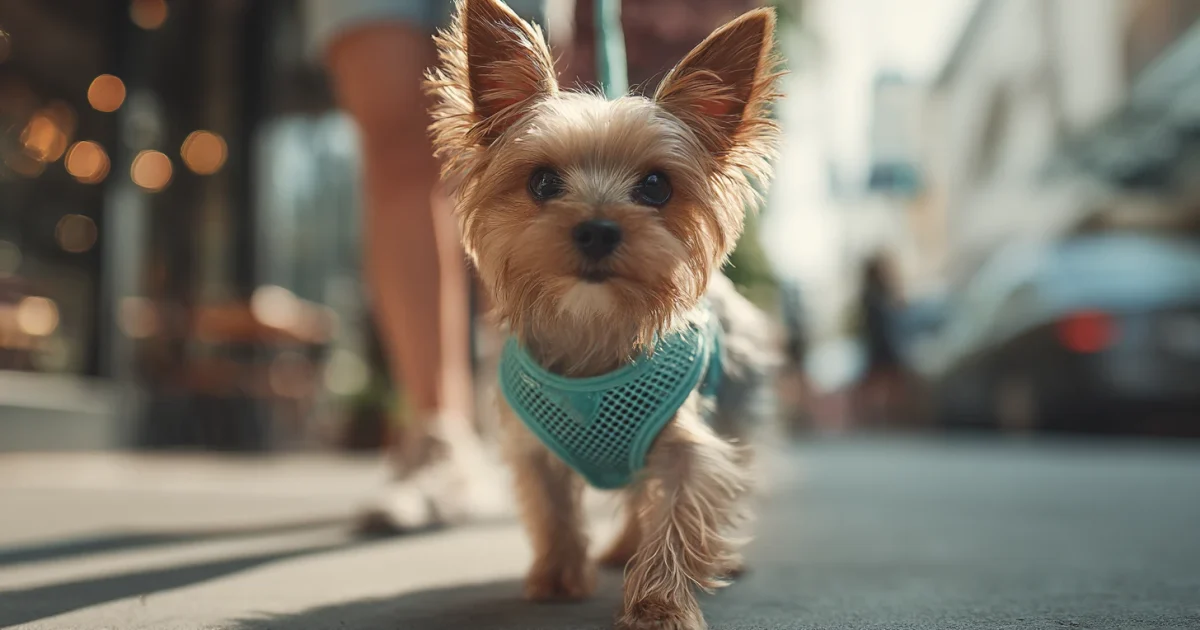
For most small breeds — malteses, yorkies, chihuahuas, small dachshunds — this is one of the better options.
Which Harness Works for Your Dog’s Body Type
Here’s the breakdown I wish existed before I wasted money on the wrong harnesses.
Barrel-chested breeds (boxers, English bulldogs, French bulldogs, pugs): You need adjustability at the chest, not just the neck. Blue-9 Balance Harness is the best fit here. Standard sizing almost never works for these dogs. Measure the widest point of the chest and match it to the brand’s actual measurement chart.
Muscular, thick-necked breeds (pitbulls, American bullies, rottweilers, Cane Corsos): You need metal hardware and wide straps. Julius-K9 or a heavy-duty dual-clip harness. Plastic buckles will eventually give. The front ring placement matters — it should sit center-chest, not high on the neck.
Narrow-bodied, deep-chested breeds (greyhounds, whippets, Dobermans): These dogs slip out of harnesses that would hold any other dog fine. The Blue-9’s six adjustment points are the only thing I’ve found that actually solves this.
Large, athletic breeds (huskies, German shepherds, golden retrievers, Labrador retrievers): Ruffwear Front Range or the 2 Hounds Freedom Harness. These dogs need durability as much as fit. For a husky in particular, make sure the chest ring sits correctly — huskies are notorious for backing out of harnesses that fit everywhere else but gap at the chest.
Small breeds under 20 pounds: Sporn Mesh or a correctly sized rabbitgoo. The key is chest girth, not body weight. A small dog with a wide chest needs a size up. A small dog with a narrow chest needs a size down or a different style entirely.
The One Thing That Makes or Breaks Any Harness
Fit. I keep coming back to it because it’s genuinely where most people go wrong.
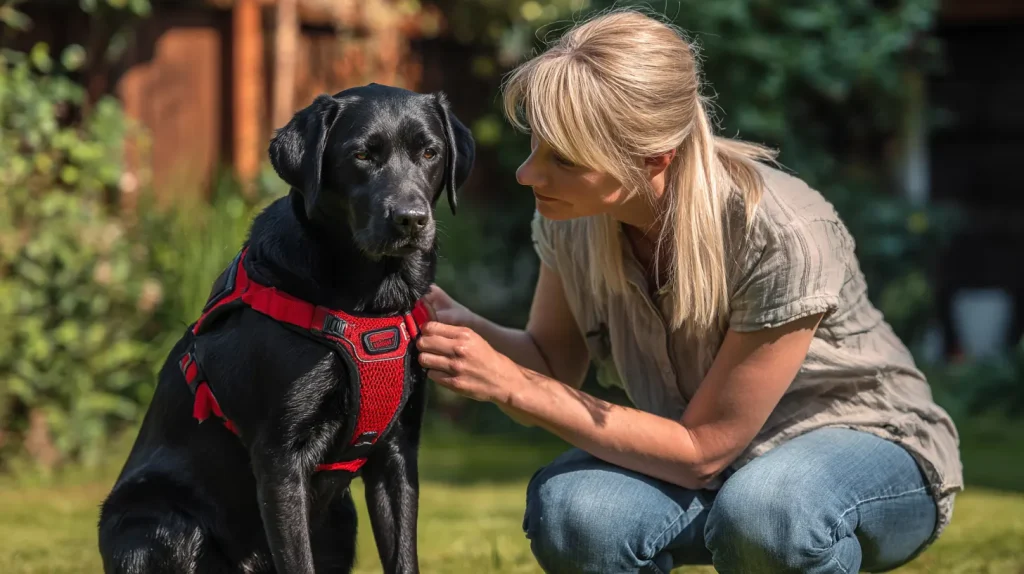
A harness that’s too loose will let your dog pull straight through it. A harness that’s too tight will rub, restrict movement, and make your dog hate wearing it.
The two-finger rule: slide two fingers under any strap. If you can’t fit two fingers, it’s too tight. If you can fit four fingers comfortably, it’s too loose.
Check the chest ring position specifically. It should sit flat in the center of the chest, not riding up near the collar, not drooping down toward the belly. If it’s drifting either direction, the harness isn’t the right shape for your dog’s body — not the wrong size, the wrong shape.
And one thing nobody talks about: check the fit after a few walks. Harnesses loosen as the webbing breaks in. What fits correctly on day one might need a half-size tightening by week two.
FAQ
My dog keeps backing out of every harness I try. What do I do? This usually means the harness is too loose at the chest or the wrong shape for your dog’s body. Greyhounds, whippets, and some huskies are expert escape artists because their neck is wider than their head. Look for a harness with a neck buckle that can close independently — the Blue-9 Balance Harness has this. It prevents the backward slip-out move entirely.
Can a no-pull harness hurt my dog’s shoulders? It can if the front clip pulls the harness sideways and it rubs against the shoulder joint during normal gait. This is rare with well-fitted harnesses, but it’s worth watching for. If your dog starts moving differently or seems reluctant to wear it, check where the straps cross the shoulder blades. They should sit behind them, not over them.
My dog still pulls even with a front-clip harness. Is it broken? Probably not. Front-clip harnesses redirect pulling — they don’t stop it immediately. Most dogs take 2–4 weeks of consistent walks to start adjusting. During that time, stop walking every time your dog pulls, let the leash go slack, then move again. The harness works with that training. It doesn’t replace it.
What’s the best no-pull dog harness for a golden retriever? Ruffwear Front Range is a strong match. Goldens tend to be medium-to-large, athletic, and enthusiastic on walks without being aggressive pullers. The mesh padding holds up to their fur, the four adjustment points get a good fit on most body types, and the durability suits daily use. If your golden is on the larger side or has a broad chest, size up and check the fit at the chest ring.
Does it matter if I use front clip or back clip? Yes. Back clip is fine for trained dogs or short, controlled walks. Front clip is what actually redirects pulling for dogs actively working on leash manners. Some harnesses offer both, which lets you switch depending on the situation. If your dog is a genuine puller, use the front clip consistently until pulling decreases, then you can switch to the back for casual walks.
The best no-pull dog harness isn’t always the most expensive one or the one with the most reviews. It’s the one that fits your specific dog’s body correctly and gets used every single day. That’s it. Get the fit right, stay consistent on walks, and most dogs will improve more than you’d expect.