
- Quick Answer: The Best Community Fish for Beginners
- What Makes a Good Community Fish?
- Best Schooling Fish: Harlequin Rasboras
- Best Color and Ease: Platies
- Best Bottom Fish: Corydoras Catfish
- Best Hardy Active Fish: Zebra Danios
- Best Nano School: Ember Tetras
- Best Centerpiece Fish: Honey Gourami
- Best Classic School: Neon Tetras
- Fish That Get Along, But With Conditions
- Simple Beginner Community Tank Recipes
- Common Community Tank Mistakes
- FAQ
- What are the best freshwater community fish for beginners?
- What fish get along in a beginner tank?
- Are guppies good community fish?
- Can bettas live in a community tank?
- How many species should a beginner community tank have?
A peaceful fish can still be a terrible tank mate.
That sounds backward until you watch a fast danio stress a slow betta, or a lonely tetra nip fins because it should have been kept in a group. The best community fish for beginners are not just gentle. They match the tank size, water needs, swim speed, and social rules of the other fish.
Quick Answer: The Best Community Fish for Beginners
For most beginner community tanks, start with harlequin rasboras, platies, corydoras catfish, zebra danios, ember tetras, or a honey gourami. Pick one schooling fish, one bottom group, and maybe one calm centerpiece fish. Do not buy one of every pretty fish at the store. That is how a community tank becomes a waiting room with gills.
| Product & Model | Best For | The Big Win | The Catch | Price Tier |
|---|---|---|---|---|
| Harlequin Rasbora | Peaceful schools | Hardy and calm | Needs a group | Budget |
| Platy | Color and ease | Very forgiving | Breeds quickly | Budget |
| Corydoras Catfish | Bottom activity | Peaceful cleanup behavior | Needs soft substrate | Mid-Range |
| Zebra Danio | Active tanks | Extremely hardy | Too fast for shy fish | Budget |
| Ember Tetra | Small planted tanks | Gentle nano school | Needs stable water | Budget |
| Honey Gourami | Centerpiece fish | Calm bright focal point | Avoid pushy tank mates | Mid-Range |
What Makes a Good Community Fish?
Community fish are fish that can live with other peaceful species in the same tank.
That is the simple version.
The real version has rules.
A good community fish should be peaceful, not too large, not predatory, and not a fin nipper. It should enjoy similar water temperature and pH as the rest of the tank. It should also fit the tank’s swimming space.
Size alone is not enough.
Some small fish are rude. Some large fish eat smaller fish because they fit in the mouth. Some active fish are not aggressive, but they stress slow fish by never stopping.
For a beginner community tank, I like fish that are:
- Hardy
- Peaceful
- Easy to feed
- Commonly available
- Comfortable in normal tap water
- Clear about group needs
I would rather have six happy rasboras than one rasbora, one tetra, one guppy, one cory, and one fish nobody can identify.
Best Schooling Fish: Harlequin Rasboras
Harlequin rasboras are one of the best beginner community fish because they are calm, hardy, and beautiful without being chaotic.
They have copper-orange bodies with a dark wedge near the tail. In a planted tank, they look better than the store tank suggests. That is true of many fish, but harlequins have a quiet glow that sneaks up on you.
Keep them in a group of at least six. Eight or more is better if the tank has room. They feel safer in numbers and show better behavior.
They work well with:
- Corydoras
- Honey gouramis
- Small peaceful tetras
- Platies
- Kuhli loaches in larger tanks
They are not fussy eaters. Flake, micro pellets, frozen daphnia, and brine shrimp all work.
The catch is that they still need a proper school. Buying two because “they are small” misses the point.
Best Color and Ease: Platies
Platies are cheerful beginner fish.
They come in bright colors, eat well, stay active, and handle a range of normal community tank conditions. They are one of the better fish for someone who wants movement and color without delicate care.
The catch is babies.
Platies are livebearers. Females give birth to free-swimming fry. If you keep males and females, the tank can fill up faster than planned. I have seen “just three platies” become a neighborhood.
You can keep a small group of females, but many females from stores may already be pregnant. Male-only groups can work if you have enough space and watch behavior.
Platies do best in tanks around 20 gallons or more, though people keep them smaller. I prefer giving them room because they are active and social.
They match well with corydoras, rasboras, some tetras, and other peaceful livebearers.
I would not mix them with fin nippers or large predators. That sounds obvious. Pet stores still make it happen.
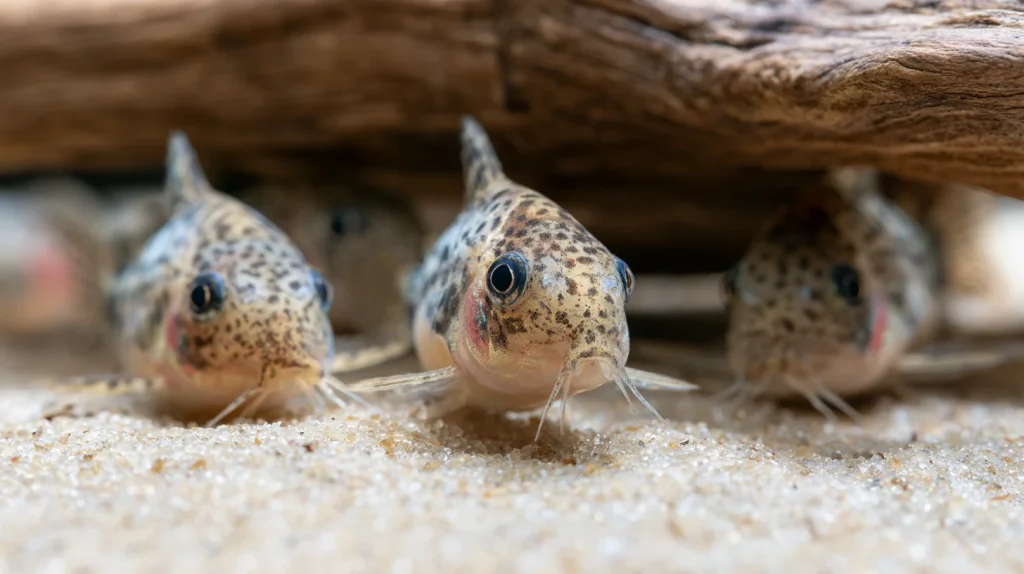
Best Bottom Fish: Corydoras Catfish
Corydoras catfish are peaceful bottom dwellers with tiny whiskered faces and serious snack energy.
They are often sold as “cleaner fish,” and I hate that label a little. They will eat leftover food, yes. But they need their own sinking food and a proper group. They are not tank janitors.
Most corydoras should be kept in groups of six or more. They do best on sand or smooth fine substrate because rough gravel can damage their barbels.
For beginners, good choices include:
- Bronze corydoras
- Albino corydoras
- Panda corydoras
- Pygmy corydoras for smaller peaceful tanks
They are gentle and fun to watch. They root around, shuffle together, and sometimes dart to the surface for a gulp of air.
The catch is feeding. Food must reach the bottom. If fast midwater fish steal everything, the corys can go hungry.
Best Hardy Active Fish: Zebra Danios
Zebra danios are hard to kill by normal beginner standards.
That is why they are recommended so often. They are active, hardy, and forgiving of small water changes in a way some delicate fish are not.
But they are fast.
Really fast.
In the wrong tank, they can make calmer fish nervous. I would not put zebra danios with a long-finned betta in a small tank. The danios may not be trying to bother him, but their constant motion can be too much.
Zebra danios are best in longer tanks with open swimming space. Keep a group of at least six. They look better and behave better that way.
They are great for:
- Active community tanks
- Beginner 20-gallon longs
- Cooler tropical setups
- Owners who want movement
They are less great for:
- Tiny tanks
- Slow fancy fish
- Shy centerpiece fish
This is the kind of nuance many beginner lists skip. Hardy does not mean suitable for every tank.
Best Nano School: Ember Tetras
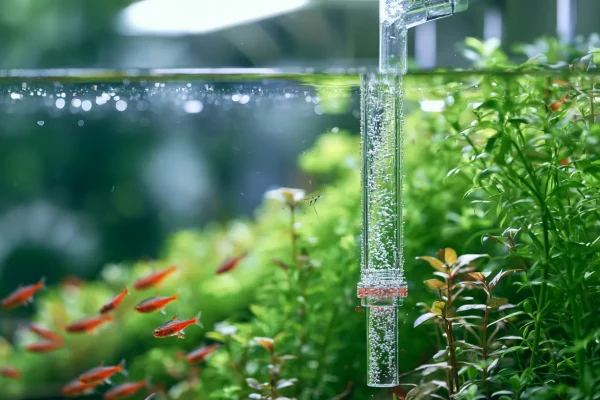
Ember tetras are gentle, small, and warm orange.
They are a great choice for planted community tanks, especially 10 to 20 gallons. They do best in groups and look best with green plants, dark substrate, and calm tank mates.
They are less bold than zebra danios and less flashy than neon tetras at first glance. But in a settled tank, they have a soft glow that makes the whole aquarium feel calmer.
Feed small foods. Their mouths are tiny.
They pair well with:
- Pygmy corydoras
- Honey gouramis
- Chili rasboras
- Small shrimp, sometimes
The “sometimes” matters. Many fish eat baby shrimp. Some adult shrimp are safe. Some are not. Fish do not read compatibility charts.
Best Centerpiece Fish: Honey Gourami
A honey gourami is a lovely centerpiece for a peaceful beginner tank.
It gives you one fish with presence without the attitude of some larger gouramis. Males can turn warm yellow or orange, and they move through the tank with a soft, floating style.
I prefer honey gouramis over dwarf gouramis for many beginners. Dwarf gouramis can be gorgeous, but health issues and territorial behavior make them a less sure bet.
Honey gouramis like planted tanks, gentle flow, and floating cover. They are labyrinth fish, so they breathe air at the surface too.
Good tank mates include rasboras, ember tetras, corydoras, and other calm fish.
Avoid pushy tank mates. Avoid fin nippers. Avoid strong current.
If you want a peaceful freshwater fish that feels like a pet, not just part of a school, this is a strong pick.
Best Classic School: Neon Tetras
Neon tetras are famous for a reason.
They are small, bright, and beautiful in a group. The blue stripe catches light in a way that still works even after you have seen it a hundred times.
But I do not think they are always the easiest first fish.
They can be sensitive in brand-new tanks. They need a group. They prefer stable water. They can also be small enough to tempt larger fish.
Use neon tetras in a mature, peaceful tank. Keep at least six, and more if the tank allows. A 20-gallon tank is nicer than a cramped 10.
If your tank is brand new and you are nervous, start with harlequin rasboras or platies instead.
That is not a knock on neons. It is just practical.
Fish That Get Along, But With Conditions
Some fish are called peaceful but need extra thought.
Guppies are colorful and easy, but males can pester females, and mixed groups breed fast. Keep male-only groups if you do not want fry.
Swordtails are hardy but active and larger than platies. Give them more room.
Mollies can be hardy, but they get larger and often prefer harder water. They are not my first pick for every beginner community tank.
Kuhli loaches are peaceful and fun, but they need groups, hiding spots, and a mature tank.
Angelfish can be peaceful, but they are predators. They may eat tiny fish as they grow. Do not put them with neon-sized snacks and act shocked later.
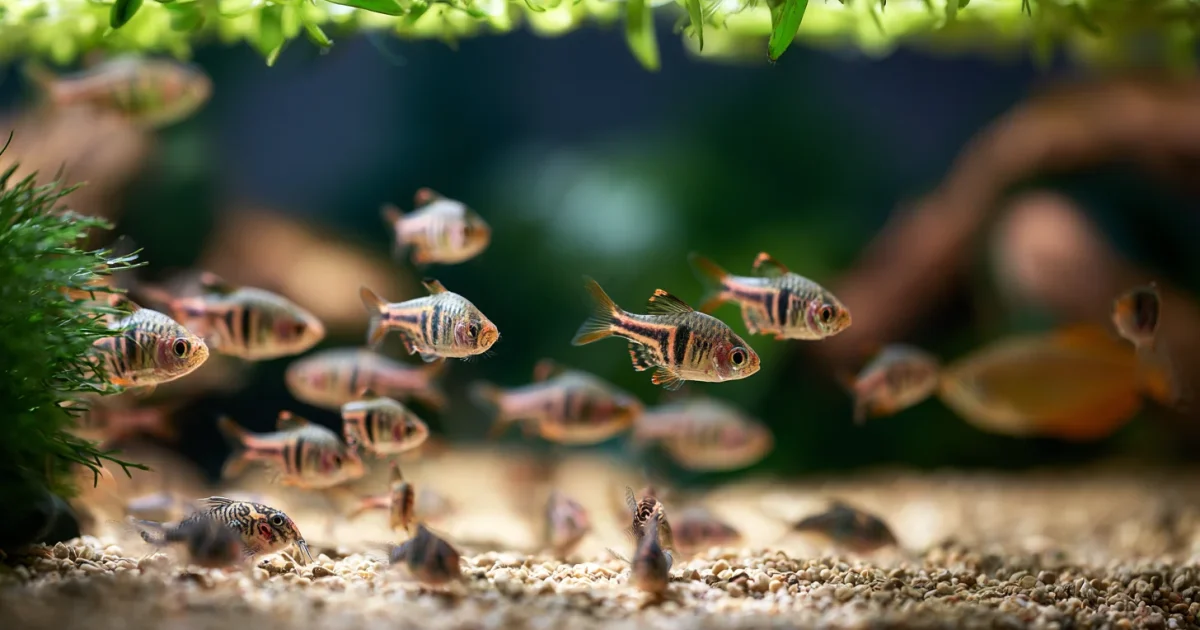
Tiger barbs are active and fun, but they can nip fins. They need groups and careful tank mates.
The word peaceful is only the first question.
The second question is: peaceful with whom?
Simple Beginner Community Tank Recipes
For a 10-gallon tank:
Choose one small school, like ember tetras or chili rasboras. Add shrimp or snails if the setup fits. Keep it simple.
For a 20-gallon tank:
Try eight harlequin rasboras, six corydoras, and one honey gourami. That is a calm, balanced community.
For a 20-gallon long:
Try six zebra danios, six corydoras, and a small group of platies if filtration is good. This is more active.
For a 29-gallon tank:
Try ten rasboras, six corys, one honey gourami, and a few platies. Keep up with water changes.
For a planted calm tank:
Try ember tetras, pygmy corydoras, and one honey gourami.
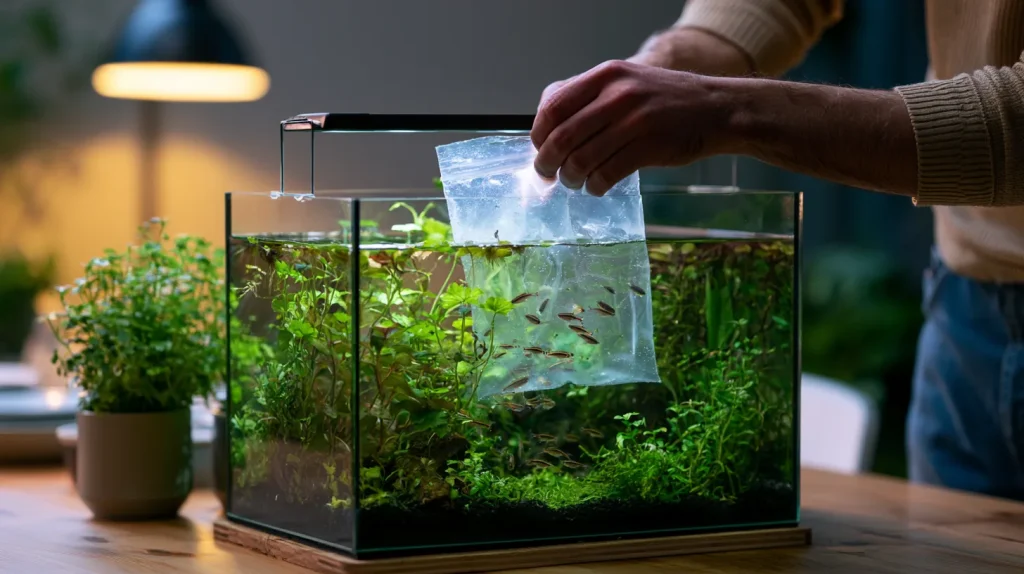
Do not add all fish at once. Add slowly. Test water. Let the filter catch up.
Common Community Tank Mistakes
The first mistake is buying one of each fish.
Schooling fish need groups. A mixed tank with one lonely tetra, one danio, and one rasbora is not a community. It is a confusion sampler.
The second mistake is mixing slow fish with fast fish in small tanks.
The third mistake is ignoring adult size. Baby fish are not final fish.
The fourth mistake is adding fish before the tank cycles. Cycling grows the bacteria that process waste. Skip it, and ammonia can hurt fish fast.
The fifth mistake is trusting “community fish” labels too much. Store labels are short. Fish behavior is not.
You have probably noticed that the peaceful tanks that look best are usually not crowded. There is a reason. Space lets fish act normal.
FAQ
What are the best freshwater community fish for beginners?
Harlequin rasboras, platies, corydoras, zebra danios, ember tetras, and honey gouramis are some of the best beginner community fish.
What fish get along in a beginner tank?
Small peaceful fish with similar temperature needs get along best. A good mix is rasboras, corydoras, and one honey gourami in a planted 20-gallon tank.
Are guppies good community fish?
Yes, but they breed fast. Male-only groups are easier if you do not want babies.
Can bettas live in a community tank?
Sometimes. It depends on the betta and tank mates. Avoid fin nippers and fast stressful fish. Always have a backup plan.
How many species should a beginner community tank have?
Two or three species is plenty for many beginner tanks. A school, a bottom group, and one centerpiece fish can feel complete.
The best beginner community tank is not the one with the most kinds of fish.
It is the one where every fish has a job, a group if needed, and enough room to act normal. Start simple. Pick peaceful fish that share the same water and pace. The tank will look calmer, and so will you.