
- Quick Answer: The Best Substrate for Most Planted Tanks
- What Substrate Does in a Planted Tank
- Best Aquasoil for Beginners: Fluval Stratum
- Best Easy Beginner Base: CaribSea Eco-Complete
- Best Long-Term Inert Substrate: Seachem Flourite Black
- Best Budget Substrate: Plain Gravel + Root Tabs
- Best for Corydoras: Pool Filter Sand
- Best Premium Aquascape Soil: ADA Amazonia
- Soil vs Gravel vs Sand
- Substrate Depth and Setup
- Common Substrate Mistakes
- FAQ
- What is the best substrate for planted tanks?
- Is aquarium soil better than gravel?
- Can aquarium plants grow in sand?
- Do I need to rinse planted tank substrate?
- Is Fluval Stratum good for beginners?
The wrong planted tank substrate can make a beautiful plan annoying before the first fish goes in.
Aquasoil can cloud the water. Sand can starve root feeders. Gravel can trap waste. The best substrate planted tank choice depends on your plants, fish, budget, and whether you want low-tech calm or a full aquascape project with trimming every weekend.
Quick Answer: The Best Substrate for Most Planted Tanks
For most beginner planted tanks, CaribSea Eco-Complete or plain gravel/sand with root tabs is the safest start. For serious plant growth and aquascapes, Fluval Stratum or another aquasoil gives plants more support but needs more care. For corydoras and natural fish behavior, use sand and feed rooted plants with root tabs.
| Product & Model | Best For | The Big Win | The Catch | Price Tier |
|---|---|---|---|---|
| Fluval Stratum | Shrimp and aquascapes | Plant-friendly buffering | Can cloud water | Mid-Range |
| CaribSea Eco-Complete | Beginner planted tanks | Easy mineral base | Nutrients still needed | Mid-Range |
| Seachem Flourite Black | Long-term tanks | Does not wear out | Dusty at setup | Mid-Range |
| Pool Filter Sand | Cory-friendly tanks | Cheap and smooth | Needs root tabs | Budget |
| ADA Amazonia | High-tech aquascapes | Rich plant growth | Ammonia at start | Premium |
| Plain Gravel + Root Tabs | Budget setups | Simple and flexible | Root feeding required | Budget |
What Substrate Does in a Planted Tank
Substrate is the material on the bottom of the aquarium.
It holds plants. It traps or releases nutrients. It affects how fish behave. It can change water chemistry. It also sets the whole look of the tank.
Some plants care a lot about substrate.
Amazon swords, crypts, vallisneria, dwarf sagittaria, and many carpeting plants feed heavily through roots. Anubias, Java fern, moss, hornwort, and floating plants care less because they feed more from the water column or do not root the same way.
That means substrate choice should start with the plants.
Then think about fish.
Corydoras like soft sand. Goldfish dig. Shrimp often like planted soils that support biofilm and stable soft-water conditions. Cichlids may rearrange everything because apparently your design needed feedback.
No substrate is perfect.
The trick is choosing the problem you can live with.
Best Aquasoil for Beginners: Fluval Stratum
Fluval Stratum is one of the most popular planted tank substrates for a reason.
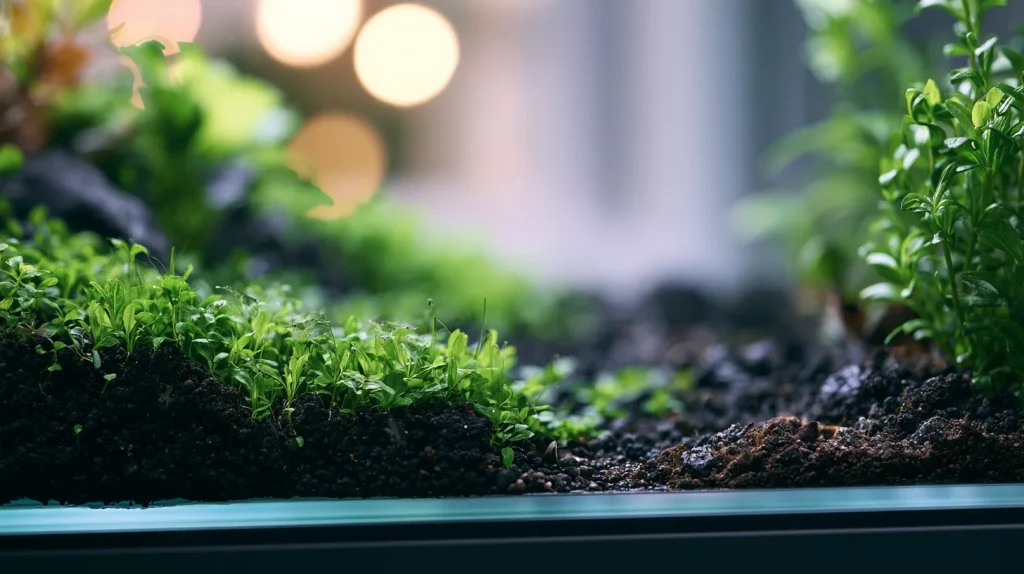
It is lightweight, dark, plant-friendly, and often used in shrimp tanks. It can support root growth and may help lower pH and hardness, which suits many planted setups and soft-water livestock.
The Fluval Stratum review I would give a friend is this: it can work beautifully, but it is not magic dirt.
It can cloud the water if you blast it with a hose or pour water too hard. It can break down over time. It can be annoying for plants that refuse to stay planted because the granules are light.
Use it for:
- Shrimp tanks
- Low-tech planted tanks
- Aquascapes
- Soft-water fish
- Rooted plants
Be careful with:
- Fish that dig
- Very high flow at setup
- Hard-water fish that need stable minerals
- Owners who hate cloudy setup water
Do not rinse it aggressively unless the label says to. Many active soils are meant to be handled gently.
Best Easy Beginner Base: CaribSea Eco-Complete
CaribSea Eco-Complete is a good planted tank substrate for people who want something easier than active aquasoil.
It is dark, heavy enough to plant in, and ready to use from the bag. It does not usually buffer water as strongly as aquasoil. That can be a plus if you want stable tap-water conditions.
The catch is nutrients.
Eco-Complete has minerals and a plant-friendly texture, but it is not an endless buffet. Heavy root feeders still benefit from root tabs. Water-column plants may need liquid fertilizer.
I like Eco-Complete for:
- Beginner planted tanks
- Community tanks
- Crypts and swords with root tabs
- Tanks where you do not want pH swings
- Owners who want a dark natural look
It is not cheap compared with plain sand. But it is simple, and simple has value.
Best Long-Term Inert Substrate: Seachem Flourite Black
Seachem Flourite Black is an inert planted substrate.
Inert means it does not come loaded like aquasoil and does not strongly buffer water. It is more like a long-term mineral-rich base that you feed as needed.
The big win is durability. It does not run out in the same way active soil does. You can keep it for years and use root tabs or fertilizers to support plants.
The catch is dust.
Flourite can be very dusty during setup. Rinse it well, or accept cloudy water for a while. I have rinsed planted substrates until I questioned my life choices. Flourite belongs in that memory box.
Use Flourite Black for:
- Long-term planted tanks
- Root-tab setups
- Dark natural aquariums
- Fish that prefer stable chemistry
- Owners who do not want aquasoil breakdown
It is not the fastest plant-growth cheat code. It is a steady base.
Best Budget Substrate: Plain Gravel + Root Tabs
Plain gravel can grow plants.
That statement annoys people who think every planted tank needs expensive aquasoil. It does not.
Use natural gravel with a plant-friendly size. Very large gravel can trap waste and make rooting hard. Very tiny compacted gravel can limit water movement around roots. A moderate grain size works better.
Add root tabs for root feeders.
Root tabs are the secret that makes budget planted tanks work. Put them near Amazon swords, crypts, vallisneria, and other rooted plants. Replace as directed.
Plain gravel is best for:
- Budget tanks
- Beginner community tanks
- Low-tech plants
- Owners who want stable water
- Tanks with easy maintenance
The catch is that gravel itself does not feed plants much. You must add nutrients.
Best for Corydoras: Pool Filter Sand
Sand is wonderful for bottom fish.
Corydoras sift it through their mouths and gills. Loaches dig in it. Many fish show more natural behavior on sand than chunky gravel.
Pool filter sand is cheap, smooth, and easy to find in many places. Aquarium sand works too. Avoid sharp blasting sand unless you know it is fish-safe.
The catch is plant feeding.
Sand is usually inert. Root feeders need root tabs. Heavy compacted sand can also create dead spots if the bed is too deep and never disturbed. Keep the depth reasonable, plant roots through it, or gently stir open areas during maintenance.
Use sand for:
- Corydoras tanks
- Natural aquascapes
- Loaches
- Low-tech plants with root tabs
- Fish that dig gently
I love sand for fish behavior. I do not love it when people expect it to feed an Amazon sword by itself.
Best Premium Aquascape Soil: ADA Amazonia
ADA Amazonia is famous for plant growth.
It is nutrient-rich and built for serious planted tanks. Aquascapers use it because it can push strong root growth and support demanding layouts.
The catch is startup behavior.
Rich aquasoils can release ammonia at the beginning. That means you do not add fish right away. You cycle the tank, test water, and do water changes.
This is not the best choice for someone who wants to set up a tank Saturday and add fish Sunday.
Use ADA Amazonia for:
- High-tech planted tanks
- Carpeting plants
- Dense aquascapes
- Experienced plant keepers
- Tanks cycled patiently before livestock
I would not recommend it as the easiest first substrate for a casual beginner.
It is powerful. Powerful things ask for attention.
Soil vs Gravel vs Sand
Aquasoil gives plants more early support and can buffer water. It is great for aquascapes, shrimp, and plant-heavy tanks. It can cloud, break down, and change water chemistry.
Gravel is simple and stable. It needs root tabs for root-feeding plants. It can trap waste if too coarse.
Sand looks natural and suits bottom fish. It needs root tabs and careful depth. It can compact if neglected.
Here is my quick view:
- Best plant growth: aquasoil
- Best beginner stability: gravel with root tabs
- Best bottom fish behavior: sand
- Best high-tech aquascape: premium aquasoil
- Best budget: plain gravel or pool filter sand
No shame in budget substrate.
Some of the nicest low-tech tanks I have seen were sand, root tabs, and patience.
Substrate Depth and Setup
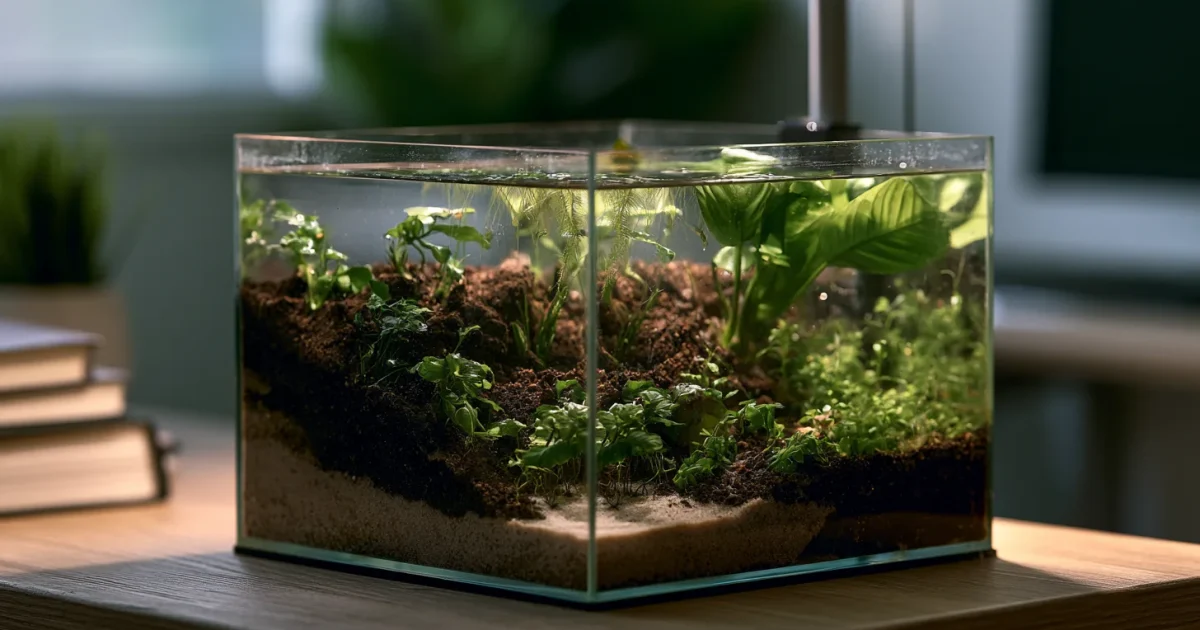
Most planted tanks do well with about 2 to 3 inches of substrate.
Deep-rooted plants may need more. Tiny foreground plants may need less. Sloped aquascapes can be deeper in the back and shallow in front.
Add water slowly. Pour onto a plate, plastic bag, or hardscape so you do not blast the substrate everywhere.
Do not bury rhizome plants like Anubias and Java fern. Attach them to rocks or wood.
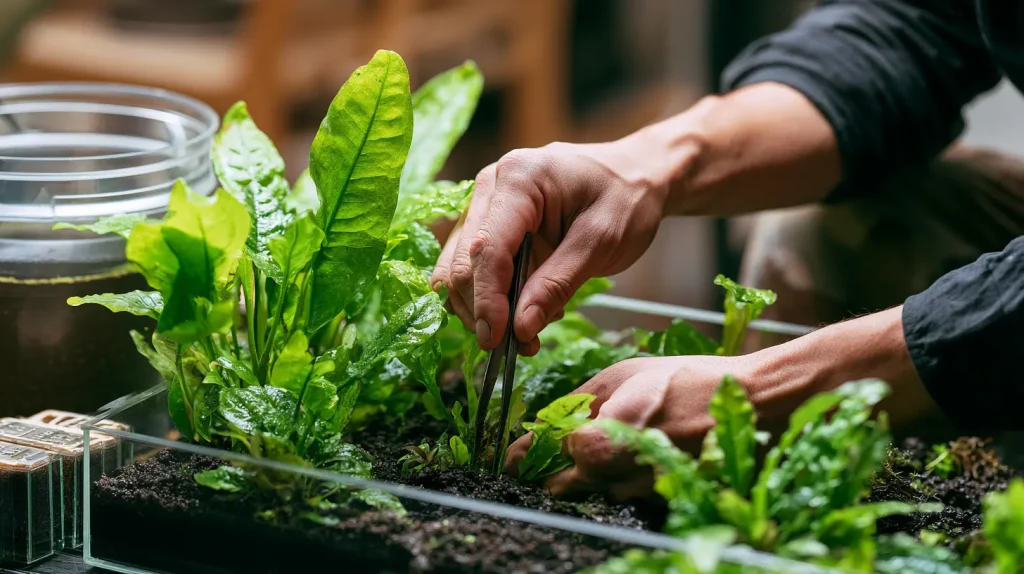
Plant root feeders into the substrate and add root tabs nearby if the substrate is inert.
If using aquasoil, cycle the tank and test before adding fish. Some soils affect ammonia, pH, KH, or hardness.
Common Substrate Mistakes
The first mistake is choosing substrate only by looks.
White sand looks clean for about ten minutes in some tanks.
The second mistake is using active soil with fish that need hard alkaline water.
The third mistake is skipping root tabs in inert substrate.
The fourth mistake is using gravel too large for small plants.
The fifth mistake is putting corydoras on sharp substrate.
The sixth mistake is mixing nutrient soil into the water column during setup and then wondering why the tank is cloudy.
You have probably noticed substrate is hard to change later. Choose slowly.
FAQ
What is the best substrate for planted tanks?
Fluval Stratum, CaribSea Eco-Complete, Seachem Flourite, ADA Amazonia, sand with root tabs, and gravel with root tabs can all work. The best choice depends on plants and fish.
Is aquarium soil better than gravel?
Aquarium soil often grows plants faster, but gravel is more stable and cheaper. Gravel works well with root tabs.
Can aquarium plants grow in sand?
Yes. Many plants grow in sand if you add root tabs for root feeders and keep the sand from compacting too much.
Do I need to rinse planted tank substrate?
It depends on the product. Inert substrates often need rinsing. Active aquasoils usually should not be rinsed aggressively.
Is Fluval Stratum good for beginners?
Yes, if you understand it can cloud water, buffer pH, and break down over time. It is best for shrimp and planted tanks, not every fish setup.
The best planted tank substrate is the one that supports your plants without fighting your fish.
Use aquasoil when plant growth and soft-water conditions matter. Use sand when bottom fish matter. Use gravel and root tabs when budget and stability matter. The tank does not care what substrate won an online argument. It cares whether roots can grow and fish can live well above them.