
- Best Aquarium Light LED Setup for Most Tanks
- Why LED Aquarium Lights Are Usually the Right Pick
- Best Overall: Hygger 24/7 LED
- Best Budget Planted Light: NICREW C10
- Best Premium Planted Tank Light: Fluval Plant 3.0
- Best for Color and Aquascaping: Chihiros WRGB II Slim
- Best Fish-Only Light: Current USA Satellite Plus Pro
- Best Nano Tank Light: Aqueon Clip-On LED
- How to Pick the Best LED Fish Tank Light
- For Fish-Only Freshwater Tanks
- For Low-Tech Planted Tanks
- For High-Tech Planted Tanks
- For Reef and Saltwater Tanks
- The Light Schedule I Trust Most
- Brightness, Spectrum, and PAR Without the Headache
- Common Mistakes That Make Good Lights Look Bad
- My Picks by Tank Type
- FAQ
- What is the best aquarium light LED for beginners?
- Do aquarium fish need LED lights at night?
- How long should I leave my LED aquarium light on?
- Can too much LED light hurt aquarium plants?
- Is a planted tank light review still useful if I only have fake plants?
The wrong aquarium light can make a clean tank look sick by dinner.
I learned that with a 20-gallon planted tank that went from “soft green jungle” to “why is there fuzz on the driftwood?” in about nine days. The light looked bright. The fish looked great. The plants did not agree. That is the trick with the best aquarium light led choice: your eyes are only one vote.
Best Aquarium Light LED Setup for Most Tanks
For most freshwater tanks, I would start with the Hygger 24/7 LED or NICREW C10 before spending more. They give you timer control, dimming, and enough range for easy plants without turning the tank into a tiny sunburn machine. For heavy planted tanks, I still like the Fluval Plant 3.0 because the control is better and the spread feels more even.
For fish-only tanks, buy less light than you think.
That sounds wrong. It is not. Fish need a day and night rhythm. They do not need a stadium.
| Product & Model | Best For | The Big Win | The Catch | Price Tier |
|---|---|---|---|---|
| Hygger 24/7 LED | Easy planted tanks | Simple sunrise cycle | Timer can annoy | Mid-Range |
| NICREW C10 | Budget planted tanks | Strong value | App-free limits | Budget |
| Fluval Plant 3.0 | Dense plant growth | Deep app control | Costs more | Premium |
| Chihiros WRGB II Slim | Red plants | Rich color control | Too much for beginners | Premium |
| Aqueon Clip-On LED | Nano tanks | Tiny tank fit | Limited spread | Budget |
| Current USA Satellite Plus Pro | Community tanks | Nice color modes | Not high-tech planted | Mid-Range |
Why LED Aquarium Lights Are Usually the Right Pick
LEDs won because they solved the three old aquarium light problems at once.
They run cooler. They use less power. They give better control.
Old fluorescent tubes still work. I have used them. Some looked lovely. But they fade, they get warm, and they make timing clunky unless you add a plug-in timer. Metal halide lights can grow demanding corals, but they throw heat like a desk lamp from another century.
For a home freshwater tank, LED is the sensible path.
That does not mean every LED is good.
A cheap white strip can make a tank look bright while giving plants a poor mix of light. A fancy app light can give you twelve sliders you will touch once, then forget. Some lights are too narrow, so the center of the tank glows while the front plants sit in shade.
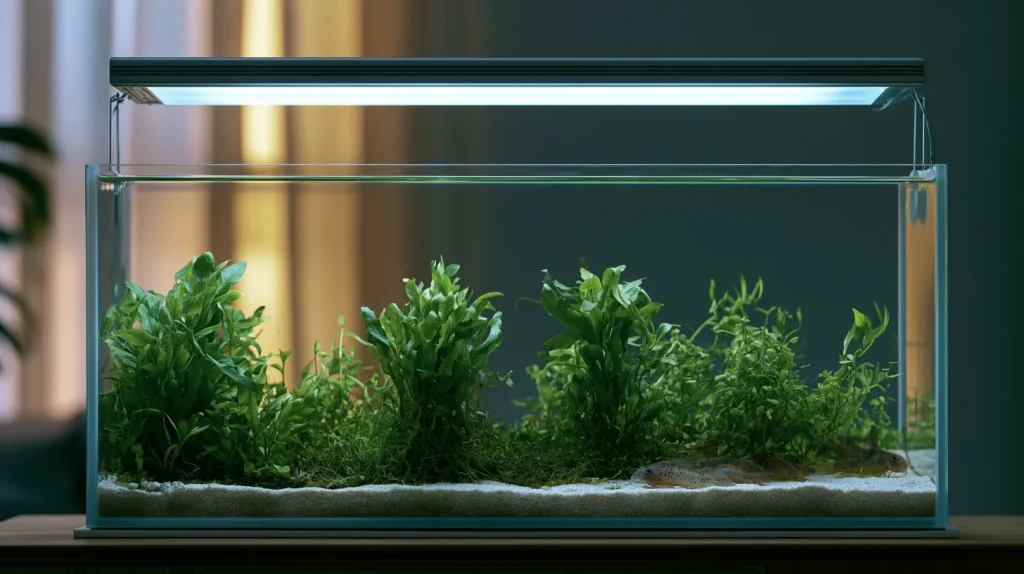
The aquarium lighting guide advice that gets repeated a lot is “more light grows better plants.”
I disagree with that, at least for normal people with normal tanks.
More light grows faster problems unless nutrients, plant mass, and carbon dioxide keep up. If your tank has slow plants like anubias, Java fern, cryptocoryne, and moss, blasting them for ten hours can feed algae before it helps leaves.
Start lower.
You can raise light later. Scraping algae off every leaf is harder.
Best Overall: Hygger 24/7 LED
The Hygger 24/7 LED is the light I would hand to a friend who has a normal freshwater tank and wants live plants without studying light charts at midnight.
It has a built-in day cycle. That matters more than people think. Fish behave better when the room does not go from pitch dark to full noon in one hard click. My bettas, especially, have always looked less jumpy with a slow ramp.
The light is bright enough for easy and medium plants in many tanks. Think Java fern, Amazon sword, water sprite, anubias, crypts, bacopa, pearl weed, and floating plants if you keep them trimmed.
The catch is control.
The timer features are useful, but they can feel odd if you want a tight custom schedule. Some models reset in ways that make you stare at the instructions longer than you want. I do not love that. A light should not feel like setting a microwave clock after a power cut.
Still, for the price, it gets a lot right:
- Good color for fish and green plants
- Built-in timer modes
- Adjustable brackets
- Enough strength for many low-tech tanks
- Gentle ramping for shy fish
I would not use it as my first pick for a deep high-tech planted tank. I also would not use it for coral. But for a 10, 20, 29, or 40-gallon freshwater tank, it is a strong fit.
Best Budget Planted Light: NICREW C10
NICREW has become the default answer for people who want a better light without spending Fluval money.
The C10 is a good example. It is not the fanciest light on the shelf. That is part of the charm. You get useful brightness, decent color, and timer control at a price that does not make the hobby feel rude.
It works best over tanks with easy plants and a sane photo period. That means six to eight hours a day for many setups. Not twelve. Not “I leave it on while I am awake.” I did that years ago. My reward was green dust algae and regret.
For a planted tank light review, the C10 earns points because it does the plain job well. It gives plants enough light to grow, lets fish look like themselves, and does not demand a phone app.
The tradeoff is polish.
The spread may not feel as smooth as a pricier fixture. The color can be less rich than Fluval or Chihiros. Controls are better than bare-bones lights, but they still feel like budget controls.
That is fair.
I would buy the NICREW C10 for:
- A first planted tank
- A 10 to 40-gallon community tank
- Easy plants
- A backup light
- A budget aquascape where plants matter more than tech
I would skip it for red stem plants that need strong light. I would also skip it if you want deep color tuning.
Best Premium Planted Tank Light: Fluval Plant 3.0
The Fluval Plant 3.0 is the light I like when plants are the point of the tank.
It gives you strong output, full spectrum control, and an app that can fine-tune each color channel. That sounds fussy. Sometimes it is. But for planted tanks, it can help.
Red plants are a good test. Many red aquarium plants do not stay red just because the label says they will. They need stronger light, steady nutrients, and often added CO2. The Fluval Plant 3.0 gives you enough control to push a tank in that direction without swapping lights later.
Here is my mild complaint: the app control can make beginners overthink.
You can spend an hour moving sliders and still have no clue if your plants are happier. I have done that. It feels productive. It may be nothing.
For most people, the better use is simple:
Set a gentle sunrise.
Run a bright middle period.
Dim it down before night.
Then leave it alone for two weeks and watch the plants.
The Fluval Plant 3.0 is best for aquarists who want room to grow. If you think you may add CO2 later, try carpeting plants, or keep demanding stems, it makes sense. If your tank has plastic plants and a few guppies, it is overkill.
Best for Color and Aquascaping: Chihiros WRGB II Slim
Chihiros lights make plants look rich. Reds look red. Greens look clean. Fish colors pop without that weird blue-white glare some cheap LEDs give.
The WRGB II Slim is not the easiest first light. It is strong. It can grow algae with great passion if you give it too many hours over a new tank. But in the right setup, it looks gorgeous.
This is the kind of light I would use over a shallow rimless tank with active plant growth, CO2, and regular trimming. It is less “pet store starter kit” and more “I have opinions about stem plants now.”
Which is frustrating. But also kind of makes sense.
Once your plants become the main hobby, color control starts to matter. You notice the green cast on one fixture. You notice shadows. You notice whether red plants look warm or dull.
I am not 100% sure every casual keeper needs to pay for that. Most do not. But if you are building an aquascape and want it to look like the tank in your head, Chihiros deserves a look.
Best Fish-Only Light: Current USA Satellite Plus Pro
Fish-only tanks need a different kind of choice.
You are not trying to push photosynthesis. You are trying to see your fish, keep a steady day cycle, and avoid stress. The Current USA Satellite Plus Pro is nice for this because it gives pleasing color modes without forcing a planted-tank mindset.
For fish-only tanks, I care about:
- Dimming
- Timer control
- A warm daytime color
- No harsh startup
- Good spread from front to back
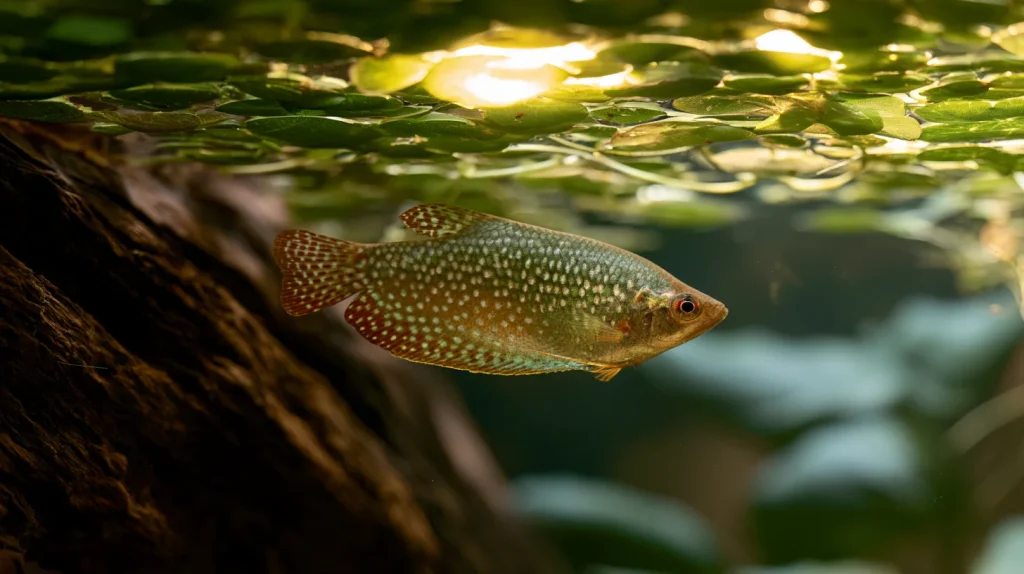
You can keep many fish under simple lights. Guppies, mollies, cory cats, danios, tetras, gouramis, and goldfish do not need special plant-level lighting. Some fish even look better with shade. A tank with floating plants, driftwood, and a dimmer LED often feels calmer than a bright open box.
The common advice says aquarium fish need bright light to show good color.
Sometimes, sure. But stressed fish do not show their best color either. I would rather have a slightly dimmer tank with confident fish than a bright tank where everyone hides behind the filter.
[PHOTO: realistic photography, adult pearl gourami hovering under floating plants in a softly lit community aquarium, warm LED light above water surface, dark driftwood and shaded corner, soft indoor lighting, shot on Canon EOS R5 85mm lens, shallow depth of field, calm curious mood –ar 16:9 –style raw –v 6.1 | Alt text: peaceful community fish under soft aquarium lighting]
Best Nano Tank Light: Aqueon Clip-On LED
Nano tanks are where people buy too much light by mistake.
A five-gallon tank is shallow. Light does not have far to travel. A strong fixture over a small cube can make algae show up fast, especially if the tank has slow plants and one betta.
The Aqueon Clip-On LED works because it fits the job. It is small, easy to mount, and enough for simple nano plants. It will not turn a tiny tank into a high-light Dutch aquascape. That is fine.
Use it for:
- Betta tanks
- Shrimp tanks
- Desktop nano tanks
- Java fern and anubias
- Moss and floating plants
Watch the mounting point. Clip-on lights can cast shadows if the tank is wide or packed with hardscape. You may need to place taller plants closer to the light and shade-loving plants farther away.
Also, keep a lid gap in mind. Some clip lights fight with glass lids, filters, and rim shapes. Measure first. Future you will be less annoyed.
How to Pick the Best LED Fish Tank Light
Ignore the packaging for a minute.
Start with your tank.
A shallow 10-gallon with guppies is not the same as a 24-inch-deep planted tank. A blackwater tetra tank is not the same as a red plant aquascape. A goldfish tank with no plants is not asking the same question as a carpeted CO2 setup.
Here is the simple way I sort it.
For Fish-Only Freshwater Tanks
Choose a light with dimming and a timer. You do not need high output. You need a steady rhythm and a look you enjoy.
Run it six to eight hours at first. If algae appears, lower the time or brightness. If fish hide when the light comes on, use a ramping mode or add floating plants.
For Low-Tech Planted Tanks
Low-tech means no added CO2 gas. These tanks can be lovely, but they do not want wild light.
Pick a full spectrum LED with moderate power. Hygger, NICREW, Fluval Aquasky, and similar lights can work well here. Start at six hours. Move to seven or eight only if plants look hungry for more.
Signs the light may be too low:
- Leggy stem plants
- Pale new growth
- Plants leaning hard toward the light
- Slow plants doing almost nothing for months
Signs the light may be too high:
- Hair algae
- Green dust on glass every few days
- Leaves covered in fuzz
- Floating plants multiplying too fast
For High-Tech Planted Tanks
High-tech means added CO2, richer nutrients, and faster plant growth. Now stronger lights make sense.
This is where Fluval Plant 3.0, Chihiros, Twinstar, and other stronger fixtures shine. You can run a bright middle window and still ramp up and down. You can tune color so the tank looks natural instead of harsh.
Do not add a strong light and wait to add CO2 “later” if you already plan a demanding layout. That gap often becomes algae week.
For Reef and Saltwater Tanks
Be careful here.
Fish-only saltwater tanks can use simple lighting. Coral tanks cannot. Corals depend on light in a different way, and many need measured output, usually talked about as PAR. PAR means photosynthetic active radiation, or the light range used by photosynthetic life.
For reef tanks, look at reef-rated lights from brands like AI, Ecotech, Kessil, Fluval Marine, and NICREW HyperReef. Match the light to coral type and tank depth.
This article is mainly a freshwater and fish-only buying guide, so I will not pretend reef lighting is simple. It is not.
The Light Schedule I Trust Most
Start boring.
Six hours a day.
That is the whole trick for new tanks. Six hours gives plants a chance without feeding algae all day. After three weeks, add 30 minutes if plants look good and algae stays calm.
For many tanks, the sweet spot lands around seven or eight hours. Some heavily planted tanks can run longer. Some tanks do better with less.
I know a lot of guides say eight to twelve hours. That can work. It can also make a new keeper think ten hours is the starting line.
It is not.
My favorite schedule for planted tanks:
- 1 hour gentle ramp
- 5 to 6 hours brighter light
- 1 hour gentle fade
For fish-only tanks, use a softer peak. Your fish do not need midday desert vibes.
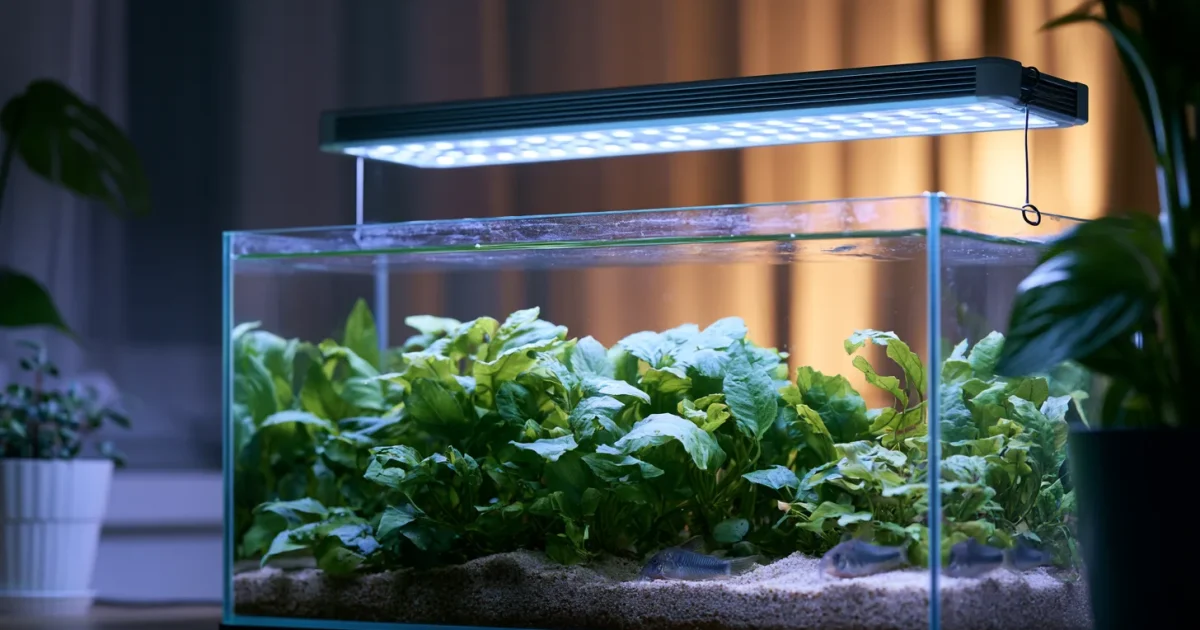
[PHOTO: realistic photography, close view of a timer-controlled LED aquarium light glowing softly above a glass tank with anubias and cory catfish near sand substrate, evening apartment setting, golden hour light through curtains, shot on Canon EOS R5 85mm lens, shallow depth of field, slightly tired but peaceful mood –ar 16:9 –style raw –v 6.1 | Alt text: LED aquarium light on a timer above a calm planted tank]
Brightness, Spectrum, and PAR Without the Headache
Aquarium light terms get annoying fast.
Brightness is how strong the light looks to us. Spectrum is the mix of colors in the light. PAR is the amount of usable light plants or corals receive.
For freshwater plants, you do not need to chase lab numbers for every normal tank. You need a light made for planted aquariums, set to a sane schedule, over plants that match your gear.
White light grows plants. Red and blue light help too. Full spectrum lights mix these in a way that looks decent to people and useful to plants.
Kelvin is the color temperature. Lower numbers look warmer and more yellow. Higher numbers look cooler and more blue. Many freshwater tanks look good around daylight tones, often near 6500K, though adjustable LEDs give you room to taste.
Here is where I get opinionated again: do not buy a light only because it has the highest wattage.
LED wattage is not a clean measure of plant growth. Design, lens spread, distance from water, tank depth, and spectrum all matter. A well-made 24-watt light can beat a sloppy 40-watt fixture in real use.
You have probably noticed this with house lamps too. Some bright bulbs feel harsh but still leave corners gloomy. Aquariums do the same thing.
Common Mistakes That Make Good Lights Look Bad
Good lights get blamed for bad settings all the time.
The first mistake is running the light too long. Ten hours over a new tank is asking a lot. Plants need time to settle. Algae needs about four seconds to accept the invitation.
The second mistake is using strong light with too few plants. A tank with one Java fern and three rocks does not need high output. Add plant mass first, then raise light later.
The third mistake is ignoring room light. A tank next to a sunny window gets light before your LED even turns on. The timer does not know that. Algae does.
The fourth mistake is changing settings every day. Plants respond slowly. If you adjust brightness Monday, color Tuesday, and duration Wednesday, you will not know what worked.
Pick a setting. Wait. Watch.
The fifth mistake is copying someone with a different tank. Their 40 breeder is shallow. Your 55-gallon is tall. Their tank has CO2. Yours does not. Their plants are growing fast. Yours were shipped in a bag last week and are still sulking.
That last part is real. New plants can melt before they grow back. Light is only one piece.
My Picks by Tank Type
For a simple betta tank, I would choose a small clip-on or a dimmable NICREW. Keep part of the tank shaded. Bettas like cover. A bright open tank can make them pace.
For a 20-gallon community tank with easy plants, I would pick Hygger 24/7 or NICREW C10. Both make sense. Choose Hygger if you want the built-in day cycle. Choose NICREW if price matters more.
For a 40-gallon breeder planted tank, I would look at Fluval Plant 3.0 or Chihiros. The wide footprint needs good spread. A cheap narrow strip may leave the front carpet dim.
For a goldfish tank, I would focus on viewing and algae control. Goldfish are messy. Mess plus long light hours can get ugly. Use a timer, keep the light moderate, and pick tough plants if you use plants at all.
For a future reef tank, do not buy a freshwater plant light and hope it works. Buy for reef needs from the start, or plan to replace it.
FAQ
What is the best aquarium light LED for beginners?
The Hygger 24/7 LED is my beginner pick for most freshwater tanks. The NICREW C10 is close if you want to spend less. Both give you control without making the whole tank feel like a tech project.
Do aquarium fish need LED lights at night?
No. Fish need darkness. Blue night modes look neat, but leaving them on all night can mess with rest. If you use moonlight, keep it dim and short.
How long should I leave my LED aquarium light on?
Start with six hours a day for a new tank. Move toward seven or eight hours if plants grow well and algae stays under control. Fish-only tanks can stay on a similar schedule.
Can too much LED light hurt aquarium plants?
Too much light can cause algae and stress weak plants. It does not always “burn” plants like sun on skin, but it can push the tank out of balance.
Is a planted tank light review still useful if I only have fake plants?
Yes, but read it differently. You care about dimming, color, spread, and timer control. You do not need strong plant-growing power for fake plants.
The best LED fish tank light is not the brightest one you can afford. It is the one your tank can actually use.
For most people, that means a dimmable full spectrum LED, a timer, and enough patience to leave the settings alone. Your fish will look better. Your plants will give you clearer feedback. And your glass scraper may finally get a little rest.