
- Why Your Dog Is Acting Out (And What It Has to Do With the Best Dog Puzzle Toys)
- The Four Types of Dog Puzzle Toys (And When to Use Each)
- Best Dog Puzzle Toys for Mental Stimulation: Our Actual Picks
- Nina Ottosson Dog Brick (Level 2)
- KONG Classic (Frozen)
- Outward Hound Dog Casino (Level 3)
- Snuffle Mat (Any Brand)
- Bob-A-Lot (Interactive Wobbler)
- What Nobody Tells You About Difficulty Levels
- Best Dog Puzzle Toys for Aggressive Chewers
- A Note on Rotating Toys
- FAQ
Gap found: No top-ranking post explains how to match a puzzle toy to the specific reason your dog is acting out — they all list toys without addressing whether the dog is bored, anxious, under-exercised, or simply needs a job.
Unique angle: This post connects the type of destructive behavior to the right category of puzzle toy, so readers walk away with a specific pick — not just a list.
Why top results are beatable: Most posts are generic ranked lists that treat all dogs the same. They skip the matching process entirely and bury the most useful insight in a paragraph readers won’t reach. None of them admit that some dogs solve level-1 puzzles in under 30 seconds and get bored faster with a toy than without one.
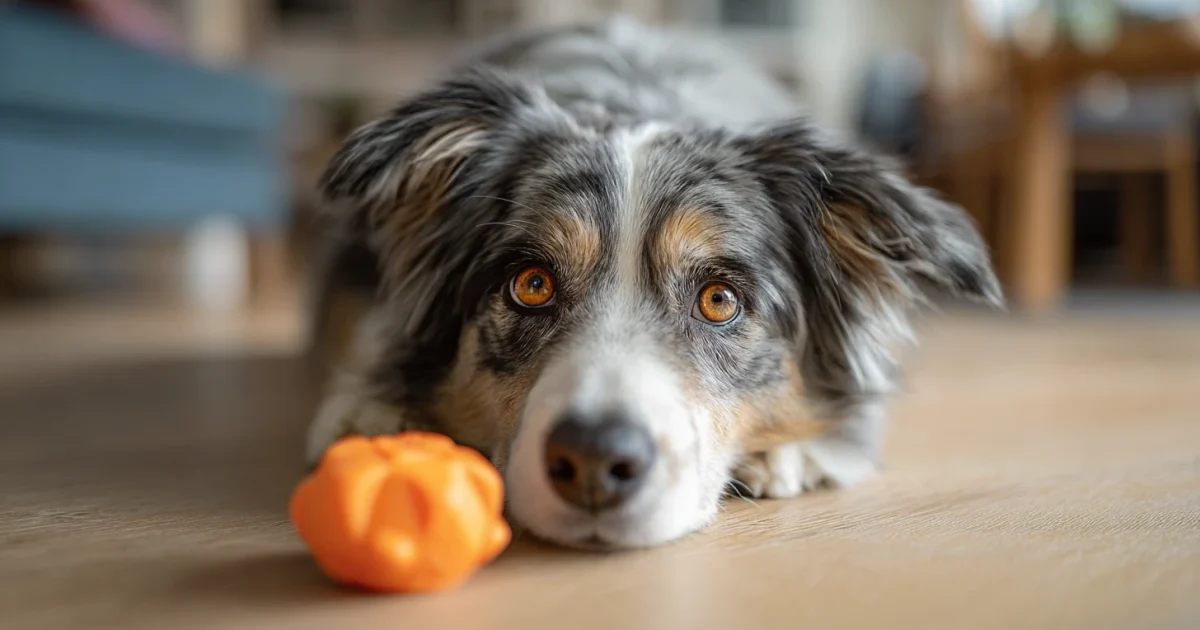
My neighbor came home to a destroyed couch. Not chewed at one corner — fully gutted. The cushions were spread across three rooms. Her dog, a two-year-old Australian Shepherd named Milo, had been alone for six hours.
She bought a puzzle toy the next day. It lasted four minutes. Milo cracked it open, ate the treats, then went back to staring at the wall.
She’d bought the wrong toy for the wrong problem. That’s what nobody tells you.
The best dog puzzle toys aren’t about keeping your dog busy. They’re about giving your dog something that matches why they’re going off the rails in the first place. Pick the right one and you can genuinely change your dog’s behavior. Pick the wrong one and you’ve wasted $25 and your dog still ate your baseboard.
Why Your Dog Is Acting Out (And What It Has to Do With the Best Dog Puzzle Toys)
Chewing, barking, digging, knocking things over — these aren’t bad behavior. They’re communication. Your dog is telling you something isn’t being met.
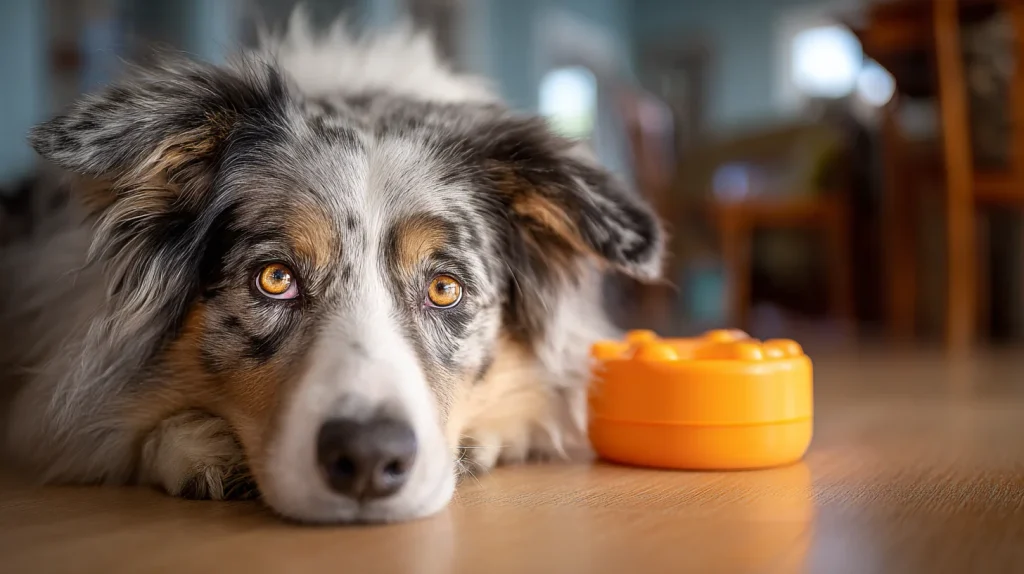
The tricky part is that the same behavior can come from completely different root causes. A dog that chews furniture while you’re gone might be anxious. A dog that chews furniture with you sitting right there is probably bored. Those are two different dogs with two different needs.
Here’s a rough guide:
- Chewing everything in sight, even with you home — pure boredom. The dog has too much mental energy and nowhere to put it.
- Destroying things only when you leave — separation anxiety. Mental stimulation helps, but it’s not the whole fix.
- Pacing, whining, unable to settle — overstimulation or under-exercise. A puzzle toy alone won’t solve this.
- Barking at nothing, getting into trash — needs a “job.” This dog wants a task, not just a treat.
Once you know which camp your dog is in, you can pick a toy that actually helps.
The Four Types of Dog Puzzle Toys (And When to Use Each)
Most lists just rank toys by popularity. That’s not useful if your dog doesn’t fit the average.
1. Slow-feeder puzzles and snuffle mats
These are flat boards or fabric mats where you hide kibble or treats in shallow compartments or fabric folds. Think Nina Ottosson’s Dog Brick, or any snuffle mat.
Good for: dogs that eat too fast, mild boredom, puppies, and seniors. They’re not very challenging. Most dogs solve them in under five minutes once they know how they work.
Not great for: smart dogs who’ve had them for a week. After that, it’s just a slightly annoying food bowl.
2. Treat-dispensing balls and wobblers
These are hollow balls or weighted tumblers that drop treats as your dog nudges or rolls them. The KONG Wobbler is the classic. The Bob-A-Lot is another good one.
Good for: high-energy dogs who need physical movement alongside mental work. Rolling toys add the physical element that flat puzzles skip. These are genuinely great for dogs that need to move while they think.
Not great for: small apartments with hard floors. They’re loud. Your downstairs neighbor will notice.
3. Multi-step slider puzzles (Level 2 and above)
These are the Nina Ottosson-style boards where your dog has to slide pieces, lift covers, and sometimes do things in a specific order. Level 2 and 3 puzzles require actual problem solving — not just nosing around until food falls out.
Good for: smart breeds, dogs who’ve “solved” their current toys, Australian Shepherds, Border Collies, Poodles, dogs who seem bored by toys.
This is where I have a strong opinion: if your dog is medium-to-high intelligence and over 18 months old, skip Level 1 entirely. It will be solved in under two minutes and discarded. Start at Level 2.
4. Frozen Kongs and lick mats
You stuff a KONG with food — peanut butter, wet food, banana, yogurt — freeze it, and hand it over. Lick mats work the same way but flat.
Good for: separation anxiety dogs. The frozen part makes it last 20–30 minutes, which is exactly the window when most anxious dogs fall apart after you leave. Many dog trainers call this the single best tool for departure anxiety.
Also good for: post-surgery recovery, thunderstorm anxiety, car rides.
Best Dog Puzzle Toys for Mental Stimulation: Our Actual Picks
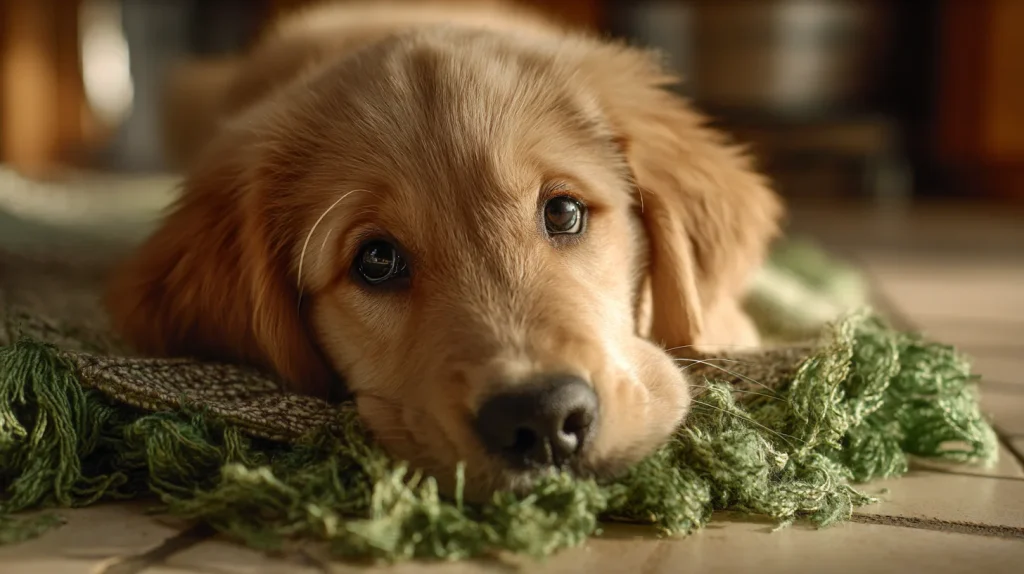
These are toys I’ve personally used or watched friends use with real dogs. No toy is perfect. I’ll tell you what I actually think.
Nina Ottosson Dog Brick (Level 2)
The Dog Brick has 20 compartments — a mix of sliding pieces and flip covers. Your dog has to work different parts of the puzzle using nose and paw, and the compartments vary in difficulty across the same board.
It’s the most consistent recommendation I make because it works across a wide range of dogs. Medium-sized, easy to clean, and durable enough for light chewers.
One caveat: heavy chewers will crack the plastic. If your dog bites toys rather than nudges them, look elsewhere.
Best for: most adult dogs, first-time puzzle owners, dogs who need better mental stimulation at mealtime.
KONG Classic (Frozen)
Old design. Decades-old. Still the best tool for dogs with anxiety.
Stuff it with layer food — kibble at the bottom, a little wet food or peanut butter mixed in, sealed with frozen banana on top. Freeze for a few hours. Hand it over right before you leave.
The licking motion is genuinely calming for dogs. It releases serotonin the same way it does in stressed humans. It’s not a puzzle exactly, but it’s the best dog puzzle toy for the right problem.
One thing most posts don’t tell you: rotate filling combinations. Dogs get bored of the same KONG stuffing fast. Change it up every few days.
Best for: anxious dogs, crate training, post-surgery recovery.
Outward Hound Dog Casino (Level 3)
This one has sliding compartments with pegs that lock them in place. Your dog has to remove the pegs before accessing the treats underneath. It adds a step that most Level 2 puzzles skip.
Milo — my neighbor’s Aussie — was finally challenged by this one. He spent 12 minutes on it the first session. For a dog that solved the Dog Brick in four minutes, that’s a win.
Honest take: it’s not for impatient dogs or beginners. If your dog gets frustrated and gives up easily, start lower and work up.
Best for: experienced puzzle dogs, high-intelligence breeds, dogs who’ve “graduated” from Level 2.
Snuffle Mat (Any Brand)
Snuffle mats are fabric mats with lots of loops and folds where you hide kibble. Your dog sniffs it out using their nose.
This is the most underrated toy in the category. Sniffing is mentally exhausting for dogs in a way that visual puzzles aren’t. A ten-minute snuffle session can tire out a dog more than a twenty-minute walk.
The brands mostly don’t matter here — look for one that doesn’t flip easily and can go in the washing machine. The Paw5 Rock-N-Roll Snuffle Mat has a suction cup base that helps.
Not suitable for dogs that like to shred fabric.
Best for: any age or size dog, mental fatigue without physical exertion, puppies who aren’t ready for hard plastic puzzles.
Bob-A-Lot (Interactive Wobbler)
This is a weighted plastic wobbler with two adjustable openings. You fill it with kibble and your dog has to knock it around to release food. It also has a small compartment on top for treats.
The two adjustable openings are the key feature. You can make it harder as your dog figures it out. Most wobbler toys have a fixed opening — they never get harder. Bob-A-Lot grows with your dog.
Downside: it is loud on hard floors. Not ideal for apartments.
Best for: large dogs, active dogs, best dog puzzle toys for large dogs who knock things over.
What Nobody Tells You About Difficulty Levels
Puzzle toys usually come in levels 1–4. The number is supposed to tell you how hard the toy is. Here’s what that actually means in practice:
Level 1 is “your dog finds food by walking toward it.” It’s basically a slow-feeder bowl with extra steps. Most adult dogs figure it out in under two minutes.
Level 2 adds sliding covers or flipping pieces. Dogs have to interact more intentionally. This is the sweet spot for most dogs.
Level 3 adds multiple required steps — you can’t access compartment B until you do compartment A. This is where working breeds and smart mixed breeds really engage.
Level 4 is genuinely challenging. Most household dogs won’t love these because frustration outpaces satisfaction. These are for people who actively train with their dogs and want the puzzle to be part of a training session.
If you’re shopping for a puppy, start at Level 1. If you’re shopping for an adult dog who has never had a puzzle toy, start at Level 1 or 2 — but plan to upgrade within a month.
Brain Training for Dogs Review 2026: Is It Worth $47?
Best Dog Puzzle Toys for Aggressive Chewers
Most puzzle toys are not made for dogs who bite and chew rather than nose and paw.
Plastic slider puzzles crack under determined chewing. Snuffle mats get shredded. Even some rubber toys don’t hold up.
If your dog bites toys, your main options are:
- KONG Extreme (black rubber, much harder than the classic red)
- West Paw Toppl — thick rubber, dishwasher-safe, interlocks with other Toppls for added difficulty
- Benebone Puzzle Toy — nylon-based, for dogs that need to chew but you want them to work for it
Be honest about your dog’s chewing style before buying a plastic puzzle. I’ve seen people spend $40 on a beautiful Nina Ottosson puzzle and watch their Lab destroy it in a day. That’s not the toy’s fault — it’s a mismatch.
A Note on Rotating Toys
One thing that extends the life of any puzzle toy is rotation. When a toy stays out permanently, it stops being interesting within a week.
Put two or three toys away. Bring one out. After three days, swap it for a different one. The “new toy” effect doesn’t require buying new toys — just putting old ones out of sight long enough that your dog forgets they’ve solved it.
This is how you get long-term value out of a small toy collection instead of spending more money replacing toys that stopped working.
FAQ
Do puzzle toys actually stop destructive behavior?
They help, but only if you’re matching the toy to the right problem. A bored dog with a good puzzle toy will redirect their energy. An anxious dog that’s destroying things when you leave needs a frozen KONG departure routine and probably some behavior training — a puzzle alone won’t fix anxiety.
My dog just flips the puzzle over and eats the treats. What do I do?
This is a classic Level 1 problem. Your dog is smarter than the toy. Move to Level 2 immediately and look for puzzles with locking mechanisms. The Nina Ottosson Dog Casino has pegs that lock compartments in place — it can’t be brute-forced.
How long should a dog play with a puzzle toy each day?
There’s no hard rule. Most dogs naturally disengage after 10–20 minutes. That’s fine. You’re not trying to keep them busy all day — you’re trying to give their brain a real workout once or twice a day. Two 15-minute sessions is more valuable than one toy left out permanently.
Are puzzle toys good for puppies?
Yes, with the right toy. Start simple — a snuffle mat or a Kong with soft stuffing. Avoid hard plastic puzzles until around 6 months. And always supervise. Puppies are more likely to chew and swallow pieces.
Can puzzle toys help with separation anxiety?
They help with the first 20–30 minutes, especially frozen KONGs given right at departure. They don’t fix the underlying anxiety. If your dog is panicking well beyond the toy’s engagement window, that’s a sign the anxiety runs deeper and may need professional support.
The right puzzle toy really can change your daily routine with your dog. Less destruction. A calmer dog at the end of the day. A few minutes of watching them actually think. But it starts with picking based on your dog — not based on whatever has the most Amazon reviews.