


- The 3 Main Types of Best Dog Training Collars (And What Each One Is Actually For)
- E-Collars: The Most Misunderstood Tool in Dog Training
- Prong Collars: What They Actually Do (And What They Don't)
- Martingale Collars: Underrated and Worth Knowing
- Best Dog Training Collar for Small Dogs
- Best Dog Training Collar for Large Dogs
- Best Dog Training Collar With Remote
- Best Dog Training Collar No Shock
- Waterproof and IP Ratings: What the Numbers Mean
- FAQ
My neighbor knocked on my door last spring looking completely defeated. Her 70-pound Lab mix had just dragged her down the front steps — again. She’d already bought two different collars off Amazon. Neither had worked. “Which one is the best dog training collar?” she asked me.
Honest answer? There isn’t one.
That’s the thing no one wants to say. The best dog training collar depends entirely on what your dog is doing, how big they are, and what you’re willing to do with it. The wrong collar for the wrong problem doesn’t just fail — it can make things worse.
Here’s what actually helps — a plain breakdown of each collar type, what it does well, what it doesn’t, and which dogs it suits. Then some real product picks with no fluff.
The 3 Main Types of Best Dog Training Collars (And What Each One Is Actually For)
Most people frame this as a debate. It’s not. These collars solve different problems.
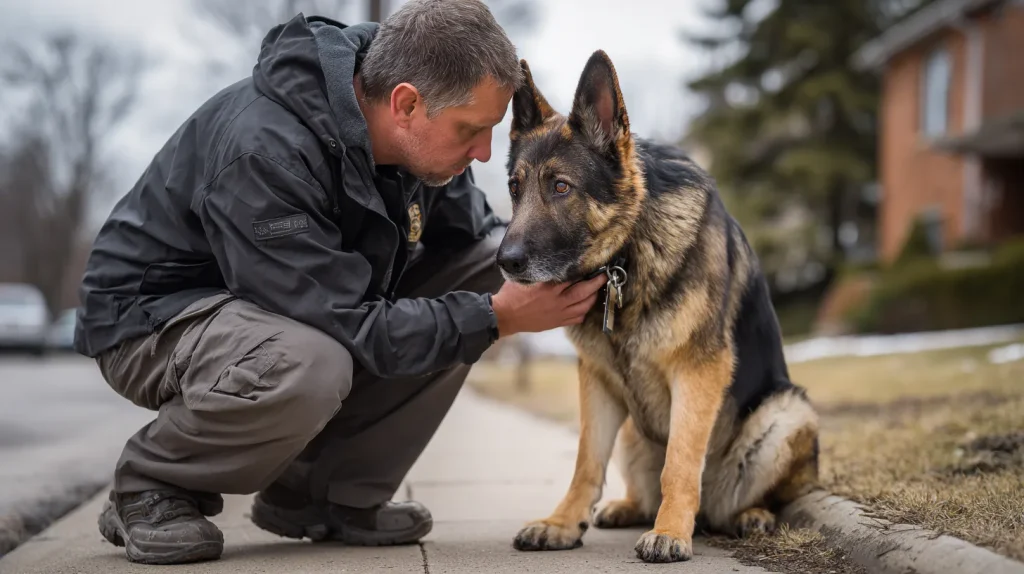
E-collars (also called electronic collars or remote training collars) send a signal — beep, vibration, or mild static stimulation — via a handheld remote. They work at distance. Good for off-leash training, recall, and dogs that are already past basic obedience.
Prong collars (also called pinch collars) apply even pressure around the neck when the dog pulls forward. The pressure mimics the way a mother dog corrects a puppy. Used correctly, they’re a leash-walking tool — not a punishment device.
Martingale collars are a limited-slip design. They tighten slightly when the dog pulls, then release. They can’t over-tighten. Originally designed for greyhounds and whippets, whose narrow heads can slip out of flat collars. Now used widely as a gentle correction and safety collar.
There are also no-shock collars using beep and vibration only, bark-specific collars, and GPS tracking collars — but those three above cover 90% of what most dog owners actually need.
E-Collars: The Most Misunderstood Tool in Dog Training
People either love these or think they’re cruel. Both camps are partially right.
Used too early, or at the wrong stimulation level, an e-collar can confuse a dog badly. Used correctly — paired with a command the dog already knows, at the lowest effective stimulation level — it’s one of the most precise training tools available.
The key word is precise. A good e-collar has at least 16 stimulation levels. The better ones have 100. That matters because “low stimulation” on a cheap collar and “low stimulation” on an Educator ET-300 are completely different experiences.
Who e-collars work well for:
- Dogs with established basic obedience who need reliable off-leash recall
- Active dogs that work at distance — hunting dogs, hiking dogs, farm dogs
- Dogs that pull but ignore pressure-based tools
- Owners who have worked with a trainer first
Who should skip them for now:
- Puppies under 6 months (developing trachea and skeleton — skip it)
- Dogs that are anxious, fearful, or reactive — stimulation can escalate stress
- Anyone who hasn’t worked with a trainer or read the manual thoroughly
My opinion here: I’ve seen e-collars ruin dogs in the wrong hands and transform them in the right ones. If you’ve never used one, buy it with a lesson from a trainer. Not optional.
Top picks for e-collars in 2026:
- Educator ET-300 Mini — 100 stimulation levels, waterproof remote that floats, ½ mile range. This is the gold standard for a reason. Runs about $220.
- Dogtra 280X — Works for dogs 10 lbs and up. IPX9K waterproof (submersible, not just splash-proof). Good for small to medium dogs.
- SportDOG SportHunter 825X — If you hunt or spend serious time outdoors, this is hard to beat. IPX7 waterproof, 50–70 hours battery life per charge.
- INVIROX 2026 Edition — Budget option around $50–90. IP67 waterproof, 123 levels, manual bark control. Good for owners who want to test the concept before spending $200+.
Prong Collars: What They Actually Do (And What They Don’t)
Few tools in dog training get more unfair press than prong collars.
Here’s the honest version. A properly fitted prong collar distributes pressure evenly around the neck — similar to how a horse halter works. The metal links are blunt-ended, not sharp. The tightening is limited and self-correcting when pressure releases. A flat collar that a dog pulls against for 45 minutes puts far more sustained pressure on the trachea than a prong collar used during a 15-minute walk.

That said — fit matters enormously. A prong collar sitting too low on the neck, or too loose, can absolutely cause injury.
Who prong collars work well for:
- Large, strong dogs with a pulling problem that flat collars or harnesses haven’t fixed
- Dogs being walked by someone smaller or physically limited
- Dogs that have already been introduced to leash manners but need clearer pressure feedback
Who shouldn’t use them:
- Puppies under 6 months
- Dogs with neck or trachea issues
- Anyone who hasn’t been shown proper fit and use by someone experienced
The Herm Sprenger is the standard recommendation from professional trainers worldwide. It comes in several widths — narrow for smaller dogs, wider for large breeds. Do not buy a cheap knockoff version. The metal quality matters.
Martingale Collars: Underrated and Worth Knowing
This one doesn’t get enough attention in “best dog training collar” conversations, and it should.
A martingale is two loops. The main loop goes around the neck. A smaller control loop attaches to the leash. When the dog pulls, the control loop tightens the main loop — but only up to a fixed limit. It can’t choke. It can’t over-tighten past a set point.
That makes it safer than a choke chain and gentler than a prong for everyday walking.
It’s also the right call for:
- Greyhounds, whippets, and other sighthound breeds with narrow heads that can back out of flat collars
- Dogs that are new to leash manners and need feedback without pressure-based tools
- Owners who want a safety collar that prevents slip-outs
Honestly, if your dog is under 40 pounds and has a moderate pulling problem, a martingale plus consistent training will solve it for most people. No electronics needed.
Good options in the $20–$40 range include the Ruffwear Flat Out, the Blue-9 Balance Harness martingale option, and several Guardian Gear adjustable models.
Best Dog Training Collar for Small Dogs
Small dogs need smaller contact points, lighter receivers, and shorter strap lengths. An e-collar designed for a 90-pound Lab sitting on a 12-pound Chihuahua is a bad time for everyone.
For small dogs with a pulling issue, start with a martingale. Most pulling problems in small dogs are a training issue, not a tool issue.
For small dogs that need off-leash work or bark control, the Dogtra 280X starts at 10 lbs. The PaiPaitek compact training collar is another lightweight option designed specifically for smaller necks. Look for a receiver under 1.5 oz and strap width under ¾ inch.
Best Dog Training Collar for Large Dogs
Large dogs have the opposite problem. They can overpower tools designed for average sizes, and a collar that doesn’t deliver consistent feedback is just noise to a 100-pound dog that’s already ignoring you.
For large pullers: Herm Sprenger prong collar (get the medium or large link depending on breed neck thickness) or the SportDOG 825X for off-leash work.
For stubborn large breeds, the INVIROX 2026 Edition and the Educator ET-300 (full-size version for larger dogs) both hold up well. The ET-300’s 100-level precision is especially useful because large dogs vary a lot in sensitivity.
Best Dog Training Collar With Remote
If you want remote control — meaning you can trigger beep, vibration, or stimulation from a distance — you’re looking at e-collars.
Range matters based on what you’re doing:
- Backyard and neighborhood walks: 300–500 feet is plenty
- Hiking, off-leash parks: look for ½ mile minimum
- Hunting or field training: 1 mile+
The best dog training collar with remote at under $100 is the Bousnic 3300ft model. It handles up to 120 lbs, has beep, vibration, and shock modes, and is fully waterproof. For around $50, it’s a reasonable starting point before committing to a $200+ professional unit.
Best Dog Training Collar No Shock
If you’d rather skip the static stimulation entirely — totally valid — you have options.
Vibration and beep-only modes are available on most modern e-collars, but if you want a collar where shock literally isn’t an option on the device, look at:
- SODOG No Shock Training Collar — tone and vibration only
- PetSpy M919 — has shock but most owners use only the vibrate and tone modes; easy to set shock to zero and leave it
- Martingale collars — zero electronics, zero shock, just feedback from natural pressure
For bark-specific problems, the best dog training collar for barking without shock is a citronella bark collar. The dog barks, gets a puff of citronella spray near the nose. Unpleasant, harmless, and surprisingly effective for noise-sensitive breeds.
Waterproof and IP Ratings: What the Numbers Mean
You’ll see IP67, IP68, IPX7, IPX9K on collar listings. Here’s what they mean without the tech jargon.
The first number (6 or 7) = dust protection level. 6 means fully dust-tight. The second number (7, 8, 9K) = water protection.
- IPX7: safe submerged up to 1 meter for 30 minutes
- IPX8: safe submerged deeper than 1 meter (manufacturer-specified depth)
- IP67: dust-tight + submerged 1 meter for 30 minutes
- IPX9K: withstands high-pressure water jets — military-grade protection (Dogtra uses this)
For most dog owners, IP67 is fine. If your dog swims regularly or you hunt in rivers, go IPX8 or IPX9K.
FAQ
My dog pulls hard on leash and nothing has worked — what’s the best dog training collar for that? If you’ve already tried a flat collar and harness with no luck, a martingale is the next gentler step. If that also fails, a properly fitted prong collar used with leash training techniques has the most consistent results for strong pullers. Get a fitting lesson if you’ve never used one.
What’s the best dog training collar brands right now? For e-collars: Educator (E-Collar Technologies), Dogtra, and SportDOG are the professional standards. For prong collars: Herm Sprenger is the only brand most trainers will recommend. For martingales: Blue-9, Ruffwear, and Guardian Gear all make quality versions.
Can I use an e-collar on a puppy? Not under 6 months. Puppies are still developing physically and behaviorally. A flat collar or martingale is appropriate. Basic positive reinforcement training is the priority at that age anyway. Most professional trainers won’t introduce e-collar work before 6–12 months.
Is the best dog training collar with GPS worth it? GPS collars are tracking devices, not training tools. They tell you where your dog is, not how to correct behavior. Some systems like Garmin’s Delta series combine GPS tracking with e-collar function — useful for hunting dogs that cover long distances. For the average pet owner, a standard e-collar with good range is more practical than GPS unless your dog has escaped before and you want that safety net.
What’s the best dog training collar under $100? The Bousnic 3300ft handles most needs for around $35–$50. The INVIROX 2026 Edition runs $50–$90 and has a 123-level range and IP67 waterproofing. Both are significantly less precise than the Educator or Dogtra line, but they’ll do the job for basic obedience and recall training.
The collar is never the whole answer. Any trainer worth listening to will tell you that. But picking the right tool for the right problem — instead of buying whatever ranks first on Amazon — makes the actual training faster, clearer, and less frustrating for both of you. Your dog wants to understand what you’re asking. The collar is just how you communicate it.