

- Why Length Matters More Than the Leash Itself
- The Material Debate: Biothane vs. Nylon
- The 5 Best Long Training Leashes Worth Buying Right Now
- Best for Beginners: Hi Kiss 20-Foot Nylon Training Leash
- Best Biothane Option: Mendota Products Long Line
- Best for Puppies: Ruffwear Knot-a-Leash (15 Feet)
- Best for Dogs That Pull Hard: Dogline Biothane Slip Lead (Long Version
- Best Budget Pick for Recall Training Leashes for Dogs That Pull: Heldig 30-Foot Nylon Long Line
- How to Actually Use a Long Line for Recall
- What About Short Training Leashes?
- One More Thing Worth Knowing
- FAQ
My neighbor called me last spring, frustrated. She’d been working on recall with her two-year-old shepherd mix for weeks. Nothing was sticking. I asked what leash she was using. Turns out she’d bought a 50-foot nylon line and was trying to manage it alone in a field. The line tangled constantly. She spent more time untangling it than training. Her dog learned nothing — except that “come” means mom gets flustered.
She needed a better long training leash. But more than that, she needed the right length for where her dog actually was in training.
That’s the thing most product lists miss entirely.
Why Length Matters More Than the Leash Itself
The best long training leash for recall practice isn’t just the most durable one or the cheapest one. It’s the one that matches where your dog is right now.
Most trainers land on 20–30 feet for general recall work. That range gives your dog enough room to get genuinely distracted — which is the whole point — while keeping the line manageable in your hands. A 15-foot line is a good starting point if your dog has zero recall history and you need tight control. A 50-foot line is for dogs that already have a solid foundation and you’re proofing recall in wide open spaces.
Handing a beginner dog a 50-foot line is like handing a kid their first bike on a highway. Too much, too fast.
Start at 20–30 feet. Adjust from there.
The Material Debate: Biothane vs. Nylon
Here’s where most buyer guides just list features without giving you a real answer. I’ll give you one.
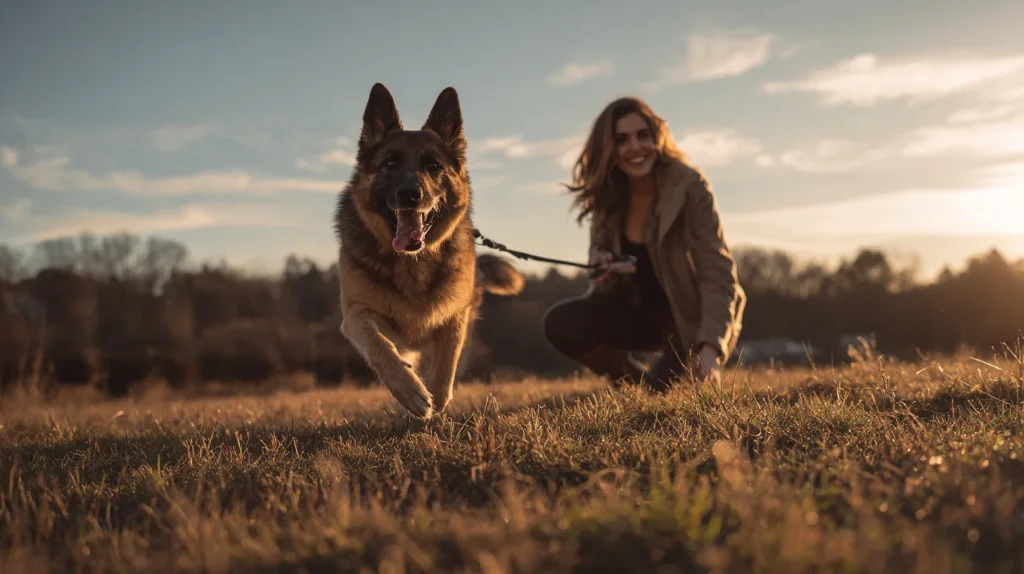
Nylon is cheaper. Biothane is better for most people. That’s my opinion, and I’ll stand behind it.
Nylon long lines — the flat woven kind — are everywhere, they’re affordable, and they work fine when they’re dry. The problem is they absorb water. They get muddy, smell like wet dog, and after a few months of hard use they start fraying at the clip end. If you train in a field, near water, or anywhere with morning dew, you’ll be wringing out a soggy rope every session.
Biothane is a synthetic material coated to feel leather-like. It’s waterproof. You can drag it through a creek and wipe it clean with a rag. It doesn’t tangle as badly as nylon rope, and it doesn’t develop that locker-room smell after a few weeks. The downside is cost — a quality biothane long line runs $25–$45 depending on length, versus $10–$18 for a comparable nylon version.
If you train once a week in perfect weather and you’re on a tight budget, nylon is fine. If you train regularly and outdoors in any real conditions, biothane is the better investment.
Rope-style leashes (think climbing rope material) land somewhere in the middle. Stronger grip than flat nylon, more comfortable in your hands, but they tangle badly with an excited dog and wet rope is heavy.
The 5 Best Long Training Leashes Worth Buying Right Now
These picks are organized by training stage and use case — not just price. Pick the one that matches where you and your dog actually are.
Best for Beginners: Hi Kiss 20-Foot Nylon Training Leash
If you’re just starting recall training and you don’t want to spend $40 on your first long line, this is the one to grab. It comes in 15, 20, 30, 50, and 100-foot lengths. Start with the 20-foot version. The clip is solid, the material is thick enough to not cut into your hands when your dog hits the end of the line, and the price is low enough that you won’t feel bad when it gets dragged through mud for six months.
The nylon will absorb water and eventually smell. That’s the trade-off for the price point.
- Best length to buy: 20 feet
- Great for: puppies, new rescues, early recall foundations
- Watch out for: don’t coil it tightly around your hand — flat nylon at speed causes rope burn
Best Biothane Option: Mendota Products Long Line
Mendota has been making training equipment for a long time, and their biothane long lines reflect that. The hardware is solid — the clip swivels well and hasn’t shown any sign of weakening after heavy use. It comes in multiple lengths and a handful of colors.
The 30-foot version hits the sweet spot for most dogs past the beginner stage. Long enough to let your dog get genuinely engaged with something else before you call them. Short enough to manage without losing control of the line.
This is the leash I’d recommend to anyone who trains more than a few times a week. The upfront cost pays for itself fast when you compare it to replacing a nylon line every few months.
- Best length to buy: 30 feet
- Great for: intermediate to advanced recall proofing, dogs with solid foundational training
- Watch out for: biothane can be stiffer in cold weather — give it a minute to warm up in your hands
Best for Puppies: Ruffwear Knot-a-Leash (15 Feet)
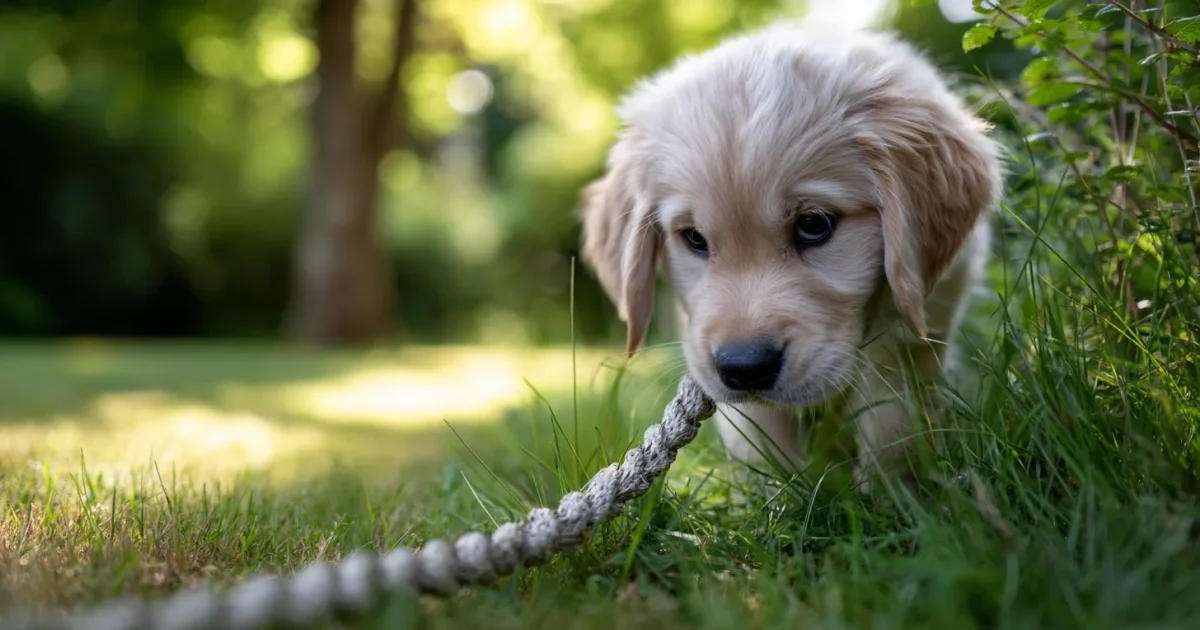
Puppies need a lighter line. Heavy nylon or thick biothane feels too substantial for a 4-month-old and can create negative associations with the leash before the training even starts. Ruffwear’s rope-style line in the 15-foot length is lighter, clips to a harness cleanly, and is easier for small dogs to drag without the leash weight pulling them back.
This is also a good pick as a professional dog training leash feel — the quality is obvious even to a first-time buyer.
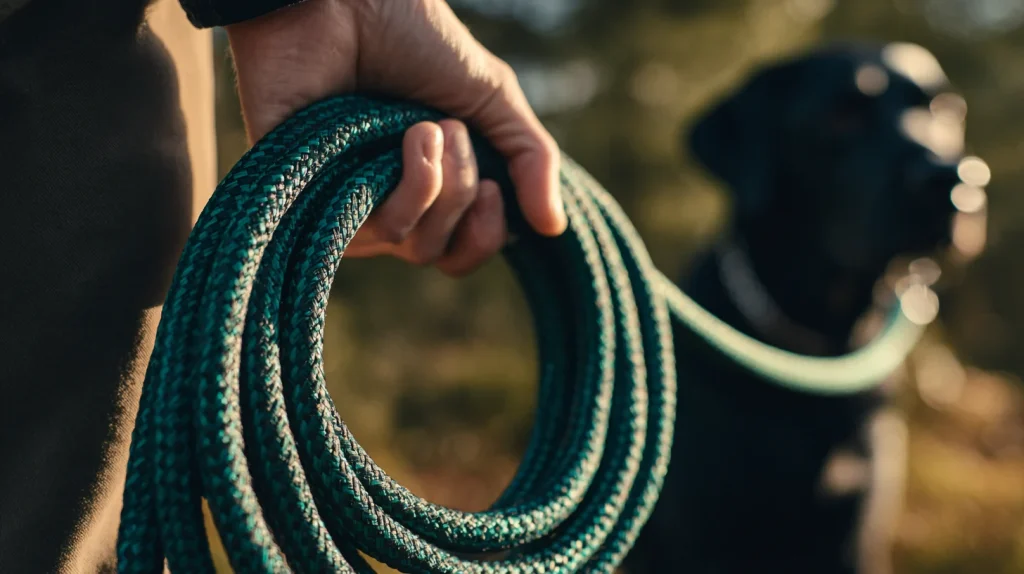
One honest note: the rope tangles more than flat biothane. Plan to spend a minute before each session getting it sorted.
- Best length to buy: 15 feet
- Great for: puppies under 6 months, small breeds at any age
- Watch out for: don’t use this for powerful breeds — the clip isn’t rated for real force
Best for Dogs That Pull Hard: Dogline Biothane Slip Lead (Long Version
If your dog is a serious puller and you need a slip training leash for dogs that combines the correction of a slip lead with the distance of a long line, Dogline’s biothane slip lead in longer lengths is worth a look. The biothane material means no fraying, no soggy mess, and the slip mechanism is smooth without being harsh.
This one isn’t for everyone. Slip leads — where the loop tightens when the dog pulls — should only be used if you know how to use them correctly. They’re not punitive when used right, but they can cause problems if you don’t know the mechanics. When in doubt, stick to a standard clip.
- Best length to buy: 20–30 feet
- Great for: dogs with prior training experience, handlers who understand slip mechanics
- Watch out for: not recommended for puppies or dogs with trachea or neck issues — always attach to a harness if there’s any doubt
Best Budget Pick for Recall Training Leashes for Dogs That Pull: Heldig 30-Foot Nylon Long Line
Under $15, 30 feet, solid swivel clip. That’s the pitch. It’s basic nylon, so all the earlier caveats apply — it’ll absorb water, it’ll smell after a while. But for budget-conscious buyers who want to try out long-line training before committing to biothane, this is the right entry point.
Don’t wrap it around your hand. Buy two so you have a backup.
How to Actually Use a Long Line for Recall
Buying the right leash matters. Using it correctly matters more.
The most common mistake: holding the leash tight. A long line for recall work is mostly meant to trail on the ground while your dog moves around. You hold the end loosely. The leash is a safety net, not a handle. When your dog runs toward something they shouldn’t, you step on the line or pick it up. You don’t hold it taut the whole time — that defeats the purpose.
The second most common mistake: calling your dog back too soon. Let them actually get distracted. That’s where the training happens. Calling “come” when your dog is already looking at you teaches them nothing. Wait until they’re nose-deep in something interesting, then call. When they turn and run back, that’s the behavior you’re building.
A few things to keep in your back pocket:
- Use a harness, not a collar, with a long line. If your dog hits the end at speed, the force goes to their chest and shoulders — not their neck.
- Practice “looping” the extra line in your non-dominant hand in large, loose loops rather than bundling it tight. Tight bundles become instant tangles.
- Train in an area clear of trees and posts at first. A dog that wraps a 30-foot line around a tree trunk is a very funny sight, but only in retrospect.
What About Short Training Leashes?
A short training leash — usually 4 to 6 feet — is what you use for loose-leash walking and heel work. Different job entirely. You use a long line to build recall and give your dog freedom with a safety net. You use a short line to teach your dog how to walk politely next to you.
Some handlers keep both on hand and switch between them depending on what they’re working on during a session. That’s not a bad system at all.
One More Thing Worth Knowing
Recall training leash or not — if your dog has a high prey drive, reactive behavior, or an unreliable recall in high-distraction environments, a long line may be the safest way to walk them for the long term. Not just as a training tool, but as a permanent part of your setup. There’s no shame in that. Safety and freedom aren’t opposites.
Some dogs take a few weeks to develop solid recall. Others take months of consistent work. The leash doesn’t do the training. You do. The leash just keeps everyone safe while you get there.
FAQ
What length long training leash should I start with? Most trainers recommend 20–30 feet as a starting point. A 15-foot line works for puppies or small dogs, or if you’re training in a tight space. Only move to 50 feet once your dog already responds reliably at 30.
Is biothane worth the extra cost over nylon? For most people who train outdoors regularly, yes. Biothane doesn’t absorb water, lasts longer, and doesn’t hold onto odors the way nylon does. If you train occasionally in dry conditions and you’re on a tight budget, nylon is fine to start.
Can I use a long training leash on a collar instead of a harness? Technically yes, but most trainers recommend a harness. If your dog hits the end of a 30-foot line at a full sprint, the force on a collar goes directly to their neck. A harness spreads that impact across the chest. For puppies especially, always use a harness.
What’s the difference between a long training leash and a retractable leash? A long training leash is a fixed length — it doesn’t extend or retract. That fixed length is what makes it useful for recall training: you set the boundary, your dog works within it. Retractable leashes have a spring mechanism that changes length constantly, which makes them poor tools for teaching recall because the tension is never consistent.
How do I stop a long training leash from tangling? Hold the extra length in loose, open loops in your non-dominant hand rather than tight coils. Biothane tangles less than rope or nylon because of its smooth coating. Training in an open area — away from trees, fences, and posts — helps a lot too.