
The first aid kit on your shelf is useful or useless depending on one thing: whether you know what to do with what’s inside it. The most common pet first aid mistake isn’t having the wrong supplies — it’s using the right supplies incorrectly, or using them instead of getting to a vet.
A second mistake: thinking first aid treats the emergency rather than bridges to veterinary care. With a few exceptions (removing a visible splinter, cleaning a minor cut), pet first aid is not treatment. It’s stabilization and preparation for the vet visit that should happen next.
That reframe changes how you think about every item in the kit.
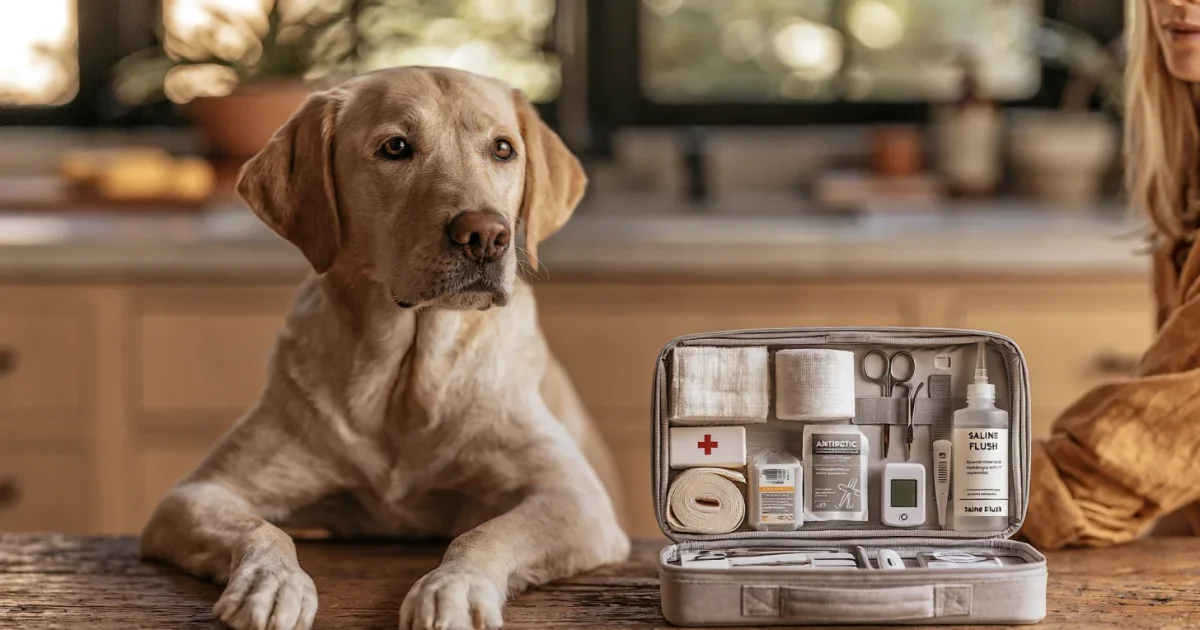
What Every Pet First Aid Kit Should Contain
Wound care:
- Sterile gauze pads (2×2 and 4×4 inch)
- Self-adhesive cohesive bandage wrap (Vetrap or similar)
- Medical tape
- Sterile saline wound flush (not hydrogen peroxide — hydrogen peroxide damages tissue and delays healing in wounds)
- Antiseptic wipes (chlorhexidine-based)
- Clean scissors (blunt-tipped for near fur and skin)
- Disposable gloves
Assessment tools:
- Digital rectal thermometer (normal dog/cat temperature: 101–102.5°F / 38.3–39.2°C)
- Penlight or small flashlight (examining mouth, eyes, ears)
- Magnifying glass (removing small foreign objects, splinters)
Medication:
- Hydrogen peroxide 3% — only for inducing vomiting in dogs (not cats) and only if directed by poison control or a vet (not a standalone decision)
- Diphenhydramine (Benadryl) — for mild allergic reactions to insect stings; dose at 1mg per pound of body weight for dogs; check with vet before using in cats
- Saline eye wash (sterile saline flush for eye irrigation)
- Styptic powder (stops nail bleeding if you cut the quick)
Emergency transport:
- Slip lead or extra leash
- Soft muzzle (appropriate size) — injured animals bite, even gentle ones; muzzle before handling a painful pet
- Emergency blanket (thermal)
- Contact card: vet phone, nearest emergency vet address and hours, ASPCA Poison Control number (888-426-4435), Pet Poison Helpline (855-764-7661)
Best Pet First Aid Kits 2026: Quick Comparison
| Product & Model | Best For | The Big Win | The Catch | Price Tier |
|---|---|---|---|---|
| RC Pet Products Pet First Aid Kit | Owners who want a complete pre-assembled kit; general households; travel | Well-organized case with labeled sections; includes most essential items including thermometer and emergency guide; compact design for car or home | Pre-assembled kits often contain items of lower quality than purchased individually; review contents and replace with better items where appropriate | Mid-Range |
| Rayco International Pet First Aid Kit | Households with multiple pets; outdoor/hiking use; comprehensive coverage | Larger kit with more supplies for extended use; handles and portable design; includes first aid guide booklet | Larger size means less convenient for emergency grab; some redundant items; bulkier than single-pet kits | Mid-Range |
| PetArmor Pet First Aid Kit | Budget-conscious first kit; basic coverage; small households | Affordable entry point; covers essential wound care basics; lightweight and portable | More minimal than comprehensive kits; may need to supplement with thermometer and specific medications; quality of included items variable | Budget |
| DIY assembled kit (recommended approach) | Owners who want quality supplies; customized to specific pets; most cost-effective comprehensive approach | You control quality of every item; can tailor contents to your pet species (rabbit-safe vs dog-appropriate items); replace items as used without buying a new full kit; typically more cost-effective for quality comparable items | Requires time to assemble; no organizing case unless purchased separately; you must know what to include | Budget |
| Adventure Medical Kits Trail Dog (with pet module) | Hiking/camping with dogs; outdoor emergencies; dual human/dog coverage | Designed for backcountry use; higher quality materials than most pet-specific kits; covers both owner and dog in one pack | Designed for outdoor/trail use specifically — larger and heavier than necessary for home-only use | Mid-Range |
What Each Kit Item Is Actually For
Cohesive bandage wrap (Vetrap): pressure bandage for bleeding wounds and bandage securing. Does not apply directly to the wound (gauze pad goes on the wound first, Vetrap over it). Do not wrap so tightly it restricts blood flow — you should be able to slide one finger under the wrapped bandage.
Hydrogen peroxide 3%: do not use on wounds — it damages tissue. The only appropriate pet first aid use is inducing vomiting in dogs who have ingested a toxic substance, and only when directed by poison control or a vet. Never induce vomiting in cats (risk of aspiration pneumonia). Never induce vomiting if your pet has ingested corrosive substances, hydrocarbons, or if they’re already showing neurological symptoms.
Digital thermometer: take a pet’s temperature rectally (lubricate with petroleum jelly). Normal is 101–102.5°F. Below 99°F or above 104°F = emergency vet immediately. Learning to take your pet’s temperature at home in a non-emergency situation prepares you for when it matters.
Diphenhydramine (Benadryl): for mild allergic reactions (bee sting, contact allergic reaction). Does NOT treat anaphylaxis — if your pet is having anaphylaxis (difficulty breathing, collapsing, severe swelling of face/throat), this is not a home situation. Emergency vet immediately. Regular Benadryl (no decongestant — check ingredients; some combination formulas contain xylitol or pseudoephedrine, both toxic to pets).
Styptic powder: stops minor nail bleeding when you cut the quick during trimming. Cornstarch works in a pinch. Not for significant wounds.
The “Call First” Rule
Before using hydrogen peroxide to induce vomiting: call ASPCA Poison Control (888-426-4435) or your vet. Not every ingested substance should be vomited back up — corrosives cause more damage coming back up than going down.
Before applying a pressure bandage to a severe wound: call your vet or emergency vet and describe the wound. They’ll tell you whether to bandage and bring in immediately or manage first and transport.
Before giving any medication: verify species appropriateness. Ibuprofen and acetaminophen (Tylenol) are toxic to dogs and cats. Many human OTC medications are inappropriate for pets.
The call-first rule exists because in genuine emergencies, you don’t always know whether your action helps or harms. Thirty seconds on the phone with a vet before acting on something irreversible is worth it.
The Poison Control Numbers
Save these in your phone before you need them:
- ASPCA Animal Poison Control Center: 888-426-4435 (consultation fee applies)
- Pet Poison Helpline: 855-764-7661 (consultation fee applies)
- Your regular vet’s emergency number: call to get this proactively, not during an emergency
Write these on a card and tape it to the inside of your first aid kit.
FAQ
What’s the most important thing to have in a pet first aid kit?
The contact card — ASPCA Poison Control, your vet’s emergency number, and the nearest 24-hour emergency vet’s address. Having supplies with no guidance on when to use them is less useful than knowing who to call. Put the contacts front and center in any kit.
Should I keep a pet first aid kit in my car?
Yes. Many pet emergencies happen away from home — during travel, hiking, or after accidents. A compact kit (wound care basics, muzzle, emergency contact card, emergency blanket) in the car glove compartment or trunk is useful even if you have a comprehensive kit at home. Car temperatures can degrade some supplies — check medications for temperature storage requirements.
Can I use my human first aid kit for my pet?
Partially. Sterile gauze, bandage wrap, and saline are species-nonspecific and transfer directly. Medications in human first aid kits (ibuprofen, acetaminophen, some topicals) are toxic to pets. Human hydrogen peroxide is the same product. The limitation of using a human kit is mainly the medication and species-specific items — remove or clearly mark human medications as “NOT FOR PETS.”
Should I muzzle my pet before treating a wound?
Yes, with exceptions. Injured animals — even calm, familiar pets — may bite when you touch a painful area. A soft muzzle prevents reflexive bite injury to you. Exception: if your pet is having breathing difficulty (respiratory distress, vomiting, shock) — never muzzle an animal who may need an open airway to breathe or vomit. If in doubt: call the vet before applying a muzzle in an unclear respiratory situation.
Is pet CPR something I should learn?
Worth learning, with realistic expectations. Pet CPR courses are available through many local Red Cross chapters and vet schools. The techniques differ from human CPR (30 compressions to 2 breaths; compression location differs for cats vs dogs). Pet CPR is a bridge tool to professional care — it is rarely sufficient alone to save a pet, but it provides time to reach emergency veterinary care. If you have a breed at cardiac risk or a senior pet: learning pet CPR is a reasonable investment.