

- Quick Comparison
- Quick Picks
- Night Vision Technology: What Actually Differentiates These Cameras
- Detailed Reviews
- Wyze Cam v4
- Eufy Indoor Cam 2K (E220)
- Furbo 360° Dog Camera
- Petcube Bites 2
- Arlo Essential Indoor
- Ring Indoor Cam (2nd gen)
- 🏆 Editor's Pick: Wyze Cam v4
- Buying Advice
- FAQ
- The Bottom Line
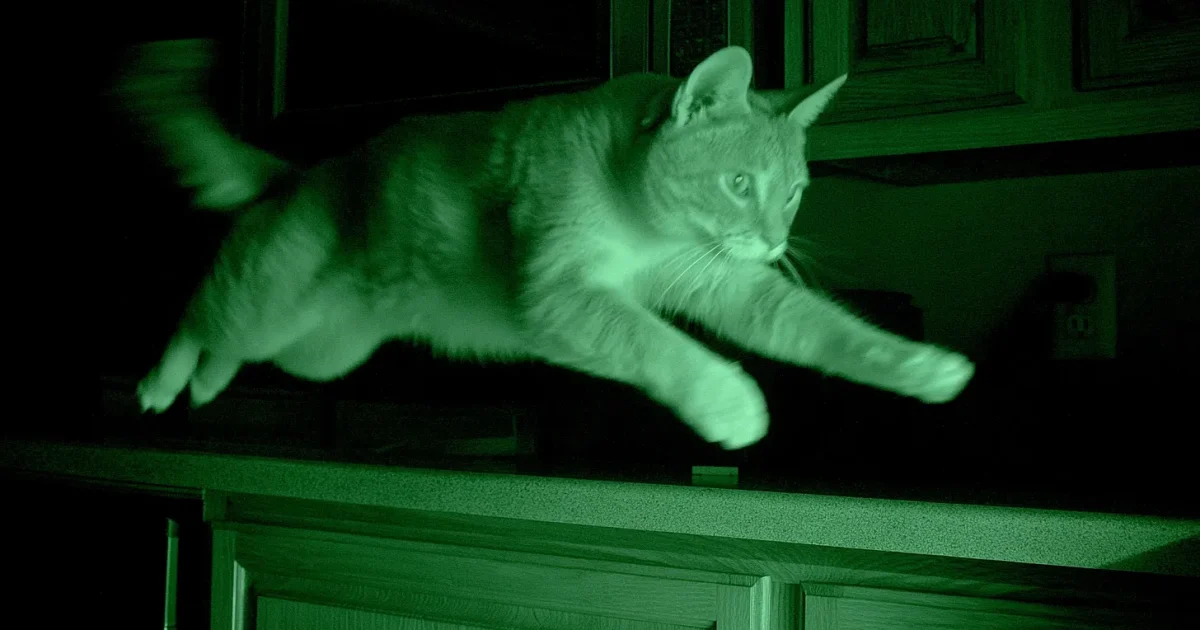
Your cat isn’t doing anything interesting at 3PM. She’s asleep. The counter-surfing, the litter box negotiations, the 2AM zoomies — that’s all happening after you’ve gone to bed, which is exactly when most pet cameras stop being useful.
Cats are crepuscular and nocturnal by nature, so the behavior you actually want to see mostly happens in the dark. And if you’ve got a dog with separation anxiety, nighttime footage matters even more — the pacing, the vocalizing, the destructive habits owners suspect but can’t prove almost always show up once the house goes quiet.
So a camera that performs at night isn’t a bonus feature. For a lot of owners, it’s the whole point of buying one.
Here’s the catch: “night vision” isn’t one feature. It’s a category, and the differences between cameras inside that category are bigger than most buying guides let on.
If you’re short on time: the Wyze Cam v4 delivers the best night-vision image quality for the money, with color footage in any ambient light and a $35 price tag — but it has zero pet-specific features. If you want treat tossing and bark alerts alongside solid infrared night vision, the Furbo 360° is the more complete dog camera. For budget-conscious cat owners, the Eufy Indoor Cam 2K matches Wyze’s color night vision with local storage and no subscription.
Quick Comparison
| Camera | Best For | The Big Win | The Catch | Price Tier |
|---|---|---|---|---|
| Wyze Cam v4 | Best image quality per dollar, no fees | 2K resolution, color night vision in any ambient light, local SD storage, $35 | No treat dispenser, no pet-specific AI | Budget |
| Eufy Indoor Cam 2K (E220) | Color night vision without a subscription | Sony Starvis sensor, strong low-light color, local storage | Not built for pets — it’s a security camera | Budget |
| Furbo 360° Dog Camera | Dog owners who want treats + bark alerts | 360° rotation, treat tossing, bark alert AI, polished app | IR-only night vision (grey scale), subscription for full features | Mid-Range |
| Petcube Bites 2 | Cat and dog owners who want treat tossing on a budget | Treat tossing, adequate IR night vision, no mandatory subscription | Grey-scale only, fixed 160° angle | Budget |
| Arlo Essential Indoor | Smart home integration | Clear night vision, works with smart home ecosystems, no sub for basic alerts | No treat dispenser, subscription needed for video history | Mid-Range |
| Ring Indoor Cam (2nd gen) | Amazon/Alexa households | Easy setup, Alexa integration, no fee for basic alerts | No treat dispenser, weaker night vision than Wyze at a similar price | Budget |
Quick Picks
Wyze Cam v4 The sharpest night-vision image of anything on this list, and it isn’t close on price.
Eufy Indoor Cam 2K (E220) Same color night-vision advantage as Wyze, in a slightly different package.
Furbo 360° Dog Camera The most complete pet-specific package if you want interaction, not just observation.
Petcube Bites 2 Treat tossing at a lower price than Furbo, with a tradeoff on night vision quality.
Arlo Essential Indoor Good for households already invested in smart home gear.
Ring Indoor Cam (2nd gen) Convenient if you’re already in the Amazon ecosystem, less impressive on night vision than its price suggests.
Night Vision Technology: What Actually Differentiates These Cameras
Before comparing products, it’s worth understanding what you’re actually paying for, because “night vision” on a spec sheet can mean four different things.
Standard infrared (IR). The most common type, and the one you’ll find in most consumer pet cameras, including Furbo, Petcube, and several Wyze models. Small IR LEDs around the lens light the scene with infrared light that’s invisible to humans and most pets. The camera picks up that IR light and renders it as black-and-white or green-grey footage. You get a clear read on your pet’s shape, position, and movement — just no color. It’s enough to answer “where is my pet and what are they doing,” but everything reads as the same shade of grey.
Color night vision. This needs some ambient light in the room — a streetlight through a window, a dim nightlight, even a stray LED from a router. Sony Starvis CMOS sensors, used in the Eufy cameras and some Wyze models, can pull color out of very low light levels. Given any light source at all, you get realistic color instead of grey. It doesn’t work in total darkness.
Active illumination. Some cameras trigger a visible white light when they detect motion in the dark, flooding the room and capturing full color. It’s more common in outdoor security cameras — Arlo uses this on some models — because the light can startle a sleeping pet the first few times it fires.
Passive IR with color supplement. A hybrid approach used in cameras like the Wyze Cam v4: color when there’s any light present, IR fallback in complete darkness. This is the setup that gives you the best of both without picking one technology and living with its limits.
Detailed Reviews
Wyze Cam v4
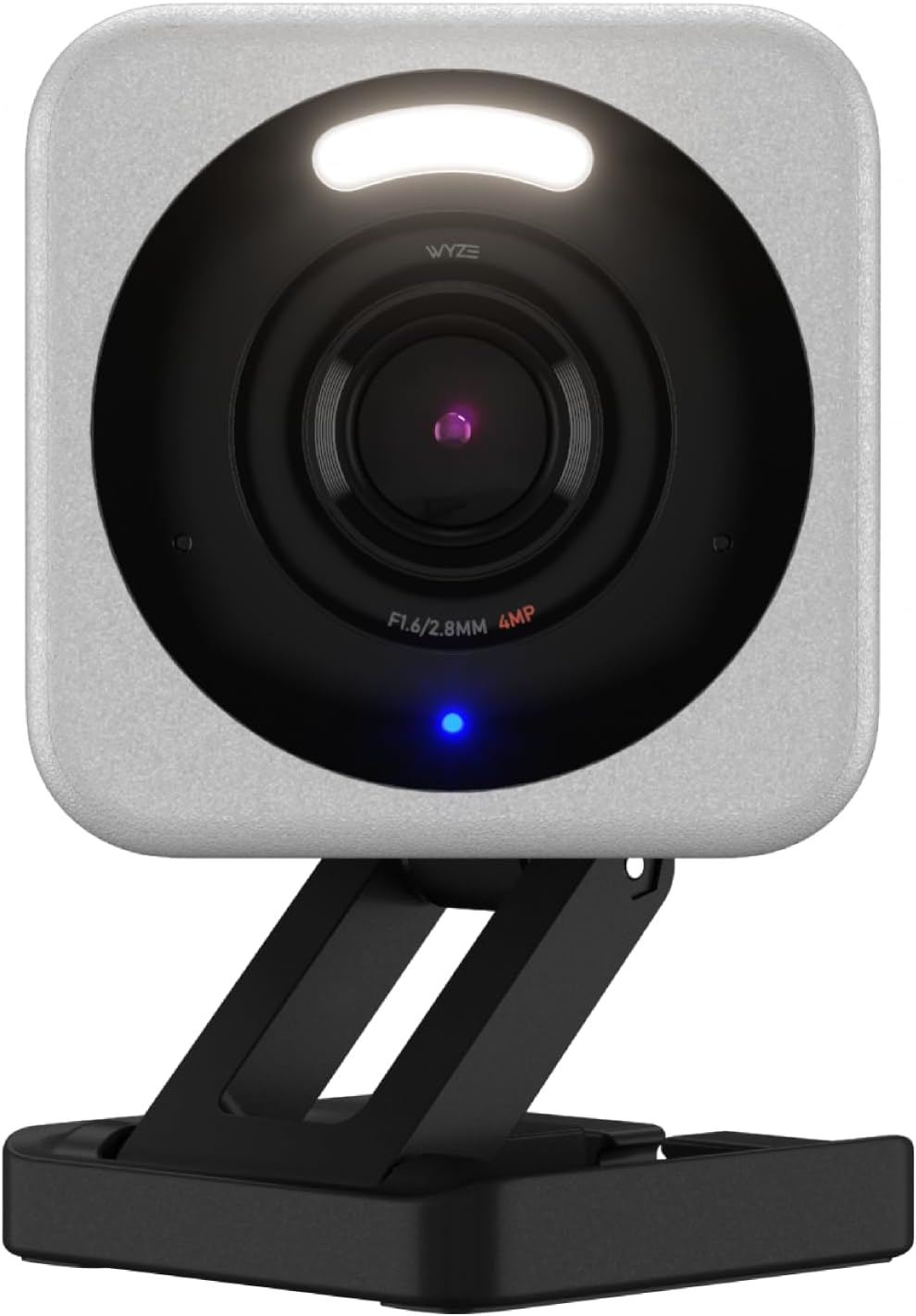
The Wyze Cam v4 costs $35, records at 2K (2560×1440), and its “Color Night Vision” activates automatically whenever there’s enough ambient light to work with — producing genuinely usable color footage rather than the grey-scale most budget cameras are stuck with. Image quality here outperforms cameras costing three times as much.
The tradeoff is that Wyze is a home security camera, not a pet camera. There’s no treat dispenser, no bark alert AI, nothing built specifically around pet behavior. If your priority is watching what your pet actually does — clearly, in color, at night — this is hard to beat for the price. If you want the camera to do something back, it won’t.
Pros
- 2K resolution with genuinely useful color night vision
- No mandatory subscription; local SD card storage
- Best image quality per dollar in this category
Cons
- No treat dispenser or interactive features
- No pet-specific AI (bark alerts, behavior tracking)
- Falls back to standard IR in complete darkness, like any other camera
Eufy Indoor Cam 2K (E220)
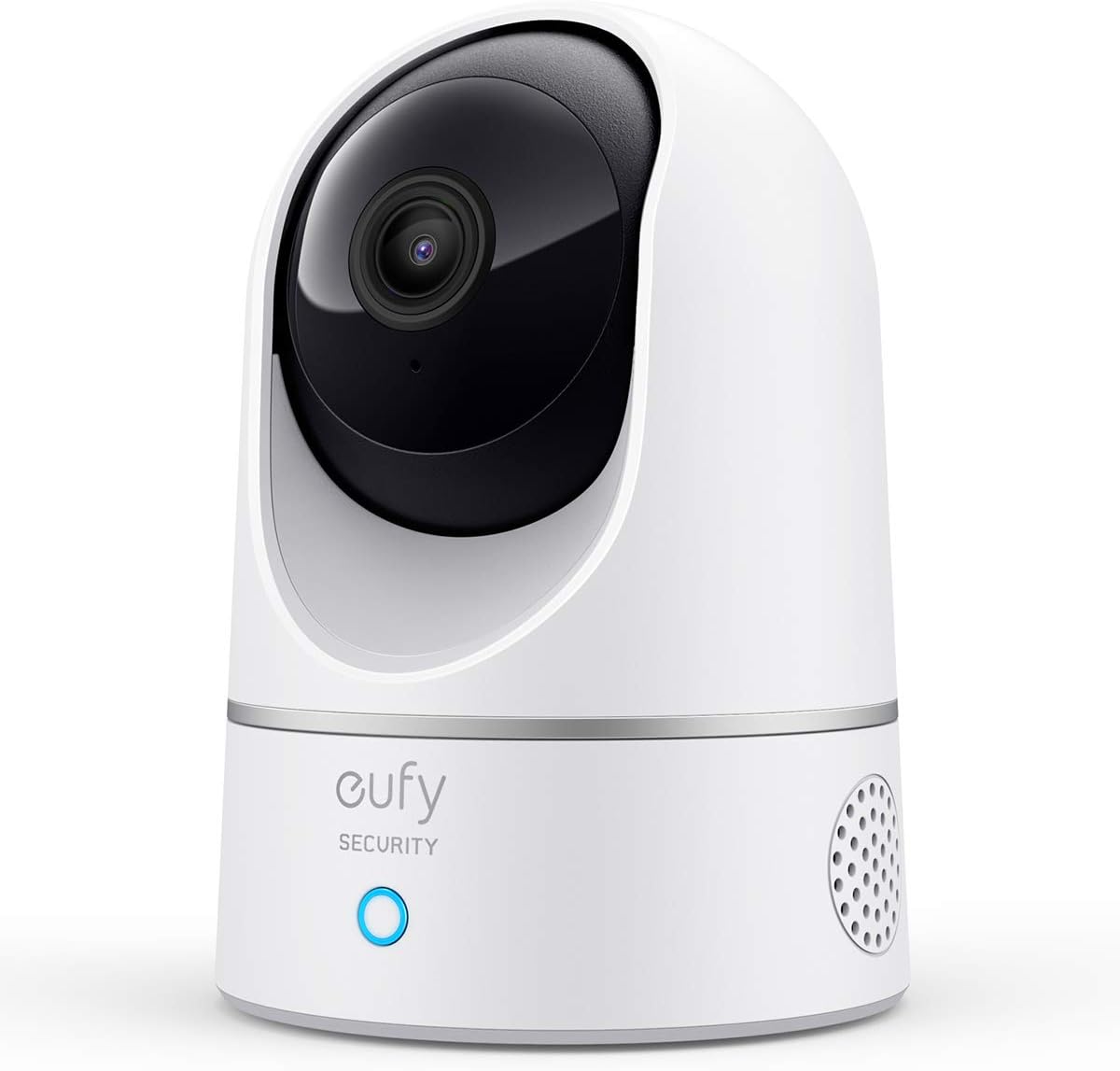
Eufy’s E220 uses the same class of Sony Starvis sensor that makes Wyze’s color night vision possible, and delivers a similar result: strong low-light color performance at 2K resolution, with local storage and no subscription requirement. Like the Wyze, it’s a general-purpose home camera pressed into pet-monitoring duty rather than something designed around pets specifically.
Pros
- Strong color night vision in low light
- Local storage, no subscription required
- 2K resolution
Cons
- No treat dispenser
- Not purpose-built for pet monitoring
Furbo 360° Dog Camera
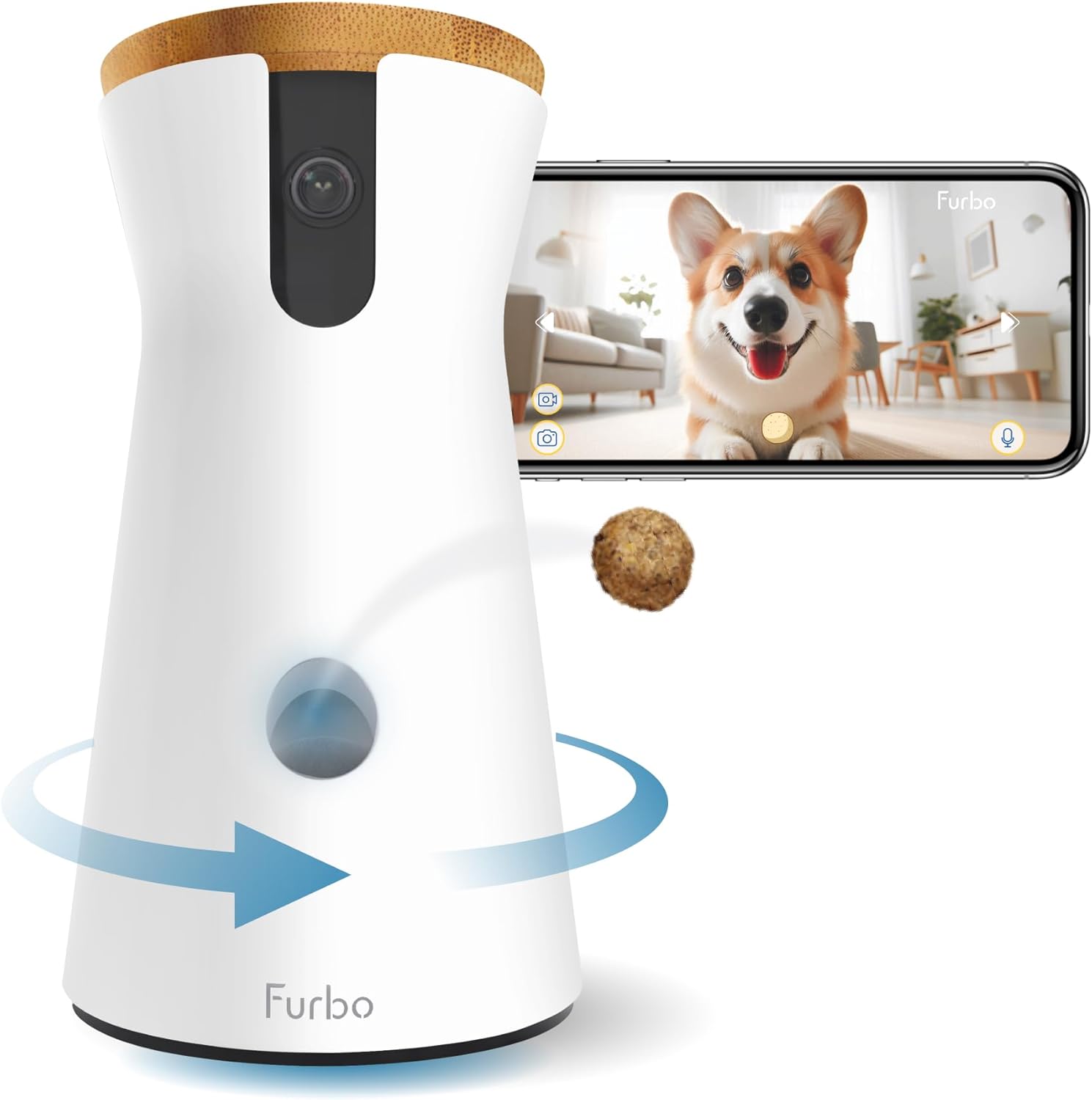
Furbo is built around dogs specifically, and it shows. The 360° rotation keeps your dog in frame as they move through a room, the treat-tossing feature gives you a way to interact remotely, and the bark alert AI flags vocalization so you’re not scrubbing through hours of footage. The app is polished, and for owners who want a camera that does more than record, this is the most complete package on the list.
The limitation is the night vision itself. Furbo uses standard IR, so nighttime footage is grey-scale — clear enough to see what your dog is doing, but without the color clarity Wyze or Eufy offer under the same ambient light conditions. Full features also require a subscription.
Pros
- 360° rotation keeps pets in frame
- Treat tossing and bark alert AI
- Polished, dog-focused app experience
Cons
- IR-only night vision — no color option
- Subscription needed for full feature set
Petcube Bites 2
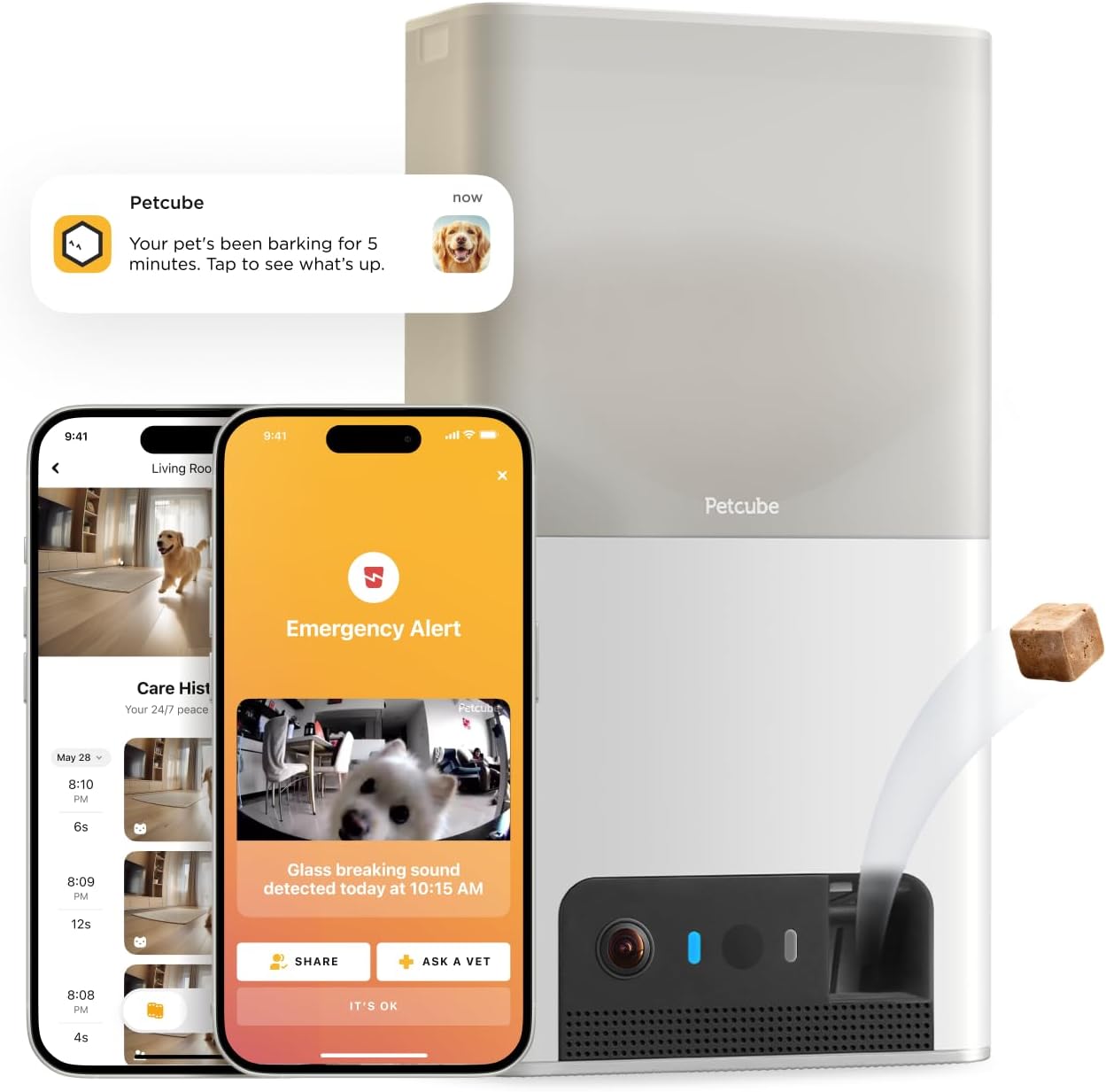
Petcube Bites 2 covers similar ground to Furbo at a lower price: treat tossing, IR night vision, no mandatory subscription. The angle is fixed at 160° rather than rotating, which is a real limitation in larger rooms, but for a single pet in a defined space it’s adequate. Night vision performance is comparable to other IR-only cameras — functional, grey-scale, nothing more.
Pros
- Treat tossing at a budget price point
- No mandatory subscription
- Adequate night performance for its price tier
Cons
- Fixed 160° angle, no rotation
- Grey-scale only, no color night vision option
Arlo Essential Indoor
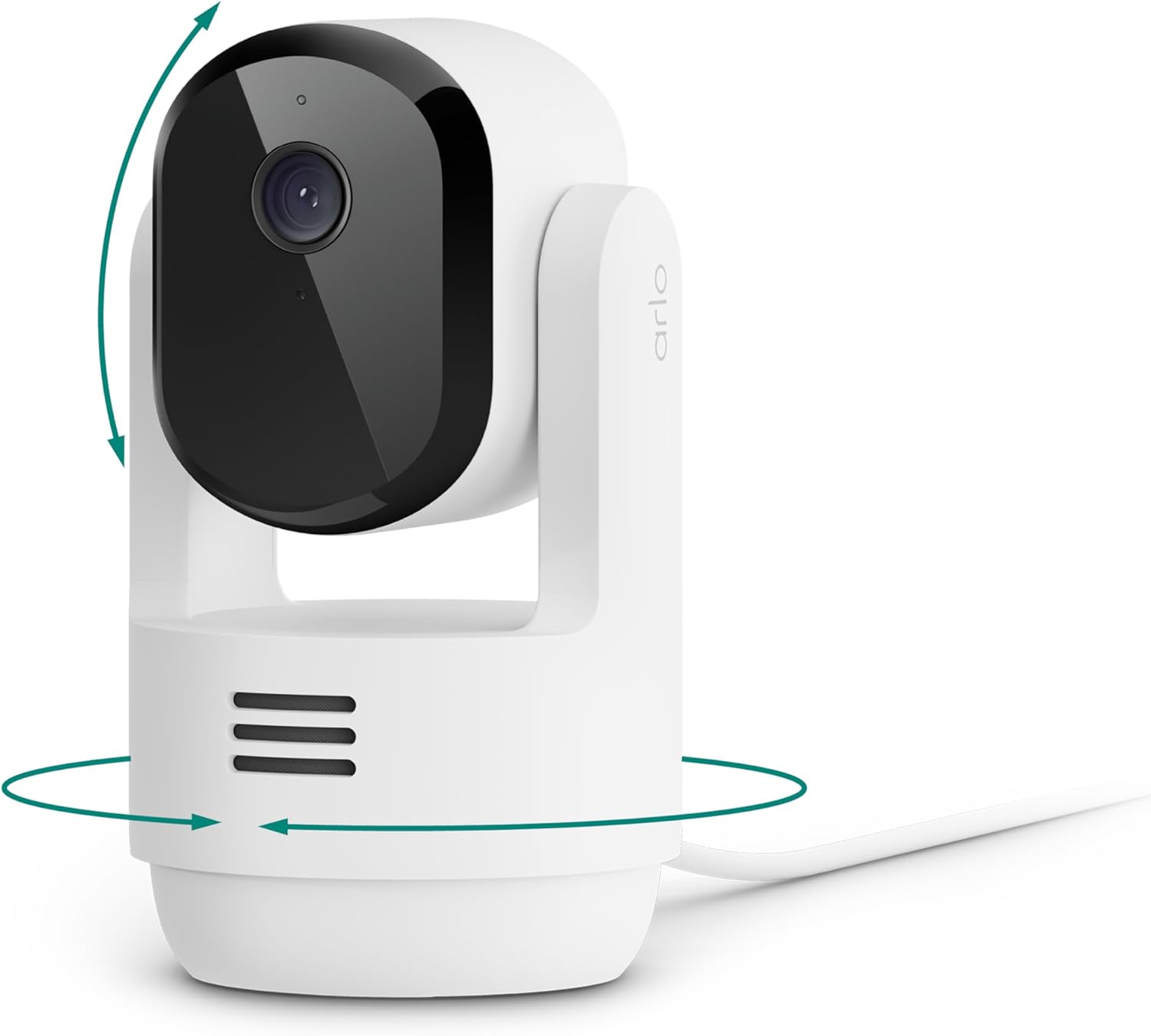
Arlo’s appeal here isn’t pet-specific features — it doesn’t have any — it’s ecosystem integration. If you’re already using Arlo or a broader smart home setup, this camera slots in cleanly, offers clear night vision at 1080p, and doesn’t require a subscription for basic motion alerts. Full video history access does require one.
Pros
- Clear night vision performance
- No subscription needed for basic alerts
- Smart home compatibility
Cons
- No treat dispenser
- Subscription required for full video history
- Designed for security, not pet monitoring specifically
Ring Indoor Cam (2nd gen)
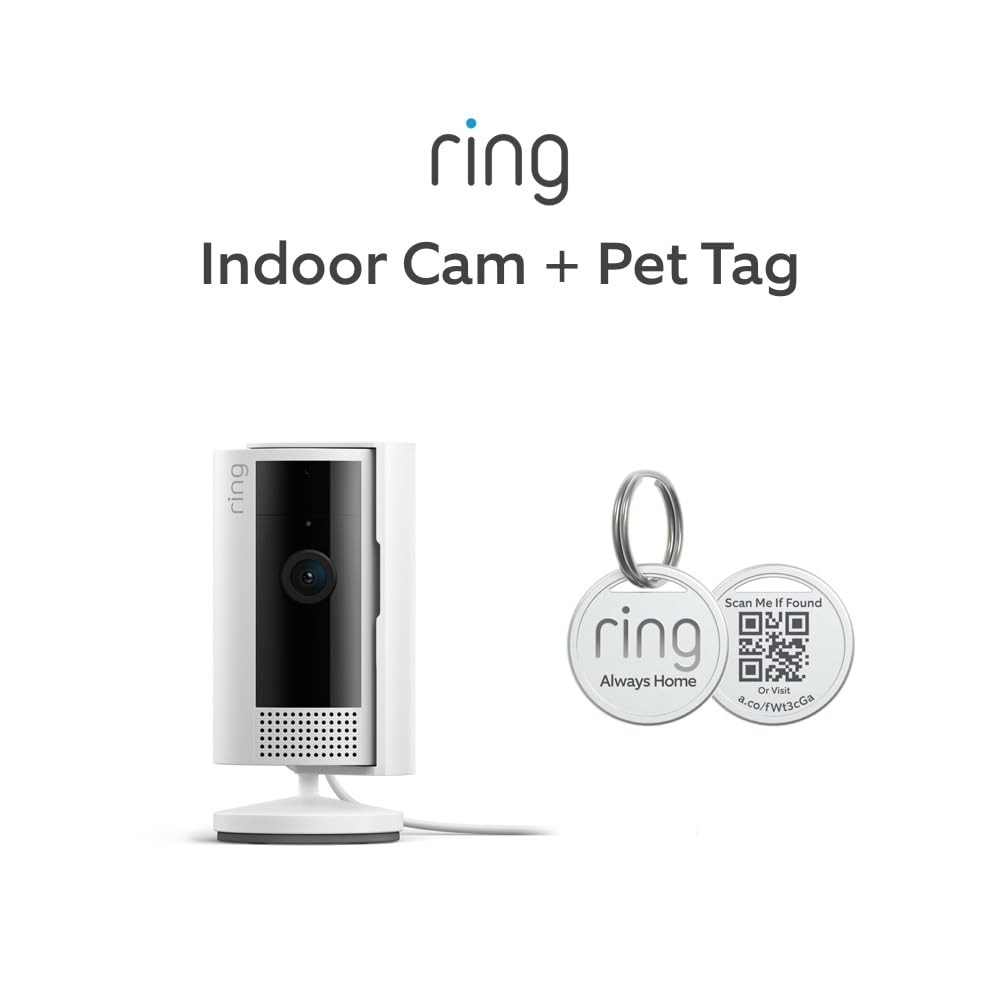
Ring’s advantage is almost entirely about ecosystem — if your home already runs on Alexa, setup is simple and the camera does what’s expected of it. Night vision is adequate rather than impressive, and some users report it falling short of what Wyze delivers at a comparable price point.
Pros
- Easy setup, especially in Alexa households
- No annual fee for basic alerts
- Straightforward, no-frills monitoring
Cons
- No treat dispenser
- Subscription required for video history
- Night vision quality reportedly weaker than Wyze at a similar price
🏆 Editor’s Pick: Wyze Cam v4
If the reason you’re buying a camera is to actually see what your pet does at night — not to toss treats, not to get bark alerts, just to know — the Wyze Cam v4 is the pick. At $35, with no subscription and 2K color night vision that holds up in any room with a hint of ambient light, nothing else here comes close on image quality per dollar.
It’s not a complete pet-monitoring solution on its own. There’s no interaction built in. But that’s a solvable problem: pair a $35 Wyze Cam v4 for night-vision quality with a $90 Petcube Bites 2 for treat tossing, and you’ve got both capabilities across two cameras for less than the price of a single Furbo. It means managing two apps instead of one, which won’t appeal to everyone — but for buyers who care about image quality first, it’s the more cost-effective setup.
Buying Advice
Match the camera to your lighting, not just the spec sheet. Color night vision only works with some ambient light in the room — a nightlight, a streetlight through a window, even a stray LED. If your pet’s space is genuinely pitch black (a windowless basement, blackout curtains fully drawn), color night vision cameras fall back to the same grey-scale IR as everything else, and the premium you paid for color buys you nothing in that room.
Think about range. Standard IR illuminates effectively to about 15–25 feet; past that, image quality drops off. Most bedrooms and living rooms fall within that range from a corner or shelf placement, but don’t expect a single camera to cover a large open room from a distant corner. Color night vision isn’t limited by IR range the same way — it’s governed by available light and sensor sensitivity — but it still performs best when the pet stays within about 15 feet of the lens.
Decide whether you need interaction or just observation. Purpose-built pet cameras (Furbo, Petcube) add treat tossing, bark alerts, and two-way audio, but that usually comes with a subscription and IR-only night vision. Home security cameras (Wyze, Eufy, Arlo, Ring) often deliver better night-vision image quality for less money, but they don’t do anything pet-specific. There’s no wrong answer here — it depends on whether you want a camera that watches or one that also acts.
Keep the lens clean and the camera at the right distance. Most night-vision quality complaints trace back to a dirty lens, a pet sitting too close (IR typically has a minimum focus distance around 1 foot), or a room that’s actually too bright for IR mode to optimize correctly.
FAQ
Do night vision pet cameras work in complete darkness? Standard IR cameras do — the IR LEDs provide their own light source regardless of the room. Color night vision cameras need some ambient light to work; in total darkness they either don’t activate or drop back into IR mode. Most indoor spaces have at least a little ambient light at night, which is why color night vision is functional in the majority of real households.
Can pets see infrared night vision LEDs? Dogs and cats pick up on the near-IR spectrum slightly better than humans do, but the 850nm LEDs used in most consumer cameras sit at the edge of, or beyond, what cats and dogs meaningfully perceive. Most pets don’t react to a camera switching into night mode, though some show brief curiosity when the LEDs activate. Cameras using 940nm LEDs are effectively invisible to pets.
What resolution do I actually need for night vision footage? 1080p is enough to track your pet’s location, posture, and general behavior at night. 2K or 4K gives you more detail if you want to zoom in on something specific — a particular behavior, a health concern. For most owners just checking in on nighttime activity, 1080p covers it. If you’re watching for behavioral or medical detail, the extra resolution from something like the Wyze Cam v4 gives you more to work with.
My camera’s night vision footage is blurry — what’s going on? The usual culprits: a dirty lens (wipe it down with a microfiber cloth), the pet sitting closer than the camera’s minimum IR focus distance (often around 1 foot), or the room actually being too bright for IR mode, which can cause the image to overexpose. Moving the camera away from residual light sources, or rebooting it, often resolves the issue.
Do I need a dedicated pet camera, or will a security camera do the job? For pure night monitoring, a home security camera like Wyze, Eufy, or Arlo often delivers better night-vision image quality per dollar than a purpose-built pet camera. If you want interactive features — treat tossing, bark alerts, two-way audio built around pet communication — Furbo or Petcube are the better fit. Plenty of owners run both: a security camera for quality nighttime footage, a pet camera for daytime interaction.
The Bottom Line
If you only care about seeing what your pet does after dark, buy the Wyze Cam v4 and don’t overthink it — nothing else touches its night-vision image quality at $35. If treat tossing and bark alerts matter enough that you’re willing to trade color for interaction, Furbo is the more complete dog-specific option. And if your pet’s space is truly dark at night, save your money on “color night vision” marketing altogether — every camera on this list reverts to the same grey-scale IR once the ambient light disappears.