
- Why Size Beats Style Every Time
- Best Hides & Decor: Quick Comparison
- Exo Terra Reptile Cave (Small)
- Pros
- Cons
- Zoo Med Reptile Shelter 3-in-1
- Pros
- Cons
- Lugarti Premium Reptile Hides
- Pros
- Cons
- Exo Terra Moist Hide Rock
- Pros
- Cons
- DIY Tupperware With a Cut Entrance
- Pros
- Cons
- Generic Pet-Store Starter Hides
- The Three-Hide System
- Hide Sizing: The Snug Rule
- The Moist Hide: Setup and Maintenance
- Decor and Enrichment Beyond Hides
- What to Avoid
- FAQ
- Which Hide Should You Actually Buy?
Almost every new leopard gecko keeper hits the same wall: they build a gorgeous naturalistic setup — a detailed cave hide, a rock formation, a carefully trained vine — and the gecko ignores all of it to wedge itself under a folded paper towel in the corner.
The paper towel wins. Every time.
Quick Answer: Leopard geckos don’t choose hides based on looks — they choose them based on fit. A hide only feels secure when the gecko’s body touches the interior walls on multiple sides at once. A $2 folded paper towel sized correctly for a juvenile will out-perform a $30 naturalistic cave hide that’s too roomy. Get the sizing right first; everything else — style, material, brand — is secondary.
That single principle explains almost every “my gecko won’t use its hide” question you’ll find in gecko forums, and it’s the idea this whole guide is built around.
Why Size Beats Style Every Time
This isn’t the gecko being fussy. It’s the gecko telling you the paper towel fits and the cave hide doesn’t.
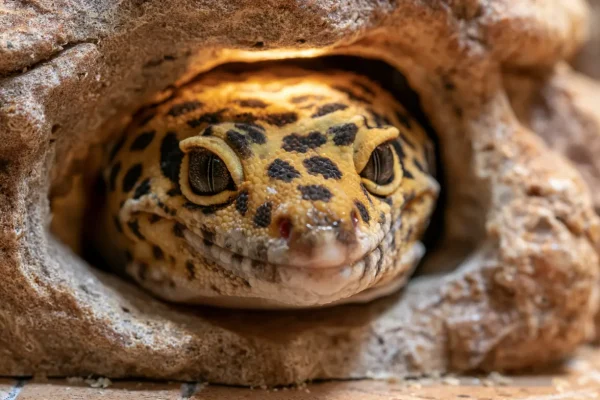
Leopard geckos are prey animals, and their nervous systems are wired around contact, not space. A hide that lets a gecko touch the walls with several parts of its body at once triggers a genuine security response: the animal rests in the open posture, sits visibly near the entrance, and comes out to explore on its own schedule. A large, roomy hide gives visual cover — it blocks sightlines — but it doesn’t deliver that tactile “I am enclosed” signal, so the gecko keeps looking for something snugger.
Pro Tip: Before buying anything, measure your gecko’s girth with a soft tape or piece of string. Compare that number to a hide’s interior dimensions, not the exterior box measurements — manufacturers rarely list interior space, and it’s the number that actually matters.
Best Hides & Decor: Quick Comparison
| Product | Best For | The Big Win | The Catch | Price Tier |
|---|---|---|---|---|
| Exo Terra Reptile Cave (Small) | Adult warm or cool hide | Sturdy resin, natural look, stable base, several sizes | Medium/large sizes run too spacious for most adults | Mid-range |
| Zoo Med Reptile Shelter 3-in-1 | Dedicated moist hide | Top opening lets you pack in damp moss; doubles as a laybox for gravid females | Less naturalistic look; top hole must be filled correctly to hold humidity | Budget |
| Lugarti Premium Reptile Hides | Keepers who want durability | Thicker resin, heavier base, sizes that actually fit adult geckos snugly | Pricier; mostly sold online | Mid-range |
| Exo Terra Moist Hide Rock | Naturalistic moist hide | Built specifically to retain humidity; entrance sized well for most adults | Limited size range | Mid-range |
| DIY Tupperware, entrance cut to fit | Any size, especially juveniles | Cut the entrance to your exact gecko; free if you already own a container; fully adjustable | Not naturalistic; needs periodic replacement | Budget |
| Generic pet-store starter hides (M/L) | — | Cheap, everywhere | Often sized for something closer to a cat than a gecko — measure before buying | Budget |
Exo Terra Reptile Cave (Small)
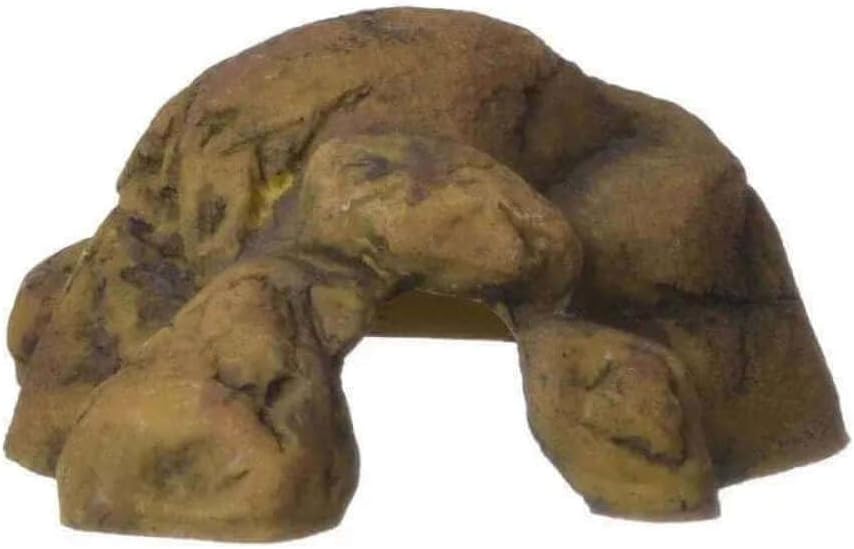
Verdict: The most reliable “buy it and it fits” option for adult leopard geckos, provided you stick to the small size.
Pros
- Sturdy resin construction that won’t tip or crack under normal handling
- Naturalistic rock-cave look that blends into most setups
- Wide size range across the product line
- Easy to find at most pet retailers
Cons
- The medium and large versions are genuinely too big for an average adult leo
- Requires you to measure your gecko first — sizing by age or weight guesses alone leads to the wrong pick
This is the hide most keepers reach for first, and for adult geckos it’s a solid choice — as long as you resist the instinct to size up “for extra room.” More room is exactly the problem, not the solution.
Zoo Med Reptile Shelter 3-in-1
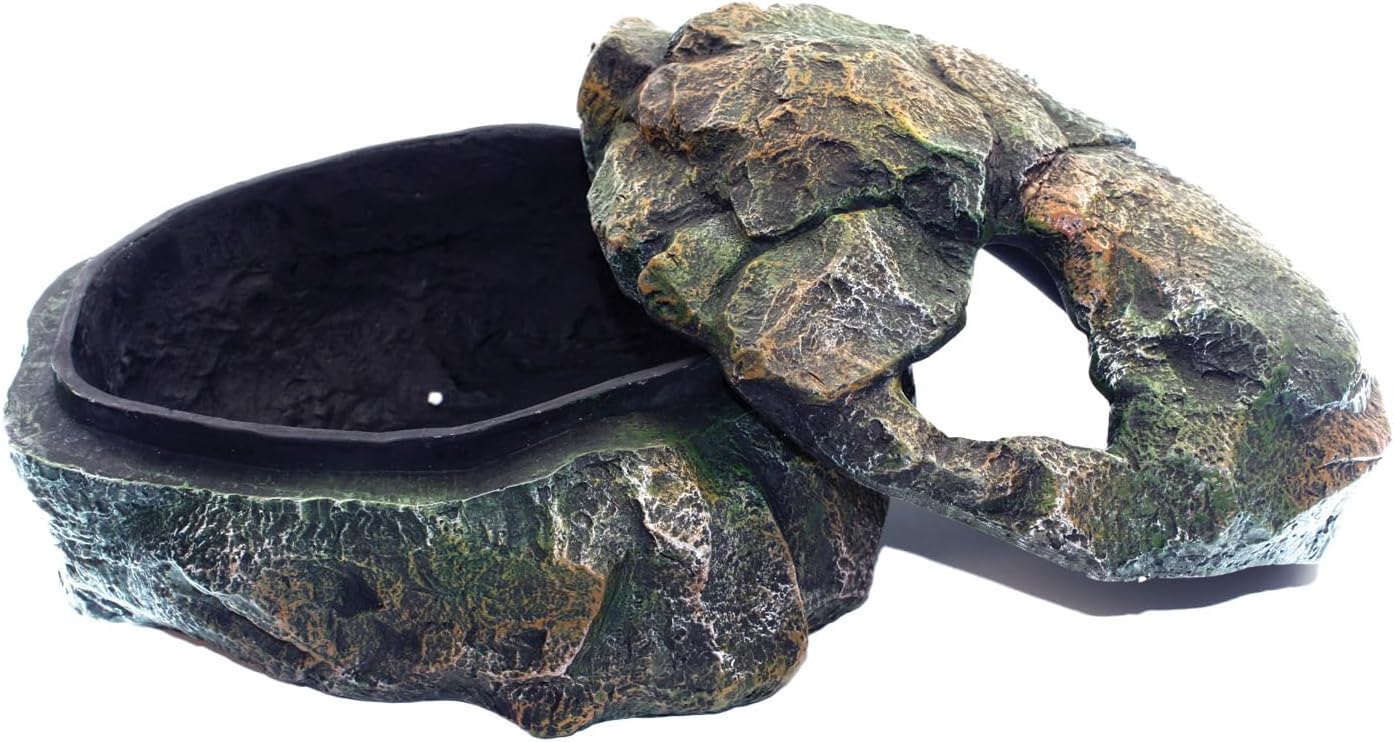
Verdict: The easiest way to build a proper moist hide without any DIY work.
Pros
- Top-loading design makes packing in damp sphagnum moss simple
- Doubles as a laybox if you’re keeping a gravid female
- Inexpensive relative to other moist-hide options
Cons
- Looks more utilitarian than naturalistic
- The fill hole needs to be sealed or managed properly, or humidity leaks out fast
If shed quality has been a recurring problem — retained shed, stuck eye caps — this is often the fastest fix, because it’s built around humidity retention rather than looks.
Lugarti Premium Reptile Hides
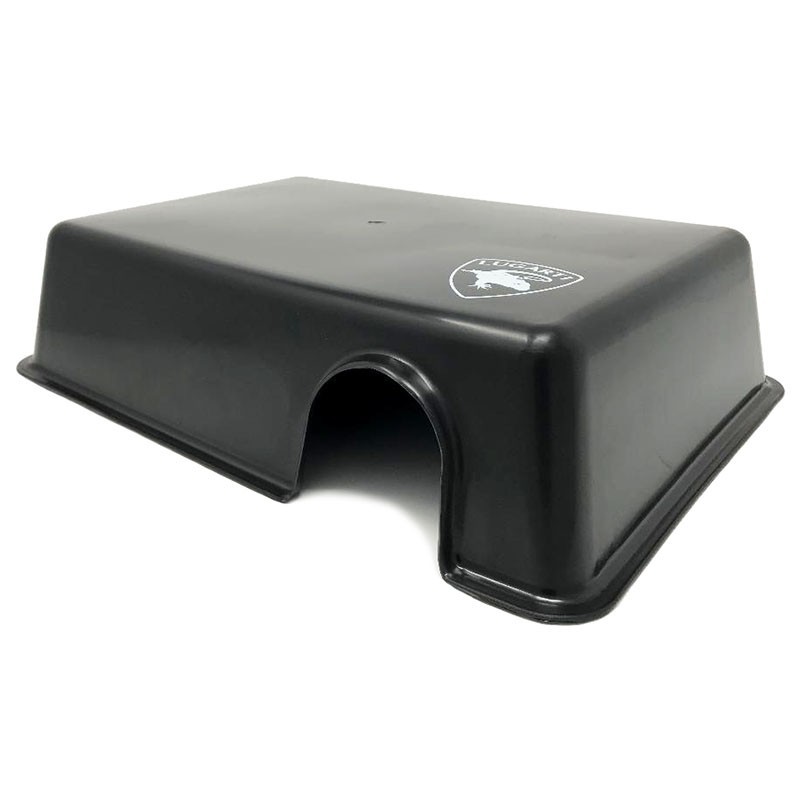
Verdict: Worth the extra cost if you want something that lasts years and actually comes in adult-appropriate sizing.
Pros
- Noticeably thicker, heavier resin than most competitors
- Stable enough that it won’t shift when a gecko pushes against the walls
- Sizes are calibrated closer to real adult gecko dimensions than most “small” branded hides
Cons
- Costs more than comparable options
- Mostly available through online retailers, not big-box pet stores
Expert Insight: The extra cost here buys you sizing accuracy, not just build quality. A lot of “small” hides from other brands are still oversized for a typical adult leo — Lugarti’s small size tends to run closer to what actually produces wall contact.
Exo Terra Moist Hide Rock
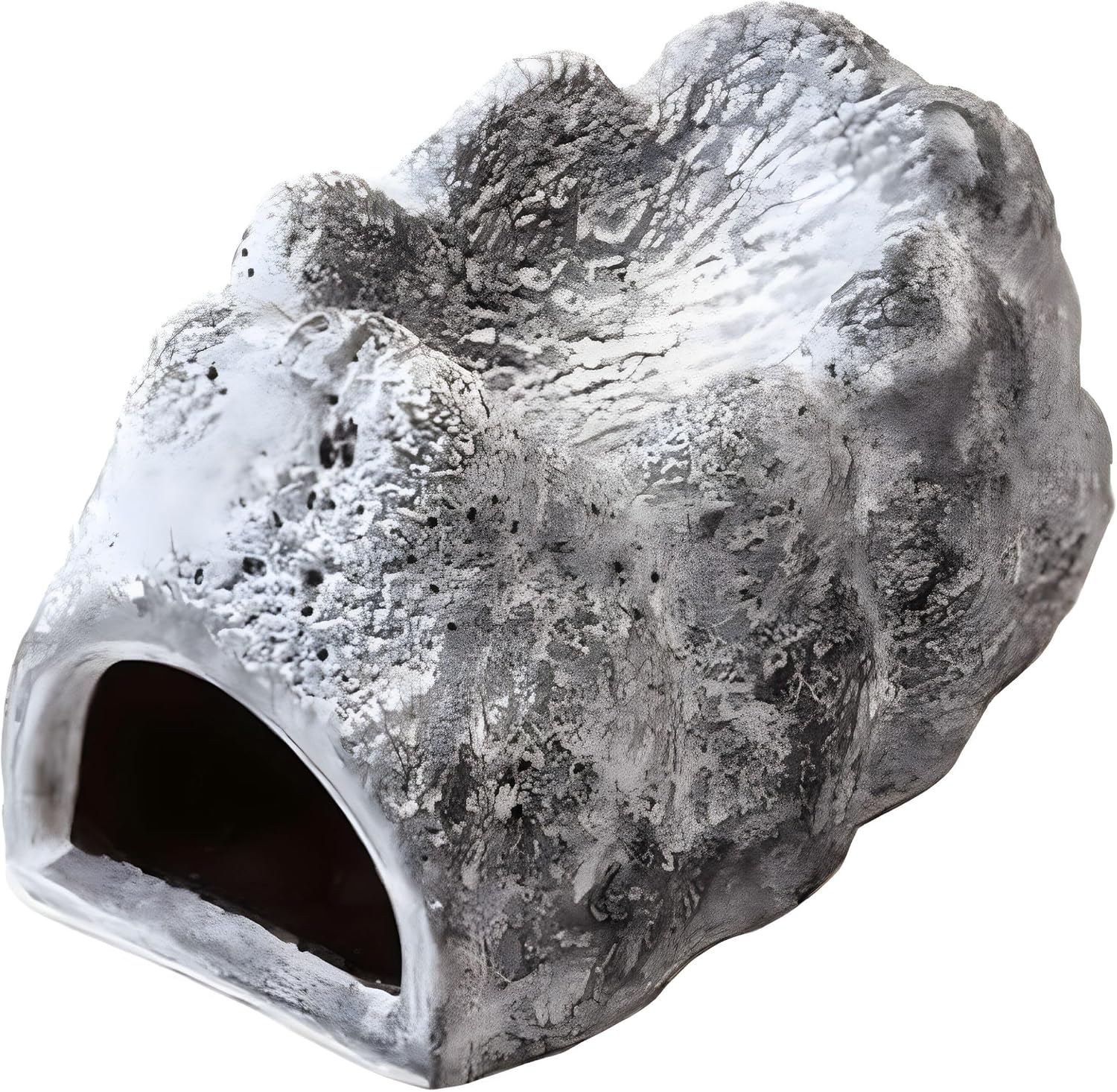
Verdict: The naturalistic-looking option for keepers who don’t want their moist hide to look like a plastic tub.
Pros
- Purpose-built for humidity retention, unlike a repurposed dry hide
- Entrance sizing works for most adult geckos out of the box
- Fits the aesthetic of a naturalistic or bioactive setup
Cons
- Only comes in one real size option, so it won’t fit every gecko correctly
DIY Tupperware With a Cut Entrance
Verdict: The single best moist hide for juveniles, and arguably the best value hide at any life stage.
Pros
- Cut the entrance to the exact width of your gecko’s body — no guessing
- Costs nothing if you already have a container on hand
- Fully adjustable as the gecko grows — just cut a slightly bigger hole
- Holds moisture well when filled with sphagnum moss
Cons
- Won’t win any design awards in a display enclosure
- Needs replacing periodically as the plastic scratches and stains
Common Mistake: Keepers buy an expensive naturalistic hide for a juvenile gecko, assuming it’ll “grow into it.” In practice, the gecko avoids it the entire time it’s too large, and you end up buying a second, smaller hide anyway. For juveniles, cheap and correctly sized beats expensive and roomy.
Generic Pet-Store Starter Hides
These medium and large hides are inexpensive and available everywhere, but the sizing is the catch: many are proportioned for something closer to a bearded dragon or even a small mammal than a leopard gecko. If you already own one and your gecko avoids it, oversizing is the first thing to check before assuming something else is wrong.
The Three-Hide System
Every leopard gecko enclosure needs three hides, each doing a specific job. Which brand you buy matters far less than getting the placement and sizing right.
Warm hide — positioned directly over the heat source (under-tank heater or the zone heated by a Deep Heat Projector). Floor temperature inside should read 88–92°F on an IR temp gun. This is where the gecko goes to raise its body temperature for digestion and immune function, and it needs to be snug. If the gecko won’t use it, check temperature and sizing first — in that order.
Cool hide — on the opposite end, with no heat source, holding an ambient 70–75°F. The gecko retreats here to cool down between warm-side sessions. If a gecko avoids the cool hide, it’s often a sign the temperature gradient isn’t strong enough — the “cool” end isn’t actually cooler.
Moist hide — positioned over or near the heat source, sometimes slightly off-center between the warm and mid zones. Packed with damp substrate (sphagnum moss is standard), it holds 70–80% interior humidity even while the rest of the enclosure sits at 30–40%. This is where shedding happens. Skip it, and retained shed and stuck eye caps become close to inevitable over a few shed cycles.
Hide Sizing: The Snug Rule
Quick Answer: If you can fit a finger — let alone a fist — in the hide alongside your gecko, it’s too big.
The correct hide makes contact with the gecko’s body from multiple sides at once, with almost no spare room. It sounds restrictive, but it matches how geckos actually live in the wild: tucked into rock crevices, burrow entrances, and narrow gaps under debris — not roomy caves.
- Juveniles: A Tupperware container with an entrance cut to just fit the gecko’s body is often the single best hide available. Size up the entrance (or the container) as the gecko grows.
- Adults: Most “small” branded hides fit an average adult correctly. “Medium” and “large” branded sizes are usually too spacious. Measure girth against interior dimensions before ordering anything.
Quick Take: I’m not fully certain whether geckos ever acclimate to a slightly oversized hide over time — some experienced keepers report their geckos eventually settling into larger hides after weeks without an alternative. But watching a gecko choose a paper towel corner over an expensive hide for months at a stretch suggests most don’t just “get used to it.” The preference for a snug fit seems to hold.
The Moist Hide: Setup and Maintenance
A functional moist hide needs three things: a container that actually holds moisture (ceramic, thick plastic, or coated resin — thin plastic dries out too fast), an entrance sized snugly to the gecko, and a substrate that stays damp for several days between refreshes.
Best moist hide substrates:
- Sphagnum moss — the standard choice. Holds moisture 5–7 days between refreshes, has a texture geckos tolerate well, and isn’t particulate enough to pose an impaction risk if a strand gets swallowed during shedding.
- Coconut fiber (coco coir) — absorbs moisture well and can be blended with sphagnum moss for a mixed substrate.
- Damp paper towels — the simplest option. Effective, but needs replacing every 2–3 days before it dries out or develops mold.
The substrate should feel damp, not soaked — squeeze it and expect a few drops, not a stream. Too dry and it won’t hold shed-cycle humidity; too wet and it invites bacterial growth.
Common Mistake: Refreshing the moist hide on a fixed schedule regardless of how it actually looks. Check it weekly, but replace it any time it looks dry or discolored, even if that’s sooner. Rinse and sterilize the container itself monthly with a diluted reptile-safe disinfectant.
Decor and Enrichment Beyond Hides
Climbing features: Leopard geckos are mostly ground-dwellers, but they do investigate low climbing structures. Stable cork bark rounds or slate stacks in the mid-zone give them something to climb, hide behind, and explore — as long as nothing can tip.
Artificial plants: Add visual complexity without the moisture headaches of live plants. Silk versions look and feel more realistic than plastic and hold up longer. Skip anything with small pieces that could detach and be swallowed.
Slate or stone tiles: Flat slate or ceramic tile makes a strong warm-side basking surface — it retains heat well and conducts belly warmth from an under-tank heater more evenly than loose substrate.
Water dish: Shallow enough for easy access, deep enough to hold water for a full day without evaporating dry, placed on the cool side, and changed daily — bacteria multiply fast in a warm enclosure.
Calcium dish: A small, shallow dish of plain calcium powder (no D3), left out at all times and refreshed weekly. Most geckos self-regulate their intake from it.
What to Avoid
- Perfectly smooth, round hides. Geckos prefer some grip texture; a slick dome hide gets used less than one with a textured or naturalistic interior.
- Sharp entrance edges. Check for rough resin seams or plastic burrs at the opening, and sand or file down anything that could cut the gecko on entry or exit.
- Unstable stacked decor. A heavy rock formation collapsing on a sleeping gecko is a real, documented cause of injury and death. Anything stacked or leaning needs to stay put even if the gecko crawls underneath it.
- Oversized water dishes. Leopard geckos can drown in deep water — keep any dish under 1 inch deep for a juvenile.
FAQ
Why isn’t my leopard gecko using the hide I bought? Nine times out of ten, it’s too large — the gecko isn’t getting the wall contact that signals safety. Put a smaller hide, or a Tupperware container with a snug entrance cut, right next to the current one and see which one it picks. Also confirm the warm hide sits directly over the heat source; if the floor temperature underneath isn’t 88–92°F, size won’t matter because the gecko has no thermal reason to use it.
What do I put in the moist hide? Damp sphagnum moss is the standard, coconut fiber works nearly as well, and damp paper towels are the simplest fallback. Aim for damp-to-the-touch, not dripping. In theory the interior should sit at 70–80% humidity, though few keepers actually measure it with a hygrometer — visibly moist moss that stays damp for several days is the practical benchmark most people use instead.
How many hides does a leopard gecko need? Three, minimum: warm, cool, and moist. Some keepers add a fourth in the mid-zone as a general roaming refuge, but three is the floor — skip the moist hide and shed problems follow; skip the cool hide and the gecko has nowhere to thermoregulate down to.
Can I use rocks or wood from outside as decor? Wild rocks are usable if sterilized properly first: scrub clean, soak in a 10% bleach solution for 30 minutes, rinse thoroughly, then bake at 250°F for 30 minutes. Wild wood is riskier — it’s harder to fully sterilize and carries a higher chance of mites or other pests hitching a ride. Kiln-dried reptile wood from a retailer is the safer call for wood decor specifically.
How often should I clean the hides? Spot-clean waste as you see it — leopard geckos often pick one corner (sometimes inside a hide) as a bathroom spot. Do a full sanitize monthly: remove the hide, rinse, soak in a reptile-safe disinfectant, rinse again, and dry fully before putting it back. The moist hide’s substrate is the exception — refresh that weekly regardless of the hide’s own cleaning schedule.
Which Hide Should You Actually Buy?
If you take one thing from this guide, make it this: sizing solves more problems than shopping does. A $2 correctly sized paper towel hide will outperform every product on this list if the product is the wrong size for your gecko.
That said, once sizing is handled:
- Best Overall: Exo Terra Reptile Cave (Small) — reliable fit for most adults, sturdy, and easy to find.
- Best Budget: DIY Tupperware with a cut entrance — free or nearly free, and the only option that adjusts as your gecko grows.
- Best Premium: Lugarti Premium Reptile Hides — thicker build and sizing that’s genuinely calibrated for adult geckos, if you don’t mind ordering online.
- Best for Juveniles: DIY Tupperware, hands down — nothing else lets you size the entrance to a young gecko’s exact body width.
Measure your gecko before you buy anything. Then build around the three-hide system — warm, cool, moist — and let fit, not appearance, drive every decision.