
- Best Aquarium Fish Food for Most Tanks
- Fish Food Is Not One-Size-Fits-All
- Best Overall Community Food: Fluval Bug Bites Tropical Formula
- Best Premium Daily Pellet: New Life Spectrum Community
- Best for Small Fish: Hikari Micro Pellets
- Best Budget Flake: TetraMin Tropical Flakes
- Best Color Support: Omega One Freshwater Flakes
- Best Bottom Feeder Food: Hikari Sinking Wafers
- Best for Goldfish: Hikari Goldfish Foods
- Best for Bettas: Fluval Bug Bites Betta or Hikari Betta Bio-Gold
- Best for Marine Fish: Mixed Pellets, Frozen Mysis, and Nori
- Freeze-Dried, Frozen, and Live Food
- How Much Should You Feed?
- FAQ
- What is the best aquarium fish food brand?
- Are flakes or pellets better for aquarium fish?
- What is the best flake food for fish?
- Can all fish eat the same food?
- How often should I feed aquarium fish?
The wrong fish food can make a clean tank dirty in one feeding.
I do not mean the label is evil. I mean flakes can drift past bottom feeders, giant pellets can choke small tetras, and rich goldfish food can turn a tank into a nitrate factory if you feed like the fish pay rent. The best aquarium fish food is the one your fish can eat cleanly, digest well, and use before it rots in the gravel.
Best Aquarium Fish Food for Most Tanks
For most community freshwater tanks, I would keep Fluval Bug Bites Tropical Formula or New Life Spectrum Community Pellets as the main food, then add Hikari specialty foods for bettas, goldfish, cichlids, algae eaters, or bottom feeders. TetraMin is still a useful flake for basic community tanks, but pellets and granules are often easier to feed cleanly.
| Product & Model | Best For | The Big Win | The Catch | Price Tier |
|---|---|---|---|---|
| Fluval Bug Bites Tropical | Community tanks | Insect-based protein | Granules vary slightly | Mid-Range |
| New Life Spectrum Community | Mixed tropical fish | Balanced daily pellet | Costs more | Premium |
| Hikari Micro Pellets | Small fish | Tiny clean bites | Too small for big fish | Mid-Range |
| TetraMin Tropical Flakes | Budget tanks | Easy to find | Flakes get messy | Budget |
| Omega One Freshwater Flakes | Color support | Fish-based ingredients | Can cloud if overfed | Mid-Range |
| Repashy Gel Food | Grazers and picky fish | Stays available longer | Takes prep | Premium |
Fish Food Is Not One-Size-Fits-All
Fish eat in different places.
Some feed at the surface. Bettas, guppies, and many gouramis watch the top. Tetras and rasboras often feed mid-water. Corydoras and loaches search the bottom. Plecos and some algae eaters graze surfaces. Goldfish inhale food like small orange vacuum cleaners.
So one flake food does not serve every fish well.
Food form matters:
- Flakes spread across the surface
- Micro pellets suit small fish
- Floating pellets suit bettas and some cichlids
- Sinking pellets reach bottom feeders
- Wafers help plecos and corydoras
- Gel food works for grazers and goldfish
- Frozen food adds variety
The best aquarium fish food brand is less important than choosing the right style from that brand.
That is my first strong opinion here.
A premium floating pellet is useless if your fish eat from the sand. A cheap flake can be fine if your community fish eat it fast and your water stays clean.

Best Overall Community Food: Fluval Bug Bites Tropical Formula
Fluval Bug Bites Tropical Formula is my favorite everyday food for many community tanks.
The insect protein base makes sense. Many small fish eat insect larvae and small invertebrates in nature. The granules are easy for tetras, rasboras, guppies, platies, barbs, and many small community fish.
It also tends to get a strong feeding response.
Fish notice it fast. That matters because food that sits around becomes waste.
The catch is size variation. Some granules are tiny. Some are larger. For very small fish, crush a bit between your fingers. For larger fish, use the right size formula.
I like Bug Bites for:
- Community tropical fish
- Small cichlids
- Bettas with the betta formula
- Goldfish with the goldfish formula
- Owners who want a better daily food
Do not dump a large pinch because the fish look excited. Fish always look excited. They are not budget managers.
Best Premium Daily Pellet: New Life Spectrum Community
New Life Spectrum has a loyal following because the foods are built around a broad mix of proteins, algae, and nutrients.
The Community formula is a good pick for mixed tropical tanks. The pellets are small, steady, and usually eaten cleanly. I like pellets because you can control portions better than flakes.
This is a strong choice for people who want one high-quality staple food and do not mind paying more.
The catch is that not every fish loves every pellet right away. Some fish raised on flakes need time. Start with tiny amounts and mix with the old food for a few days.
New Life Spectrum works well for:
- Tetras
- Rasboras
- Livebearers
- Small barbs
- Dwarf cichlids
- Community tanks with mixed mouths
For bottom feeders, add sinking foods. Do not assume community pellets feed everyone just because some crumbs fall.
Best for Small Fish: Hikari Micro Pellets
Tiny fish need tiny food.
That sounds obvious until you watch ember tetras attack flakes bigger than their faces. Hikari Micro Pellets are useful for small community fish because the pieces fit better.
Small fish waste energy chasing food they cannot swallow. They also spit out pieces, which makes the tank dirtier.
Hikari Micro Pellets are good for:
- Ember tetras
- Chili rasboras
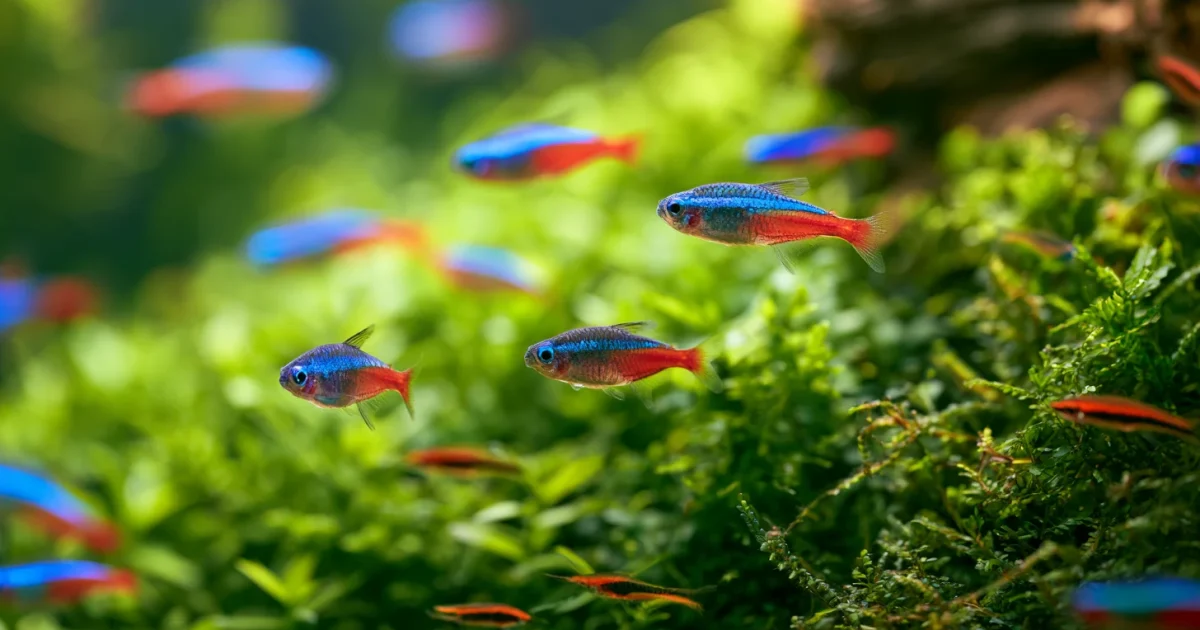
- Neon tetras
- White clouds
- Small guppies
- Young fish
The catch is that larger fish may ignore them or eat too many before shy fish get any. In a mixed tank, feed in more than one spot.
I also like frozen daphnia or baby brine shrimp for small fish once in a while. Dry food is easy. Variety is better.
Best Budget Flake: TetraMin Tropical Flakes
TetraMin is the classic flake food many of us used first.
It is easy to find, cheap, and accepted by a wide range of community fish. For a basic tropical tank, it can work fine if you feed small amounts and add variety.
I know some hobbyists roll their eyes at basic flakes.
I get it. There are better ingredient lists now. But a common food fed carefully is still better than a premium food dumped into the tank until it snows.
The main problem with flakes is mess. They break apart, float, sink, and get pulled into filters. Bottom feeders may miss them. Some fish grab the big pieces while shy fish get dust.
Use flakes like this:
- Crush for small fish
- Feed tiny pinches
- Watch all food get eaten
- Remove excess if needed
- Add pellets or frozen food for variety
TetraMin is not my dream food. It is a workable basic food.
That distinction matters.
Best Color Support: Omega One Freshwater Flakes
Omega One Freshwater Flakes are a nice step up from basic flakes for many freshwater fish.
The fish-based ingredients appeal to me more than grain-heavy foods. Many fish take them well, and the flakes can help support color when the rest of the tank care is good.
Food can support color. It cannot fake health.
If the water is dirty, the tank is cold, or the fish are stressed, no color flake will make them glow. Clean water comes first.
Use Omega One for community tanks, livebearers, rainbows, small cichlids, and fish that prefer flake texture. Do not use it as the only food for bottom feeders or algae grazers.
The catch is richness. Feed lightly. Rich food plus heavy feeding can raise waste fast.
Best Bottom Feeder Food: Hikari Sinking Wafers
Corydoras, loaches, and many catfish need food that reaches them.
Hikari Sinking Wafers are a common, reliable choice. They sink fast, hold together long enough for bottom fish to find them, and come in sizes that work for many tanks.
Please do not call corydoras “cleaner fish” and expect them to survive on leftovers.
They need dinner.
Drop wafers after lights dim if top fish steal everything. Break wafers into smaller pieces for small groups. Remove uneaten chunks if they sit too long.
For plecos and algae grazers, use algae wafers, vegetables when suitable, and species-specific foods. A bristlenose pleco has different needs than a cory cat.
Best for Goldfish: Hikari Goldfish Foods
Goldfish need food that suits their body and waste load.
Hikari makes several goldfish formulas, including floating and sinking options. For fancy goldfish, I often prefer sinking pellets because gulping air at the surface can be an issue for some fish.
Goldfish are heavy eaters. They also produce a lot of waste. That means the best aquarium fish food for goldfish is not just about growth. It is about digestibility and portion control.
Feed less than they request.
They will request everything.
For fancy goldfish, soak hard pellets briefly if needed. Add vegetable matter like shelled peas in some cases, gel foods, or goldfish-safe greens. Keep water testing honest because goldfish make nitrate quickly.
I would not feed tropical flake as the main goldfish diet. Goldfish deserve a food made for them.
Best for Bettas: Fluval Bug Bites Betta or Hikari Betta Bio-Gold
Bettas are carnivores with tiny stomachs and big acting skills.
Fluval Bug Bites Betta Formula and Hikari Betta Bio-Gold are both good picks. Bug Bites has the insect protein angle I like. Hikari floats well and many picky bettas accept it.
The trick is pellet size.
If your betta grabs a pellet, spits it out, then grabs it again, the pellet may be too large or too hard. Try smaller pieces or soak for a few seconds.
Add variety with frozen daphnia, brine shrimp, or bloodworms. Treat bloodworms like treats, not breakfast every day.
I am not 100% sure any single betta food is perfect for every fish. Bettas can be picky in a way that feels personal. Keep two good foods if needed.
Best for Marine Fish: Mixed Pellets, Frozen Mysis, and Nori
Saltwater fish make food choices more specific.
Clownfish can eat quality marine pellets and frozen foods. Gobies may need small meaty foods. Tangs need algae and seaweed like nori. Some butterflyfish, mandarins, and picky marine fish need special diets and mature tanks.
For a basic marine tank, use:
- Quality marine pellets
- Frozen mysis shrimp
- Brine shrimp as variety
- Nori for herbivores
- Occasional krill for larger fish
Mysis shrimp is a protein-rich frozen food many marine fish love. Nori is dried seaweed. Clip it in the tank for grazing fish like tangs.
Do not buy a fish before knowing what it eats. That advice is boring and saves lives.
Freeze-Dried, Frozen, and Live Food
Prepared foods are the base for most aquariums.
That is normal. Many fishkeepers use flakes, pellets, tablets, and wafers every day because they are easy and balanced.
But variety helps.
Frozen foods like bloodworms, brine shrimp, mysis shrimp, daphnia, and krill can improve feeding response and add texture. Freeze-dried foods are easy to store, but I like to soak them before feeding. Dry foods can expand.
Live foods can be great, but they need clean sources. Do not scoop random pond life and feed it unless you enjoy mystery problems.
Use treats to fill gaps, not replace the staple.
How Much Should You Feed?
Less.
That is the answer most tanks need.
Feed what your fish can finish in about one to two minutes. Bottom feeders may need extra time with sinking foods, but you should still avoid leftovers sitting for hours.
Overfeeding causes:
- Cloudy water
- Ammonia spikes
- High nitrate
- Algae
- Fat fish
- Dirty substrate
Fish begging does not mean fish starving. Many aquarium fish learn that humans equal food. They will perform. You are allowed to be the adult in the room.
FAQ
What is the best aquarium fish food brand?
Fluval, New Life Spectrum, Hikari, Tetra, Omega One, Sera, and Repashy all make useful foods. The best brand depends on your fish type and food form.
Are flakes or pellets better for aquarium fish?
Pellets are often easier to portion and keep cleaner. Flakes work well for many community fish but can break apart and make more mess.
What is the best flake food for fish?
TetraMin is a good budget flake, while Omega One Freshwater Flakes are a stronger ingredient-focused choice for many freshwater tanks.
Can all fish eat the same food?
No. Surface feeders, bottom feeders, herbivores, carnivores, goldfish, bettas, and marine fish may need different foods.
How often should I feed aquarium fish?
Most adult community fish do well once or twice a day in small amounts. Young fish, fry, and some species need different schedules.
The best top rated fish food brands all fail if the food misses the fish.
Match the food to mouth size, feeding level, and diet. Use a good staple, then add variety. Feed lightly enough that the tank stays clean. Your fish will still beg. That does not mean they won the argument.