
- What Makes a Training Treat Different From a Regular Treat
- The Treat Tier System (This Is What Most Posts Miss)
- The Best Dog Training Treats You Can Actually Buy
- Best Dog Training Treats for Puppies
- Best Dog Training Treats for Small Dogs
- Best Dog Training Treats for Large Dogs
- Best Dog Training Treats for Sensitive Stomachs
- What About Homemade Training Treats?
- How to Use Treats Without Creating a Treat-Dependent Dog
- FAQ
My dog Biscuit once ignored a piece of hot dog to chase a pigeon. Full piece. Didn’t even sniff it. I’d been using those hot dogs for weeks in our living room and they worked great — sit, stay, spin, all of it. Then we went to the park. Nothing.
That was the day I learned that the best dog training treats aren’t just about ingredients. They’re about matching the treat to the moment.
This post covers what actually makes the best dog training treats work, which ones are worth buying, and how to figure out what your dog needs for different situations — including puppies, small dogs, large dogs, and dogs with sensitive stomachs.
What Makes a Training Treat Different From a Regular Treat
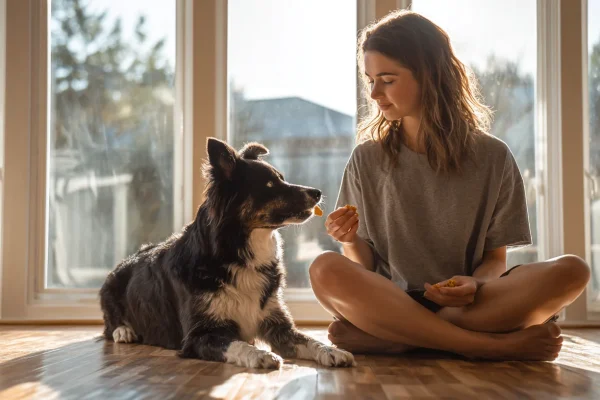
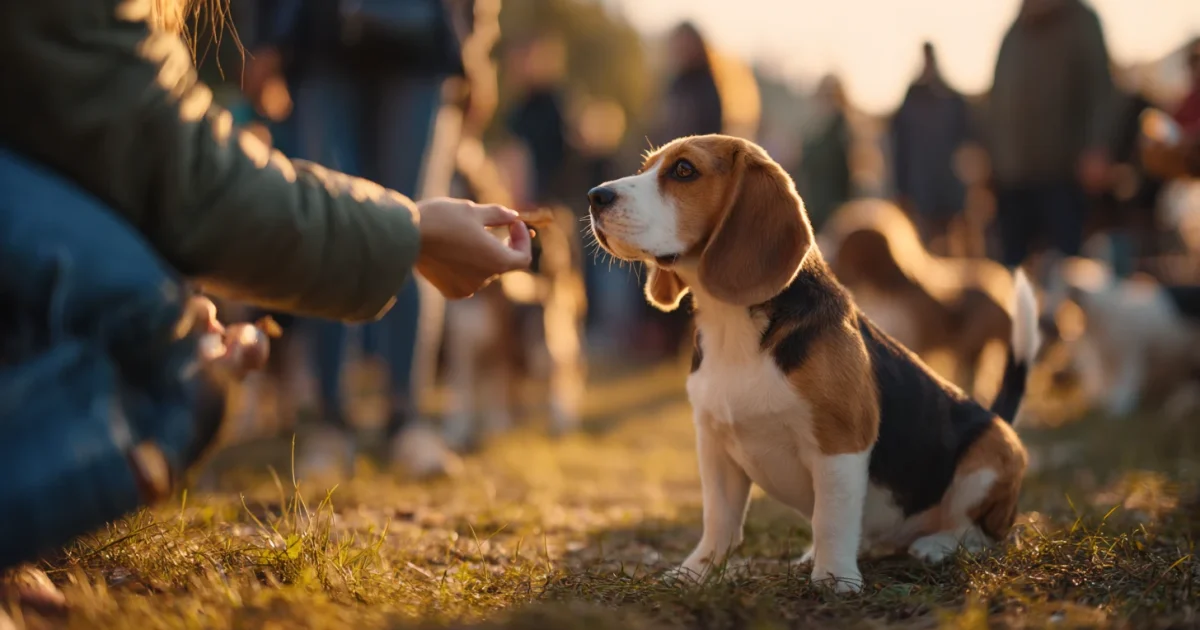
Size matters more than people think. A training treat should disappear in one bite — no chewing, no searching the floor for crumbs. The faster your dog swallows it, the faster their brain connects the treat to whatever they just did right.
Soft beats crunchy almost every time. A crunchy biscuit takes five seconds to eat. Five seconds is an eternity in dog training time. You want the reward delivered, registered, and done so you can move on to the next rep.
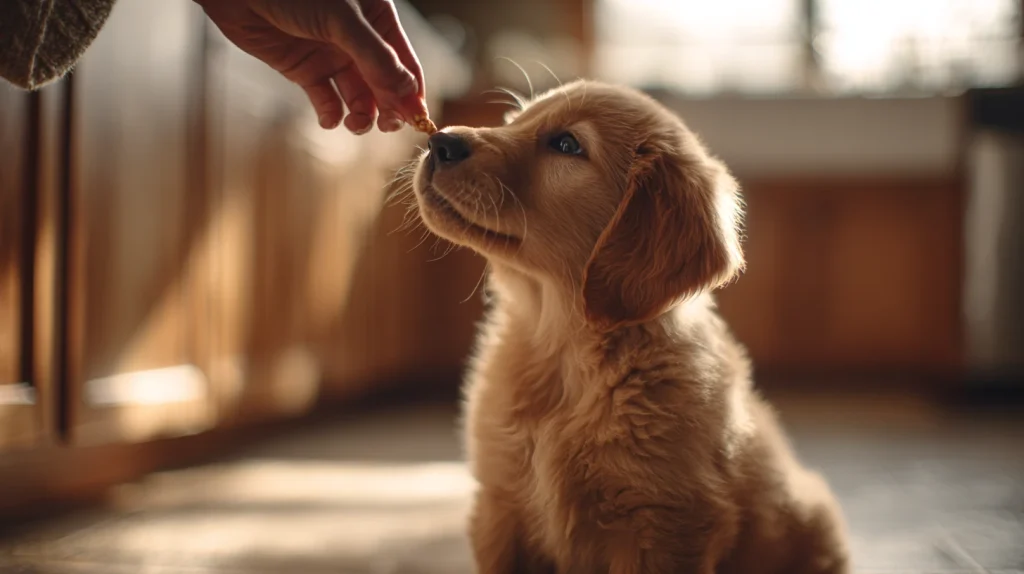
Smell is your secret weapon. Dogs experience food through their nose before their mouth ever gets involved. Stinky treats — liver, salmon, cheese — hold your dog’s attention better than bland ones, especially in busy environments.
Three things to look for:
- Small — pea-sized or smaller, especially for puppies and small breeds
- Soft — goes down fast, no crumble mess
- Aromatic — something your dog can smell from a few feet away
Low calories matter too, but mostly because you’ll be giving a lot of them. During a 10-minute training session, your dog might eat 30 to 50 small treats. That adds up fast.
The Treat Tier System (This Is What Most Posts Miss)
Here’s something almost no one talks about: not all training situations need the same treat.
Think of treats in three tiers.
Tier 1 — Low Value: Your dog’s kibble, plain rice cakes, Cheerios, plain cooked carrot. Use these for easy, low-distraction practice at home. Sit in the living room. Lie down on the mat. Stuff your dog already knows cold.
Tier 2 — Medium Value: Soft commercial training treats like Zuke’s Mini Naturals, Cloud Star Tricky Trainers, or Pet Botanics Training Rewards. These are what most people think of as “training treats.” Great for learning new commands, short outdoor sessions, or moderately distracting environments.
Tier 3 — High Value: Freeze-dried liver, small pieces of real chicken, cheese, hot dog slices, or salmon. Reserve these for hard stuff. Recall training. Working near other dogs. Teaching “leave it” around squirrels. High-distraction parks.
The mistake I made with Biscuit and the pigeon? I brought a Tier 2 treat into a Tier 3 situation.
Your dog isn’t being stubborn when they ignore a treat outside. They’re just telling you the math doesn’t work. The distraction is higher value than the reward. Bump up the treat, and suddenly they’re paying attention again.
The Best Dog Training Treats You Can Actually Buy
These are the ones that consistently work, are easy to find, and hold up in real training sessions.
Zuke’s Mini Naturals — A trainer staple. Tiny, soft, low calorie (3 calories each), and they come in chicken, salmon, and peanut butter. Easy to break in half for tiny dogs. Widely available.
Cloud Star Tricky Trainers — Similar to Zuke’s, with a crunchy version that some dogs actually prefer. The chewy version works better for fast sessions. At 2 calories per piece, you can use a lot without stressing over your dog’s diet.
Vital Essentials Freeze-Dried Beef Liver — Single ingredient. Just beef liver. These are the nuclear option — bring them out when nothing else is working. A bit pricier and they smell like, well, liver. Worth it.
Stewart Pro-Treat Freeze-Dried Chicken Liver — Same idea as above, but some dogs prefer the flavor. Grain-free, no fillers, comes in a resealable tube which is genuinely convenient mid-session.
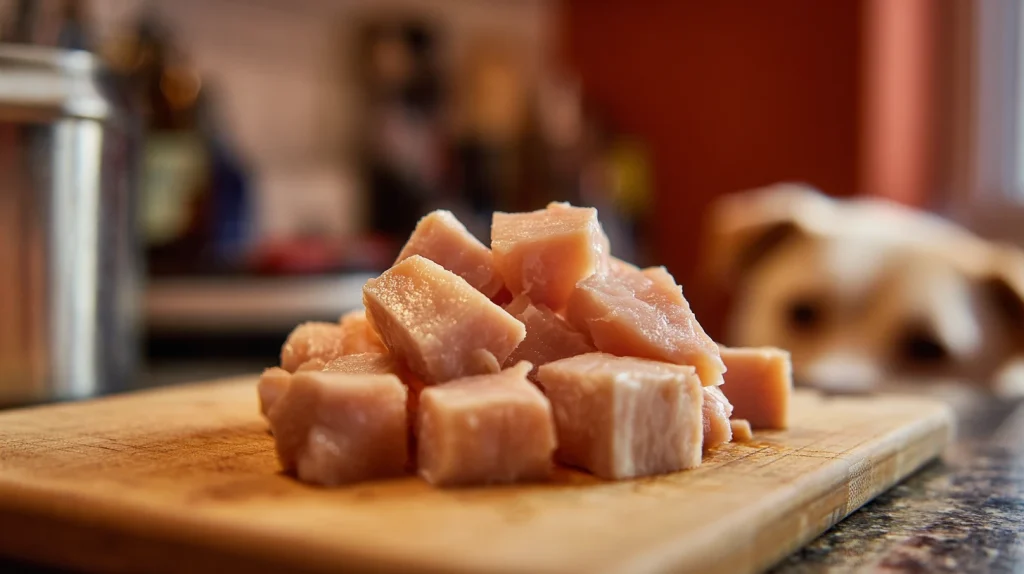
Real chicken breast, boiled and cubed — Cheap, effective, and arguably the gold standard high-value treat. Cut it small. Pat it dry so it doesn’t get slimy in your pocket. Store in the fridge for up to four days.
Cheese cubes — American cheese or string cheese, torn into tiny bits. Dogs go completely sideways for cheese. Use sparingly — it’s rich and can cause loose stools if overdone.
Honestly? The best training treats for most dogs aren’t the priciest option. They’re whatever your specific dog goes nuts for that you can give in tiny amounts, fast.
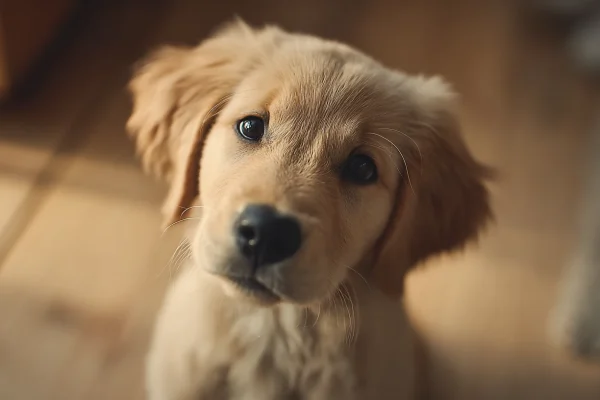
Best Dog Training Treats for Puppies
Puppies have smaller stomachs, developing digestive systems, and a much lower tolerance for rich food. This matters a lot.
Stick to soft treats with simple ingredients. Avoid anything with a long ingredient list when you’re just starting out. A 10-week-old puppy doesn’t need salmon oil, flaxseed, and seven herbs — they need something that won’t upset their stomach before you’re even done with a five-minute session.
Good options for puppies:
- Soft commercial puppy treats broken into tiny pieces (think lentil-sized, not pea-sized)
- Small bits of plain cooked chicken
- Plain Cheerios for low-distraction household training
- Zuke’s Mini Naturals cut into thirds
Keep sessions short — five to seven minutes max for very young puppies. Their brains fatigue fast. More treats won’t help if the puppy has mentally checked out.
One thing worth knowing: puppies are often easier to train with lower-value treats than adult dogs. Everything is new and exciting. A plain bit of kibble soaked in warm water might be all you need for basic sit and down.
Best Dog Training Treats for Small Dogs
Small dogs need smaller pieces. That sounds obvious, but people underestimate how small “small” needs to be.
For a Chihuahua or a toy breed, a pea-sized treat is honestly already pretty big. Aim for half a pea. The dog gets the reward signal, but they’re not eating a meaningful chunk of calories each time. During a 15-minute session with 40 reps, those bites add up.
Use squeeze tubes for very small dogs. A squeeze tube filled with peanut butter (xylitol-free — always check the label), soft cheese, or pureed chicken lets you give a tiny lick as a reward. It’s fast, low-calorie, and small dogs love it.
A few options that work well for small breeds:
- Zukes Mini Naturals (the standard version, or broken smaller)
- Wellness Soft WellBites
- Plato Small Bites
- Licks of peanut butter or cream cheese from a squeeze tube
Watch calorie counts. A 5-pound dog has a very small daily calorie budget. Twenty training treats can genuinely be a significant chunk of their day’s food.
Best Dog Training Treats for Large Dogs
Here’s a thing that surprises people: large dogs still do best with small training treats.
The size of the treat should match how fast you want the session to move, not how big your dog is. A Great Dane eating full-sized treats is a Great Dane who spends half the session chewing. Small treat, faster session, more reps, better learning.
That said, large dogs can handle tougher textures. A harder, chewier treat won’t be a problem for a 70-pound Lab the way it might be for a small senior dog with dental issues. Larger dogs can also handle richer proteins without the digestive upset that hits smaller breeds harder.
High-value options for large dogs:
- Freeze-dried liver (broken into small pieces even for big dogs)
- Real meat cubes — chicken, turkey, lean beef
- Commercial training treats in standard size (not “large dog” size — keep them small)
Best Dog Training Treats for Sensitive Stomachs
This is where I see people get stuck. Their dog has a sensitive stomach, so they either give up on food rewards entirely, or they just keep using whatever treat they started with and deal with the fallout.
Neither is the answer.
The rule for sensitive stomachs is simple: fewer ingredients, familiar protein.
If your dog eats chicken-based kibble, train with small pieces of cooked chicken. Same protein, no surprises. If they eat salmon food, try freeze-dried salmon treats. The stomach already knows how to handle that protein source.
Avoid anything with multiple protein sources, artificial additives, or sugar-containing ingredients in the top five. Some treat brands add sweeteners to improve palatability — great for taste, rough on a sensitive gut.
Single-ingredient freeze-dried treats are often the best dog training treats for sensitive stomachs specifically. One ingredient means you always know exactly what your dog is reacting to if something goes wrong.
Dog food for sensitive stomachs
A squeeze tube filled with the canned version of your dog’s prescription or sensitive-stomach food is another option trainers use. A tiny lick counts as a reward. The dog stays motivated. The stomach stays calm.
What About Homemade Training Treats?
I’m a fan. Not because they’re necessarily better than commercial treats — some commercial treats are excellent — but because you have full control over what goes in them.
The simplest option: boiled chicken breast, patted dry, cut into pea-sized cubes. Takes 20 minutes, costs less than a bag of commercial treats, and most dogs rank it very highly.
Another one worth trying: rice cakes left overnight in a bag with a slice of bacon. The rice cake absorbs the bacon smell. You get a low-calorie treat that smells like Tier 3 but has the calorie count of Tier 1. I learned this trick from a trainer years ago and still use it.
Liver brownies are a real thing in the training community. You take beef or chicken liver, blend it, mix with oat flour or rice flour to bind it, press into a baking pan, and bake low and slow. Cut into tiny cubes. They keep in the freezer for months. Dogs are obsessed. Your kitchen will smell like, well, liver — fair warning.
How to Use Treats Without Creating a Treat-Dependent Dog
One concern people raise: “My dog will only work if I have treats.” Valid worry, but it’s usually a training mechanics problem, not a treat problem.
The fix is called a variable reinforcement schedule. You don’t give a treat every single time. You give it unpredictably — sometimes after one sit, sometimes after five, sometimes immediately, sometimes with a small delay. Slot machines use this same principle. It’s actually more motivating than constant rewards over time.
Start with a treat every time when teaching something new. Once your dog has it down solid, start mixing in verbal praise, toys, or a quick game of tug as rewards. Treats stay in the rotation but stop being the only currency.
The goal isn’t a dog who only works for food. The goal is a dog who works because working feels good. Treats get you there. They’re not where you stay forever.
FAQ
How many treats can I give my dog during training? A rough guide: treats should make up no more than 10% of your dog’s daily calories. For a 20-pound dog eating 500 calories a day, that’s 50 calories from treats — which might be 15 to 20 small treats depending on the brand. Cut them smaller if you’re doing long sessions.
What do I do if my dog isn’t interested in treats at all? First, try training before meals, not after. A full dog is less motivated. If that doesn’t help, experiment with real food — small bits of chicken, cheese, hot dog. Some dogs just need higher-value options. A very small number of dogs genuinely prefer toys or play as rewards, and that’s fine too.
Are freeze-dried treats worth the price? For everyday training? Probably not necessary. For recall training, high-distraction work, or getting a reluctant dog engaged, yes. Use them selectively and they stay high-value. Use them constantly and they start feeling like Tier 2.
Can I use my dog’s regular kibble as a training treat? Yes, and it’s actually a solid approach for low-distraction home training. Especially good if your dog is on a restricted diet. Soak a few pieces in warm water to soften them and make them slightly more aromatic. Some dogs respond just as well to kibble as commercial treats.
What are the best training treats for a French Bulldog? French bulldogs can have sensitive stomachs and brachycephalic (flat-faced) anatomy that makes fast eating tricky. Stick with small, soft treats they can consume quickly without gulping air — that excess air leads to bloating. Single-ingredient options like freeze-dried chicken or boiled chicken cubes tend to work well. Avoid anything too hard or large.
The best dog training treats aren’t always the most expensive ones, the most popular ones, or the ones with the longest ingredient list. They’re the ones your dog actually cares about, in the right size, at the right moment. Once you start thinking about treats as communication tools rather than snacks, the whole training process gets easier.