
- Quick Answer: The Best Betta Fish Food for Most Bettas
- What Bettas Eat in Plain English
- Best Overall: Fluval Bug Bites Betta Formula
- Best Clean Pellet: NorthFin Betta Bits
- Best Easy Store Pick: Hikari Betta Bio-Gold
- Best for Color: Omega One Betta Buffet Pellets
- Best Treat: Frozen Bloodworms
- Best Digestion Helper: Daphnia
- Freeze-Dried Foods: Useful, But Soak Them
- How Much Should You Feed a Betta?
- A Simple Weekly Betta Feeding Plan
- Flakes vs Pellets
- Signs the Food Is Not Working
- FAQ
- What is the best betta fish food for daily feeding?
- How many pellets should I feed my betta?
- Are bloodworms good for betta fish?
- Can bettas eat flakes?
- Why does my betta spit out pellets?
Your betta does not need a feast. He needs you to stop believing his lies.
Every betta I have owned acted like breakfast was a legal emergency. That little wiggle at the glass is powerful. But the best betta fish food only works if the amount is right, the pieces fit his mouth, and the diet is not the same dry pellet forever.
Quick Answer: The Best Betta Fish Food for Most Bettas
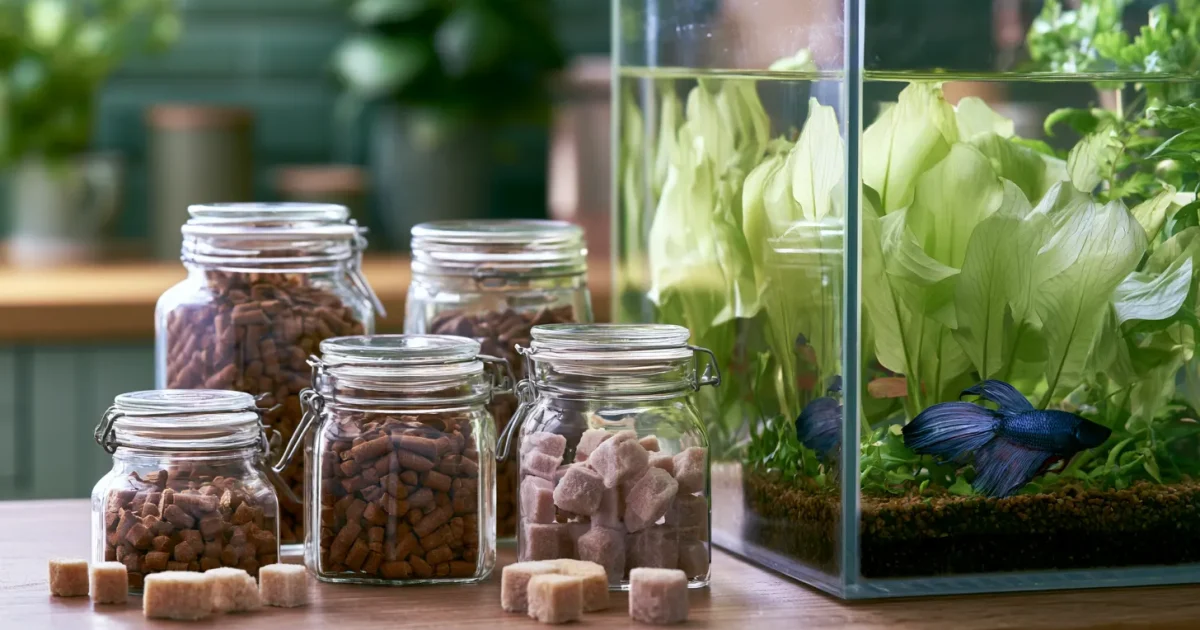
For most bettas, I would use Fluval Bug Bites Betta Formula or NorthFin Betta Bits as the main pellet, then rotate in frozen or freeze-dried bloodworms, daphnia, or brine shrimp a few times a week. Hikari Betta Bio-Gold is still a strong easy-to-find pick, but I like insect- and fish-based formulas better than grain-heavy foods.
| Product & Model | Best For | The Big Win | The Catch | Price Tier |
|---|---|---|---|---|
| Fluval Bug Bites Betta Formula | Most bettas | Insect protein base | Granules vary in size | Mid-Range |
| NorthFin Betta Bits | Clean daily feeding | Simple quality ingredients | Harder to find | Premium |
| Hikari Betta Bio-Gold | Picky eaters | Floats well | More fillers | Mid-Range |
| Omega One Betta Buffet Pellets | Color support | Fish-based protein | Can be rich | Mid-Range |
| San Francisco Bay Frozen Bloodworms | Treat feeding | Strong feeding response | Not daily food | Budget |
| Zoo Med Betta Dial-A-Treat | Variety snacks | Easy small portions | Freeze-dried only | Budget |
What Bettas Eat in Plain English
Bettas are carnivores.
That means they are built to eat animal-based foods, not plant flakes. In the wild, bettas eat small insects, larvae, tiny crustaceans, and other meaty bits they can catch near the surface.
In a tank, that usually means pellets with good protein plus some variety.
The first ingredient matters. I like to see fish meal, whole fish, black soldier fly larvae, krill, shrimp, or other animal protein near the top. I am less excited when wheat, soy, or vague fillers lead the list.
That does not mean one filler grain will ruin your fish. Real life is less dramatic than comment sections. But if you are choosing between foods, pick the one built around better protein.
A good betta fish diet review should look at:
- Protein source
- Pellet size
- Floating time
- Ingredient quality
- How easy it is to portion
- How the fish digests it
That last one matters more than the front label.
If a food bloats your betta or clouds the water, it is not a great fit, even if the package looks fancy.
Best Overall: Fluval Bug Bites Betta Formula
Fluval Bug Bites Betta Formula is my top pick for most bettas because it matches how bettas naturally eat better than many old-school pellets.
The insect protein base makes sense. Bettas eat insects and larvae in the wild. Black soldier fly larvae are not a cute marketing trick. They are a reasonable protein source for a surface-feeding fish.
The granules usually float long enough for bettas to notice them, and many fish take to them fast.
The catch is size variation.
Some granules are tiny. Some are a bit larger. For a small betta or a young fish, you may need to pick out smaller pieces or crush a large one. Do not assume a pellet is fine because the fish can grab it. If he chews, spits, grabs again, and struggles, it may be too big.
I like Bug Bites as a main food because it is easy to use and widely available. It also tends to make bettas feed with interest. My bettas have not needed much convincing.
Feed a tiny pinch, not a snowstorm.
That part is where people go wrong.
Best Clean Pellet: NorthFin Betta Bits
NorthFin Betta Bits are a strong choice if you care about ingredient lists.
They tend to use quality animal proteins and avoid some of the heavier filler feeling you see in cheaper foods. The pellets are small, dense, and tidy. They do not turn the tank into soup if you feed carefully.
This is the food I would choose for a betta owner who already has the basics right and wants a clean daily pellet.
The catch is availability. You may not find it at every local store. Online ordering may be easier.
Some picky bettas may also need a little time to accept it. Bettas are dramatic about change. One of mine once acted personally betrayed by a new pellet for two days, then decided it was fine.
Use NorthFin if:
- Your betta eats pellets well
- You want a cleaner formula
- You prefer small portions
- You do not mind ordering online
I would still rotate treats. No dry pellet should be the whole personality of the diet.
Best Easy Store Pick: Hikari Betta Bio-Gold
Hikari Betta Bio-Gold has been around a long time for a reason.
Bettas often like it. The pellets float well. The packaging makes portioning easy. If you walk into a pet store and need food today, this is one of the safer shelf picks.
I do think some newer formulas have better ingredient appeal. That is why it is not my number one. But I would rather see someone feed Hikari correctly than buy a premium food and dump in too much.
The best pellets for betta care are not only about brand. They are about size and routine.
If your betta eats Hikari well, keeps good body shape, and has clean water, you do not need to panic-switch.
Watch for bloating. Some bettas get round fast on richer pellets or too many pieces. A healthy betta should look full after eating, not like a floating pea.
Best for Color: Omega One Betta Buffet Pellets
Omega One Betta Buffet Pellets are a good pick for color and fish-based ingredients.
I like that they lean on seafood proteins. Many bettas eat them readily, and the food feels more serious than the cheapest bright flakes on the shelf.
Color food is a tricky topic, though.
Food can support color. It cannot turn a stressed, cold, poorly kept betta into a show fish. If the water is bad, the tank is too cold, or the fish is sick, no pellet will fix that.
This is where a lot of product pages oversell.
A good diet helps color because the fish has the nutrients to stay healthy. Clean warm water does the rest. Genetics plays a role too. Some bettas marble and change color over time no matter what you feed.
I like Omega One as part of a rotation. Use it with Bug Bites or NorthFin, then add frozen foods for variety.
Best Treat: Frozen Bloodworms
Bloodworms are not a daily food.
They are a treat.
Bettas love them because they are meaty and wiggly-looking once thawed. Frozen bloodworms can get picky fish eating and add variety to the diet. They are also easy to overdo.
Feed a few, not a cube.
That sounds obvious until you thaw one cube and realize it contains enough worms for a tiny underwater banquet. Use a small bit, then store or discard the rest safely. Do not keep thawed food sitting around.
Bloodworms can be rich. Some bettas bloat from them. If your fish gets round or sluggish after bloodworms, use daphnia instead or feed fewer.
I use frozen food like dessert with nutritional value. Helpful, loved, and not the main meal.
Best Digestion Helper: Daphnia
Daphnia is underrated.
It is a small crustacean, and it can help when a betta seems a little backed up from too much dry food. Frozen daphnia is my favorite version. Freeze-dried daphnia can work too, but soak it first.
There is old advice that says to feed peas for constipation.
I do not love that for bettas. Bettas are carnivores. Peas are more of a goldfish-style internet hand-me-down. Daphnia makes more sense to me as a betta-friendly option.
I am not saying one tiny pea bit will destroy a fish. I am saying I would choose daphnia first.
Use daphnia once in a while as part of variety, especially if your betta gets bloated from pellets.
Freeze-Dried Foods: Useful, But Soak Them
Freeze-dried bloodworms, brine shrimp, and daphnia are handy.
They store well. They are easy to feed. Bettas usually get excited.
The issue is dryness. Freeze-dried foods can expand after eating. That can make bloating worse in some fish. Soak them in tank water for a minute before feeding.
Also, do not let freeze-dried foods replace a good pellet. Some are more like snacks than balanced meals.
Zoo Med Betta Dial-A-Treat is useful because it gives variety in small containers. I like it for owners who want simple treat options without buying huge packs.
Just remember the word treat.
How Much Should You Feed a Betta?
Less than he asks for.
Most adult bettas do well with two to four small pellets once or twice a day, depending on pellet size and the fish’s body. Tiny pellets are different from big pellets. A giant half-floating pellet does not count the same as a speck.
Here is my simple feeding guide:
- Feed small amounts
- Watch the belly
- Remove uneaten food
- Skip huge meals
- Use treats a few times a week
A betta stomach is often described as about the size of its eye. That is not a perfect feeding rule, but it helps people stop dumping in flakes like confetti.
I usually feed once daily for adult bettas, with occasional small second meals. Some owners prefer two tiny meals. Both can work.
The key is body shape.
A healthy betta should look smooth from head to belly. Too thin means underfed or sick. Too round after every meal means you are likely overfeeding.
A Simple Weekly Betta Feeding Plan
You do not need a complex plan.
Try this:
Monday: main pellets
Tuesday: main pellets
Wednesday: frozen daphnia or brine shrimp
Thursday: main pellets
Friday: main pellets
Saturday: frozen bloodworms, small amount
Sunday: light feeding or fasting day
Some people hate fasting days. I get it. It feels mean when the fish begs. But a light day can help digestion, especially for adult bettas that bloat easily.
Do not fast a sick, thin, young, or recovering fish without a reason.
Real advice has conditions.
Flakes vs Pellets
Pellets win for most bettas.
They are easier to portion. They often float better. You can count them. That matters because overfeeding is one of the fastest ways to dirty a small tank.
Flakes can work, but they break apart and drift. Bettas may miss pieces, and leftover food can rot in the gravel. Some flakes are also made for community fish, not carnivorous bettas.
If you use flakes, choose a betta formula and feed tiny amounts.
Personally, I keep pellets as the main food and use frozen or freeze-dried foods for variety.
Signs the Food Is Not Working
Food problems can look like tank problems, and tank problems can look like food problems.
Annoying, I know.
Watch for:
- Bloating after meals
- Spitting out pellets
- Uneaten food sinking
- Cloudy water after feeding
- Long stringy waste
- Low energy
- Faded color
If your betta spits food, the pellet may be too large or too hard. Try smaller pellets or soak them for a few seconds.
If water clouds, feed less and remove leftovers.
If the fish is bloated, pause rich foods and offer daphnia later. Also check temperature. Cold water slows digestion.
If the fish refuses all food, test water. A sick betta may stop eating because ammonia, nitrite, stress, or disease is present.
FAQ
What is the best betta fish food for daily feeding?
Fluval Bug Bites Betta Formula, NorthFin Betta Bits, and Hikari Betta Bio-Gold are all good daily pellet choices. Pick one your betta can eat easily.
How many pellets should I feed my betta?
Most adult bettas do well with two to four small pellets once or twice a day. Adjust based on pellet size and body shape.
Are bloodworms good for betta fish?
Yes, as a treat. Feed a few frozen or soaked freeze-dried bloodworms, not a large amount every day.
Can bettas eat flakes?
They can, but pellets are usually easier to portion and keep cleaner. If you use flakes, choose a betta formula and feed very small amounts.
Why does my betta spit out pellets?
The pellets may be too big, too hard, or unfamiliar. Try smaller food, soak pellets briefly, or offer a different formula.
The best food for betta fish is a good pellet plus variety, fed with restraint.
Choose a protein-rich main food. Add frozen or soaked freeze-dried treats. Watch the belly, not the begging. Your betta will still act hungry after dinner, because that is his art form. Do not let him run the kitchen.