
- Best Protein Skimmer for Most Reef Tanks
- What a Protein Skimmer Actually Does
- Best Overall: Reef Octopus Classic 110INT
- Best Value: Bubble Magus Curve 5 Elite
- Best Nano Skimmer: Tunze Comline DOC 9004
- Best for Heavy Loads: Reef Octopus Classic 150INT
- Best Hang-On-Back Skimmer: Aquamaxx HOB 1.5
- Best Premium Quiet Pick: Nyos Quantum 120
- How to Size a Protein Skimmer
- Sump Depth, Footprint, and Break-In
- Wet Skimming vs Dry Skimming
- Common Protein Skimmer Mistakes
- FAQ
- What is the best protein skimmer for a 50 gallon reef tank?
- Do I need a protein skimmer for a reef tank?
- How long does a protein skimmer take to break in?
- Why is my protein skimmer overflowing?
- Should I run my reef skimmer all the time?
A protein skimmer can make a reef tank cleaner, louder, wetter, or all three by breakfast.
That is the part the box does not mention. The best protein skimmer reef tank choice is not just the one rated for the biggest number of gallons. It is the one that fits your sump, your fish load, your patience, and your nutrient goals. I learned that after watching a new skimmer overflow into a cabinet because I adjusted it like I was defusing a toaster.
Best Protein Skimmer for Most Reef Tanks
For most reef tanks in the 40 to 90-gallon range, I would start with the Reef Octopus Classic 110INT or Bubble Magus Curve 5 Elite. Both are proven sump skimmers with strong value, steady foam, and enough power for a normal mixed reef. For nano tanks, the Tunze Comline DOC 9004 makes more sense. For heavier stocked reefs, size up.
| Product & Model | Best For | The Big Win | The Catch | Price Tier |
|---|---|---|---|---|
| Reef Octopus Classic 110INT | 50-gallon reefs | Reliable foam production | Needs sump space | Mid-Range |
| Bubble Magus Curve 5 Elite | Value reef builds | Strong price-to-performance | Break-in can annoy | Mid-Range |
| Tunze Comline DOC 9004 | Nano reefs | Compact and quiet | Limited heavy-load power | Premium |
| Reef Octopus Classic 150INT | Heavy fish loads | More waste headroom | Larger footprint | Premium |
| Aquamaxx HOB 1.5 | No-sump tanks | Hang-on skimming | Visible on display | Premium |
| Nyos Quantum 120 | Quiet display reefs | Polished operation | Higher price | Ultra-Premium |
What a Protein Skimmer Actually Does
A skimmer removes organic waste before it breaks down further in the water.
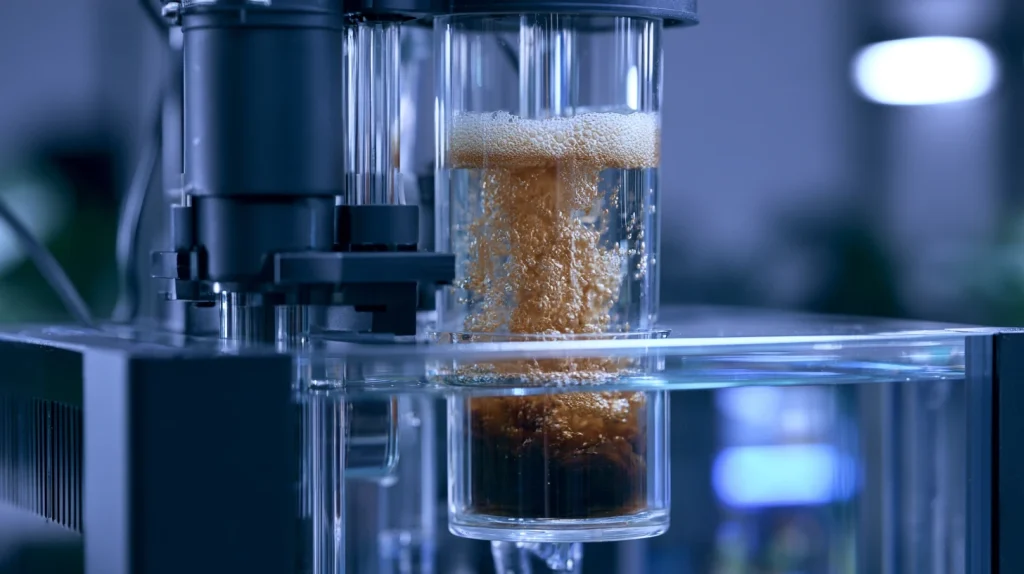
That sounds dry, but it is a big deal in saltwater tanks. Fish food, fish waste, coral slime, bacteria, and tiny bits of organic matter all add to the nutrient load. A skimmer mixes water with lots of tiny bubbles. Waste sticks to the bubble surface, foam rises, and the gunk collects in a cup.
That dark liquid is called skimmate.
It smells like a dock had a bad week.
Skimmers do not remove everything. They do not replace water changes. They do not directly remove all nitrate and phosphate. They pull out some waste before it becomes a bigger nutrient problem.
They also add gas exchange, which can help oxygen and pH. That is one reason many reef keepers like them even when nutrient numbers are already fine.
The common advice says every reef needs a skimmer.
I disagree a little.
Many reefs benefit from one. But tiny soft coral tanks, lightly stocked nano reefs, and tanks with strong water changes can run without a skimmer. A skimmer becomes more useful as the fish load rises, feeding gets heavier, or coral care gets more serious.
Best Overall: Reef Octopus Classic 110INT
The Reef Octopus Classic 110INT is the safe middle pick for many reef tanks.
It is not the newest toy. That is part of why I like it. This skimmer has been used in many home reefs, and it has the kind of reputation that comes from people cleaning the cup for years, not just unboxing it once.
It fits many sump setups and handles a normal mixed reef well. Think clownfish, wrasses, gobies, a few LPS corals, soft corals, maybe some easier SPS later if the tank matures.
SPS means small polyp stony coral. These corals often need more stable water than soft corals.
The Classic 110INT is a good reef tank skimmer for roughly 50-gallon systems with a normal fish load. If you feed heavy or keep messy fish, size up. Manufacturer gallon ratings can be optimistic, and I would rather have some headroom.
What I like:
- Proven design
- Good foam stability
- Easy parts support
- Strong value
- Good fit for many sumps
What I do not love:
It still needs tuning. All skimmers do. You need the right sump water depth, a break-in period, and some patience with the water level inside the body.
If you want silent, invisible, no-maintenance gear, reef tanks may be plotting against you.
Best Value: Bubble Magus Curve 5 Elite
The Bubble Magus Curve 5 Elite is the skimmer I think about when someone wants solid performance without premium pricing.
The curved body helps foam rise smoothly. The pump is capable. The footprint fits many beginner sump builds. For a mixed reef in the 40 to 70-gallon range, it can be a very good buy.
It may need a break-in period.
Break-in means the skimmer needs time to settle after manufacturing oils, new plastic surfaces, water chemistry, and slime coating change how bubbles behave. During that period, the skimmer may overflow, underperform, or act like it has a personal grudge.
Do not judge it in the first hour.
Set it in the recommended water depth, open it up enough to avoid overflow, and let it run. Raise the foam level slowly over days.
I like the Curve 5 Elite for:
- First sump reef tanks
- Budget-conscious mixed reefs
- 50-gallon systems
- Moderate fish loads
- Owners who can tune slowly
I would not pick it for a packed predator tank or a big SPS system with heavy feeding. That is not a knock. It is knowing the tool.
Best Nano Skimmer: Tunze Comline DOC 9004
Nano reefs are tricky because everything has to fit.
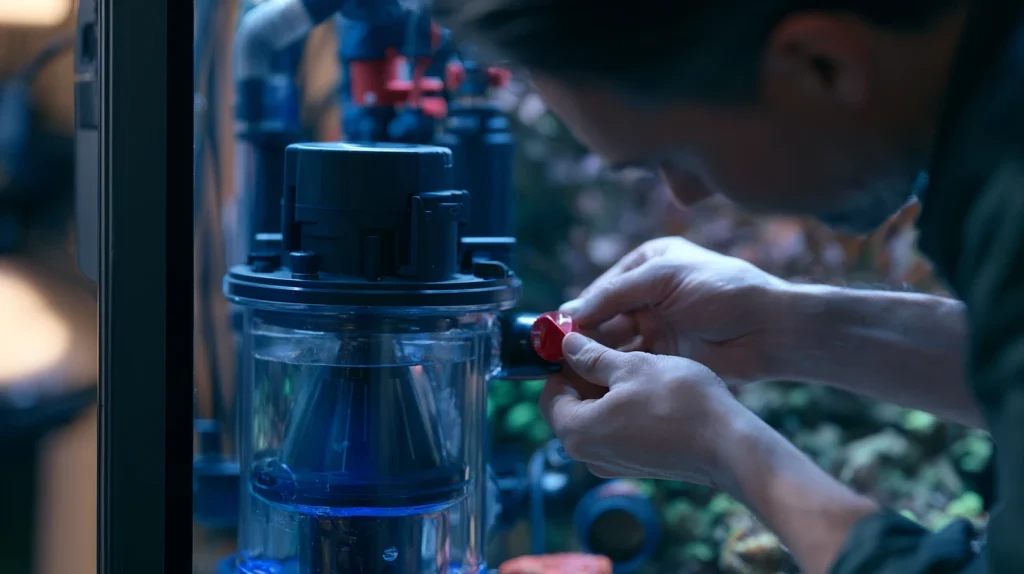
The Tunze Comline DOC 9004 is a good choice for small reef tanks because it is compact, quiet, and made for tight spaces. It can sit inside the display or rear chamber depending on the setup.
It is not a monster waste puller. That is fine. A nano reef should not have a monster fish load anyway.
Use it for:
- Nano reef tanks
- All-in-one systems
- Light to moderate stocking
- Soft corals and LPS
- Owners who want quiet gear
The catch is capacity. If you have a small tank packed with fish and feed frozen food like it is a buffet, this skimmer will not save you.
Nano reefs punish overstocking.
I like this skimmer most when the owner already has good habits: regular top-off, water testing, light feeding, and water changes. It adds support. It does not fix chaos.
Best for Heavy Loads: Reef Octopus Classic 150INT
Some reef tanks need more skimmer.
Maybe you keep tangs. Maybe you feed corals often. Maybe you like fat fish and honest portions. The Reef Octopus Classic 150INT gives more headroom than the 110INT and fits larger systems.
This is the pick for reef owners who know they will not run a low-nutrient, lightly stocked display.
The larger body and pump can remove more waste, but bigger is not always better. An oversized skimmer on a light tank can struggle to build stable foam. It may skim inconsistently because there is not enough waste in the water to keep the foam head steady.
That sounds strange. It is real.
A skimmer needs something to skim.
Choose the 150INT for a larger or dirtier system, not because bigger numbers feel comforting.
Best Hang-On-Back Skimmer: Aquamaxx HOB 1.5
No sump? You still have options.
The Aquamaxx HOB 1.5 is a strong hang-on-back skimmer for saltwater tanks without sump filtration. It hangs on the display or rear chamber and gives skimming to tanks that otherwise would skip it.
This matters for older tanks, budget reef builds, and apartment setups where adding a sump is not realistic.
The catch is appearance.
You will see it. You may hear it. You need room behind the tank. You also need to prevent leaks and keep the cup clean. Hang-on gear always makes me a little more cautious because any mistake happens near the display, not hidden in a sump.
Still, for a no-sump reef, it can be a very useful tool.
Best fit:
- 20 to 75-gallon no-sump systems
- Fish-only saltwater tanks
- Beginner reefs with limited cabinet space
- Owners who want real export without plumbing
Do not hang it on a tank pushed tight against the wall. Future you will not enjoy that puzzle.
Best Premium Quiet Pick: Nyos Quantum 120
The Nyos Quantum 120 is the skimmer I would consider for a living-room reef where noise matters and the budget is less painful.
It has a polished feel. The design is clean. The operation can be quieter than many cheaper skimmers when set up well.
That matters more than people admit.
A reef tank in a fish room can hum, splash, and grumble. A reef tank six feet from your couch needs better manners.
The Quantum 120 is a good fit for refined mixed reefs, office displays, and owners who want gear that feels less clunky. The catch is price. You can keep a healthy reef with cheaper skimmers. This is not a need for every tank.
I am not 100% sure the premium cost makes sense for every beginner. For a quiet display reef, though, I understand the appeal.
How to Size a Protein Skimmer
Do not trust the biggest gallon rating on the box.
Use your real system size and fish load.
A lightly stocked 75-gallon reef is not the same as a 75-gallon tank packed with hungry wrasses, tangs, and anthias. Feeding changes everything. Coral type changes things too.
I sort skimmer sizing like this:
- Light load: choose near actual system volume
- Normal mixed reef: choose moderate headroom
- Heavy fish load: size up
- Nano reef: fit and stability matter most
- Ultra-low nutrient tank: avoid huge oversizing
System volume means display plus sump water, minus rock and sand displacement. You do not need perfect math, but do not pretend a 40-gallon breeder with a small sump is a 100-gallon system.
For a best skimmer 50 gallon search, I would usually look at Reef Octopus Classic 110INT, Bubble Magus Curve 5 Elite, Tunze 9004 for smaller all-in-one tanks, or a similar model rated for a normal mixed reef.
Sump Depth, Footprint, and Break-In
This is the boring part that decides whether you love the skimmer.
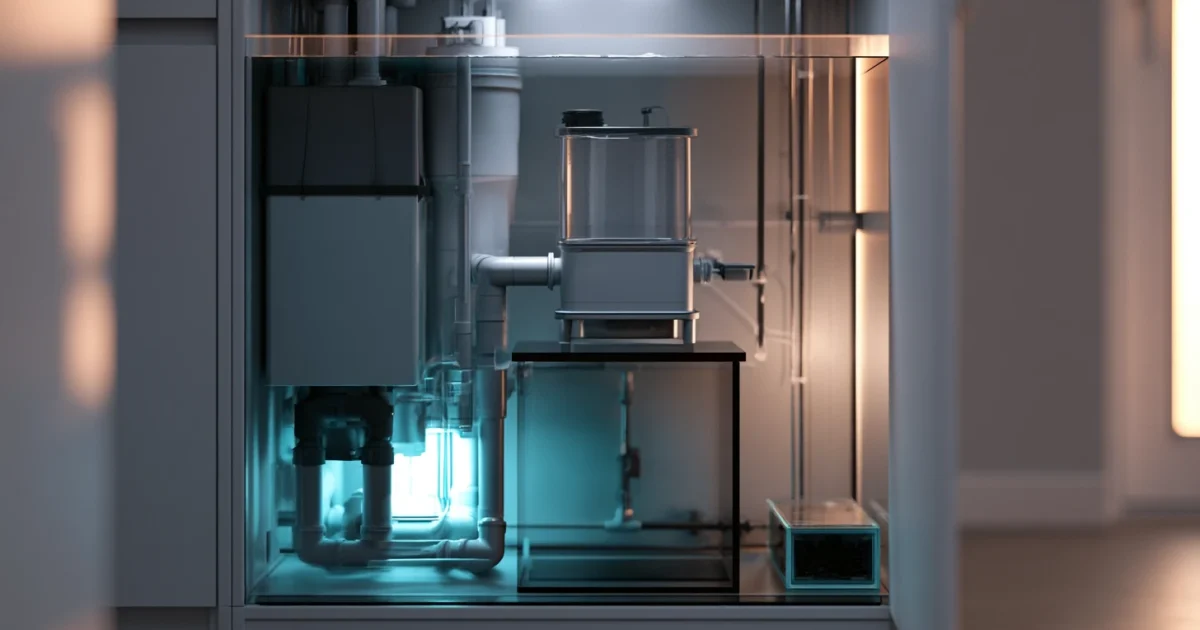
Footprint is the space the skimmer needs in your sump. Measure before buying. Include room to remove the cup. Include the pump and any pipe sticking out.
Sump depth is the water height where the skimmer sits. Many skimmers need a specific range, like 7 to 9 inches. If your sump is deeper, use a skimmer stand. If it is too shallow, the skimmer may not work well.
Break-in takes time. Some skimmers settle in a few days. Some take longer. New tanks can make skimmers act strange because the water lacks the organic load of a mature reef.
Avoid adding water conditioners, epoxy, certain foods, or medications without expecting the skimmer to react. It may overflow or stop foaming.
Which is annoying. But also kind of makes sense.
The skimmer is reacting to the water, and the water just changed.
Wet Skimming vs Dry Skimming
Wet skimming pulls lighter, watery skimmate.
Dry skimming pulls darker, thicker skimmate.
Wet skimming removes more water and can lower salinity if your top-off setup replaces it with fresh water. Dry skimming is slower but more concentrated.
For normal reef care, I like a middle path. Dark tea to coffee-colored skimmate is fine. Black sludge is satisfying, but it is not the only sign of success.
If nutrients are high, skim wetter for a while and watch salinity.
If nutrients are too low, skim drier or run the skimmer part-time.
Yes, a skimmer can help too much in some tanks. Corals need some nutrients. A reef with nitrate and phosphate at absolute zero can look pale and angry.
That is why the best protein skimmer is not the one that strips the tank hardest. It is the one you can control.
Common Protein Skimmer Mistakes
The first mistake is buying too large because the box rating looks impressive.
The second mistake is placing the skimmer in the wrong water depth.
The third mistake is adjusting it every ten minutes. Make a small change, then wait. Foam takes time to respond.
The fourth mistake is cleaning the neck too rarely. A dirty neck can reduce foam rise. Clean the cup and neck often.
The fifth mistake is expecting skimming to replace water changes.
It will not.
The sixth mistake is ignoring noise. Pumps, air intake, splashing, and vibration all matter in a home.
You have probably noticed reef gear is never just about numbers. It is also about whether you can live with it.
FAQ
What is the best protein skimmer for a 50 gallon reef tank?
The Reef Octopus Classic 110INT and Bubble Magus Curve 5 Elite are strong picks for many 50-gallon mixed reefs. Choose based on sump space and fish load.
Do I need a protein skimmer for a reef tank?
Many reef tanks benefit from one, especially with fish and heavy feeding. Very small or lightly stocked tanks can run without one if water changes and nutrient control are strong.
How long does a protein skimmer take to break in?
Many skimmers take a few days to two weeks to settle. New plastic, tank chemistry, and water depth all affect the break-in period.
Why is my protein skimmer overflowing?
Common causes include wrong water depth, new equipment, additives, epoxy, oily foods, or the outlet set too high. Open the skimmer, lower the foam level, and adjust slowly.
Should I run my reef skimmer all the time?
Most reef owners do. Some run it part-time if nutrients get too low or during feeding. Watch nitrate, phosphate, pH, and coral response.
The best protein skimmer review is the one that admits the annoying part: skimmers need tuning.
Buy a model that fits your tank, sump, and fish load. Give it time to break in. Clean the cup before it becomes a science project. A good skimmer will not run the reef for you, but it can make the water more forgiving while you learn the rest.