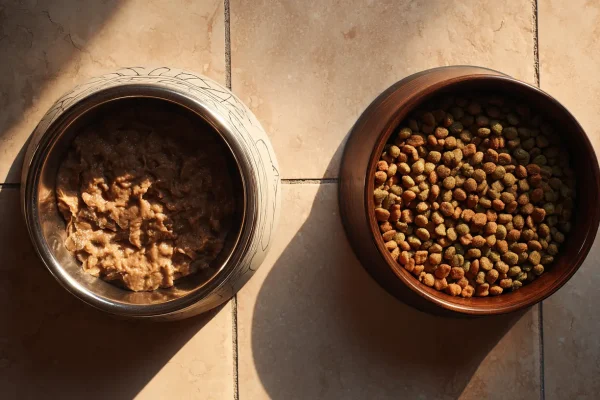


- What Makes the Best Dog Food for Pitbulls Different
- How to Read a Dog Food Label (Without Getting Fooled)
- Best Dog Food for Pitbulls: My Actual Picks
- Best Overall: Taste of the Wild High Prairie
- Best for Muscle Building: Annamaet Ultra 32%
- Best for Skin Allergies: Natural Balance Limited Ingredient Lamb & Brown Rice
- Best for Pitbull Puppies: Merrick Grain-Free Puppy Recipe
- Best Budget Pick: Purina Pro Plan Sensitive Skin & Stomach (Salmon)
- The Grain-Free Debate (Because You'll See It Everywhere)
- How Much Should a Pitbull Eat?
- Signs Your Pitbull Might Need a Food Change
- One Thing Most People Skip: Feeding Schedule Matters Too
- FAQ
My pitbull Roscoe was lean in all the wrong ways. Not the “athletic” lean you see in photos — the kind where his ribs showed just a little too easily and his coat had a dull, papery look that made strangers ask if he was sick.
He wasn’t sick. He was just eating the wrong food for his body.
After a lot of trial, error, and one very expensive vet visit, I figured out what pitbulls actually need from their food. It’s not complicated. But the pet food aisle makes it feel that way on purpose.
Here’s what I know now.
What Makes the Best Dog Food for Pitbulls Different
Pitbulls are not just “medium dogs.” They’re dense. Muscular. Built like a wrestler who also does cardio. Their bodies burn through protein faster than most breeds, and their short, tight coat offers almost no protection when something in their food triggers a skin reaction.
That combination — high muscle demand plus skin sensitivity — is what makes feeding a pitbull genuinely tricky.
Most dog foods are designed for the average dog. Pitbulls are not average dogs.
A good food for a pitbull needs to do three things at once:
- Deliver enough quality protein to maintain muscle (not just “high protein” — quality protein, from named meat sources)
- Include omega-3 and omega-6 fatty acids to protect the skin and coat
- Avoid the common allergens that cause itching, redness, and hot spots in this breed
That last point is where most owners get stuck. Because the foods marketed as “high protein” are often loaded with chicken, beef, and soy — which are also the top allergy triggers for pitbulls.
So you end up in a loop: the food that builds muscle tears up the skin. The food that calms the skin doesn’t have enough protein. Finding something that does both is the actual goal.
How to Read a Dog Food Label (Without Getting Fooled)
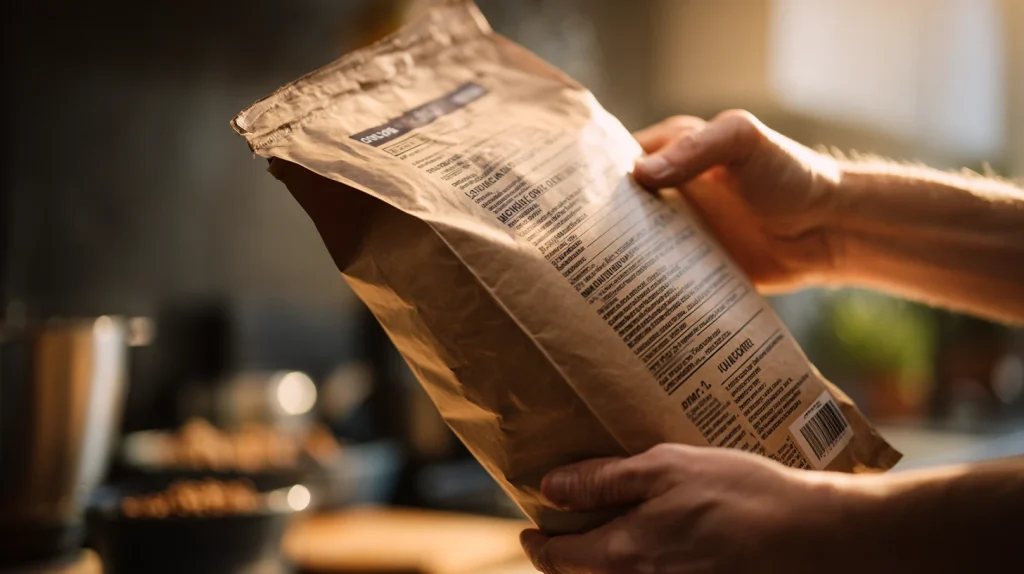
Before any product recommendations, this matters more.
The first ingredient is the most important line on the bag. If it says “chicken meal” or “beef meal,” that’s actually fine — meal is concentrated and protein-dense. If it says “chicken by-product” or just “meat,” that’s a red flag.
Look for a named protein as the first ingredient:
- Deboned salmon
- Beef
- Lamb
- Turkey
- Venison
Anything vague — “animal protein,” “poultry,” “meat” — skip it.
Check the guaranteed analysis. For an active adult pitbull, aim for at least 30% crude protein and 15-18% fat. Puppies need a bit more fat. Seniors can go slightly lower on both.
Watch the carb sources. Corn, wheat, and soy are the three to avoid if your dog has any skin issues. Sweet potato, brown rice, and peas are gentler options. Grain-free is not automatically better — some pitbulls do great on brown rice — but ditching those three specific grains often makes a visible difference.
The ingredient list is ordered by weight before cooking. So “chicken” listed first might actually become much smaller after moisture is removed. That’s why “chicken meal” first can mean more actual protein than “chicken” first. It’s counterintuitive. But now you know.
Best Dog Food for Pitbulls: My Actual Picks
These are not random affiliate picks. These are foods I’ve either used myself, researched deeply, or heard consistent real-world feedback about from other pittie owners.
Best Overall: Taste of the Wild High Prairie
This is my personal go-to. Roasted bison and venison as the main proteins. No corn, wheat, or soy. Grain-free. It’s been around long enough to have a solid track record and it’s priced in the range most people can actually afford.
The bison and venison also happen to be novel proteins for most dogs — meaning if your pitbull has never eaten them, there’s no existing allergy to trigger. That’s a big deal for dogs with mystery skin issues.
Crude protein sits around 32%. Fat at 18%. Omega-3 and omega-6 are both present from the fish meal and added fish oil.
Roscoe’s coat changed noticeably within about six weeks of switching.
Best for Muscle Building: Annamaet Ultra 32%
If your pitbull is underweight, working, or just genuinely athletic, Annamaet Ultra is worth knowing about. The protein percentage is real — 32% from named chicken and herring meal. Fat runs at 20%, which supports energy and muscle recovery.
It’s not a flashy brand. It doesn’t have a big Instagram presence. But it’s been used by working dog owners and breeders for years. That quiet reputation means something.
One note: this food has chicken as a primary protein. If your pitbull has a known chicken allergy, look elsewhere.
Best for Skin Allergies: Natural Balance Limited Ingredient Lamb & Brown Rice
When a dog has visible skin problems — itching, redness, recurring hot spots — the goal is to strip everything down to the minimum. That’s what limited ingredient diets (LIDs) do.
Natural Balance’s lamb and brown rice formula has one protein source and one carbohydrate. That’s it. No fillers, no by-products, no corn or soy.
Lamb is a lower-allergen protein for most dogs. Brown rice is easy to digest. The simplicity is the point.
This is the food I’d start with for any pitbull with skin allergies, before trying anything more complex. It’s also widely available — you can find it at PetSmart and sometimes Walmart.
Best for Pitbull Puppies: Merrick Grain-Free Puppy Recipe
Puppies need more protein and fat than adults. They also need DHA (docosahexaenoic acid — basically the omega fatty acid that builds brain and eye tissue) during their first year.
Merrick’s puppy formula uses deboned chicken as the first ingredient, includes salmon oil for omega-3s and DHA, and skips the corn, wheat, and soy. The kibble size is appropriate for growing jaws.
One honest caveat: some pitbull puppies are already showing allergy symptoms by four to five months old. If that’s your situation, the limited ingredient lamb formula above can work for puppies too — just confirm the packaging says it’s appropriate for all life stages.
Best Budget Pick: Purina Pro Plan Sensitive Skin & Stomach (Salmon)
I know some people will roll their eyes at Purina. I get it. But this formula specifically — the salmon-based sensitive skin one — has real data behind it. Purina funds more nutritional research than almost any other pet food company. Whether you like the brand or not, that matters.
Salmon as the first ingredient. Oatmeal for digestibility. Live probiotics. Omega-6 from sunflower oil.
For the price per pound, this is one of the more honest options on the shelf. It won’t build a show dog’s physique, but it’ll keep a healthy pitbull comfortable and well-fed without breaking the budget.
The Grain-Free Debate (Because You’ll See It Everywhere)
There was a period a few years back where grain-free dog food was treated like a cure for everything. Then the FDA started investigating a possible link between grain-free diets and dilated cardiomyopathy (DCM) — a serious heart condition — in dogs.
Here’s where things actually stand: the research is still inconclusive. The suspected culprit wasn’t grains specifically, but heavy reliance on legumes (peas, lentils, chickpeas) as filler ingredients in grain-free formulas.
I won’t tell you to avoid grain-free food entirely. Some pitbulls genuinely do better on it. But I also won’t pretend the concern doesn’t exist.
My honest take: if your dog does well on a grain-inclusive food with quality ingredients, stick with it. Don’t switch to grain-free just because it sounds more “natural.” If your pitbull has real issues with grains, grain-free with limited legumes can help — but keep your vet in the loop.
How Much Should a Pitbull Eat?
This depends on weight, activity level, and age more than breed alone. But here’s a rough starting guide for adult pitbulls:
- 40–50 lbs: 2 to 2.5 cups of dry kibble per day, split into two meals
- 55–70 lbs: 2.5 to 3.5 cups per day
- 75+ lbs: 3.5 to 4.5 cups per day
These numbers assume a moderate-activity adult dog on a food with around 350–400 calories per cup. Always check the specific calorie count on your bag — it varies a lot between brands.
If your pitbull is underweight and you’re trying to add muscle, increase by about 10–15% and monitor every two weeks. Don’t rush it. Rapid weight gain in dogs — like in people — tends to be fat, not muscle. You want slow, steady progress.
And if you’re genuinely worried about your dog’s weight, a single vet visit for a body condition score assessment is worth every penny.
Signs Your Pitbull Might Need a Food Change
Dogs can’t tell you the food isn’t working. But they show you. Watch for:
- Constant itching or licking at paws, belly, or face
- Recurring ear infections (often allergy-related)
- Dull coat, excessive shedding, or dry flaky skin
- Loose stools that don’t firm up
- Low energy or poor muscle tone despite regular exercise
- Eating the food fine but still losing weight
If you see two or more of these together, the food is worth examining. Start with the ingredients list and check it against the common allergens: chicken, beef, wheat, corn, soy, dairy.
One change at a time. Give any new food at least six to eight weeks before judging whether it’s working. Skin issues especially take time to clear.
One Thing Most People Skip: Feeding Schedule Matters Too
The food gets most of the attention. But how you feed a pitbull matters almost as much.
Two meals a day is standard and works well for most adults. One large meal raises bloat risk in deep-chested dogs — and while pitbulls aren’t the highest-risk breed for gastric dilation, it’s not a risk worth taking.
Free feeding (leaving food out all day) tends to cause overeating and makes it hard to monitor appetite changes, which are often an early sign of health problems.
Feed at the same times each day. Wait 30 minutes after meals before exercise. That’s about it.
FAQ
What’s the best dog food for pitbulls with skin allergies? Start with a limited ingredient diet using a novel protein — something your dog hasn’t eaten before, like lamb, venison, or duck. Natural Balance LID Lamb & Brown Rice is a solid starting point. The goal is to eliminate common allergens (chicken, beef, wheat, corn, soy) and see if symptoms improve over six to eight weeks.
What’s the best dog food for pitbulls to gain muscle? Look for foods with at least 30% crude protein from named meat sources, plus 15–20% fat. Annamaet Ultra is a strong pick. Pair good food with regular exercise — diet alone won’t build muscle without physical activity to stimulate it.
Can pitbulls eat grain-free food? Yes, but it’s not automatically better. If your pitbull tolerates grains well, there’s no need to avoid them. If you do go grain-free, avoid formulas that use large amounts of peas and lentils as filler. The FDA has flagged that combination as potentially problematic for heart health, though research is still ongoing.
How do I know if my pitbull has a food allergy? The most common signs are itchy skin (especially on the belly, paws, and face), recurring ear infections, and loose stools. The only real way to confirm a food allergy is an elimination diet — switching to a limited ingredient food for 8–12 weeks and seeing if symptoms clear. Your vet can guide you through it.
Is wet food or dry food better for pitbulls? Both can work. Dry kibble is more practical, more affordable, and better for dental health. Wet food has higher moisture content, which is good for hydration. Some owners mix both. If budget is a concern, high-quality dry food is the more sustainable choice long-term.
Roscoe is seven now. His ribs are exactly where they should be — felt but not seen. His coat has that short, tight shine that means the omega-3s are doing their job. It took a few months of paying attention to get him there, and honestly, it wasn’t as complicated as the pet food aisle makes it look.
Find the right protein source for your dog’s body. Keep the ingredients list short and honest. Give it time.
That’s mostly it.