
- Why Crystal Type Changes Everything About Urinary Tract Cat Food
- What Actually Makes a Food Good for Urinary Health
- Hill's Prescription Diet c/d: The Most-Studied Option
- Royal Canin Urinary SO: The Palatability Winner
- Over-the-Counter Options: What to Know
- Wet Food vs. Dry: It's Not As Simple as You've Heard
- Male Cats Need Extra Attention
- The Stress Factor Nobody Mentions
- Quick Comparison: Prescription Urinary Diets
- FAQ
My cat Oliver blocked three times before he was four years old. Three emergency vet visits. Three nights sleeping on the floor of an animal hospital waiting room. By the third time, my vet sat me down and said: “The food you’re buying him — it’s the wrong one for his crystal type.”
I didn’t even know there were different crystal types.
That conversation changed everything. And it’s the thing almost nobody talks about when they write about the best cat food for urinary health.
Why Crystal Type Changes Everything About Urinary Tract Cat Food
Here’s what most articles skip: there are two main types of crystals that form in cat bladders. Struvite and calcium oxalate. They form under opposite conditions.
Struvite grows in alkaline urine. Calcium oxalate grows in acidic urine.
That means a food formulated to dissolve struvite — by acidifying the urine — can actually trigger calcium oxalate crystals in the wrong cat. This is not a small footnote. It’s the reason your vet runs a urinalysis before prescribing food.
If your cat has never been diagnosed, and you’re just buying something labeled “urinary care” off the shelf at a pet store, you’re guessing. Sometimes that guess is fine. But if your cat has a history of crystals or blockages, guessing is how you end up back in the ER.
Talk to your vet before changing the food of any cat with a urinary history. Full stop.
What Actually Makes a Food Good for Urinary Health
Three things matter most.
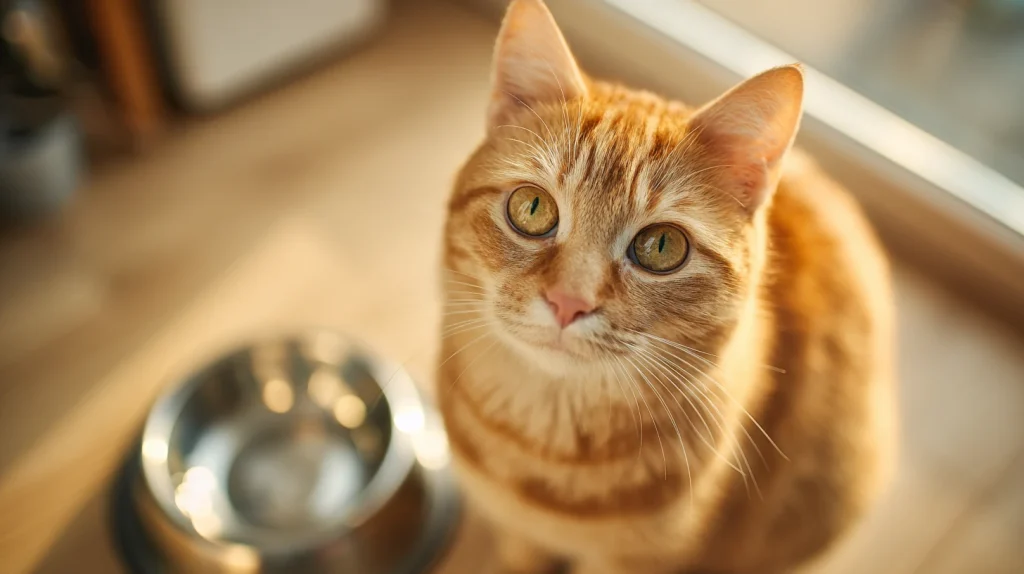
Moisture content. Cats are descended from desert animals. They evolved to get most of their water from prey, not from a bowl. Their thirst drive is weak. A dry kibble is about 10% moisture. A wet food is 70–80%. That gap matters because concentrated urine is where crystals form. More water in, more dilute urine out, lower risk.
Controlled minerals. Magnesium, phosphorus, and calcium are the building blocks of crystals. A good urinary formula keeps these in check — not eliminated, just balanced. Cats still need these minerals. Too little causes other problems.
Urine pH management. Most therapeutic urinary foods aim for a pH between 6.2 and 6.4. That window is acidic enough to discourage struvite but not so acidic that it tips toward calcium oxalate. It’s a narrow target. Getting it right is why prescription diets exist.
Hill’s Prescription Diet c/d: The Most-Studied Option
My vet has recommended Hill’s c/d to me twice over the years. She’s not sponsored by them. She recommends it because the data behind it is real.
Hill’s c/d Multicare is the only cat food with a published Grade 1 clinical study showing an 89% reduction in recurrent FIC (feline idiopathic cystitis) episodes. FIC is the most common cause of urinary symptoms in cats — it accounts for roughly two-thirds of all FLUTD cases. For that condition specifically, c/d’s track record is hard to argue with.
It targets both struvite and calcium oxalate. It hits that 6.2–6.4 pH range. The Multicare + Stress formula also includes ingredients to support cats dealing with environmental anxiety, which matters more than people realize. Stress is a direct trigger for FIC flare-ups.
The downsides? It requires a vet prescription. The ingredient list isn’t premium — corn features prominently. And it costs more than regular cat food. My honest take: for a cat with active urinary disease or a history of blockages, the ingredient quality conversation is secondary to the clinical evidence. For a healthy cat you’re just feeding preventively, there are better options.
Royal Canin Urinary SO: The Palatability Winner
If Hill’s c/d is the evidence-backed choice, Royal Canin Urinary SO is the one cats tend to actually eat.
This matters more than it sounds. A therapeutic diet that your cat refuses is worthless. Royal Canin’s SO formula — SO stands for struvite and oxalate — works by increasing urine volume and reducing the concentration of ions that form crystals. It also requires a prescription.
One practical difference: Royal Canin SO tends to run slightly lower in calories than c/d. For cats that are already at a healthy weight, that’s a non-issue. For cats that are underweight or very active, it’s worth discussing with your vet.
The ingredient quality conversation is the same here as with Hill’s. Corn and wheat gluten are prominent. The foods are formulated for therapeutic function, not ingredient prestige. That’s a deliberate trade-off, and it’s a reasonable one for cats with diagnosed disease.
For cats who are picky eaters, Royal Canin also makes an olfactory attraction version that’s designed to be more appealing. Ask your vet about it if your cat is turning their nose up at the standard formula.
Over-the-Counter Options: What to Know
Prescription diets exist because they’ve been clinically tested. Over-the-counter urinary support foods have not been held to that same standard.
That doesn’t mean OTC options are useless. For a generally healthy adult cat with no urinary history, a high-quality wet food with controlled mineral levels and good moisture content can be a solid preventive choice.
What to look for on labels:
- Moisture content of 70% or higher (wet food)
- Low magnesium — aim for under 0.1% on a dry matter basis
- No added salt, which can stress kidneys over time
- Animal protein as the first ingredient
Tiki Cat is a brand that comes up a lot in this space. Their broth-based formulas have low ash content and less magnesium than some prescription foods on a dry matter comparison. For a cat with no active disease, it’s a reasonable choice.
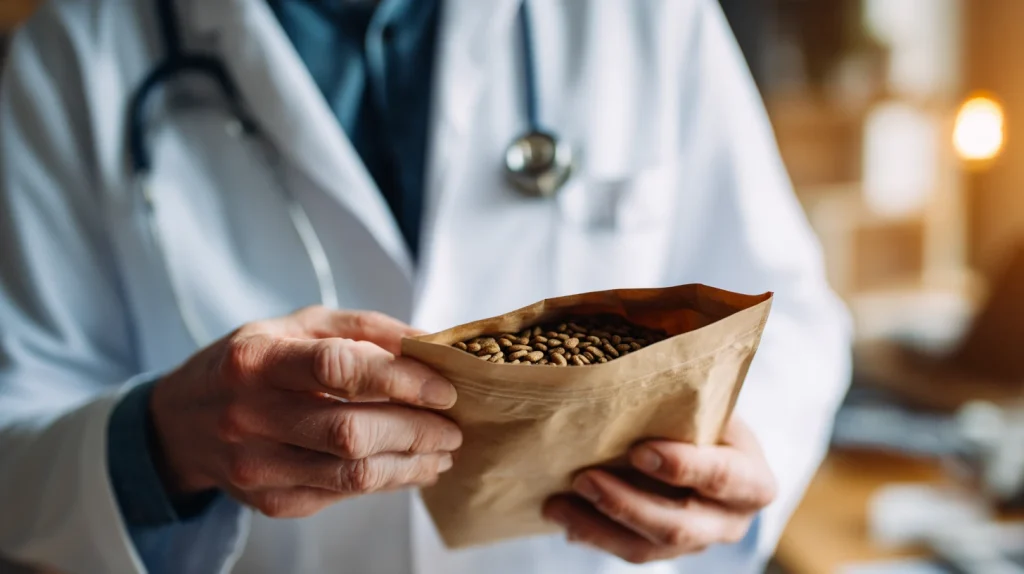
Purina Pro Plan Urinary Tract Health is another option that vets mention. It’s not a therapeutic diet — it won’t dissolve crystals — but it supports a healthy urine pH in cats without diagnosed disease.
I want to be clear about the limits here. If your cat has had a blockage, crystals confirmed by urinalysis, or recurring urinary symptoms, an OTC food is not the right conversation. Go back to the prescription aisle.
Wet Food vs. Dry: It’s Not As Simple as You’ve Heard
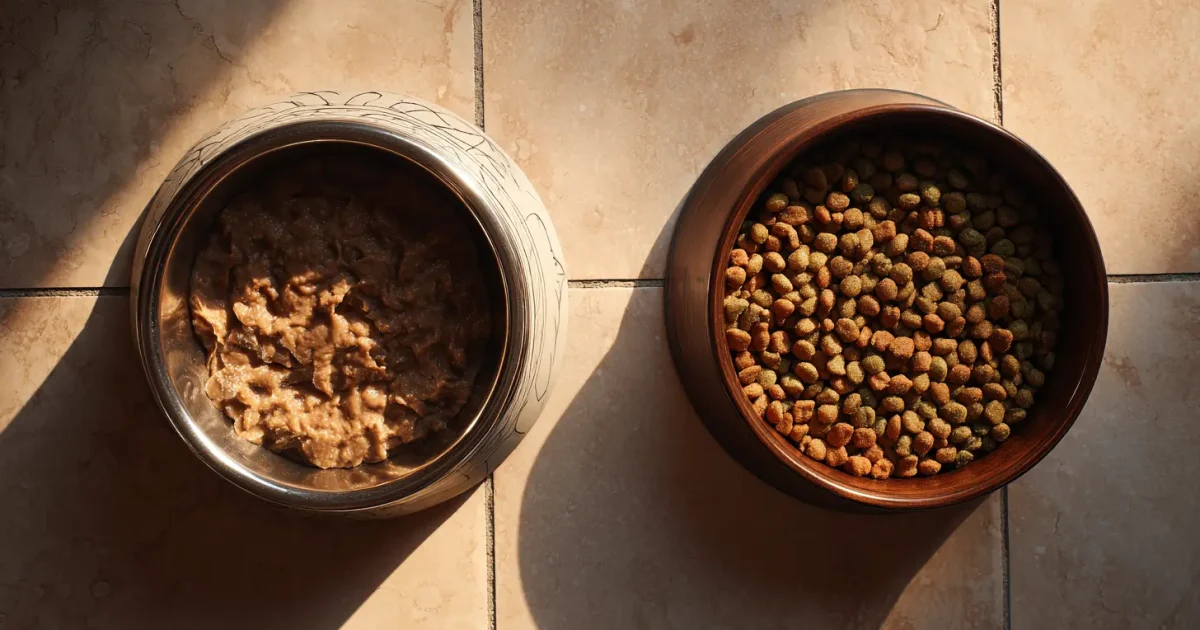
Every article on this topic says the same thing: wet food is better for urinary health. That’s true enough, but it’s not the full picture.
Yes, wet food dramatically increases water intake. Cats eating only dry kibble consume about half the total water of cats eating wet food. More water means more dilute urine. More dilute urine means lower crystal risk. This is real and it matters.
But here’s the nuance no one talks about: a study on FIC cats found that 11% of cats fed a wet-only diet still relapsed. Compare that to 39% on dry food — so wet is clearly better. But not a guarantee. The type of food matters too, not just whether it’s wet or dry.
If you’re feeding dry and your cat is healthy, the priority is hydration. Add a water fountain — cats drink more from moving water. Try mixing a small amount of water or low-sodium broth into dry food. Even these small changes can lower urine concentration meaningfully.
If you’re feeding dry and your cat has urinary disease, switching to wet — especially a prescription wet formula — is usually the first thing your vet will suggest.
Male Cats Need Extra Attention
Male cats have a narrower urethra than females. Even small crystal buildups can cause a complete blockage. A blocked bladder is a medical emergency. Cats can die from it within 24–48 hours.
If you have a male cat, urinary health is not a back-burner concern. It’s one of the most important things you’ll manage for his entire life.
The signs to watch for:
- Straining in the litter box with little or no output
- Crying or yowling while trying to urinate
- Blood in urine
- Licking at the genital area excessively
- Lethargy combined with any of the above
Any of those, especially straining with no output, is an emergency vet call. Not a wait-and-see situation.
The Stress Factor Nobody Mentions
Two-thirds of FLUTD cases are caused by feline idiopathic cystitis. “Idiopathic” means they don’t know exactly why it happens. What they do know is that stress makes it worse. Significantly worse.
House moves, new pets, schedule changes, loud noise — these are documented FIC triggers. Some cats get bladder inflammation in response to stress with no crystals at all.
Hill’s c/d Multicare + Stress is formulated to address this. It includes tryptophan and hydrolyzed casein, which are calming compounds. It’s one of the few cat foods that acknowledges the mind-body link in feline urinary health.
If your cat keeps having flare-ups despite being on a good urinary diet, stress is worth a serious conversation with your vet.
Quick Comparison: Prescription Urinary Diets
| Feature | Hill’s c/d Multicare | Royal Canin Urinary SO |
|---|---|---|
| Crystal types addressed | Struvite + Calcium oxalate | Struvite + Calcium oxalate |
| Target urine pH | 6.2–6.4 | 6.0–6.3 |
| Clinical evidence | Grade 1 FIC study | Strong but less published |
| Palatability | Good | Generally better |
| Calorie density | Moderate-high | Slightly lower |
| Stress formula available | Yes (c/d + Stress) | No |
| Prescription required | Yes | Yes |
Neither is objectively better. The right one depends on your cat’s specific diagnosis, weight, and whether stress is a factor.
FAQ
My cat had struvite crystals. Does he need prescription food forever? Not necessarily, but many cats do best staying on therapeutic food long-term. Once a cat forms crystals, they’re more likely to form them again. Your vet will check urine pH and recheck periodically to decide if you can transition to a maintenance diet.
Can I mix regular food with urinary food to save money? No. The whole point of therapeutic urinary food is to hit a precise urine pH and mineral balance. Mixing in regular food throws that off. If cost is a concern, talk to your vet — they may be able to suggest a less expensive prescription option that still meets the target.
Is grain-free cat food better for urinary health? Grain-free doesn’t mean urinary-safe. Grains aren’t the problem — mineral imbalance and dehydration are. Some grain-free foods are high in plant-based proteins that can shift urine pH unfavorably. Focus on moisture content and mineral levels, not the grain label.
Why does my vet want a urinalysis before changing food? Because struvite and calcium oxalate require different approaches. Without knowing which type your cat has — or if there are any at all — a dietary change can help or accidentally make things worse. The urinalysis takes the guessing out of it.
My cat won’t eat the prescription food. What can I do? Try the wet version if you’ve been using dry, or vice versa. Ask your vet about Royal Canin’s olfactory attraction formula. Transition slowly — mix 25% new food with 75% old for a week, then increase gradually. Some cats take two weeks to accept a new food. If your cat still refuses after three weeks, tell your vet. There are multiple prescription urinary formulas, and one of them is usually something even a picky cat will eat.
The real takeaway from years of managing Oliver’s urinary issues is this: the food matters, but knowing why you’re feeding it matters more. Ask what crystal type your cat has. Ask whether the food you’re choosing targets that specific type. And if your vet recommends something that sounds expensive or inconvenient — ask what happens if you don’t do it.
I know what happens. I’ve sat in that waiting room.
Meta description: Not all urinary cat foods work the same — the wrong one for your cat’s crystal type can backfire. Here’s what vets actually recommend and why it matters.