

- The Short Answer Nobody Gives You
- What Hill's Science Diet Actually Is
- What Royal Canin Actually Is
- Hills Cat Food Review vs Royal Canin Cat Review: Ingredients Side by Side
- The 2019 Recall: What You Actually Need to Know
- Which One Should You Actually Buy?
- Price: What You're Actually Paying
- What About Mixing the Two?
- FAQ
My cat Mochi refused to eat for three days after I switched her food. Not because she was sick. Not because something was wrong with the food. She was just making a point.
That was the moment I stopped treating pet food like a product comparison and started treating it like a personality test.
If you’ve been staring down the hills vs royal canin cat food debate, you’re not alone. These are the two brands vets recommend most. They’re in every clinic waiting room. They’re in every pet store. And they both cost enough that picking the wrong one stings.
Here’s what I’ve found after years of feeding cats and talking to too many vets.
The Short Answer Nobody Gives You
They’re both good. There, I said it.
But that’s not useful advice. So let’s go further.
Hill’s Science Diet is built around clinical research and straightforward nutrition. Royal Canin is built around precision — breed-specific shapes, textures designed for palatability, and formulas so targeted they can feel almost obsessive.
Neither is universally better. But one of them is almost certainly better for your cat.
What Hill’s Science Diet Actually Is
Hill’s started in the 1930s. A blind man named Morris Frank fed his guide dog Buddy a specially formulated diet developed by a vet named Mark Morris. That collaboration eventually became Hill’s Pet Nutrition.

The brand has two main lines.
Science Diet is the everyday stuff. You’ll find it at Petco and Chewy. It covers life stages — kitten, adult, senior — plus weight management and indoor cat formulas.
Prescription Diet is the medical line. You need a vet recommendation to buy it. These are serious formulas for serious conditions: kidney disease, urinary issues, diabetes, food allergies, liver problems.
Hill’s puts real money into research. Their scientists publish in actual peer-reviewed journals. That matters when you’re choosing a best vet cat food — you want the brand to have data behind their claims, not just marketing.
The ingredient quality in Science Diet is solid. Real chicken or tuna as the first ingredient in most formulas. They use some by-products in certain recipes, which sounds alarming but is actually a normal, nutritious part of many commercial diets.
One honest complaint: the carbohydrate content in some Science Diet formulas runs higher than some owners prefer. Cats are obligate carnivores — they get their energy from protein, not carbs. This doesn’t make the food dangerous. But it’s worth knowing.
What Royal Canin Actually Is
Royal Canin was founded in 1968 by a French vet named Jean Cathary. His philosophy was that nutrition should be tailored — not just to species, but to breed, size, age, and health condition.
That philosophy shows up everywhere in the product line.
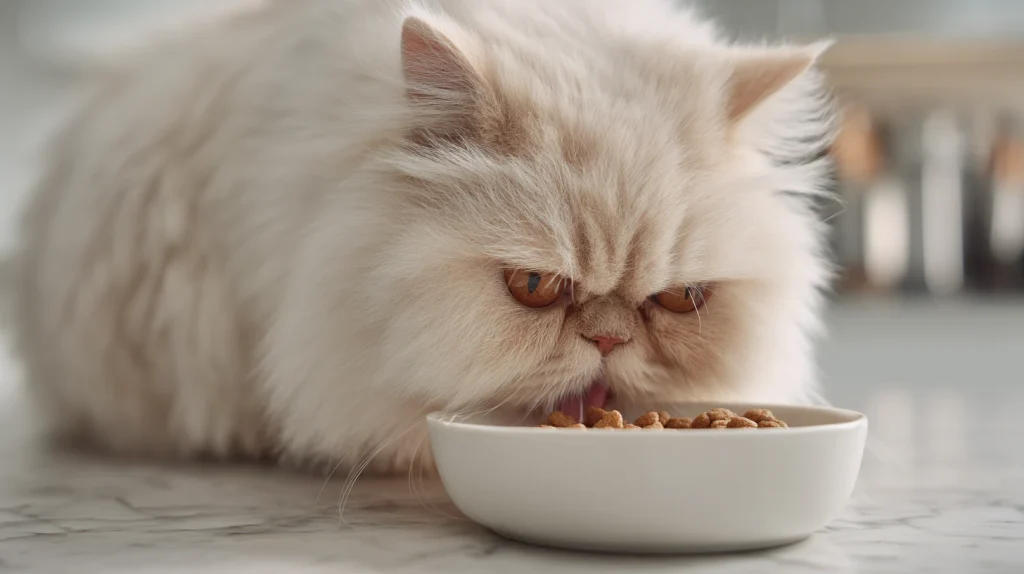
There’s food shaped specifically for Persian cats. Maine Coon formulas with larger kibble and different protein ratios. Ragdoll-specific recipes. These aren’t marketing gimmicks. The kibble shapes are engineered so certain breeds can pick them up more easily based on jaw structure.
Is that overkill? Maybe. But if you have a Persian with a flat face who struggles to eat standard kibble, it stops feeling like overkill pretty fast.
Royal Canin also has a Veterinary Diet line. These are prescription-only, similar to Hill’s Prescription Diet. The Royal Canin renal formulas are particularly well-regarded by vets treating cats with chronic kidney disease.
The thing Royal Canin does better than almost anyone: palatability. They conduct actual taste testing with cats. Their formulas are engineered to smell and feel appealing to picky eaters. If your cat has rejected every other food you’ve tried, Royal Canin is often the next move.
Hills Cat Food Review vs Royal Canin Cat Review: Ingredients Side by Side
Here’s where it gets a little complicated. Both brands use real protein sources. Both use by-products in some formulas. Both have been criticized for higher carbohydrate content in their dry foods. This is the reality of most commercial cat foods at this price point.
What actually differs:
- Protein levels: Hill’s tends to run slightly higher fat content in many formulas. Royal Canin is more fiber-forward, especially in digestive care recipes.
- Texture and aroma: Royal Canin puts significant effort into palatability engineering. Their textures, aromas, and kibble shapes are tested specifically to appeal to cats.
- Ingredient transparency: Hill’s publishes more detailed nutritional research publicly. Royal Canin’s formulas can feel harder to decode unless you’re reading their clinical white papers.
- Prescription line depth: Royal Canin’s vet diet for cats has over 40 formulas. Hill’s Prescription Diet has over 70. Hill’s wins on variety here.
Neither brand lists controversial filler ingredients as primary components in their premium lines. Both meet AAFCO standards — that’s the US body that sets minimum nutritional requirements for pet food.
The 2019 Recall: What You Actually Need to Know
Search “Hill’s recall” and you’ll find alarming headlines. Here’s the thing those headlines often miss.
The 2019 Hill’s recall was serious. Dangerously high vitamin D levels caused illness and death in dogs. That’s real and not something to brush off.
But it affected canned dog food only. No cat food was recalled. No dry food was recalled. The FDA confirmed this clearly.
Hill’s failed to follow their own testing procedures during that production run. They’ve since tightened ingredient testing protocols. But if you’re a cat owner deciding whether to trust Hill’s, the 2019 recall doesn’t change the safety picture for cat food specifically.
Royal Canin has had smaller recalls over the years for various issues. No brand at this scale is recall-free forever.
The honest answer: both brands are generally safe. Track the FDA’s voluntary recall database yourself if you want to stay current — that’s the most reliable source.
Which One Should You Actually Buy?
This is the question every comparison post dances around. I’m not going to do that.
Buy Hill’s Science Diet if:
- Your cat has a diagnosed health condition that needs a prescription diet
- You want a straightforward formula with good protein and don’t need breed-specific precision
- Budget matters and you want the best vet cat food at a slightly lower price point
- Your cat is healthy, not picky, and you just want solid everyday nutrition
Buy Royal Canin if:
- You have a purebred cat with a flat face, unusual jaw structure, or known breed sensitivities
- Your cat is a picky eater who has rejected other foods
- Your vet has recommended it specifically for a renal or urinary issue
- You want the most targeted nutrition formula available for a specific life stage or condition
If your cat is sick: Talk to your vet before choosing between these two specifically. Both have strong prescription lines. Your vet’s recommendation based on your cat’s bloodwork and condition matters more than any blog post, including this one.
Price: What You’re Actually Paying
Both are premium brands. You’re paying more than you would for Friskies or Meow Mix. That’s a fair trade if the nutrition quality justifies it.
Royal Canin tends to run slightly higher than Hill’s on most comparable formulas. The breed-specific lines especially carry a price premium.
A rough ballpark for a 7-pound bag of dry adult cat food:
- Hill’s Science Diet: around $25–35 depending on formula and retailer
- Royal Canin Indoor Adult: around $30–45
Wet food is proportionally more expensive for both. Royal Canin’s veterinary diet wet formulas especially.
If budget is tight, Hill’s Science Diet is the better choice for stretching your dollar without sacrificing nutritional quality.
What About Mixing the Two?
Some owners switch between brands, or use one for dry and one for wet. This is fine from a nutritional standpoint, assuming both are complete and balanced formulas. Cats don’t need menu consistency the way some owners assume.
The real risk of mixing is the same as any food transition: digestive upset. If your cat has a sensitive stomach, don’t rotate frequently.
For most healthy cats, using one brand consistently is simpler and reduces the chance of GI issues.
FAQ
My vet recommended both — how do I choose? Ask specifically why they’re recommending each. Sometimes vets suggest both because they stock both and either would work. Push for a specific reason. If your cat has a known condition, the answer should be tied to that condition, not just general “these are good brands.”
Is Royal Canin actually worth the higher price? For most healthy average cats — probably not. The extra money pays for breed-specific engineering that a domestic shorthair with no special needs doesn’t require. For a Persian, Siamese, Maine Coon, or a picky eater who’s rejected everything else, yes.
Can I give my cat Hill’s Science Diet long-term? Yes. It’s formulated for life-stage feeding. Plenty of cats eat it for their entire lives with no issues. Just make sure you’re using the right formula for your cat’s age and activity level.
Does the 2019 Hill’s recall mean I shouldn’t trust them? That recall affected canned dog food only — no cat food. Hill’s updated their testing procedures afterward. It’s worth knowing the history, but it’s not a reason to avoid their cat food line specifically.
My cat refuses Royal Canin but eats Hill’s — is that normal? Completely. Cats are individuals. Royal Canin invests heavily in palatability research, but that doesn’t mean every cat will prefer it. Some cats just like what they like. If your cat eats Hill’s well and is healthy, you don’t need to change anything.
Mochi eventually came around. I ended up settling on Royal Canin Indoor for her dry food, and Hill’s Prescription Diet for her urinary support wet food. It took a few months to figure out.
The right answer for your cat isn’t the brand with the better marketing. It’s the one your cat will actually eat, that supports their specific health needs, and that fits what you can realistically spend.
Start with your vet’s input. Then test. Then adjust.