
- What's Actually in That Dust Cloud
- Low-Dust vs. Dust-Free: The Difference Matters
- The Best Low-Dust Cat Litter Types (And How They Actually Compare)
- Paper Pellet Litter
- Silica Gel Crystal Litter
- Corn and Wheat-Based Litter
- Pine Pellet Litter
- Tofu Litter
- What About Clay Litter?
- What to Look for Beyond Dust Level
- Best Low-Dust Cat Litter for Multiple Cats
- Making the Switch Without Stressing Out Your Cat
- A Quick Note on "99.9% Dust-Free" Claims
- FAQ
My cat Pepper started coughing every time she used the litter box. Not a hairball cough — a dry, wheezy cough that made me stop whatever I was doing and listen. The vet confirmed feline asthma. The first thing she asked me? “What kind of litter are you using?”
I said the cheap clay kind. The bag I’d been buying for three years.
She winced a little.
That visit sent me down a rabbit hole of research that honestly changed how I think about cat litter. Not just for Pepper — but for me, too, since I was scooping that dusty clay every single day.
What’s Actually in That Dust Cloud
Every time you pour clay litter or your cat digs around in the box, a small cloud goes up. You can see it if the light hits right. That cloud isn’t harmless.
Traditional clay litter — the clumping kind — is mostly sodium bentonite. It also contains crystalline silica, a naturally occurring mineral. The issue is that long-term inhalation of crystalline silica is linked to respiratory inflammation, lung disease, and in humans, has been classified as a lung carcinogen.
Your cat’s nose is inches from the surface. Every scratch, every bury — they’re breathing that in.
For a healthy cat with no underlying issues, this may never cause a problem. But for a cat already dealing with asthma, chronic upper respiratory infections, or even just a sensitive nose, dusty litter adds fuel to an already lit fire.
And here’s something most roundup articles skip: you’re breathing it too. Every scoop. Every bag you open. If you have asthma, allergies, or any breathing sensitivity, the best low-dust cat litter matters as much for you as it does for your cat.
One important note — crystalline silica (found in clay) is different from silica gel crystals. Silica gel litter is made from amorphous silica, which doesn’t carry the same respiratory risks. That distinction matters when we get to product types.
Low-Dust vs. Dust-Free: The Difference Matters
Most articles use these terms like they mean the same thing. They don’t.
“Low-dust” means the litter produces noticeably less dust than standard clay. It’s still making dust — just less of it. For a cat with mild sensitivities or a human who wants fewer clouds at the box, low-dust is often good enough.
“Dust-free” means something closer to zero airborne particles. For a cat with diagnosed asthma, low-dust litter isn’t enough. You want as close to zero as possible.
This is the part no one tells you, and it matters. A cat having actual asthma attacks needs a different standard than a cat who sneezes sometimes.
If your cat has been formally diagnosed, talk to your vet before relying on a “low-dust” label alone. The marketing on packaging is not a medical standard.
The Best Low-Dust Cat Litter Types (And How They Actually Compare)
Paper Pellet Litter
This is my top pick for cats with confirmed respiratory issues. Paper pellets — usually made from recycled newspaper — produce virtually no airborne dust. Nothing. When you pour them, they thud into the box like small logs.
The trade-off is clumping. Paper pellets don’t clump. They absorb liquid, then break down into wet crumbs at the bottom. You need a sifting litter box, or you have to dump the whole box more often.
Brands like Purina Yesterday’s News have been around for years and consistently get recommended by vets for post-surgery recovery and respiratory conditions. The reason is simple: the particles are too large and dense to become airborne.
- Very low dust
- Soft on paws
- Unscented options widely available
- Does not clump
Silica Gel Crystal Litter
Silica gel crystals are the blue or white translucent beads you’ve probably seen. They work by absorbing moisture into the crystal itself rather than clumping around it. The granules are large — too large to float in the air — which makes them genuinely low-dust.
Remember the distinction from earlier: silica gel (amorphous silica) is not the same as the crystalline silica in clay. The gel version doesn’t carry the same lung risk.
Odor control is excellent. The box can often go longer between full changes. The downside is texture — some cats hate the feel of the beads and will avoid the box entirely. And they’re typically more expensive per pound.
Dr. Elsey’s Respiratory Relief Crystal Litter is specifically formulated for cats with breathing issues. It’s a solid choice.
Corn and Wheat-Based Litter
World’s Best Cat Litter (corn-based) consistently ranks near the top of best low-dust cat litter reviews, and for good reason. It clumps well, controls odor, and produces significantly less dust than clay. Many owners with multiple cats swear by it.
Wheat-based litters like Swheat Scoop work similarly. Both use plant starch to create clumps, which means the dust that forms is made from organic plant material — not mineral silica.
One honest caveat: these litters aren’t 100% dust-free. They’re much lower than clay, but if your cat has severe asthma, you may still see some fine particles. They’re a major step up from clay and a good middle ground for multi-cat households where tracking and odor control also matter.
Pine Pellet Litter
Feline Pine and similar products use compressed kiln-dried pine pellets. They’re low-dust, naturally odor-absorbing (pine has antimicrobial properties), and biodegradable.
One thing to check: make sure the pine is kiln-dried specifically to remove phenols. Raw pine contains natural oils that can be toxic to cats. Kiln-drying eliminates this. Most commercial pine litters handle this, but worth confirming on the bag.
Like paper pellets, pine doesn’t clump. It crumbles into sawdust when wet. Some people love this; others find it harder to manage.
Tofu Litter
Tofu litter — yes, made from food-grade soybean pulp — has gained a lot of attention in the last few years. It’s 99.9% dust-free, clumps firmly, and is flushable in most cases. It also tends to be lightweight.
For cats with respiratory issues, it’s one of the most genuinely promising newer options. The plant-based composition means no mineral silica at all. It’s pricier than clay and harder to find in physical stores, but increasingly available online.
What About Clay Litter?
Standard clumping clay is still the most widely sold cat litter in the US. It clumps well, controls odor well, and most cats accept it without complaint.
But for any cat with respiratory issues? I’d move away from it. Not because clay is automatically dangerous for all cats in all circumstances — the research is genuinely mixed on low-level household exposure — but because there are better options now that carry less risk and work just as well. Why keep using something that could be a problem when the alternatives have caught up?
That’s my honest opinion. The risk may be low, but it’s not zero, and the alternatives are good.
What to Look for Beyond Dust Level
Dust is the most important factor for respiratory health, but it’s not the only one.
Fragrance is a hidden trigger. Scented litters mask odor for you, but the synthetic fragrances — think “fresh lavender” or “mountain breeze” — are airborne chemical compounds. For a cat with asthma, or a human with allergies, those compounds can irritate airways just like dust does. Always choose unscented, especially if respiratory issues are a concern.
Clumping vs. non-clumping. If you have multiple cats and need to scoop frequently, clumping is more practical. Corn, wheat, tofu, and some silica crystal litters all clump. Paper and pine pellets don’t. Think about your actual routine before deciding.
Tracking. Dust and tracking are related. Finer-grain litters that produce dust also tend to travel further on paws. Pellet-style litters track less. If you’re trying to keep dust out of the rest of your home, a litter that stays in the box helps.
Best Low-Dust Cat Litter for Multiple Cats
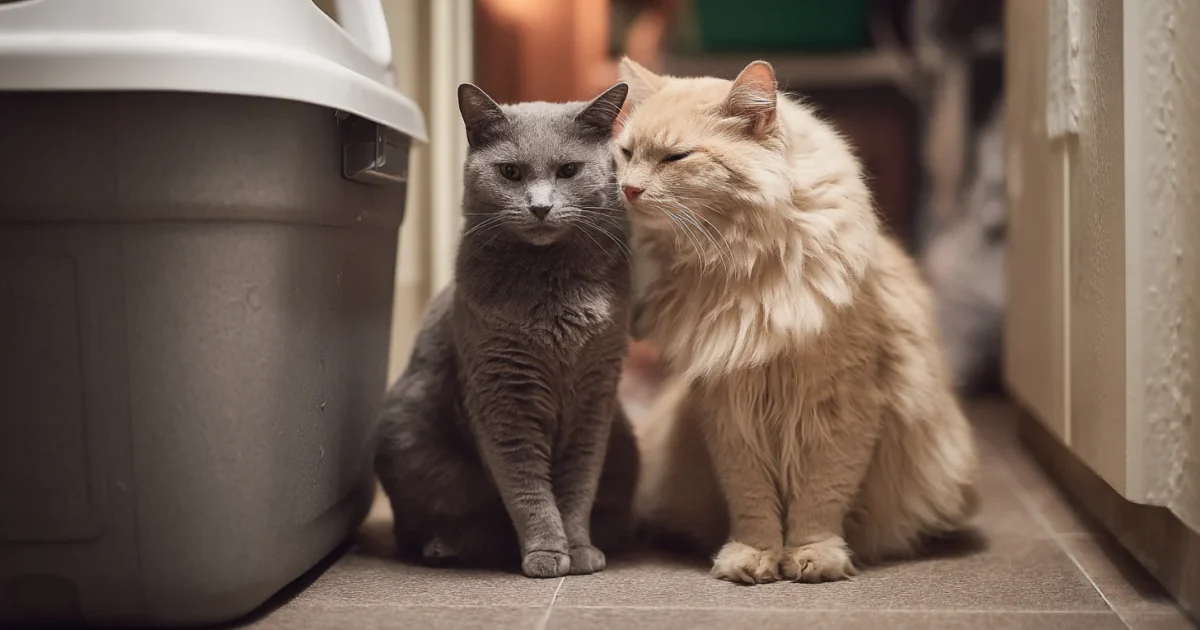
Running a multi-cat house changes things. Odor control becomes more important. You’re scooping more often, which means more exposure to whatever’s in the litter. The box gets disrupted more, releasing more particles into the air.
For multiple cats, corn-based litters tend to perform well because they clump firmly (essential when multiple cats are using the same box) and produce significantly less dust than clay. World’s Best Cat Litter Extra Strength is the version designed for multi-cat homes.
If one of your cats has asthma and others don’t, still switch the whole box. The asthmatic cat doesn’t get to choose which box to use based on litter type. Make the whole environment safer.
Making the Switch Without Stressing Out Your Cat
Cats are territorial about their litter box. Change the litter abruptly and some cats will stage a bathroom protest by going somewhere else.
Switch gradually. Mix about 25% new litter with 75% old. Over two weeks, flip that ratio until you’ve fully transitioned. Most cats adjust without any issues this way.
Some cats will resist certain textures entirely — paper pellets feel nothing like sand, and a cat used to fine clay granules may not accept them. If your cat refuses a litter type, don’t force it. Try a different option. A cat that avoids the litter box entirely creates bigger problems than respiratory irritation.
A Quick Note on “99.9% Dust-Free” Claims
This label appears on packaging constantly. It’s largely a marketing figure, not a standardized measurement. There’s no uniform industry test for how dust levels get measured, which means one brand’s “99.9% dust-free” might be tested under different conditions than another’s.
This doesn’t mean the claims are lies — most low-dust litters do perform meaningfully better than standard clay. It just means you shouldn’t treat the label as a guaranteed medical-grade specification. Real-world performance depends on how the litter is stored, poured, and used.
The most reliable indicator? Material type. Paper pellets and tofu litter are inherently low-dust because of their physical structure, not just their marketing.
FAQ
My cat has asthma — is low-dust litter enough, or do I need dust-free? For a cat with a confirmed asthma diagnosis, you want as close to dust-free as possible. Low-dust clay is still making some airborne particles, and for a cat already prone to attacks, that matters. Paper pellets, tofu litter, or silica gel crystals are better options. Talk to your vet about what they recommend.
I have asthma, not my cat. Does switching litter help me? Yes, genuinely. You’re scooping that box daily and breathing in whatever is airborne. Switching to a low-dust or dust-free litter reduces your own inhalation exposure. Pouring and scooping outdoors or with a mask on also helps during those moments.
Can I use low-dust litter in an automatic litter box? It depends on the litter. Many automatic boxes require clumping litter to work properly. Paper and pine pellets usually don’t work in self-cleaning boxes unless the box is specifically designed for non-clumping litter. Check the manufacturer’s compatibility notes.
Does scented litter make respiratory issues worse? It can. The fragrance compounds in scented litter are airborne — that’s how you smell them. For cats or humans with respiratory sensitivities, those compounds can be irritating even if the litter itself is low-dust. Unscented is always the safer choice if breathing is a concern.
My cat hates the new low-dust litter — what do I do? Slow down the transition. Mix old and new litter gradually over two weeks instead of switching cold. If your cat continues to reject a specific litter type (like paper pellets), try a different material — tofu or corn-based litter has a texture closer to clay and may be easier to accept.