

- Why Huskies Are Different From Most Active Dogs
- The Zinc Problem Nobody Talks About
- What to Actually Look for on the Label
- Best Dog Food for Huskies: My Top Picks
- Best Dog Food for Huskies With Sensitive Stomach
- Best Dog Food for Huskies to Gain Weight
- Husky Puppy Food: A Quick Note
- How Much to Feed an Adult Husky
- FAQ
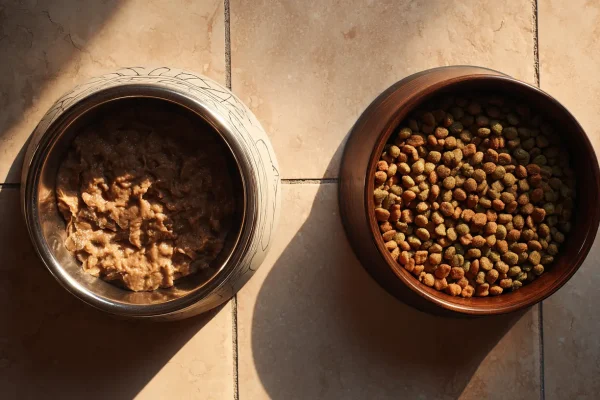
My neighbor texted me a photo last spring. Her husky, Koda, was standing over a full bowl of food, staring at it like it had personally offended him. “He won’t eat again,” she wrote. “Should I be worried?”
I wasn’t surprised. I’ve had huskies, and I’ve talked to dozens of husky owners. This breed does things on their own terms — including eating. Finding the best dog food for huskies isn’t just about picking the highest-protein bag on the shelf. It’s about understanding why this breed is weird about food in the first place.
Why Huskies Are Different From Most Active Dogs
People assume huskies need massive amounts of food because they’re athletic and high-energy. They don’t.
Huskies were bred by the Chukchi people of northeastern Siberia to pull sleds across long distances on as little food as possible. Their bodies became extremely efficient at burning calories. A husky covering 100 miles a day might eat less than you’d expect. That’s not a flaw — it’s the whole design.
This matters because a lot of dog foods marketed toward “active breeds” are calorie-dense performance formulas. Put a husky on one of those and you’ll have a fat dog fast. Or a dog that refuses to finish his bowl because his body is telling him he doesn’t need that much.
They also self-regulate. Most huskies stop eating when they’re full. They don’t wolf down everything in sight like a Labrador. New owners often panic and think their dog is sick. Usually the dog is just… a husky.
Start at about 60 percent of what the feeding label recommends for your dog’s weight. Then adjust based on how your dog actually looks and moves.
The Zinc Problem Nobody Talks About
Here’s something most best dog food for huskies articles skip right over: zinc deficiency.
Huskies and Malamutes have a genetic predisposition to zinc malabsorption. Type I zinc-responsive dermatosis is a hereditary condition. Some huskies simply cannot absorb zinc properly through their intestines — no matter how much is in the food.
Zinc is involved in more than 300 metabolic processes in your dog’s body. It supports immune function, skin health, digestion, appetite, and even mood. Your dog’s body can’t store it, so it needs a steady supply every day.
When the zinc cycle breaks down, the symptoms look like a lot of other things:
- Dull, rough coat or crusty patches around the eyes and mouth
- Recurring diarrhea that never quite gets fixed by a food switch
- Low energy and appetite loss
- Frequent minor infections
Vets often tell owners to switch foods, assuming it’s an allergy. Sometimes that helps short-term. But if the underlying absorption issue is genetic, no food swap alone will fix it.
What this means for your food choice: pick foods with high-quality whole meat proteins — chicken, beef, fish, lamb. Zinc from whole meat is more bioavailable (easier for the body to use) than zinc from plant sources or heavily processed ingredients. Low-quality fillers actively work against zinc absorption.
If your husky has recurring skin issues, a poor coat, and chronic loose stools, talk to your vet specifically about zinc. Don’t just keep cycling through new bags of food.
What to Actually Look for on the Label
Forget the marketing on the front of the bag. Flip it over.
Protein source first. The first ingredient should be a named animal protein — chicken, beef, salmon, lamb, turkey. Not “meat meal,” not “poultry by-product.” Whole meat first.
Fat content in the right range. Huskies need fat for coat health and sustained energy. Look for 15–20% fat from animal sources like chicken fat or salmon oil. Omega-3s from fish oil are especially good for the double coat and skin.
Moderate calories, not extreme. Avoid performance formulas designed for working sled dogs unless your husky actually is one. Most family huskies need something more balanced.
Zinc listed as zinc sulfate or zinc proteinate. Zinc proteinate is the more bioavailable form. It’s absorbed more efficiently — which matters extra for a breed prone to absorption issues.
Grain-free isn’t automatically better. Honestly, this is one area I’ve changed my mind on. The FDA flagged a potential link between grain-free diets and dilated cardiomyopathy (a heart condition) in dogs a few years back. The research is still inconclusive, but unless your husky has a diagnosed grain sensitivity, there’s no real reason to go grain-free. Brown rice, oatmeal, and barley are fine energy sources.
Best Dog Food for Huskies: My Top Picks
I’m not going to list fifteen products. Here are the ones I’d actually buy.
Orijen Six Fish — This is my top pick for most adult huskies. It’s fish-heavy, which means high omega-3s for coat and skin, plus good zinc bioavailability from whole fish. It’s dense, so feed less than the label says. Premium price, but worth it if your dog has skin or coat issues.
Taste of the Wild (Ancient Grains line) — A more affordable option that doesn’t sacrifice quality. The grain-inclusive version uses sorghum, millet, and quinoa alongside proteins like salmon, bison, or lamb. Contains probiotics, which helps with the digestive sensitivity huskies often deal with. Four protein options for picky eaters.
The Farmer’s Dog — Fresh food, human-grade ingredients, pre-portioned for your dog’s specific size and activity level. Pricey. But if you have a husky who constantly refuses kibble, fresh food often breaks through the pickiness. Worth trying if other foods have failed you.
Purina Pro Plan (Sensitive Skin & Stomach) — The best dog food for huskies with sensitive stomachs who also need something widely available. Salmon and rice formula, easily digestible, contains live probiotics. Not glamorous, but it works consistently.
Blue Buffalo Wilderness (Salmon) — Good middle-ground option. High protein, fish-based, and contains real salmon as the first ingredient. A reasonable choice for huskies with zinc concerns because of the fish content.
Best Dog Food for Huskies With Sensitive Stomach
Digestive issues are really common in this breed. Part of it may loop back to zinc — ongoing diarrhea depletes zinc faster, which causes more digestive problems, which depletes more zinc. A frustrating cycle.
For sensitive stomachs, look for:
- Single protein source (easier to identify triggers)
- Prebiotics and probiotics in the ingredient list
- No corn, wheat, or soy as primary ingredients
- Moderate fiber — not too high, not too low
Purina Pro Plan Sensitive Skin & Stomach and Taste of the Wild’s limited ingredient PREY line are both solid here. If things are really bad, a vet may suggest a hydrolyzed protein diet short-term — that’s a food where the proteins are broken down so small the immune system doesn’t react to them.
Best Dog Food for Huskies to Gain Weight
If your husky is underweight, rule out parasites and zinc deficiency before you change the food. Both can cause poor nutrient absorption that keeps a dog thin no matter how much they eat.
If the vet has cleared those issues, add calories with quality fat rather than just more food volume. A small amount of salmon oil drizzled on kibble adds omega-3s and extra calories without forcing more bulk into the bowl. Some owners add a small amount of cooked lean meat on top of kibble. That works too.
Avoid just buying a higher-calorie bag and doubling portions. You want dense nutrition, not empty filler.

Husky Puppy Food: A Quick Note
Husky puppies should stay on puppy food until at least 12 months, sometimes up to 18–24 months. They’re a medium-to-large breed that matures slower than small dogs.
Look for puppy food with DHA (for brain and eye development) and controlled calcium and phosphorus levels. Too much calcium too fast can cause bone development issues in larger breeds. Hill’s Science Diet Large Breed Puppy is a safe, vet-recommended option here.
Don’t put a puppy on an adult high-performance formula — the calorie density and mineral ratios aren’t right for a growing dog.
How Much to Feed an Adult Husky
This varies more than most breeds. A 50-pound husky who runs two hours a day needs different food than a 50-pound husky who mostly naps.
As a starting point: take whatever the feeding label says and cut it by 30–40%. Watch your dog’s body condition over two weeks. You should feel their ribs easily but not see them. If they’re losing weight, add a bit more. If they’re looking soft around the middle, pull back.
Feed twice a day — morning and evening. Don’t free-feed (leaving food out all day). Huskies are good at self-regulating, but structure helps, especially with training and monitoring intake.
In warm months, some huskies eat less on their own. That’s normal. Don’t panic and don’t force-feed. Adjust portions seasonally if needed.
FAQ
My husky never finishes his bowl. Is something wrong? Probably not. Huskies are natural self-regulators and often eat less than other breeds, especially in warm weather or during low-activity periods. If your dog is maintaining a healthy weight and has normal energy, a half-eaten bowl isn’t a crisis. Watch for weight loss, lethargy, or vomiting — those warrant a vet call.
What’s the best dog food for huskies with diarrhea? Recurring diarrhea in huskies often gets blamed on food allergies when the real issue is zinc malabsorption or a sensitive gut. A single-protein, easily digestible food with probiotics is a good start — like Purina Pro Plan Sensitive Skin & Stomach. But if the diarrhea keeps coming back despite food switches, ask your vet specifically about zinc deficiency before trying another bag.
Is grain-free food better for huskies? Not automatically. Unless your dog has been tested and confirmed to have a grain sensitivity, grain-free doesn’t offer a clear advantage. Some grain-free formulas have been associated with heart concerns in dogs. Grain-inclusive foods with quality whole grains like oatmeal or brown rice are perfectly fine for most huskies.
Can I feed my husky raw food? Some owners do, and some huskies thrive on it. Raw feeding can be done well, but it takes real planning — the diet has to be nutritionally balanced, which is harder than it sounds. If your husky is a food gulper, a commercially ground raw food (frozen patties or rolls) is safer than whole raw pieces. Talk to a vet or canine nutritionist before going fully raw.
My husky has crusty patches on his skin and a dull coat. Could it be his food? It could be — but before switching foods, ask your vet about zinc deficiency. Crusty skin around the eyes and muzzle, a rough coat, and low energy are classic zinc-responsive dermatosis symptoms in northern breeds. Some huskies need lifelong zinc supplementation regardless of their diet quality. A food switch alone often won’t fix it.
Feeding a husky well isn’t about finding the fanciest bag or the most expensive fresh delivery service. It’s about understanding what this breed actually needs — efficient energy, high-quality whole protein, good fat sources, and enough zinc in a form their body can use. Get those things right and you’ll spend a lot less time staring at a dog who’s staring at his bowl.