
- Best canister filter aquarium choice for most tanks
- What a canister filter is actually good at
- Fluval 307 review: the safe pick with a few habits
- Eheim Classic: quiet, plain, and weirdly lovable
- Marineland Magniflow: the budget pick with a catch
- Flow rate is not the whole story
- Media setup that does not make cleaning awful
- Noise, leaks, and the cabinet test
- Which one I would buy by tank size
- The pre-filter sponge trick
- Maintenance schedule I would actually follow
- Fluval vs Eheim vs Marineland: my honest take
- FAQ
- What is the best canister filter aquarium owners should buy first?
- Is Fluval better than Eheim?
- Are Marineland canister filters good?
- How often should I clean a canister filter?
- Do I need carbon in a canister filter all the time?
The best canister filter aquarium owners buy is not always the one they brag about online six months later.
A canister filter can make a tank look clean, quiet, and grown-up. It can also turn a simple water change into a wet little argument with hoses. I have had both days. The pretty product photos do not show the towel pile on the floor, the stuck primer button, or the moment you wonder if the hum is new or if you are just tired.
For 2026, my short list still comes down to three names for most freshwater tanks: Fluval, Eheim, and Marineland. They are not the only good brands. They are just the three most people compare first, and for good reason.
Best canister filter aquarium choice for most tanks
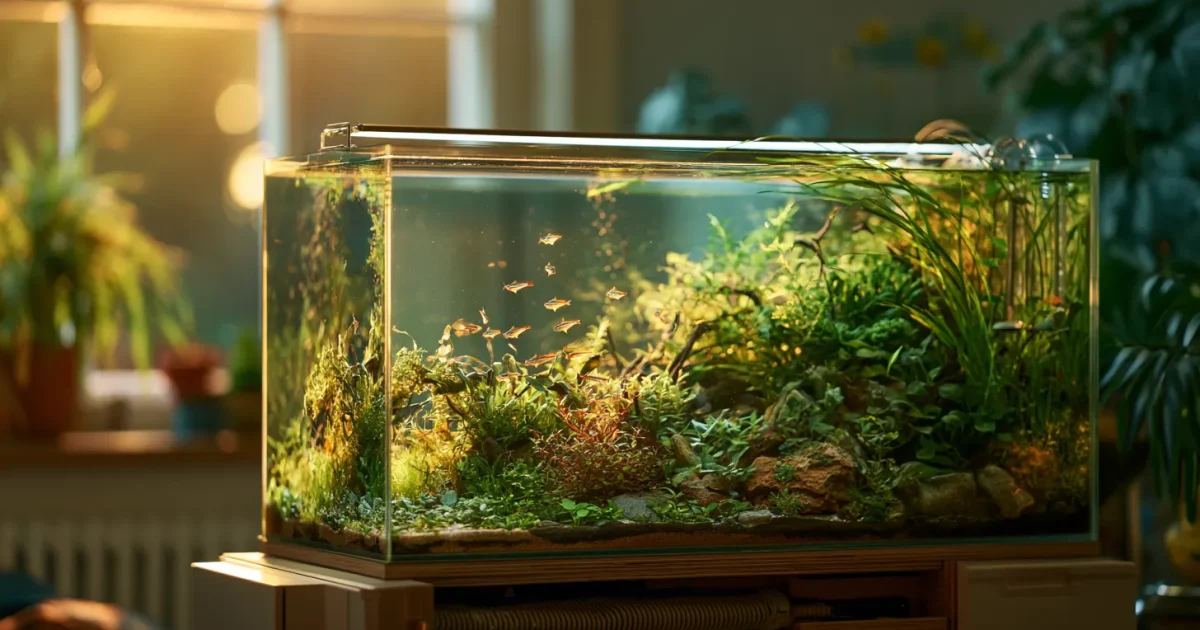
If a friend asked me what to buy for a normal planted community tank, I would point them to Fluval first. A Fluval 307 or 407 gives most owners the best mix of easy setup, strong media baskets, spare parts, and sane maintenance.
That does not mean Fluval is perfect.
The ribbed hoses collect gunk. The primer can feel oddly dramatic. The plastic clamps need respect, not brute force. Still, Fluval filters are easy to understand. That matters more than people admit.
My rough picks look like this:
- Best for most 40 to 75 gallon tanks: Fluval 307
- Best for heavy stocking or bigger planted tanks: Fluval 407
- Best quiet old-school choice: Eheim Classic 250 or 350
- Best budget canister filter review pick: Marineland Magniflow 220 or 360
- Best for people who hate fiddly parts: Fluval, by a small margin
I know Eheim fans will raise an eyebrow here. Fair. Eheim has earned that loyalty. The Classic line feels like aquarium gear from another era, in a good way. Simple tube. Simple clips. Simple media stack. It can run for years.
But “simple” also means less hand-holding.
Fluval is better for the owner who wants trays, labels, parts, and a setup that feels less like assembling a tiny plumbing system from memory.
What a canister filter is actually good at
A canister filter sits outside the aquarium, usually under the stand. Water leaves the tank through an intake tube, moves through layers of media, then returns through a spray bar or outlet nozzle.
That sounds dull. It is. Dull is good.
The real win is media space. A HOB filter can work well, but it has limited room. A sponge filter is gentle, but it will not polish a messy 75 gallon tank by itself. A canister lets you use coarse foam, fine pads, ceramic rings, and sometimes chemical media without stuffing everything into a tiny plastic box.
The best external fish tank filter gives you:
- More room for biological media
- Better hiding of equipment
- Stronger water movement across longer tanks
- Less clutter inside the display
- More control over return flow
It also gives you hoses.
Hoses are where the romance ends. Algae and brown sludge build up inside them. If the filter loses prime, you may need to work air out of the system. If a seal wears out, water does what water does. It finds the worst place to go.
I still like canisters. I just do not think every tank needs one.
Fluval 307 review: the safe pick with a few habits
The Fluval 307 is the filter I would buy for a planted 40 breeder, a 55 gallon community tank, or a lightly stocked 75 gallon. It has enough power for most sane setups and enough media space to feel like a true upgrade from a HOB filter.
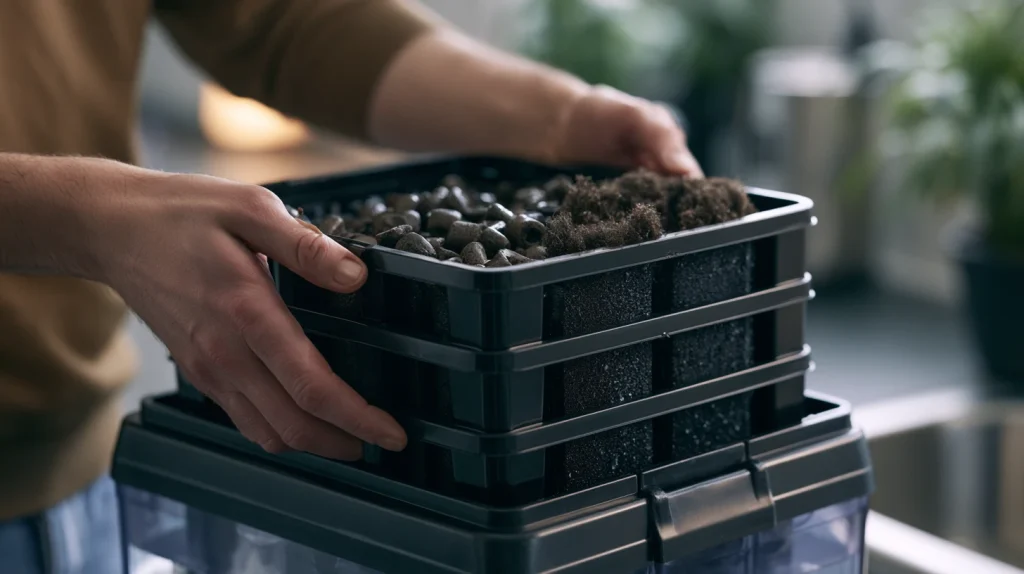
The best part is the basket design. You can pull out trays, rinse the mechanical foam, check the bio media, and put everything back without playing filter Jenga.
That sounds small. It is not.
Good maintenance design makes you less likely to avoid maintenance. I have ignored awkward filters before. Then I blamed the filter when the flow slowed down. That was not the filter being bad. That was me being me.
Fluval’s AquaStop valve is also one of the reasons people keep buying these filters. You can shut off the flow and detach the hoses from the canister. It is not magic, but it helps keep the cabinet from becoming a splash zone.
What I like:
- Easy media tray access
- Good spare part support
- Strong flow for planted tanks
- Useful quick-disconnect valve
- Clear setup for newer canister users
What bugs me:
- Ribbed hoses get dirty and are annoying to clean
- Primer buttons can feel stiff
- Flow may be too much for bettas or tiny fish without a baffle
- The filter is not silent if the cabinet echoes
The Fluval 307 review you probably need is this: it is not the quietest, cheapest, or prettiest option. It is the least confusing good option for many people.
That counts.
Eheim Classic: quiet, plain, and weirdly lovable
Eheim Classic filters have a following because they feel almost stubborn. They do not try to charm you with fancy trays or bright plastic. They are a canister, a pump head, hoses, media, and clips.
I like that.
I also think some people recommend Eheim too casually to beginners. The Classic design is clean, but it asks you to understand the order of media and the way water moves. It does not hold your hand the way Fluval does.
Once set up, though, Eheim can be lovely. The sound is low. The build feels steady. The parts do not feel trendy. You can almost forget it exists, which is the highest praise I can give a filter.
The tradeoff is setup.
Priming an Eheim Classic can test your patience if you have never used a canister. You may need to fill the canister, manage the hoses, and work out air pockets. Some owners add quick disconnect valves if their model does not come with the setup they prefer.
Eheim is the best choice for the person who values:
- Low noise
- Long service life
- Plain design
- Strong biological filtering
- Less plastic clutter inside the canister
It is not my first pick for someone who gets nervous around aquarium gear. That does not make it worse. It makes it less forgiving.
I am not 100% sure every modern Eheim unit feels as bulletproof as the old ones people still praise. Manufacturing changes, parts sources change, and hobby forums can turn nostalgia into law. But the Classic line still has one big thing going for it: it does the job without fuss once you learn its rhythm.
Marineland Magniflow: the budget pick with a catch
Marineland Magniflow filters often look tempting because the price is friendly. They offer multi-stage filtration, media trays, and models sized for common aquariums.
For many tanks, they work.
The catch is that Marineland does not feel as refined as Fluval or as quietly proven as Eheim. I would buy one for a budget build, a backup canister, or a tank where I need more media space but do not want to spend Fluval money.
I would not buy one and expect it to feel premium.
That may sound harsh. I do not mean it that way. A budget filter does not need to feel fancy. It needs to move water, hold media, seal well, and start without turning maintenance into a weekly grudge.
The Magniflow line can be a good buy if:
- You want canister media space for less money
- You are setting up a simple freshwater tank
- You do not mind a little extra noise
- You check seals and parts during cleaning
- You want a canister but cannot justify a Fluval 407
Where I hesitate is long-term comfort. A cheaper canister saves money on day one. If parts get annoying, seals worry you, or cleaning feels clumsy, that savings gets less fun.
Still, for the right owner, Marineland makes sense. I have a soft spot for gear that gets people into better filtration without asking for a giant budget.
Flow rate is not the whole story
A lot of advice says to turn your tank over four to six times per hour. So a 55 gallon tank should have a filter rated around 220 to 330 gallons per hour.
That is a decent starting point.
It is not a rule carved into glass.
Rated flow usually comes from a clean filter with little resistance. Once you add foam, fine pads, ceramic media, hoses, bends, and a spray bar, the real flow drops. Then the filter gets dirty and drops more.
This is why two filters with similar box numbers can feel different on a real tank.
Fish also matter. A school of danios may enjoy more movement. A betta with heavy fins may look offended by the same return flow. Fancy goldfish are messy, but they do not need a washing machine current.
For planted tanks, I care less about raw speed and more about spread. Dead spots collect debris. Plants block flow. Tall hardscape can split current in odd ways. A spray bar aimed along the back glass often works better than blasting the front of the tank.
You have probably noticed this if food lands in the same corner every day.
That corner is telling on your filter.
Media setup that does not make cleaning awful
Most canister filters work best when water hits mechanical media before biological media. In plain words, catch the big gunk before it reaches the bacteria housing.
My usual setup is:
- Coarse foam first
- Medium sponge or pad next
- Biological media after that
- Fine polishing pad only if I need extra clarity
- Chemical media only for a clear reason
I do not run carbon all the time in most freshwater tanks. This is one place I disagree with common beginner advice. Carbon can help remove medication after treatment, odors, or some discoloration. But as a default forever media, I would rather save that space for bio media or foam.
There are exceptions. Real advice always has them.
If your tap water has a known issue, or your tank has tannins you hate, chemical media may help. But do not let cartridge culture convince you every filter needs a fresh bag of carbon every month.
For a canister, coarse foam is your friend. Fine pads polish water, but they clog fast. If your filter slows down every two weeks, you may have packed it too fine.
Which is frustrating. But also kind of makes sense.
Noise, leaks, and the cabinet test
Noise is personal. One person’s “silent” is another person’s bedtime enemy.
Fluval usually has a mild hum. Eheim Classic often wins on quiet, though setup and trapped air can change that. Marineland can be fine, but I would not put it in a bedroom without testing your tolerance.
The cabinet matters too. A hollow wooden stand can turn a small vibration into a low drum. A folded silicone mat or dense foam pad under the canister can help. Do not block vents or make the filter unstable. Just give vibration somewhere soft to die.
Leaks are the bigger fear. Most leaks come from user error, dirty seals, bad hose seating, cracked plastic, or old O-rings.
My boring leak checklist:
- Wipe the O-ring before closing
- Seat hoses fully
- Check clips without forcing them
- Keep the canister upright
- Watch it for ten minutes after restart
That last one has saved me. Twice.
Which one I would buy by tank size
For a 20 gallon tank, I usually would not buy a canister. A good HOB filter or sponge filter is simpler. A small canister can work, but the hoses and flow often feel like too much for the job.
For a 40 breeder, Fluval 207 or 307 makes sense. I lean 307 if the tank is planted or stocked well. Add a spray bar if the current is too direct.
For a 55 gallon community tank, Fluval 307 is my easy pick. Eheim Classic 250 or 350 can be great if quiet matters more than quick cleaning.
For a 75 gallon tank, Fluval 407 is the safer pick. Eheim Classic 350 can work on lighter stocking. Marineland Magniflow 360 may work for budget owners, but I would keep up with cleaning and watch flow.
For messy fish, go bigger or use two filters. One canister plus a sponge pre-filter can be a very practical setup. A pre-filter sponge on the intake catches plant bits and fish waste before it enters the canister.
The pre-filter sponge trick
Put a sponge over the intake.
That is it. That is the section.
It keeps shrimp, fry, plant leaves, and mystery gunk out of the canister. You rinse the sponge during water changes instead of opening the whole filter every time. I resisted this for too long because I thought it looked ugly. Then I enjoyed not cleaning hoses as often and got over myself.
Maintenance schedule I would actually follow
A canister filter should not be deep-cleaned every week. That can disturb the helpful bacteria that handle fish waste.
But it should not become a swamp tube either.
For most tanks, I like this rhythm:
- Rinse the intake sponge weekly or every other week
- Check flow during every water change
- Open the canister every 4 to 8 weeks
- Rinse mechanical foam in old tank water
- Leave biological media mostly alone
- Clean hoses every few months or when flow drops
Do not rinse bio media under hot tap water. Use removed tank water. You are not trying to make it smell like new plastic. You are trying to remove loose sludge while keeping the bacteria alive.
Also, unplug the heater if the water level drops during maintenance. I learned that lesson from a cracked heater years ago. It made a sound I still dislike thinking about.
Fluval vs Eheim vs Marineland: my honest take
Fluval is the most practical pick for most owners. It feels modern, parts are easy to find, and the basket layout makes sense.
Eheim is for the person who likes quiet gear and does not mind a plainer setup. It rewards patience.
Marineland is for the owner who wants canister benefits at a lower price. It can be good, but I would not buy it for a tank where I need the filter to feel refined.
If I had to rank them for a first canister:
- Fluval
- Eheim
- Marineland
If I had to rank them for quiet:
- Eheim
- Fluval
- Marineland
If I had to rank them for budget:
- Marineland
- Eheim
- Fluval
This is where people get oddly tribal. Please do not. Fish do not care about brand loyalty. They care about stable water, steady flow, oxygen, and you not avoiding maintenance because the filter makes you grumpy.
FAQ
What is the best canister filter aquarium owners should buy first?
For most freshwater tanks, I would start with Fluval. The 307 and 407 cover many common tank sizes, and the media trays make cleaning less annoying. Eheim is a great choice if quiet matters most.
Is Fluval better than Eheim?
Fluval is easier for many owners. Eheim is often quieter and simpler inside. Better depends on what bothers you more: setup fuss or long-term hum.
Are Marineland canister filters good?
They can be good for budget freshwater setups. I would check seals, clean on schedule, and keep expectations fair. They are not my first pick for a high-stakes display tank.
How often should I clean a canister filter?
Most tanks do well with canister cleaning every 4 to 8 weeks. Rinse mechanical foam in old tank water. Leave bio media mostly alone unless it is packed with sludge.
Do I need carbon in a canister filter all the time?
Usually, no. Carbon can help after medication or with certain odors and discoloration. For daily use, foam and biological media often deserve the space more.
If your tank is quiet, clear, and easy to care for, you picked the right filter. Maybe it is Fluval. Maybe it is Eheim. Maybe it is a Marineland that cost less and does the job. The best filter is the one you will maintain without sighing every time you open the cabinet.