
- Best Picks at a Glance
- Feliway vs. Alternatives: Which One Makes Sense?
- Match the Product to the Stress Trigger
- Supplements Worth Taking Seriously
- The Product Nobody Wants to Buy
- What I'd Skip First
- Practical Buying Advice
- The Feliway Setup Most People Get Wrong
- Feliway vs. Calming Treats
- My 14-Day Test Plan
- Best Calming Products by Situation
- What About "Natural" Calming Products?
- FAQ
- Choosing With Confidence
A stressed cat can make a quiet house feel like a crime scene by 7 p.m.
The best calming products for cats aren’t magic plugs, sleepy treats, or cute bottles in soft colors. They’re tools. Some help a cat feel safer in a room. Some help with travel. Some only work if you start before the panic actually begins. Buy the wrong one and you get the classic cat-owner outcome: an empty wallet, a suspicious cat, and one more thing plugged into a wall doing absolutely nothing.
I test calming products one boring way: I watch the cat, not the label. Does the hiding drop? Does the growling stop faster? Does the carrier trip go from full opera to mild complaint? That’s the only test I actually care about.
“If you’re short on time: Feliway Optimum is the right first buy for most home anxiety — hiding, tension, scratching, general unease. Feliway Classic Spray handles carriers and vet trips. Zylkene is worth starting a few days before a known stressor like a move. None of it replaces fixing an actual layout problem in a multi-cat home.”
Best Picks at a Glance
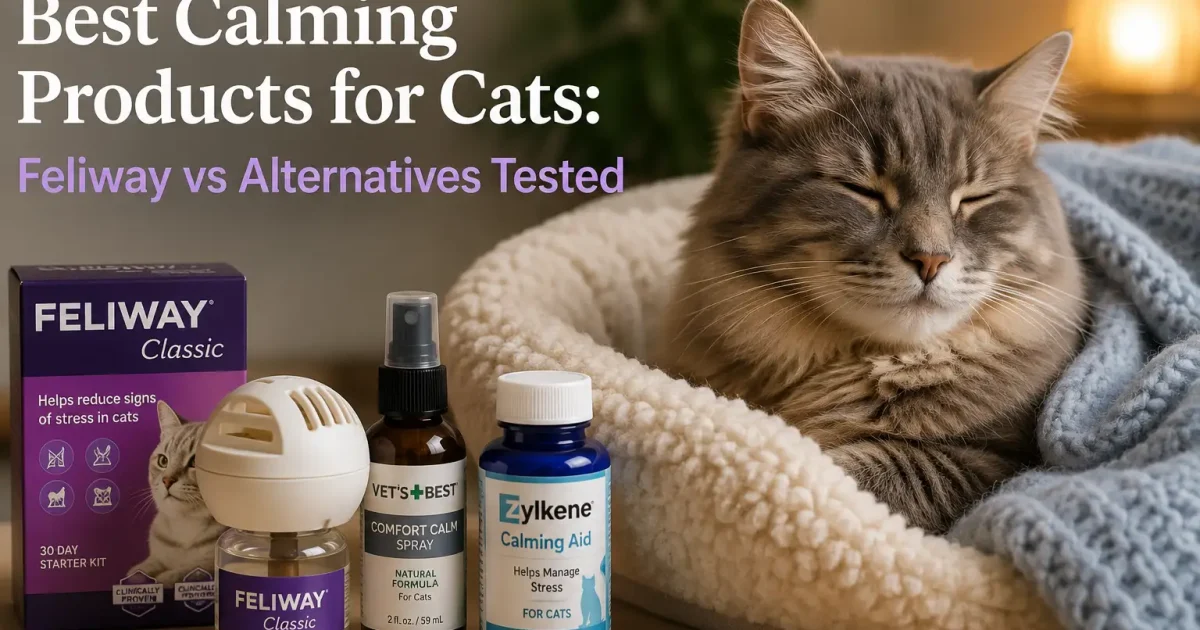
Feliway Optimum – 9.3/10 The best first try for most homes dealing with general anxiety — hiding, scratching, tension, or a cat who seems unsettled after some change. It asks almost nothing of the cat: no eating, no wearing, no wrestling into a vest. You plug it in where the cat actually spends time, and that low barrier to entry matters more than people give it credit for.
Feliway Classic Spray – 8.8/10 The right pick for carriers, vet visits, and short trips — genuinely great if you use it early, well before the stressful event, rather than reaching for it in the parking lot. It’s for a spot, not a room, and it works best paired with some carrier training rather than as a standalone fix.
Zylkene – 8.6/10 A capsule supplement built for planned stress — moves, new pets, visitors, slow-building anxiety you can see coming. It’s a good fit for cats who’ll accept a powder mixed into food, and a poor fit for cats who notice one grain of change and file a formal complaint.
Comfort Zone Multi-Cat or Single-Cat Diffuser – 8.2/10 Worth trying if Feliway’s price is the sticking point, especially in multi-cat homes dealing with tension. It doesn’t carry the same brand trust as Feliway, but plenty of cats respond well regardless of what’s printed on the label.
VetriScience Composure – 8.0/10 A useful chew for short-term stress — storms, guests, one-off events — built around calming ingredients like L-theanine and thiamine. The catch is straightforward: the cat actually has to eat it, and plenty of picky cats treat “calming chew” the way I treat a plain rice cake.
Purina Pro Plan Calming Care – 7.8/10 A daily probiotic built for steady, low-level stress over weeks, not a fast fix for tomorrow’s fireworks. Worth considering for a cat with chronic, low-grade anxiety — not worth buying on July 3rd expecting results by the 4th.
Feliway vs. Alternatives: Which One Makes Sense?
Feliway has a confusing little family of products, and the names sound closer together than the actual use cases are.
Feliway Optimum is what I’d buy first for general cat anxiety at home — hiding, tension, scratching, urine marking, or a cat who’s seemed unsettled since some change in the house.
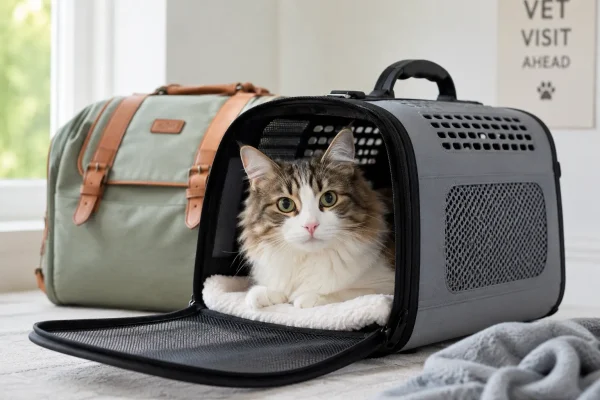
Feliway Classic Spray is better for short events. Use it on the carrier, the car, bedding, or before a vet trip. Don’t spray the cat directly — spray the carrier first, then let it sit before your cat goes anywhere near it.
Feliway MultiCat (or Friends) is built more for cat-to-cat tension — doorway blocking, chasing, staring, swatting, one cat treating the hallway like private property.
The mistake I see constantly is buying the spray and expecting it to calm the whole house. That’s not a fair ask of a spray. A spray is for a spot. A diffuser is for a room. A supplement follows the cat. A routine supports everything else.
Comfort Zone is the main Feliway alternative worth trying if cost is the obstacle. It covers similar use cases and gets used a lot in multi-cat homes. It doesn’t carry Feliway’s brand trust, but cats don’t read labels — some respond, some don’t, and that’s just how it goes with a species that isn’t a tiny predictable machine.
Match the Product to the Stress Trigger
This is where most roundups get too neat, treating “anxiety” like it’s a single thing. It isn’t. A cat scared of fireworks isn’t the same as a cat being bullied by another cat. A cat who hates the carrier doesn’t need the same setup as a cat marking near the door because outdoor cats keep wandering past.
For vet visits and car rides: use Feliway Classic Spray in the carrier before the trip, add a familiar towel, and cover part of the carrier so the cat doesn’t feel exposed. Then stop fussing — I know that sounds cold, but excessive “comforting” can actually wind a cat up further. Many cats do better when the space is prepared and everyone just acts normal. A chew like VetriScience Composure or NaturVet Quiet Moments can help some cats before travel, but test it on a calm day first. Vet day is not the day to discover your cat hates salmon chews.
For fighting or tension between cats: start with a diffuser in the room where tension peaks most, then fix the actual setup — more feeding spots, another litter box, more vertical space, no more forcing cats to share tight paths. A diffuser can lower the room’s emotional temperature, so to speak, but it won’t fix a home where one cat has to pass the other’s favorite ambush chair just to reach the litter box. Multi-cat stress is very often a layout problem before it’s a product problem.
For moving house: set up one starter room with food, water, litter, scratching, bedding, and hiding spots, and plug in a diffuser before your cat explores it. Don’t open the whole home on day one just because the cat seems curious — curious cats can still panic. Zylkene can help if you start before the move; Calming Care can too, but it needs more runway. For a move happening next weekend, don’t expect a probiotic to carry the whole job on its own.
For fireworks, storms, and loud guests: this is where layering works best. Run a diffuser in the safe room for a week or more ahead of the event, use a carrier or bedding spray the day of, and add a chew only if the cat has already accepted it on a normal day. Then give the cat somewhere to hide. People say “don’t let them hide” — I disagree. Hiding isn’t failure, it’s coping. The goal isn’t forcing a scared cat into the open; it’s giving them somewhere safe to come down from it.
Supplements Worth Taking Seriously
The calming supplement market is full of soft claims, so it’s worth being specific about what’s actually earned a look.
Zylkene uses alpha-casozepine, a milk protein ingredient often used for planned stress — moving, new pets, visitors, travel. Good for cats who’ll eat food with powder mixed in; not good for cats who notice any change to their food and object on principle.
VetriScience Composure is a chew built around L-theanine and thiamine, handy for specific events. The catch is simple: the cat has to actually eat it, and plenty of cats treat calming chews as beneath their notice.
Purina Pro Plan Calming Care is a probiotic powder meant for daily use over time — worth considering for steady, low-level stress, not a same-day fix.
NaturVet Quiet Moments can help some cats with travel, often through ingredients linked to sleepiness. Worth extra caution here — anything that makes a cat drowsy should get tested on a calm day first, never for the first time on travel day.
Herbal blends in general get a “maybe,” not a “must-buy,” from me. Some may genuinely help. Some just smell like a health food store had a moment. Cat-specific research on many herbal ingredients is thinner than the label copy suggests.
The Product Nobody Wants to Buy
A cardboard box.
Seriously. A good hiding box in a quiet room can outperform a whole shelf of calming products if your cat has nowhere safe to disappear to. It’s boring. It’s also genuinely effective, and it costs nothing.
What I’d Skip First
I wouldn’t start with a calming collar for most cats — some tolerate collars fine, others hate them, and a collar that stresses the cat out has just become a strange stress necklace.
I’d also skip compression vests unless the cat already accepts handling well. Some cats calm down under gentle pressure; others turn into liquid rage with claws attached.
Calming litter isn’t a fix I’d lean on either — scented litter can bother some cats as much as it calms others. If litter box stress is the issue, I’d improve the setup first: scoop more often, add an extra box, use a larger uncovered box, place boxes where cats can’t get cornered, and skip strong scents entirely.
CBD isn’t a first pick — talk to a vet before using it. Cat dosing is tricky, product quality varies widely, and “natural” doesn’t automatically mean safe. The same caution applies to plant oils. Lavender might sound peaceful to you; your cat didn’t ask for a spa day.
Practical Buying Advice
The Feliway Setup Most People Get Wrong
People plug diffusers into the wrong spot constantly — usually a hallway, because it feels central. But cats don’t relax in hallways. Hallways are roads. Cats calm down in resting zones.
Plug the diffuser near the cat’s main hangout room — not behind curtains, not under a shelf, not beside an open window, and not near the litter box unless the cat genuinely spends real time there (which would be its own separate concern). One diffuser also won’t cover a whole two-story home; if the problem is happening upstairs and the diffuser’s downstairs, the cat isn’t getting much benefit from it. One diffuser in the exact problem room beats two placed at random.
Feliway vs. Calming Treats
Diffusers handle background stress. Treats handle timed stress. That’s the actual split — a diffuser changes the mood of a room, a treat offers support ahead of a known event, and they’re not interchangeable.
If a cat hides every evening because another cat patrols the living room, that calls for a diffuser and a layout change. If a cat panics the moment the carrier appears, that calls for spray and training — a treat might help, but only if the cat still eats while nervous, and a lot of stressed cats simply won’t. The treat that worked fine in the kitchen can fail completely in the vet parking lot.
My 14-Day Test Plan
Don’t change five things at once — you’ll never know what actually helped. Start with a simple log, nothing fancy, just phone notes.
For two days, track the problem with no new product added. Watch for hiding time, hissing or growling, scratching or marking, carrier panic, overgrooming, and appetite changes.
Then add one calming product. For a diffuser, place it in the room where the cat spends the most time — not the hallway, not behind furniture, not beside a fan; it needs airflow, not a blast that carries the scent away. For a spray, use it on the carrier or bedding well before the cat needs that space. For a supplement, follow the label and give it at the same time each day if it’s meant for daily use.
After 14 days, ask one plain question: is the cat recovering faster? That matters more than “is my cat calm all the time.” A nervous cat may still get scared — but coming out sooner, eating sooner, or stopping the growling sooner is real progress. Small progress counts.
Best Calming Products by Situation
For general home anxiety, start with Feliway Optimum. For carrier stress, use Feliway Classic Spray alongside carrier training. For multi-cat tension, try Feliway MultiCat or Comfort Zone Multi-Cat, then fix the food, litter, and pathway issues underneath it. For planned change, consider Zylkene a few days before and during the event. For daily nervous behavior, look at Calming Care or another vet-backed daily support product.
For sudden, severe anxiety: call the vet. That’s not a fun line to include in a product roundup, but it’s true. A cat who suddenly pees outside the box may have pain or a urinary issue. A cat who hides all day may feel physically sick. A cat overgrooming until skin shows needs more than a lavender-scented promise can offer.
What About “Natural” Calming Products?
Natural can be useful. It can also be vague. Catnip, silver vine, and valerian function more as enrichment than true anxiety treatment for most cats — they help a cat play, roll, and burn off energy, and the cat may rest afterward as a result. That’s not the same thing as treating fear directly.
Catnip toys are great for a bored indoor cat. I wouldn’t rely on them for a cat being stalked by a housemate or terrified of travel. Herbal drops are trickier still — some cats hate the taste, some formulas share too little ingredient detail, and some can interact with existing health issues or medication. A vet isn’t there to ruin the fun. They’re there because cats are small, strange, and very good at hiding real problems behind what looks like ordinary stress.
FAQ
What are the best calming products for cats if Feliway doesn’t work? Match the next product to the actual trigger. For travel, a carrier spray plus training. For planned stress, Zylkene. For daily stress, ask a vet about Calming Care or another daily support product. For multi-cat tension, fix the home setup before buying another plug-in.
Are calming treats better than diffusers? Not usually — they do different jobs. Treats help before a known event, but the cat has to actually eat them. Diffusers make the room feel safer over time and ask nothing of the cat.
What are the best calming products for cats during travel? Feliway Classic Spray is the first pick for the carrier — spray it before the trip, wait, then place the cat inside. A familiar towel helps too. For cats who get seriously sick or frantic while traveling, ask a vet about travel medication.
Can I use Feliway and calming treats together? Often, yes — but don’t stack several products at once without reading labels carefully. Start with one, watch the cat, then add another if it’s genuinely needed. If the cat takes medication or has existing health issues, check with a vet first.
Has anything really changed in calming products for 2026? The core options are still pheromone diffusers, sprays, chews, capsules, probiotics, and home setup changes. The newer shift is more products targeting specific problems — multi-cat tension, daily stress — rather than one generic “anxiety” claim. That’s a genuine improvement, though it also makes random buying easier to get wrong.
Choosing With Confidence
A calm cat usually doesn’t come from one perfect product. It comes from the right product, used in the right place, with fewer stress triggers left standing around it. Start with the trigger, not the product aisle. Watch the cat. Adjust slowly.
Your cat will tell you more than the front of the box ever will.