
- Best Picks at a Glance
- What "Cat Tracker" Actually Means
- Tractive CAT Mini / CAT 6 Mini — Best for Outdoor Roamers
- Pros
- Cons
- Fi Mini — Best Battery Life
- Pros
- Cons
- Tabcat V2 — Best No-Subscription Option
- Pros
- Cons
- Apple AirTag — Best Cheap Option for iPhone Users
- Pros
- Cons
- 🏆 Editor's Pick
- Regional Notes
- UK Buyers
- Australia and Germany
- The GPS Chip Implant Question
- What Reddit Gets Right and Wrong
- Practical Buying Advice
- FAQ
- Bottom Line
My stomach dropped the first time my cat’s collar beeped from under the neighbor’s deck instead of from my own garden.
That tiny sound changed how I think about the best cat GPS tracker. A tracker is not just a cute gadget for nervous pet parents. It’s a backup plan for the night your indoor cat slips out, or the afternoon your confident outdoor cat doesn’t show up for dinner.
And no, the answer is not always “just buy an AirTag.”
I wish it were that simple. It would save everyone money and at least three browser tabs. But cats are annoying little geniuses. They hide under sheds. They squeeze through fences. They sit five feet from you and refuse to answer like they have unpaid rent. So the right tracker depends on the kind of trouble your cat likes.
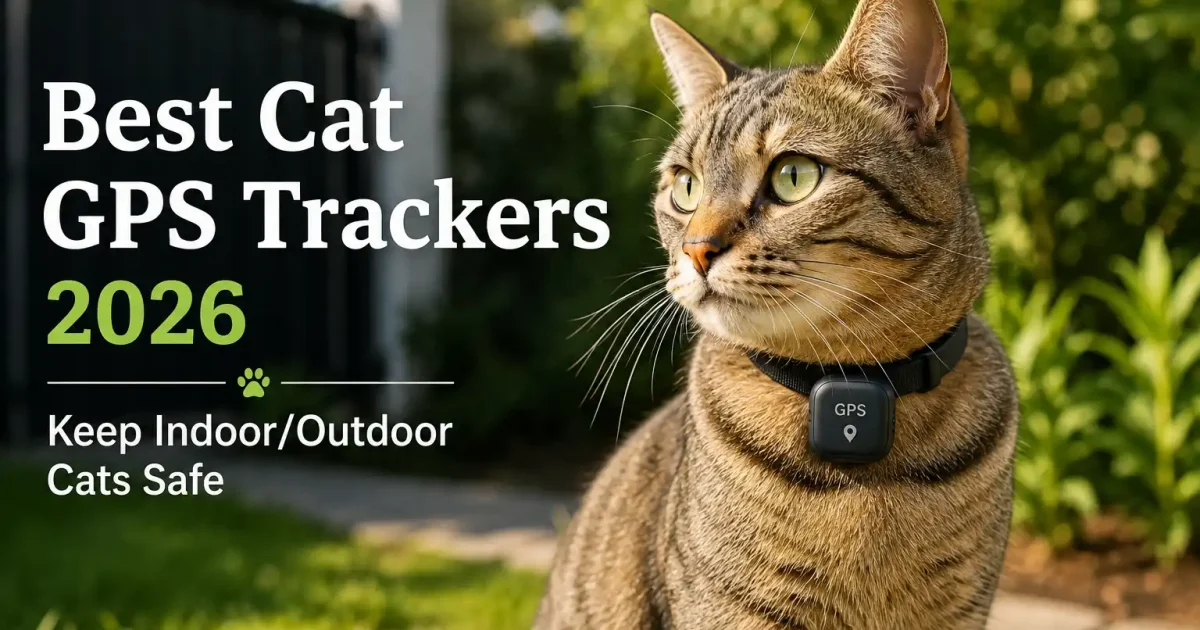
If you’re short on time: for most roaming indoor/outdoor cats, start with the Tractive CAT Mini or CAT 6 Mini — it’s true GPS with live tracking, safe zones, and location history, and it’s the closest thing to real peace of mind for a cat that leaves the yard. If you hate charging or don’t want a subscription, Fi Mini and Tabcat V2 are the two exceptions worth knowing about.
Best Picks at a Glance
Tractive CAT Mini / CAT 6 Mini – 9.0/10 My top pick for most outdoor-roaming cats. True GPS with live tracking, safe zones, and route history — the catch is a required subscription and battery life that drops fast if your cat roams a lot.
Fi Mini – 8.6/10 The pick if charging annoys you more than anything else. Real GPS plus activity and sleep tracking, with noticeably better battery life than Tractive-style trackers in most real-world use.
Weenect XS – 8.0/10 A solid true-GPS option, especially common in the UK and Europe. Requires a subscription, and battery life depends heavily on how much your cat actually roams.
Pawfit Lite – 7.9/10 Another legitimate GPS choice for UK cat owners. Worth checking size and local coverage carefully before buying.
Tabcat V2 – 8.3/10 The best no-subscription pick for cats who stay close to home. It’s not GPS — it’s a radio-frequency homing tool — but for a cat that hides under the shed rather than roams the neighborhood, that’s exactly what you need.
Apple AirTag – 7.8/10 The cheapest option for iPhone users, and genuinely useful for an indoor cat who might slip into the hallway or garden. Not a true GPS tracker, and it depends on nearby Apple devices, so it can go quiet in rural or wooded areas.
What “Cat Tracker” Actually Means
This table is the part I wish every Amazon listing would show before the shiny photos, because “cat tracker” can mean three very different things.
| Tracker | Best For | Subscription | True GPS? | Main Weakness |
|---|---|---|---|---|
| Tractive CAT Mini / CAT 6 Mini | Most outdoor cats | Yes | Yes | Needs regular charging |
| Fi Mini | Longer battery life | Yes | Yes | Best in areas with good mobile signal |
| Tabcat V2 | No monthly fee, small cats | No | No | Short-range only |
| Apple AirTag | Indoor escape risk, iPhone users | No | No | Not real-time GPS |
| Weenect XS | UK/Europe GPS option | Yes | Yes | Battery depends on use |
| Pawfit Lite | UK cat owners wanting GPS | Yes | Yes | Check size and coverage first |
A GPS tracker follows your cat across longer distances. A Bluetooth tracker waits for nearby phones to notice it. An RF tracker helps you home in on your cat once you’re already nearby. Those are not the same tool, and mixing them up is how people end up disappointed with a $30 tag that was never built to do what they expected.
Tractive CAT Mini / CAT 6 Mini — Best for Outdoor Roamers
Rating: 9.0/10
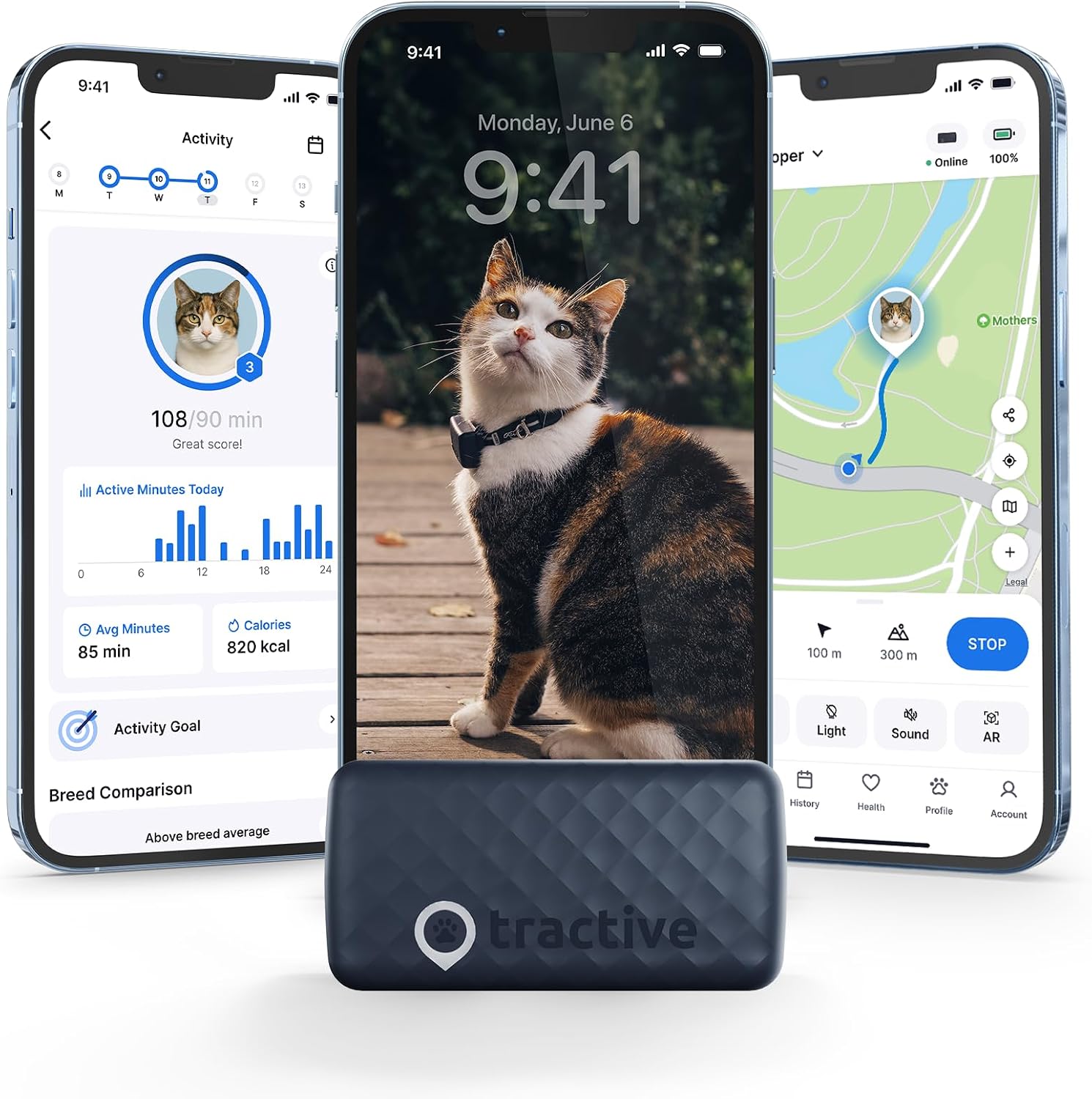
Outdoor cats don’t need a cute little tag that only works near phones. They need a tracker that gives you a map. That’s why Tractive still makes the most sense for a cat that leaves the garden, crosses alleys, or has a secret second family two streets over. I say that as someone who fully believes most outdoor cats are running a small social calendar behind our backs.
Pros
- Live tracking, safe zones, and past-route history in one app
- Works better than Bluetooth tags for a genuinely roaming cat
- App is usable without needing a tech degree
Cons
- Requires an ongoing subscription
- Battery life drops fast if your cat roams a lot
- GPS accuracy can get messy near thick trees, tall buildings, or weak mobile signal
The app shows live tracking, safe zones, and past routes, and that history can be genuinely useful — you may learn your cat isn’t “lost” at all, just visiting the same hedge every night like it owes him money. The newer Tractive CAT 6 Mini also brings more health-style tracking in some markets, covering things like changes in activity or rest. I like that idea, but I wouldn’t buy a GPS tracker only for health data. Buy it to find your cat — the health extras are nice, but the map matters more.
A few real-life notes: charge it before the battery gets low, not after. Use a breakaway collar. Test the safe zone before trusting the alerts. Don’t expect GPS to point to the exact leaf your cat is sitting under, and check mobile coverage in your area before you commit. I’m not 100% sure every cat owner will enjoy the app side of this — some people hate alerts, some hate charging, some cats hate anything on a collar at all. But for a roaming cat, this is still the closest thing to peace of mind you’re going to get.
Best for: indoor/outdoor cats, cats who roam beyond the yard, owners who want escape alerts, people who want location history, and cats big enough to comfortably wear a small GPS unit. Not the best fit for tiny kittens or people who refuse monthly fees on principle.
Fi Mini — Best Battery Life
Rating: 8.6/10
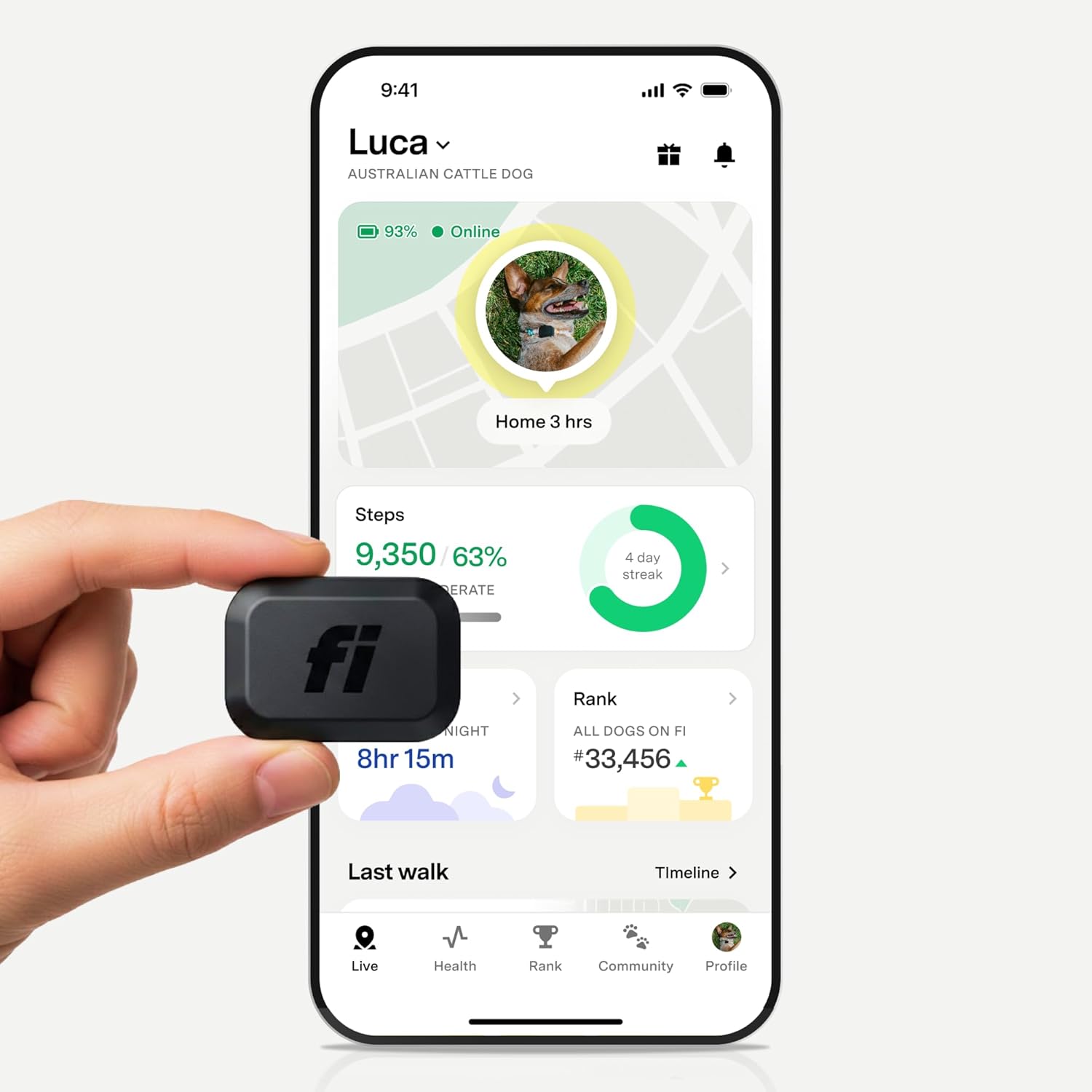
Fi Mini is the one I’d look at if battery life annoys you more than anything else about GPS trackers.
Pros
- Smaller than many older pet GPS trackers
- Real GPS plus activity and sleep tracking
- Noticeably longer battery life than many Tractive-style trackers in real use
Cons
- Still depends on mobile signal, so rural or wooded coverage can be spotty
- Battery life doesn’t always match the brand’s marketing claims
A tracker sitting dead on your kitchen counter is just a tiny plastic guilt trip, and that’s exactly the problem Fi Mini is built to solve. It makes sense for people who want GPS but know they’ll forget to charge every few days — the compact unit is also a cleaner fit for some cats physically.
The catch: mobile signal still matters. If your cat roams in rural land, wooded areas, or places with spotty coverage, any mobile-based GPS tracker can struggle — that’s not a Fi-specific problem, it’s a GPS pet tracker problem in general. I’d pick Fi Mini over Tractive if charging is your weak spot. I’d pick Tractive if location history and app detail matter more to you. Frustrating that there isn’t one clean winner, but it also kind of makes sense once you think about what each one is actually optimizing for.
Tabcat V2 — Best No-Subscription Option
Rating: 8.3/10
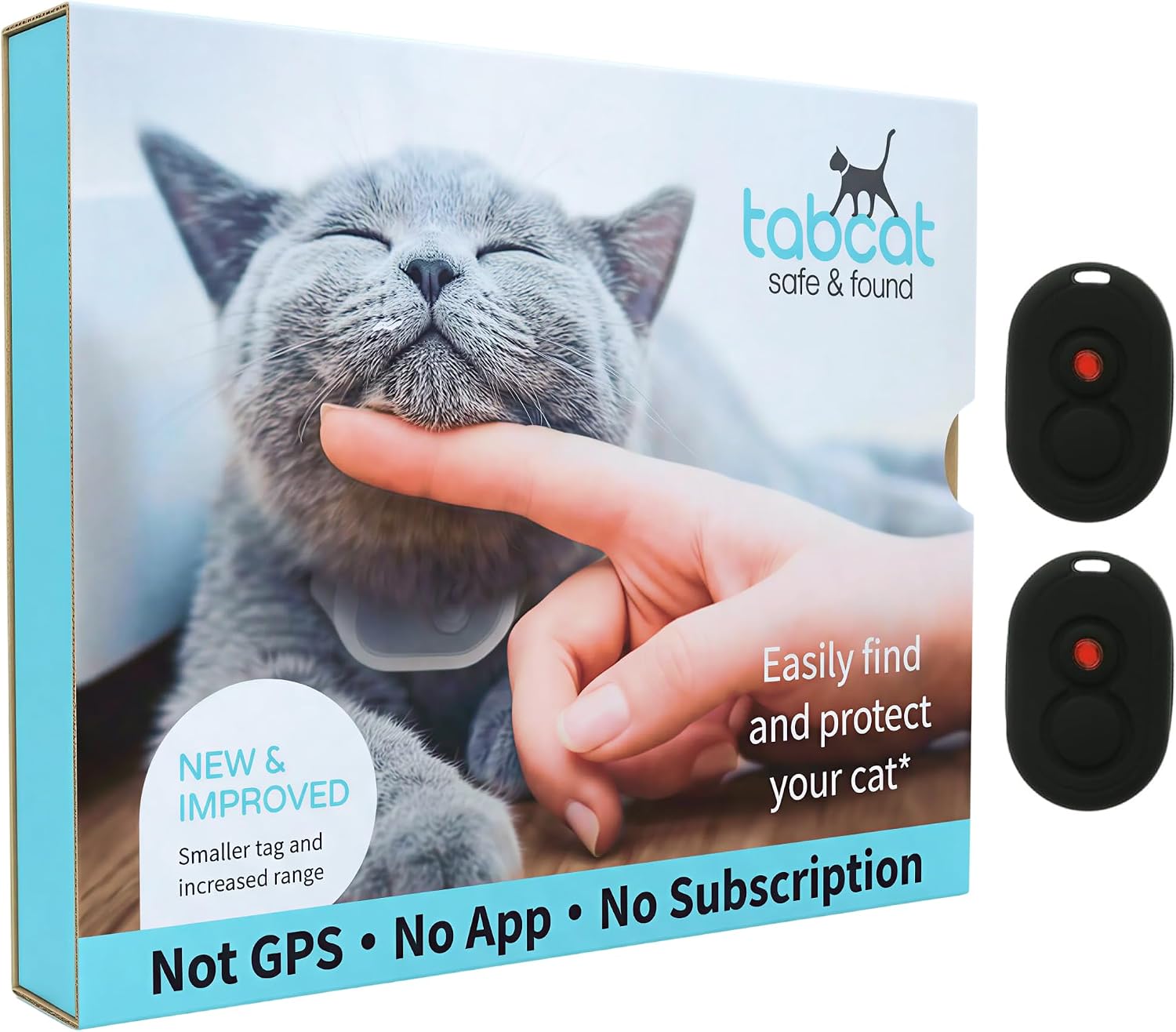
Tabcat is not a GPS tracker, and I’m saying that early because too many posts blur this line. Tabcat uses radio frequency — in plain English, you carry a small handset, and it guides you toward your cat’s tag when you’re within range.
Pros
- No map, no phone app, no monthly fee
- Tiny, lightweight tag with long battery life
- Genuinely effective for close-range searching
Cons
- Homing tool only — no route or long-distance tracking
- Not useful if your cat is genuinely far from home
For some cats, that’s perfect. Think of the indoor cat who bolts into the garden and hides under the shed, or the small cat who stays close but disappears into bushes, or the cat who hears your voice and thinks “no thank you.” Tabcat can help you search nearby spaces better than GPS in some cases — it’s light, the tag is tiny, and you don’t need a subscription.
That’s why people searching for a no-monthly-fee tracker often end up looking at Tabcat. But be clear about the tradeoff: if your cat is half a mile away, Tabcat won’t show you a map route. It’s a homing tool, not a long-distance tracker. My opinion: Tabcat is the best no-subscription choice for cats who stay near home. It’s not the best choice for a bold outdoor roamer.
Apple AirTag — Best Cheap Option for iPhone Users
Rating: 7.8/10
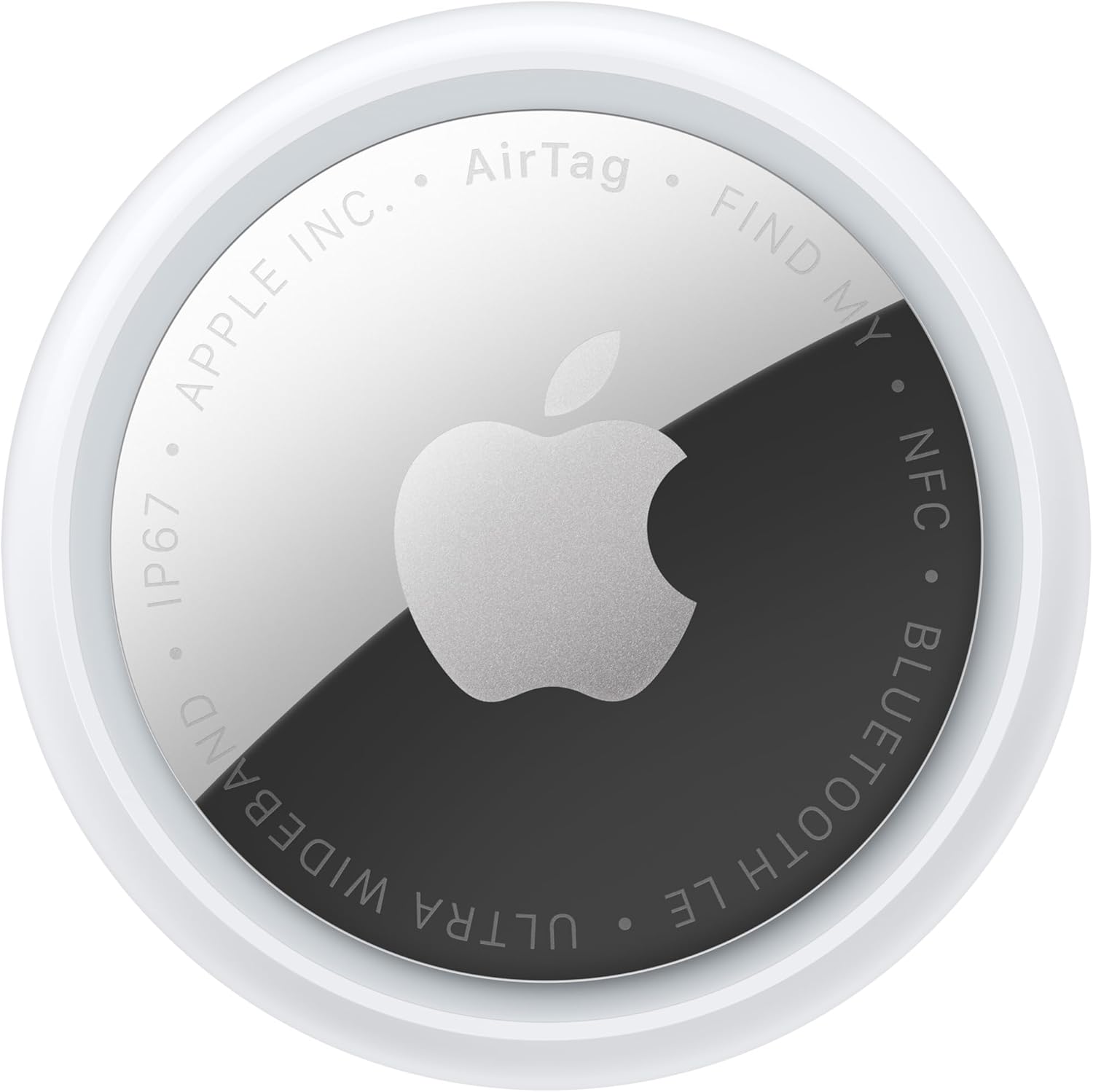
The AirTag is the tracker everyone argues about. Some cat owners love it. Some GPS tracker brands act like putting one on a pet is a personal crime. The truth is less dramatic.
Pros
- No subscription and long battery life
- Huge Find My network coverage in many towns and cities
- Cheapest entry point on this list
Cons
- Not a true GPS tracker — depends entirely on nearby Apple devices
- Can go quiet in woods, fields, farms, or quiet rural roads
An AirTag can be useful for some cats. It’s small, has no subscription, and the battery lasts a long time. If your cat passes near iPhones, you may get a location update — that can work well in a busy neighborhood and badly almost anywhere else. So would I use one? Yes, for an indoor cat who might slip into the hallway, garden, garage, or nearby street. No, for a cat who disappears into open land.
Also, please use a proper AirTag holder on a breakaway collar. Don’t let it dangle like a shiny little dinner plate — cats already have enough bad ideas on their own.
🏆 Editor’s Pick
Tractive is still where I’d spend first if my cat had real outdoor time and I wanted one tracker to trust. It’s the option that actually does the job most people picture when they search for a cat GPS tracker — a live map, safe zone alerts, and a route history that turns “where is my cat” from a guessing game into an actual answer. The subscription and charging routine are real costs, but for a roaming cat, nothing else on this list closes that gap as well.
If your cat genuinely doesn’t roam far, though, don’t over-buy. Tabcat will serve you better, for less money, with none of the charging anxiety.
Regional Notes
UK Buyers
UK cat owners have a few good options, but the best choice depends on whether you want true GPS or no monthly cost. For true GPS, look at Tractive CAT Mini or CAT 6 Mini, Weenect XS, or Pawfit Lite. For no subscription, look at Tabcat V2, or an AirTag if you’re on iPhone and live in a busy area.
One point matters more now than it did in older posts on this topic: microchipping rules changed in England in 2024. A microchip is for ID — it is not GPS — but it still matters, because it helps a vet or rescue center contact you if someone finds your cat. So do both if you can. Microchip for ID. Tracker for finding. They solve different problems entirely.
Australia and Germany
Some products change by country, which is why a US-focused reviews list may not match what you can actually buy in Australia, Germany, or the UK. Before you buy, check four things: does the tracker work with local mobile networks, is the subscription sold in your country, can you get replacement clips or collars, and does the app support your phone?
In Germany and much of Europe, Tractive and Weenect tend to be easier to find than some US-first products. In Australia, availability can shift, so check local retailers and the brand’s own coverage page directly. This is the boring part, but it saves you from buying a tracker that looks great online and turns into a plastic necklace with an app error a month later.
The GPS Chip Implant Question
A GPS chip implant for cats sounds perfect. No collar, no charging, no lost tracker — just open your phone and see your cat. Sadly, that’s not a real thing you can buy from a vet right now.
A normal cat microchip is a tiny ID chip. It has no battery, and it doesn’t send GPS location — it only works when someone scans it with a chip reader. That means a microchip can’t help you actively search the woods behind your house. It can help your cat get back to you after someone finds them.
People search for a GPS chip implant because they want the collar problem to go away, and I understand that completely. Cats lose collars. Cats hate collars. Cats turn a simple fitting into a full-body wrestling event. But for now, real tracking still means something worn on the collar or harness.
What Reddit Gets Right and Wrong
Search around and you’ll see the same debate over and over. One person says AirTag saved their cat. Another says AirTag is useless. Someone else says Tabcat found their cat under a deck in three minutes. Then a GPS owner says they’ll gladly pay the subscription because sleeping well matters.
They’re all partly right. Reddit is useful because it shows real frustration — battery drain, bulky collars, false alerts, subscriptions, weak signals, cats removing collars like tiny escape artists. But Reddit can also make one person’s yard sound like universal truth. Your area changes everything. A city cat and a farm cat need different tools. A timid indoor cat and a bold outdoor hunter need different tools too. Read Reddit for patterns, not final answers.
Practical Buying Advice
What I’d buy for each cat:
For a confident outdoor cat, I’d buy Tractive first. For a cat who roams but you hate charging, I’d compare Fi Mini and Tractive directly. For a small cat who stays close to home, I’d buy Tabcat. For an indoor cat who sometimes escapes, I’d use an AirTag or Tabcat. For a UK buyer wanting GPS, I’d check Tractive, Weenect, and Pawfit. For a no-monthly-fee setup, I’d avoid anything claiming “GPS” unless it clearly explains how it works without mobile service — real live GPS tracking usually needs a data plan, and that last part annoys people, but the tracker has to send location data somehow.
Safety matters more than the tracker. A tracker should never make a collar unsafe. Use a breakaway collar — one that pops open if it gets caught — because cats climb fences, trees, sheds, and all kinds of places we’d rather not picture. I still wouldn’t use a non-breakaway collar even though it keeps the tracker attached better; I’d rather lose a tracker than risk a trapped cat. Fit matters too — you should be able to slide one or two fingers under the collar. Too loose can snag, too tight can rub and stress your cat. Also watch the weight: a 7-pound cat and a 15-pound cat don’t carry the same tracker the same way. Simple stuff, but people skip it constantly.
Test it before you need it. You’re not done after buying a tracker — you need to test it. Walk around your home with it. Step outside the safe zone. Check how fast the alert comes. Try the sound button. Look at the map. See how it behaves near trees, garages, and walls. Do this before your cat is actually missing, because learning an app while panicking is a special kind of awful. Make charging part of your routine — I like charging during mealtime or overnight if the cat is safely indoors, and I’d never charge it during outdoor time unless I enjoyed regret. One more thing: use an ID tag or printed collar info too. A tracker can fail. A kind neighbor can still read a phone number. Old-school still works.
Reading listings on Amazon and elsewhere: look closely at product wording. A listing may say “GPS” when it really means Bluetooth or Find My network. Some no-name trackers use phrases like “real-time” and “no monthly fee” in ways that sound better than they actually are. Check whether it’s true GPS, RF, or Bluetooth, whether it needs a SIM or subscription, whether the collar is breakaway, whether the tracker is too heavy for your cat, and whether replacement holders are easy to buy. Also read the bad reviews first — five-star reviews tell you why people were happy on day one, but one-star and three-star reviews tell you what broke, what confused people, and what the app did during a bad week. That’s where the truth usually hides.
FAQ
Is there a best cat GPS tracker with no monthly fee that still has live GPS? Usually, no. Live GPS needs a way to send your cat’s location to your phone, and that typically means mobile data, which means a subscription. No-fee options like Tabcat or AirTag can work well, but they’re not the same as live GPS.
Is an AirTag good enough for an outdoor cat? For a cat who stays near homes and roads with lots of iPhone users, maybe. For a rural cat, a farm cat, or a cat who goes into woods, I wouldn’t trust it as the main tracker. It’s better as a low-cost backup than a true GPS collar.
Can my vet implant a GPS tracker in my cat? No. Vets can implant a microchip, but that chip is for ID — it doesn’t show live location on a map. A real GPS tracker needs power and signal, so it has to be worn on a collar or harness.
What’s the best cat GPS tracker collar for small cats? For tiny or light cats, Tabcat is easier to wear because the tag is very small. If you need true GPS, check the tracker’s weight and the minimum cat size before buying — some GPS units are still too bulky for small cats.
Should indoor cats wear trackers? Some should. A calm indoor cat who never tries the door may not need one daily. A door-dasher absolutely might. For escape artists, I like AirTag, Tabcat, or a light GPS tracker, depending on how far they might realistically get.
Bottom Line
The tracker I trust most for a roaming cat is still a real GPS model like Tractive. The tracker I like most for no monthly fee is Tabcat. And the tracker I’d use for a low-cost indoor escape backup is AirTag. That’s not as neat as “buy this one.” But cats are not neat. They are furry little loopholes with whiskers.