
- Why German Shepherds Are Nutritionally Demanding
- Matching Food to Your Dog's Life Stage
- The Skin Allergy Problem (And Why "Hypoallergenic" Is Mostly Marketing)
- Sensitive Stomachs: What Actually Helps
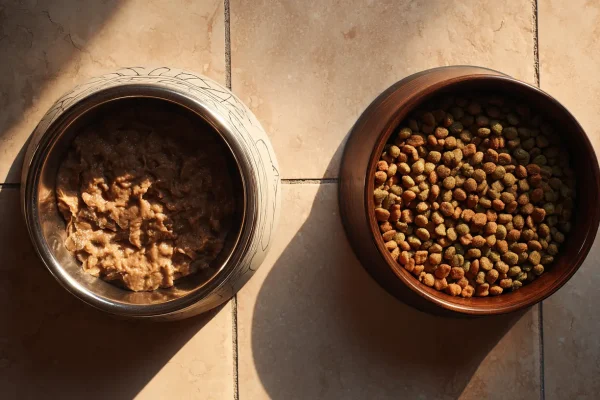
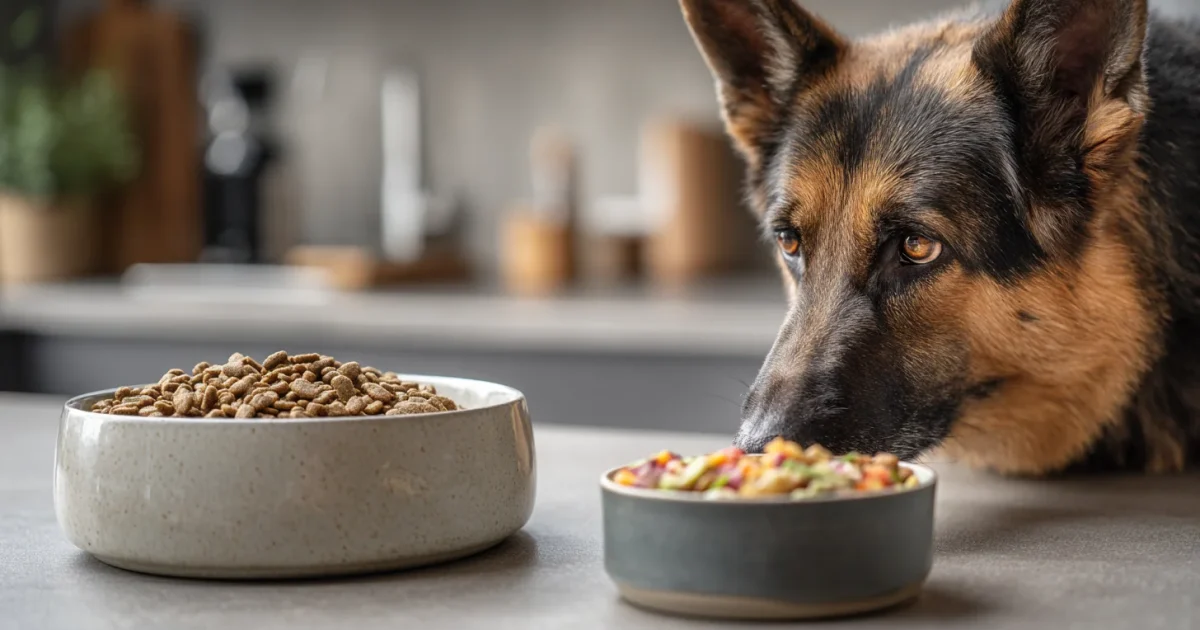
- Dry vs. Fresh vs. Raw: An Honest Take
- Reading the Label: What to Look For (and Avoid)
- Quick Decision Guide: Match Your GSD to the Right Food
- FAQ
My neighbor’s GSD, Rex, spent three years cycling through expensive kibble bags while his owner guessed. Itchy skin in summer. Loose stools in winter. Low energy year-round. The vet kept saying “try an elimination diet.” Nobody handed her a roadmap.
That’s the actual problem with most advice on the best dog food for German Shepherds. You get a ranked list. You don’t get logic. So you pick the prettiest bag and hope.
This post is different. It’s built around the question every GSD owner actually asks: given my dog’s age, activity level, and health issues — what do I actually feed them?
Why German Shepherds Are Nutritionally Demanding
German Shepherds aren’t just large dogs. They’re a working breed with a distinct set of physiological quirks that make generic “large breed” formulas fall short.
Their digestive systems are notoriously sensitive. Bloat (GDV) is a genuine risk, especially in deep-chested adults. Their skin and coat require consistent omega-3 and omega-6 support to avoid that dull, flaky look that shows up when diet isn’t right. And their hips — the breed’s most famous weakness — start bearing real structural stress from puppyhood onward.
A food that works for a Labrador probably isn’t optimized for a GSD. This matters.
The baseline nutritional profile you’re looking for:
- Protein: 25–30%+ from a named animal source (chicken, lamb, salmon, beef — not “poultry meal” as the primary)
- Fat: 12–16% — enough to fuel an active dog without promoting weight gain in less active adults
- Glucosamine and chondroitin: Non-negotiable for joint support, especially after age 5
- Probiotics or prebiotic fiber: The GSD gut is not forgiving. Digestive aids are worth the cost premium.
- Omega-3 fatty acids (DHA/EPA): Skin and coat quality, also brain function in puppies
One thing I’ll say plainly: grain-free diets have been under scrutiny since the FDA’s DCM (dilated cardiomyopathy) investigation linking legume-heavy grain-free foods to heart issues in dogs. The research is not settled — but I wouldn’t default to grain-free for a GSD without a clear allergy diagnosis. Grains aren’t the enemy.
Matching Food to Your Dog’s Life Stage
This is the section most articles skip. They treat all German Shepherds as one category.

GSD Puppies (Under 18 months)
GSD puppies grow fast and their bone structure is still developing. Excess calcium can actually cause skeletal problems in large breed pups — so ironically, an “all life stages” puppy food with very high calcium content can do harm.
You want a food specifically formulated for large breed puppies, with controlled calcium-to-phosphorus ratios. Iams ProActive Health Smart Large Breed Puppy Food is a strong budget-to-value pick — affordable, farm-raised chicken as the main ingredient, and formulated for large-breed developmental needs. For owners who want a premium option, Orijen Puppy Large derives most of its animal protein from fresh chicken and contains 43% protein by dry matter analysis — unusually high for a puppy formula, which supports muscle development during those fast-growth months. DogsterDog Food Advisor
Feed puppies 3 times daily until 6 months, then drop to twice daily. Don’t free-feed. GSD puppies will overeat.
Adult GSDs (18 months – 7 years)
This is your widest window and your most flexible one. Activity level matters more here than age. A working-line GSD doing Schutzhund training 4 days a week needs more calories and more protein than a companion dog sleeping on a couch.
Royal Canin makes the only major brand formula specifically designed for German Shepherds — the kibble shape is designed for the GSD’s long muzzle and strong jaw, encouraging chewing rather than gulping, which actually reduces bloat risk. The formula also focuses on digestive health. The downside is price — roughly $100 for 30 lbs. For most families, it’s worth trying for 90 days to see if your dog’s digestion and coat respond before committing long-term. Animal Hearted
Hill’s Science Diet Large Breed is the safe middle ground. Vets recommend it more than any other mainstream brand. Not flashy. Genuinely effective.
Senior GSDs (7+ years)
Joint support becomes the priority. You want higher glucosamine content, slightly reduced phosphorus (to protect aging kidneys), and moderate protein — not a dramatic reduction as old advice suggested, but not maximum either.
Blue Buffalo Wilderness Chicken Recipe High-Protein Senior formula is a well-regarded option for older GSDs, balancing joint support with the protein retention seniors still need. Dog Food Advisor
Watch for weight gain. Senior GSDs slow down before their appetites do.
The Skin Allergy Problem (And Why “Hypoallergenic” Is Mostly Marketing)
German Shepherds are one of the breeds most prone to environmental and food allergies. The skin shows it first — itching behind the ears, between the toes, redness on the belly. Most owners immediately assume the food. Sometimes they’re right. Often they’re not.
True food allergies in dogs are less common than environmental allergies. The most common food allergens in dogs are beef, dairy, wheat, egg, chicken, lamb, and soy — roughly in that order.
If you suspect a food allergy, the only real diagnostic tool is a strict elimination diet using a novel protein (one your dog has never eaten before) for 8–12 weeks. No treats. No cheating. It’s tedious. It works.
Purina Pro Plan Sensitive Skin and Stomach (salmon-based) consistently performs well for German Shepherds with skin issues — vets frequently recommend it, and it addresses both digestive and skin symptoms simultaneously. Animal Hearted
For confirmed food allergies, Limited Ingredient Diets (LIDs) are genuinely useful. Natural Balance LID and Zignature are frequently mentioned by GSD owners online. The key isn’t the brand — it’s choosing a protein your specific dog hasn’t built a sensitivity to yet.
One thing that gets overlooked: fish oil supplementation. A daily omega-3 supplement (EPA/DHA from fish oil, not flaxseed) added to any kibble can meaningfully improve skin and coat quality within 6–8 weeks. It costs very little. I’d try this before switching kibble entirely.
Sensitive Stomachs: What Actually Helps
Loose stools and gas are probably the most common complaints from GSD owners. Some dogs have this their whole lives regardless of food quality. But diet absolutely plays a role.
The triggers are usually:
- Food transitioned too fast (always transition over 7–10 days, not overnight)
- Fillers like corn syrup, artificial colors, or low-grade by-products
- High fat content in an inactive dog
- Kibble eaten too fast (use a slow-feeder bowl — this helps more than most people realize)
Diamond Naturals Large Breed Adult Chicken and Rice is a consistently recommended option for GSDs with sensitive stomachs — simple ingredient profile, highly digestible, and considerably cheaper than specialty gut health brands. Dog Food Advisor
Probiotics help. Some owners add a small scoop of plain pumpkin puree to kibble — it’s high in soluble fiber and works surprisingly well for loose stools. Not a long-term fix, but useful during diet transitions.
Dry vs. Fresh vs. Raw: An Honest Take
The fresh food delivery market (Farmer’s Dog, Ollie, Spot & Tango) has grown dramatically. The Farmer’s Dog uses human-grade proteins with recipes formulated by board-certified veterinary nutritionists, and the gentle cooking method preserves more nutrients than heavily processed kibble. Many GSD owners report genuine improvements in coat, energy, and digestion after switching. Dogster

The honest caveat: these services are expensive. For a 70-lb GSD, you’re looking at $80–$150/month depending on the plan. That’s 3–5x the cost of premium kibble.
Raw diets are more controversial. Advocates report excellent results. The risks — bacterial contamination (Salmonella, Listeria), nutritional imbalances if not properly formulated — are real and documented. The American Veterinary Medical Association recommends against raw diets for dogs in households with immunocompromised people or young children. If you’re going raw, work with a veterinary nutritionist, not just a Facebook group.
My honest opinion: a high-quality kibble with a daily fish oil supplement and occasional fresh food toppers gets you 80% of the fresh food benefit at 20% of the cost. That’s where I’d start for most GSD owners.
Reading the Label: What to Look For (and Avoid)
Look for:
- Named protein source as first ingredient (chicken, lamb, salmon — not “meat meal”)
- AAFCO statement: “complete and balanced for all life stages” or stage-specific
- Glucosamine/chondroitin listed (not just “joint support” marketing language)
- Omega-3 source (fish meal, fish oil, or flaxseed)
Avoid:
- Artificial preservatives: BHA, BHT, ethoxyquin
- Generic “animal fat” without species named
- Corn syrup or sugar in any form
- Ingredient splitting (corn, corn gluten meal, corn flour listed separately to push protein higher on the label)
The AAFCO statement matters more than most people realize. A food without it hasn’t been validated as nutritionally complete. Treat it as a non-negotiable baseline.
Quick Decision Guide: Match Your GSD to the Right Food
| Dog Profile | Recommended Category | Example Brands |
|---|---|---|
| Puppy, large breed | Large Breed Puppy formula | Orijen Puppy Large, Iams ProActive |
| Active adult | High-protein adult | Royal Canin GSD, Taste of the Wild |
| Low-activity adult | Moderate-calorie adult | Hill’s Science Diet Large Breed |
| Skin allergies | LID or salmon-based | Purina Pro Plan Sensitive, Natural Balance LID |
| Sensitive stomach | Simple ingredient, probiotic-enhanced | Diamond Naturals, Hill’s Sensitive |
| Senior (7+) | Senior large breed | Blue Buffalo Wilderness Senior |
| Budget-conscious | Value large breed | Iams Large Breed Adult |
FAQ
What protein is best for German Shepherds with allergies? Novel proteins are most effective — proteins your dog hasn’t eaten before, like venison, duck, or kangaroo. Salmon is also a good option because it’s lower in allergenic potential than chicken or beef and provides natural omega-3s. The key is picking one protein and sticking with it strictly during an elimination trial.
Is grain-free food good for German Shepherds? Not necessarily. Grain-free isn’t inherently healthier, and legume-heavy grain-free diets have been associated with DCM in some breeds. Unless your GSD has a confirmed grain allergy, a high-quality grain-inclusive formula is often the safer choice.
How often should I feed my adult German Shepherd? Twice daily — morning and evening. Once-daily feeding increases the risk of bloat in deep-chested breeds like GSDs. Avoid feeding immediately before or after vigorous exercise.
My German Shepherd eats fast and gets gassy — is that a food problem? It might be a behavior problem first. Slow-feeder bowls and puzzle feeders significantly reduce air ingestion during eating, which is a major cause of gas and bloating. Try that before switching food.
What’s the difference between “large breed” and regular adult food for German Shepherds? Large breed formulas have adjusted calcium-phosphorus ratios, lower calorie density to prevent rapid growth/weight gain, and typically include glucosamine. These differences matter for GSDs specifically — both for bone development in puppies and joint health in adults.