
- Best Picks at a Glance
- Detailed Reviews
- Aspects HummZinger HighView 12 oz
- Perky-Pet Pinch-Waist Glass: For People Who Want Something Beautiful
- First Nature 3051: The High-Traffic Choice
- BOLITE 18009 Glass Feeder
- Perky-Pet 209B Window Feeder
- Birdscapes Mini Hummingbird Feeder
- 🏆 Editor's Pick: Aspects HummZinger HighView
- Practical Buying Advice
- Saucer vs. Bottle: What Actually Matters
- Solving the Bee and Ant Problem
- How Often to Change the Nectar
- Window Feeders Are Worth the Extra Attention
- Making Your Own Nectar
- FAQ
- Bottom Line
A hummingbird feeder hanging in your yard with cloudy nectar in it is worse than no feeder at all. Fermented sugar water makes hummingbirds sick, and birds learn fast which feeders are worth visiting. Put one up, neglect it for a week in July heat, and you’ve trained every hummingbird in the neighborhood to look somewhere else.
The design matters. The material matters. But before any of that, the real question is how often you’re honestly willing to clean the thing. Above 85°F, nectar needs replacing every two days. Below 70°F, you can stretch it to four or five. No feeder gets around that biology.
That’s really what the saucer-vs-bottle debate comes down to — not looks, not capacity, but cleaning time. A saucer feeder comes apart in seconds and runs through a dishwasher in two minutes flat. A tall bottle feeder needs a bottle brush, careful scrubbing around the base ports, and a solid ten minutes. Multiply that by a summer of every-other-day cleanings, and the gap adds up to hours — and it’s the single best predictor of whether you’ll actually keep up with maintenance.
Buy the feeder that matches your cleaning willingness, not your aesthetic preference.
“If you’re short on time: the Aspects HummZinger HighView is the best all-around hummingbird feeder for most yards — it’s a saucer design that cleans in 90 seconds, resists ants and bees by default, and carries a genuine lifetime guarantee. If you have heavy daily traffic, size up to the First Nature 3051. If looks matter more than convenience, the Perky-Pet Pinch-Waist Glass is the one to hang somewhere guests will see it.”
Best Picks at a Glance
Aspects HummZinger HighView 12 oz – 9.6/10
The community consensus pick for good reason: fastest cleaning of any feeder here, built-in ant moat, no drip, and a lifetime guarantee Aspects actually honors.
First Nature 3051 32 oz – 8.7/10
The right call for busy yards with 10+ daily visitors. Wide 5-inch base and 10 ports unscrew for full-access cleaning, no bottle brush needed.
Perky-Pet Pinch-Waist Glass 16 oz – 8.3/10
The classic hourglass silhouette, and still the best-looking option here. Wide mouth cleans easier than most bottle feeders, though it will drip in serious heat.
BOLITE 18009 Glass Feeder – 8.0/10
Built for the patio, not the crowd. Blown glass with copper accents looks genuinely decorative, but the port gaskets need regular checking and replacement parts aren’t easy to find.
Perky-Pet 209B Window Feeder – 7.8/10
Suction-mounts straight to glass for close-up viewing. Small 8-oz capacity and it warms faster in direct sun, so it needs more frequent changes than a shaded feeder.
Birdscapes Mini Hummingbird Feeder – 7.5/10
Best for balconies and small yards where footprint matters more than capacity. At 8 oz, expect daily refills once traffic picks up.
Detailed Reviews
Aspects HummZinger HighView 12 oz
Rating: 9.6/10
The HummZinger has been the go-to recommendation in birding circles for years, and it’s not hard to see why — it does everything at a level that’s hard to beat without going custom.

The saucer design splits into two pieces, lid and base, both dishwasher-safe. A manual wipe-down takes about 90 seconds with a soft cloth. The built-in ant moat — a water-filled channel around the hanger — keeps ants out without any extra purchase. The red coloring that draws hummingbirds in is molded into the plastic itself, so it won’t fade or peel over the years. Eight feeding ports, four perches, fully sealed when assembled, so there’s no drip to deal with.
Pros
- Cleans in about 90 seconds, dishwasher-safe parts
- Built-in ant moat, zero drip design
- Lifetime guarantee that Aspects genuinely honors
Cons
- 12 oz capacity is small for high-traffic yards
- Needs daily refilling during peak migration if you’re seeing 15–20 birds a day
Aspects’ lifetime guarantee isn’t just marketing copy — the company replaces broken HummZingers without a fight, whether they were dropped, cracked in winter storage, or weather-damaged.
The honest limitation is capacity. If your yard sees 15 to 20 individual hummingbirds a day during fall migration, you’ll be refilling daily no matter what. The workaround serious hobbyists use: run two or three HummZingers on rotation, with one soaking in the dishwasher while the others stay active. It’s a good system if your yard has that kind of traffic.
Best for: most home setups, first-time feeders, anyone who wants low-maintenance upkeep. Who should look elsewhere: yards with very high daily traffic that want to avoid frequent refills — size up to the First Nature 3051 instead.
Perky-Pet Pinch-Waist Glass: For People Who Want Something Beautiful
Rating: 8.3/10
This hourglass-shaped glass bottle with a red plastic base has been around for decades, and it persists for a reason — it works, it looks good, and it’s sold everywhere.

Pros
- Wide mouth cleans without a specialized bottle brush
- Eight ports handle multiple birds at once
- Glass doesn’t absorb odor or discolor over seasons
Cons
- Drips in high heat as the vacuum seal weakens
- Base disassembly takes more steps than a saucer feeder
The legitimate complaint here is heat performance. As temperatures climb, the vacuum seal weakens and you may find a sticky patch under the feeder on the hottest days. Keeping the port gaskets tight and avoiding air pockets when filling helps, but it takes some attention.
For anyone who wants a feeder attractive enough to hang somewhere guests will notice, this is a genuinely good-looking piece, and the glass holds up well for years. It’s just not the lowest-maintenance option on this list.
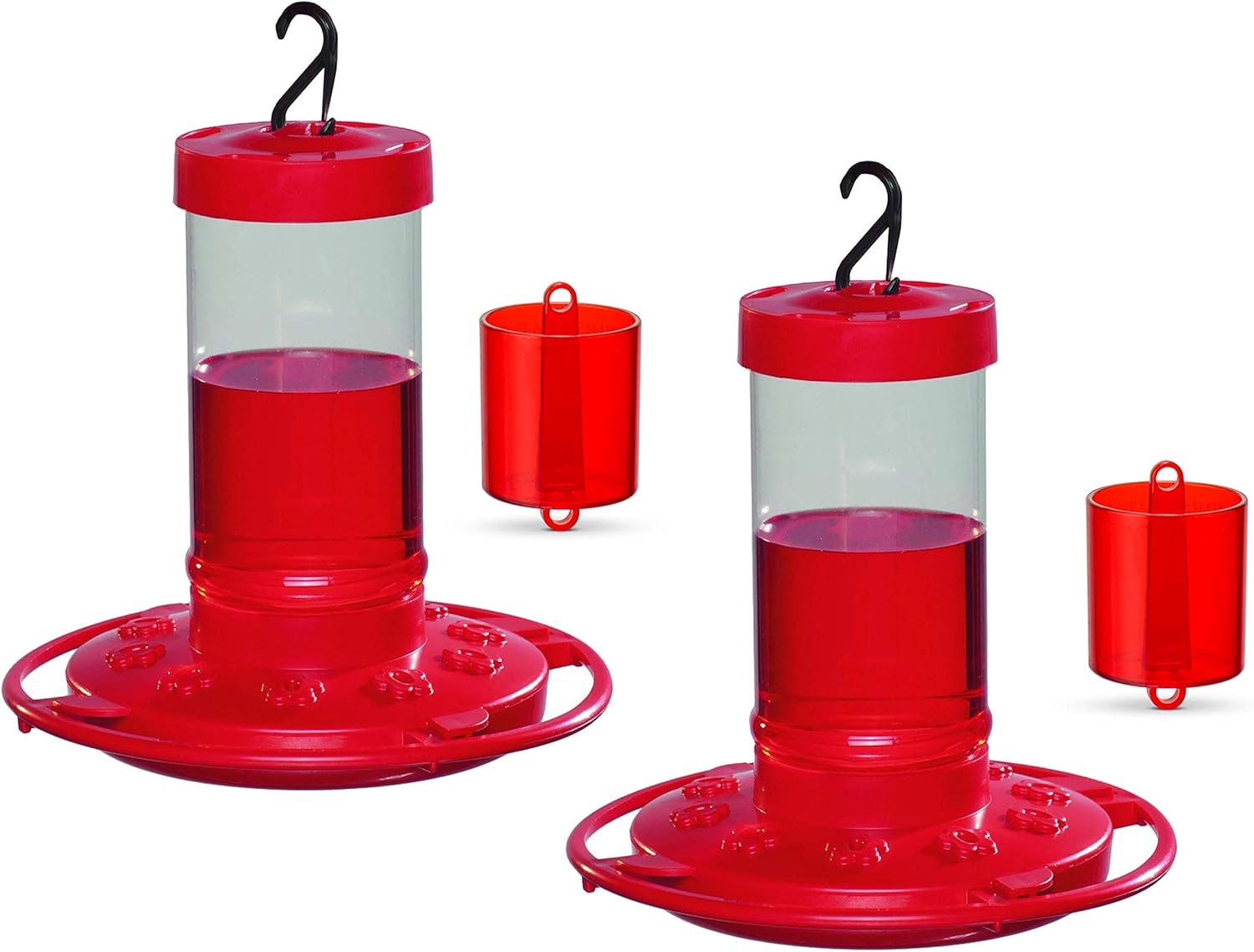
First Nature 3051: The High-Traffic Choice
Rating: 8.7/10
A 32-oz capacity, 5-inch diameter base, 10 ports, and a simple two-part twist-off design make the First Nature 3051 the practical pick for yards with heavy hummingbird activity.
Pros
- Wide-mouth base unscrews fully for easy, brush-free cleaning
- Large capacity suits 10+ daily visitors
- BPA-free, UV-stabilized plastic
Cons
- Plastic construction, not glass
- Large capacity becomes a hygiene issue in low-traffic yards
In a yard with real traffic, nectar turns over fast enough to stay naturally fresh even at this size. That’s the whole logic of the design — capacity matched to demand.
The catch is what happens when traffic doesn’t match the capacity. Thirty-two ounces of nectar sitting in July heat while only two or three birds slowly work through it is a genuine fermentation risk. If your yard is quieter, a smaller saucer feeder is the more hygienic choice, even if it means refilling more often.
Best for: yards with consistent heavy daily traffic. Who should avoid it: low-traffic yards — go smaller instead.
BOLITE 18009 Glass Feeder

Rating: 8.0/10
Built with decorative display in mind, the BOLITE pairs blown glass with copper accents and UV-resistant coloring — a feeder meant to be looked at as much as used.
The trade-off for that look is upkeep. Port gaskets need periodic inspection, and if one wears out, replacement parts aren’t as easy to source as they are for mainstream brands like Aspects or Perky-Pet. Worth it if patio aesthetics matter to you; worth skipping if you’d rather not think about part sourcing down the road.
Best for: patio and porch display where appearance is the priority.
Perky-Pet 209B Window Feeder
Rating: 7.8/10
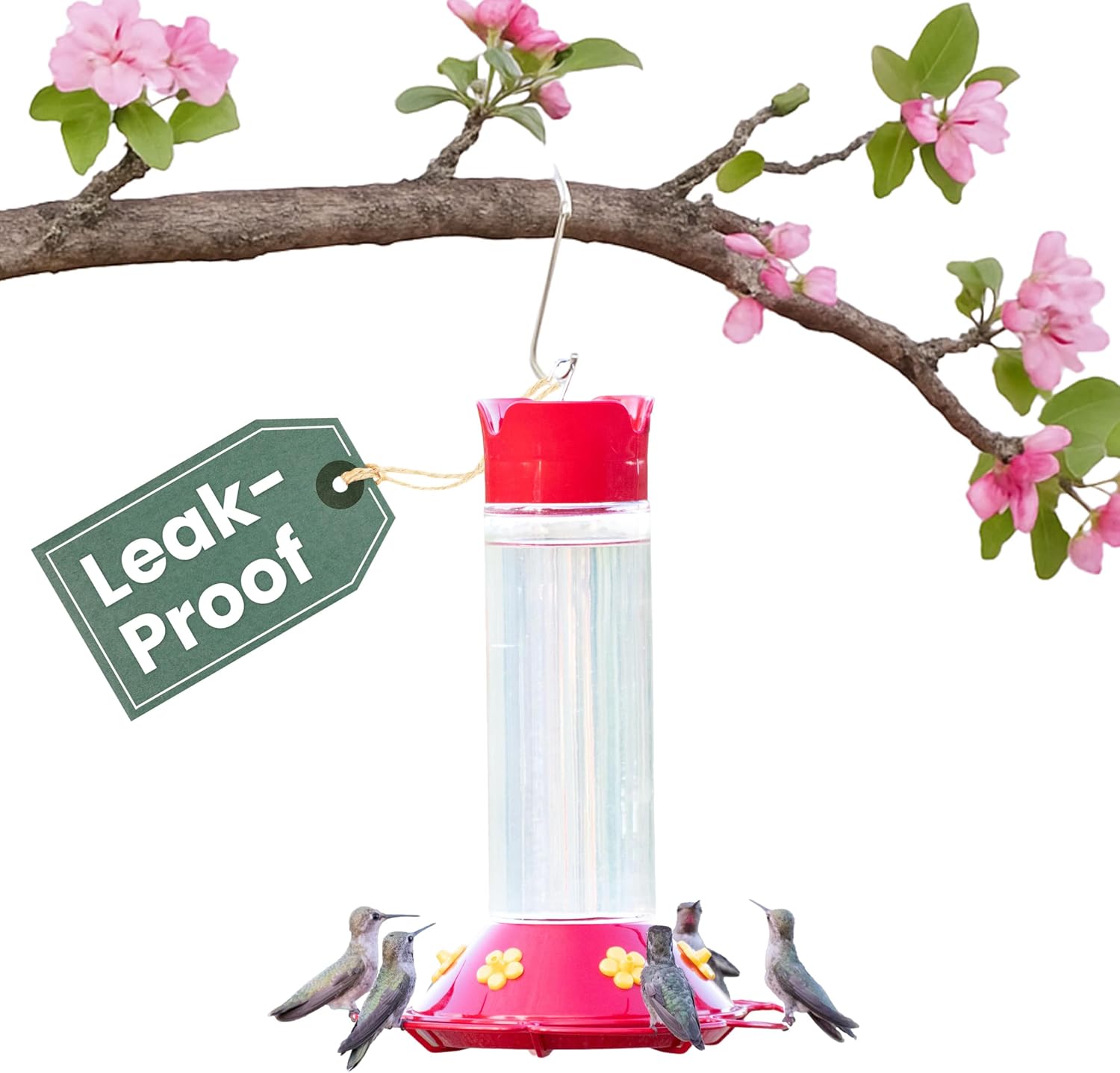
This suction-cup model mounts directly to glass, bringing hummingbirds within arm’s reach — sometimes close enough that you can hear the wingbeats through the window.
The 8-oz capacity is small, and nectar warms faster pressed against glass than it does in open shade, so plan on more frequent changes than you’d give a shaded garden feeder. Check the suction cups seasonally, too — UV exposure and temperature swings degrade them over time, and a feeder that falls while a bird is drinking is genuinely stressful for the bird.
Best for: close-up viewing from indoors, window sills with partial shade.
Birdscapes Mini Hummingbird Feeder

Rating: 7.5/10
At 8 oz, the Birdscapes Mini is built for tight spaces — balconies, apartment windows, small yards where a full-size feeder doesn’t make sense.
The small capacity is the whole story here: in an active yard during peak season, expect to refill daily. That’s a fair trade for a feeder that fits almost anywhere.
Best for: balconies, apartments, and small yards where footprint matters more than capacity.
🏆 Editor’s Pick: Aspects HummZinger HighView
If you only take one recommendation from this guide, make it this one. The HummZinger wins not because it’s flashy, but because it removes the single biggest reason hummingbird feeders fail: people stop cleaning them.
A 90-second cleaning routine is one you’ll actually stick to through an entire summer. A 10-minute one, on a bottle feeder you have to disassemble carefully, is the one that quietly turns into “I’ll do it this weekend” — and that’s how cloudy nectar happens. Add a built-in ant moat, a zero-drip seal, and a lifetime guarantee the company actually stands behind, and there’s very little reason to look elsewhere unless your yard has unusually heavy traffic.
If that’s your situation, the First Nature 3051 is the sensible upgrade — same cleaning logic, just built for volume.
Practical Buying Advice
Saucer vs. Bottle: What Actually Matters
Bottle feeders (sometimes called inverted vacuum feeders) work through vacuum pressure — a sealed bottle of nectar inverts over a reservoir, atmospheric pressure holds the nectar in place, and it drops as birds drink and air enters through the ports. These are the classic red-and-clear designs most people picture.
Their upside: larger capacity means fewer refills in busy yards, and a lot of people simply find the shape more attractive. Their downside: they drip in heat as the nectar expands and the seal weakens, the interior is harder to clean than a flat saucer, and because the nectar sits in a sealed reservoir, cloudiness can go unnoticed until you look closely.
Saucer feeders hold nectar below the ports, so birds dip down to drink. That structure makes them naturally ant-resistant (ants can’t reach nectar through downward-facing ports) and leak-proof (no vacuum seal means no heat-driven drip). The reservoir is visible, so you can check nectar condition at a glance.
Their real drawback is capacity — a 12-oz saucer feeder in a busy yard during migration season may need daily refills. For most home setups, though, that’s a 3-minute task every couple of days that people actually do, versus a bottle feeder that gets stretched toward a week between cleanings simply because cleaning it is more of a chore.
For what it’s worth: switching from a bottle feeder to a saucer feeder tends to make cleaning routines stick better, since the barrier to doing it drops so much. Some people report more consistent yard traffic after switching, though it’s hard to separate that from other seasonal factors — fresher nectar is at least a reasonable explanation.
Solving the Bee and Ant Problem
Bees and wasps aren’t drawn to hummingbird feeders at random — they’re drawn to yellow coloring and to nectar that’s dripping or otherwise accessible to insect-sized mouths. In order of effectiveness:
- Remove yellow parts. Older feeder designs often used yellow flower-shaped port covers, and yellow attracts bees. Hummingbirds find feeders by the overall red color; they don’t need yellow surrounds to locate the ports.
- Switch to a saucer feeder. Hummingbird bills reach down through the ports to nectar below; bee tongues are too short to follow. That structural difference alone makes saucer feeders bee-resistant.
- Use an ant moat. A water-filled barrier around the hanger cord stops ants from reaching the feeder. The HummZinger has one built in; add-on moats for other feeders run about $5.
- Skip the petroleum jelly or cooking spray. These substances can oil a hummingbird’s feathers during hovering, affecting insulation. A water-filled ant moat is the safe fix — not grease.
If bees are still getting to a saucer feeder despite all this, check for a slight drip — even a small one creates an accessible nectar source for insects, and tightening the port gaskets usually solves it.
How Often to Change the Nectar
Most feeder guides say “every few days,” which isn’t specific enough to be useful. Here’s the actual temperature-based schedule, based on how quickly yeast activity accelerates fermentation in a standard 4:1 sugar solution:
- Below 70°F: every 5–6 days
- 70–80°F: every 3–4 days
- 80–88°F: every 2–3 days
- Above 88°F: every 1–2 days, sometimes daily
Watch for cloudiness or a faint sour smell — either means it’s time to discard and replace, not top off. Topping off just dilutes fermenting nectar instead of removing it, which makes the problem worse while looking like you’ve addressed it.
This cleaning frequency is the single biggest factor in whether hummingbirds keep coming back. Birds remember which feeders stay fresh, and a yard with consistently clean nectar will out-perform one with a fancier but neglected feeder. Frustrating to hear if you just spent $45 on a beautiful glass feeder — but it holds up.
Window Feeders Are Worth the Extra Attention
Window-mounted feeders bring hummingbirds within arm’s reach, sometimes close enough to hear the wingbeats through the glass. The trade-off is upkeep: suction cups degrade with UV exposure and temperature swings, so check them each season, and a feeder that falls while a bird is drinking is genuinely stressful for it.
Keep window feeders out of direct midday sun where possible — nectar warms faster against glass than in open shade — and fill them only halfway, changing nectar more often than you would a shaded garden feeder. Most people who try one end up sticking with it for the viewing experience alone.
Making Your Own Nectar
Commercial nectar mixes often include red dye, which is unnecessary and not well studied for long-term effects on hummingbird health. Homemade nectar isn’t just as good — it’s the better option.
The recipe is one part plain white granulated sugar to four parts water, heated until the sugar dissolves and then cooled completely before filling. Skip honey (it ferments quickly and can cause fungal infections), brown sugar, artificial sweeteners, and food coloring. The feeder’s red color is enough to attract birds; the nectar itself doesn’t need to be red.
A batch keeps in the refrigerator for up to two weeks. Ten minutes of effort saves money and gives you full control over what’s actually going into the feeder.
FAQ
What’s the best hummingbird feeder to keep bees away? Saucer-style feeders are the most effective bee-resistant design, since bee tongues can’t reach nectar through the downward-facing ports. The Aspects HummZinger is the top pick here. Pair it with removing any yellow parts and adding an ant moat, and you’ll handle most bee problems without chemicals.
How do I know my hummingbird feeder isn’t working? If nectar sits untouched for more than a week, it’s usually one of three things: the nectar fermented and birds rejected it, there aren’t hummingbirds in your area yet (check local arrival dates), or the placement is too disturbed. Try a quieter spot and make sure you’re changing nectar every 2–3 days.
Why aren’t hummingbirds coming to my feeder? The usual suspects: fermented nectar (cloudy or off-smelling), a feeder that sits in full sun all day, a high-traffic human area, or simply no local hummingbirds yet. Planting red salvia, bee balm, or trumpet vine nearby dramatically speeds up initial discovery — hummingbirds search by color and flower shape, so natural flowers often lead them to your yard first.
Glass or plastic hummingbird feeder — which is better? Glass doesn’t absorb odor or taste over time, holds up better through repeated dishwasher cycles, and stays attractive longer. Plastic is lighter, cheaper, more shatter-resistant, and generally easier to disassemble for cleaning. For long-term durability, go glass. For ease of maintenance, go with a saucer-style plastic feeder like the HummZinger.
Can I leave my hummingbird feeder out year-round? Only in regions where hummingbirds overwinter — parts of the US Southwest, the Pacific Coast, and the Gulf Coast. In colder regions, bring feeders in after the last confirmed sighting so standing water doesn’t freeze and crack the vessel. Some dedicated hobbyists run heated feeders for late migrants in cold climates, but that’s a specialized setup, not a general recommendation.
Bottom Line
There’s no single “best” hummingbird feeder — there’s the one that matches how much cleaning you’ll actually do. If you want the safest default, the HummZinger’s 90-second cleanup makes good habits easy to keep. If your yard gets serious daily traffic, size up to the First Nature 3051 so you’re not refilling constantly. And if looks genuinely matter to you, the Perky-Pet Pinch-Waist glass feeder is worth the slightly higher maintenance.
Whichever you pick, the nectar schedule matters more than the feeder itself. Set a recurring reminder, skip the top-offs, and the birds will keep coming back.