
- Best Picks at a Glance
- When Your Bird Actually Needs Vitamins
- When You Don't Need Vitamins
- Lafeber Avi-Era — Best for Seed-Diet Birds
- Pros
- Cons
- Nekton-S — Best for Comprehensive Supplementation
- Pros
- Cons
- OASIS Vita Drops — Budget Option for Small Birds
- Pros
- Cons
- Calcium Supplementation: A Separate Category
- Pros
- Cons
- Editor's Pick -
- Practical Buying Advice
- FAQ
- Choosing With Confidence
Here’s the supplement advice most bird vitamin articles won’t give you: if your bird eats quality pellets, you probably don’t need to add vitamins at all.
Pellets are formulated to meet established avian nutritional requirements at the correct dose. Adding vitamins on top of a pellet-based diet is double-dosing in ways that can actually cause harm. Vitamin A and D3 toxicity — from well-intentioned over-supplementation — is a documented problem in captive parrots.
The bird owners who genuinely benefit from vitamin supplements are those with birds on seed-heavy diets, birds recovering from illness or injury, and birds in specific life stages like molting, breeding, or post-surgery. For everyone else, good food is the supplement.
If you’re short on time: most birds on 70%+ quality pellets don’t need added vitamins, and over-supplementing fat-soluble vitamins (A and D3) can cause real toxicity. If your bird eats mostly seed, is molting, breeding, or recovering from illness, a broad-spectrum supplement like Lafeber’s Avi-Era or Nekton-S is worth it — calcium needs, though, are a separate issue handled with targeted supplementation, not a multivitamin.
Best Picks at a Glance
Lafeber Avi-Era Powdered Vitamins – 9.0/10 The go-to choice for birds on seed-based diets. Covers all 13 essential vitamins plus vitamin C and iodine — just don’t use it alongside a pelleted diet.
Nekton-S Multi-Vitamin – 9.1/10 The most complete option for high-demand periods like molting, breeding, or recovery. Adds amino acids and minerals on top of the vitamin profile, though dosing needs to stay conservative.
Vetafarm Multivet – 8.4/10 A vet-endorsed, broad-spectrum Australian formula with wide species coverage and a stable powder form — the main catch is limited US availability compared to Nekton or Lafeber.
Prime by Avitech – 8.2/10 Solid for birds transitioning off seed, with a strong B-vitamin profile in a stable water-soluble formula. Some birds drink less because it changes the water’s taste.
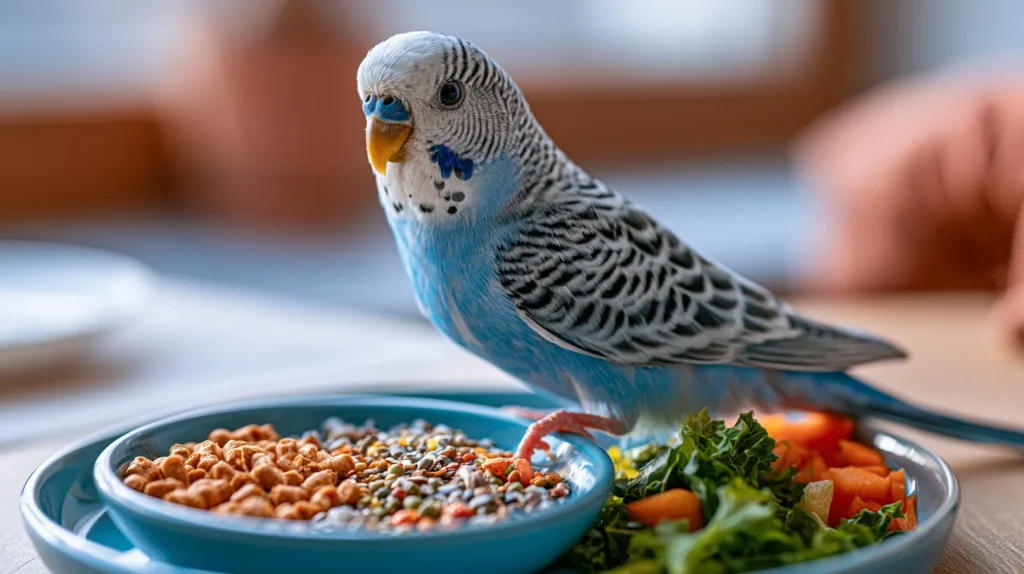
OASIS Vita Drops – 7.5/10 An affordable, easy-to-dose liquid for small cage birds like parakeets, canaries, and finches. Vitamin potency drops once the water sits in light for more than a few hours.
Calcium Plus (various brands) – 8.0/10 The right tool specifically for breeding hens and egg-prone females. It’s a targeted calcium supplement, not a complete multivitamin, so don’t expect it to cover broader nutritional gaps.
When Your Bird Actually Needs Vitamins
Seed-heavy diet birds: seeds are deficient in vitamins A, D3, E, K, and most B vitamins. If your bird’s primary food source is a seed mix, a broad-spectrum supplement like Lafeber’s Avi-Era or Nekton-S addresses those specific gaps directly. Start here before spending money on specialty supplements.
Molting birds: feather production is metabolically intensive and requires elevated B vitamins, particularly biotin, along with amino acids like methionine and cysteine. During active molt, supplemental Nekton-S or a molt-specific formula supports healthy feather regrowth.
Breeding hens and laying females: calcium depletion during egg production is the primary concern here. Breeding hens on seed diets are at particular risk for eggbinding — a life-threatening condition caused by calcium deficiency. Liquid calcium supplementation or consistent cuttlebone access addresses this directly. A broad multivitamin isn’t the right tool for this problem; targeted calcium is.
Post-illness or post-surgical recovery: avian vets sometimes recommend specific supplements during recovery periods. Follow their guidance specifically rather than guessing on your own — recovery supplementation is a clinical decision, not a shopping decision.
Newly acquired birds with unknown dietary history: a short course of broad-spectrum vitamins while you evaluate the bird’s condition and transition its diet is reasonable.
When You Don’t Need Vitamins
Birds eating 70%+ quality pellets from established brands — Harrison’s, Roudybush, ZuPreem Natural — are already receiving formulated nutrition designed to meet their requirements. Adding water-soluble vitamins on top is mostly excreted and wasted. Adding fat-soluble vitamins — A, D3, E, K — is a different story: these are cumulative. They don’t clear the body daily, and over time they build up to toxic levels.
Vitamin A toxicity in parrots causes liver damage, lethargy, and skin lesions. Vitamin D3 toxicity causes calcification of soft tissues and kidney damage. Both are real, documented outcomes of well-intentioned over-supplementation, not rare edge cases.
If your bird is on quality pellets and appears healthy, the most effective thing you can do for their health is maintain diet quality and schedule annual avian vet visits — not add vitamins on top of a diet that already covers them.
Lafeber Avi-Era — Best for Seed-Diet Birds
Rating: 9.0/10
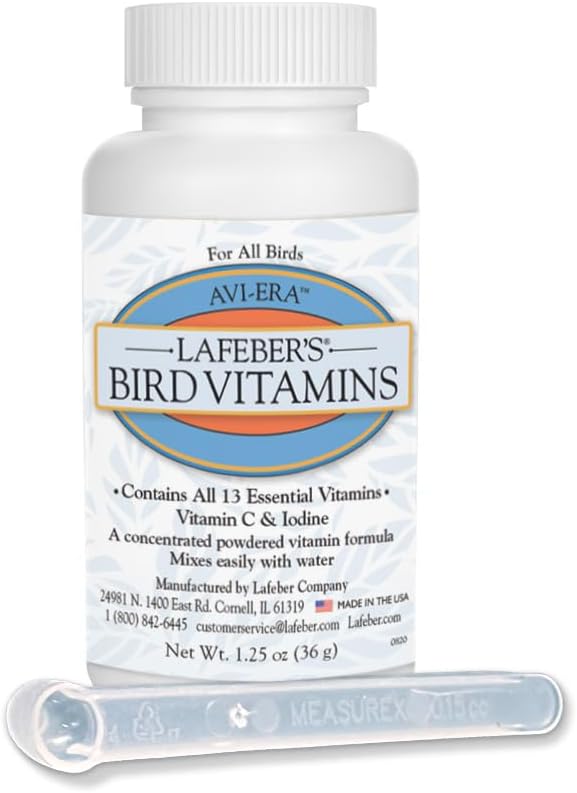
Avi-Era is the supplement most consistently recommended by avian vets for birds on seed-based diets. The formula provides all 13 essential vitamins, including A, D3, and the full B complex, plus vitamin C and iodine.
Pros
- Covers all 13 essential vitamins in one formula
- Powder mixes easily into soft food
- Widely recommended specifically for seed-heavy diets
Cons
- Not appropriate to combine with a pelleted diet — double-dosing risk
- Requires careful, disciplined dosing
It comes as a powder that mixes into soft foods or water, but soft food is the better delivery method. Vitamins degrade in water over several hours and are lost when the water gets changed, so mixing into a small amount of mashed egg, soft fruit, or lightly moistened seed ensures the bird actually consumes the full dose.
Dosing instructions matter more here than with most supplements. More is not more beneficial — it’s more toxic. Start with the recommended dose and don’t increase it on your own judgment.
Nekton-S — Best for Comprehensive Supplementation
Rating: 9.1/10
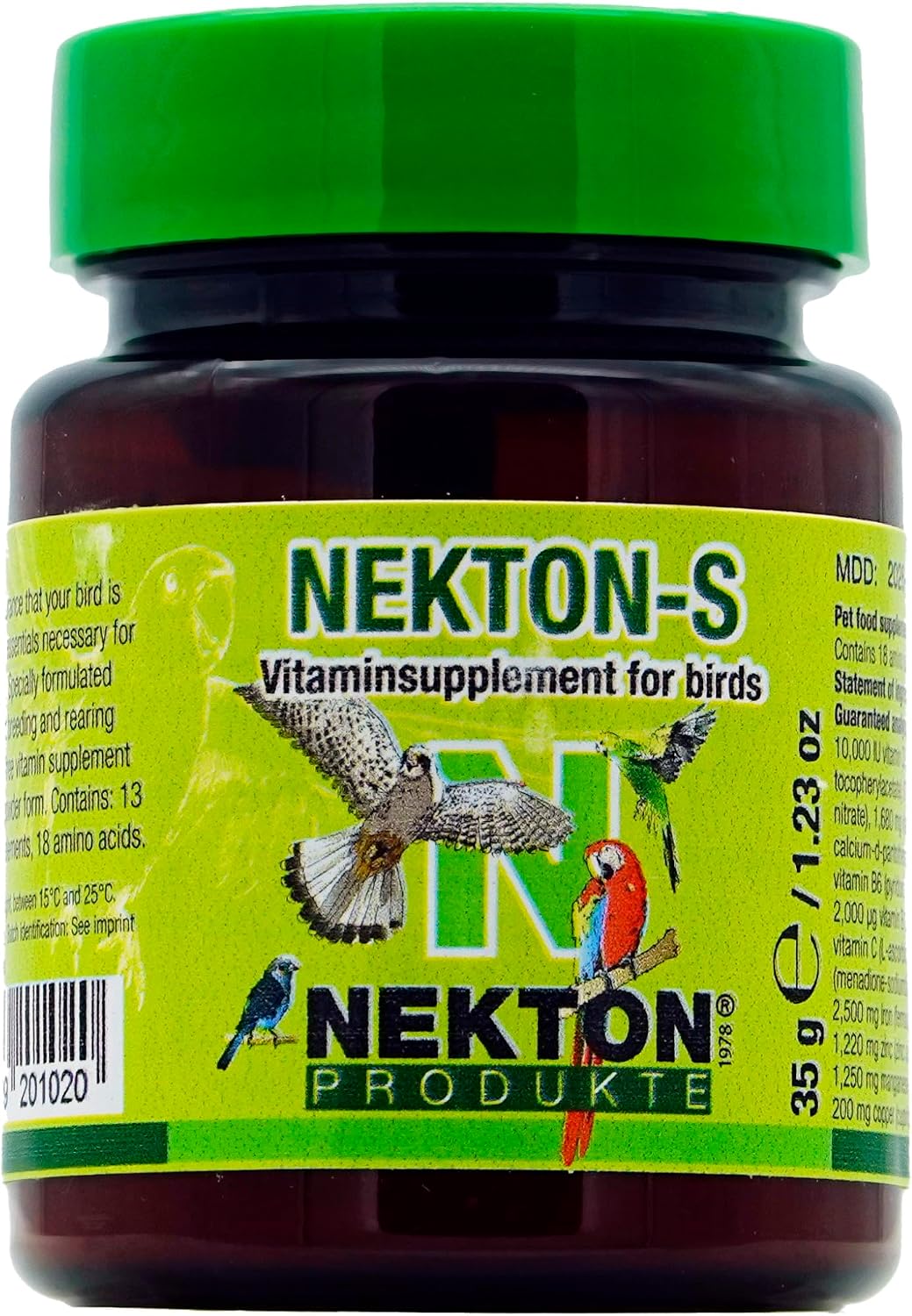
Nekton-S adds amino acids and minerals to its vitamin profile, making it more complete than most vitamin-only supplements on the market. For birds during high-demand periods — breeding, heavy molt, recovery — the amino acid component supports protein synthesis in a way that vitamins alone don’t address.
Pros
- Combines vitamins, amino acids, and minerals in one formula
- Water-stable for longer than most competing liquid or powder options
- Strong, long-standing track record in European aviculture
Cons
- Dosing requires discipline — the comprehensive formula makes over-supplementation easier to do by accident
The product is German-manufactured and widely used across European aviculture, with a solid history behind it. Its water stability reduces the degradation concern that comes with water-based supplementation generally, though soft-food delivery still edges it out as the preferable method.
OASIS Vita Drops — Budget Option for Small Birds
Rating: 7.5/10
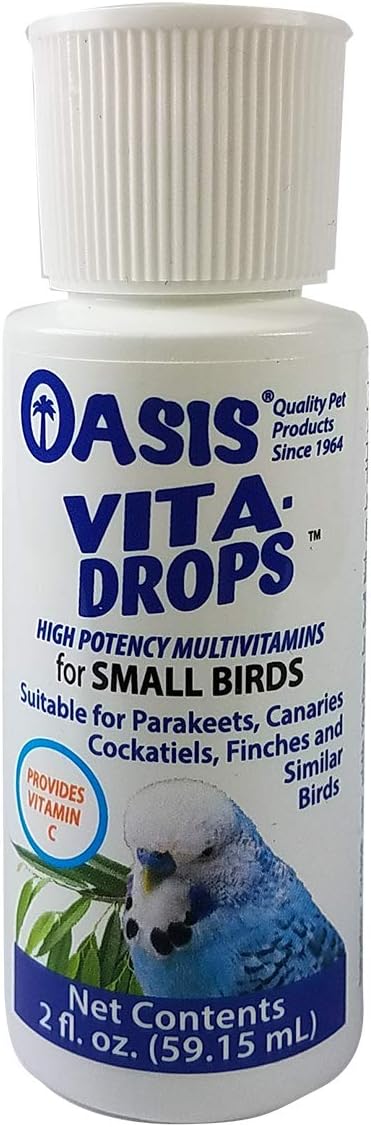
Vita Drops is a liquid vitamin formulated for small cage birds. It’s widely available at pet stores and designed to be added to drinking water at a specific dose per ounce.
Pros
- Simple, affordable entry point for small bird owners
- Easy to dose directly into drinking water
- Well suited to parakeets, canaries, and finches
Cons
- Vitamin potency declines once water sits in light for a few hours
- Requires more frequent water changes than a soft-food delivery method
The limitation here is stability, not effectiveness. Vitamins in water degrade when exposed to light and oxidize over time, so if the water sits for more than a few hours before the bird drinks it, potency has already dropped. Change vitamin-supplemented water every few hours, or deliver the supplement in food instead if that’s more practical for your routine.
For parakeet and canary owners looking for a simple, affordable entry point, Vita Drops works fine with that caveat in mind. For larger birds, or anyone wanting more comprehensive supplementation, the powder formats offer better dose control.
Calcium Supplementation: A Separate Category
Rating: 8.0/10
Calcium deficiency is the most common specific mineral deficiency in pet birds. It’s most serious in egg-producing females, but it affects any bird on a low-calcium diet.
Pros
- Targeted, specific solution for a well-documented deficiency risk
- Works well alongside — not instead of — a broader diet
Cons
- Not a complete multivitamin, and shouldn’t be mistaken for one
Cuttlebone should be in every bird cage as a baseline; most birds will self-regulate their consumption appropriately without any extra effort from you. For hens showing soft-shelled eggs, a history of eggbinding, or symptoms of bone fragility, liquid calcium supplementation under veterinary guidance is appropriate. This is a targeted clinical intervention, not a routine, everyday supplement. Mineral blocks combining calcium with iodine and other trace minerals are also available and appropriate for long-term, ongoing use.
Editor’s Pick –
Nekton-S earns the top overall recommendation, and the reason comes down to breadth without recklessness. Most vitamin-only formulas leave a gap during the periods when a bird’s body is working hardest — heavy molt, breeding, recovery from illness — because vitamins alone don’t cover the amino acid demands of protein synthesis during those windows. Nekton-S closes that gap in a single product with a long track record behind it.
The caveat that keeps it from being a blind recommendation: its comprehensiveness is exactly what makes over-dosing easier to do by accident. Follow the labeled dose precisely, and don’t treat “more complete formula” as license to use more of it than directed.
Practical Buying Advice
Features that actually matter: whether the formula matches your bird’s actual situation — seed-heavy diet, high-demand life stage, or targeted calcium need — rather than defaulting to “give vitamins just in case.”
Features that don’t matter much: broad-spectrum coverage if your bird is already on quality pellets. In that case, more ingredients on the label isn’t a benefit — it’s unnecessary risk.
Common mistakes: supplementing a pellet-fed bird because it seems like it can’t hurt (it can), assuming water-based vitamin delivery works as well as soft food, and treating calcium supplements as a substitute for a full multivitamin when a bird needs broader support.
Setup and delivery tips: mix powdered vitamins into a small amount of soft food a bird already likes, rather than diluting them into water where potency drops within hours. Use the minimum amount of carrier food necessary so the bird actually finishes the full dose.
Safety considerations: never use human vitamins on a bird — dosing and ingredient profiles aren’t compatible with avian physiology, and some human supplements contain iron levels that are toxic to birds. Treat fat-soluble vitamins (A, D3, E, K) with more caution than water-soluble ones, since they accumulate in the body rather than clearing out daily.
Long-term approach: for most pellet-fed birds, annual avian vet visits and consistent diet quality do more for long-term health than any supplement on this list.
FAQ
Should I give my bird vitamins every day? Only if they’re on a seed-heavy diet or in a specific high-demand life stage — molting, breeding, illness recovery. Birds on quality pellet diets don’t need daily supplementation, and over-supplementation with fat-soluble vitamins (A, D3) causes cumulative toxicity over time.
Can I use human vitamins for my bird? No. Human multivitamins are formulated for human body size and metabolic needs. Avian vitamins are species-appropriate in both dosage and formulation, and the iron levels in some human supplements are toxic to birds. Use only products specifically formulated for avian use.
What are signs of vitamin deficiency in birds? Vitamin A deficiency shows up as respiratory infections, skin changes around the beak and feet, and a dull eye appearance. Calcium deficiency shows up as soft or thin-shelled eggs in hens, tremors, and fragile bones. General B vitamin deficiency shows up as poor feather quality and neurological symptoms. If you suspect a deficiency, an avian vet visit and bloodwork is the right next step — not self-supplementation guesswork.
How do I give powder vitamins to a bird that won’t eat wet food? Mix the powder into something the bird strongly prefers — mashed banana, egg food, or a small amount of lightly moistened seed. Use the minimum amount of base food necessary to ensure the bird consumes the full dose. Some birds also accept powder mixed into applesauce applied to a favorite treat.
Are vitamin supplements safe for birds on pellets? Water-soluble B vitamins are low-risk even alongside pellets, since any excess gets excreted. Fat-soluble vitamins — A, D3, E, and K — accumulate in the body instead. Adding fat-soluble vitamins to a pelleted diet risks toxicity over time, so discuss it with an avian vet before supplementing a bird that’s already eating quality pellets.
Choosing With Confidence
The decision that matters most here isn’t which product to buy — it’s whether your bird needs a supplement at all. If they’re eating quality pellets and seem healthy, the highest-value move is leaving the diet alone and booking that annual vet visit. If they’re on seed, molting, breeding, or recovering, match the supplement to the actual need: broad-spectrum for seed-based diets, a comprehensive formula like Nekton-S for high-demand periods, and targeted calcium for egg-related risk — never a substitute for the others.