
- Best Parrot Food Brands — Quick Comparison
- The Nutritional Case for Pellets
- Harrison's — The Gold Standard and Its Problem
- Roudybush — The Practical Everyday Pellet
- ZuPreem Natural — Best for Transitioning Birds
- TOP's Parrot Food — Organic Without the Harrison's Price
- Lafeber Nutri-Berries — The Transitional Food That Actually Works
- Parrot Food by Species: Size Matters
- Fresh Food: What Pellets Don't Replace
- How to Actually Get Your Parrot to Eat Pellets
- FAQ
Three bags of Harrison’s sitting unopened in a cabinet while your parrot picks millet off the cage floor is not a nutrition win. It’s a $150 lesson in the difference between the best food on paper and the best food your actual bird will eat.
Parrot nutrition has been studied seriously for about thirty years, and the science is clear: seeds are inadequate as a primary diet. What the science doesn’t always address is the behavioral reality that many parrots — especially those raised on seeds — refuse to transition to pellets, regardless of brand.
So this review covers two things: which brands have the best nutritional profiles, and which ones birds actually accept.
Best Parrot Food Brands — Quick Comparison
| Product & Model | Best For | The Big Win | The Catch | Price Tier |
|---|---|---|---|---|
| Harrison’s Adult Lifetime Fine | Small-to-medium parrots long-term | USDA organic, vet-recommended, complete | Many birds refuse it; bland taste | Premium |
| Harrison’s High Potency | Birds in transition, breeding season | Higher protein for growth and recovery | Same palatability issue as standard Harrison’s | Premium |
| Roudybush Daily Maintenance | Medium-large birds on established pellet diets | Research-based, high acceptance rate | No organic certification | Mid-Range |
| ZuPreem Natural Medium | Transitioning seed-addicted birds | Better palatability without artificial dyes | Lower protein than Harrison’s or Roudybush | Mid-Range |
| Lafeber Nutri-Berries | Stubborn seed eaters as a bridge food | Seed-pellet hybrid most birds will try | Higher fat, not a complete transition solution | Mid-Range |
| TOP’s Parrot Food | Owners prioritizing organic without Harrison’s price | Organic, no corn or soy, pelleted | Availability can be inconsistent | Premium |
The Nutritional Case for Pellets
Seed mixes fail parrots primarily in three areas: vitamin A deficiency, inadequate calcium, and excessive fat.
Wild parrots eat seeds as part of a varied foraging diet. They also eat vegetation, bark, insects, and unripe fruits that collectively balance their nutrition. Captive birds given only seed have none of that variety. What looks like a full bowl of food is nutritionally incomplete.
Vitamin A deficiency is the most common consequence. Signs include respiratory infection susceptibility, flaky skin around the beak and feet, and dull eye appearance. Long-term, it contributes to shorter lifespan and repeated vet visits.
Pellets solve this by formulating every piece of food to meet established avian nutritional requirements. Every pellet your bird eats contains the same balance of nutrients. There’s no selective eating — they can’t pick out the sunflower seeds and leave the nutritious parts.
The limitation: pellets are formulated for an “average” parrot. The nutritional needs of a military macaw are not the same as a green cheek conure. Better brands address this with species-specific or size-specific lines.
Harrison’s — The Gold Standard and Its Problem
Harrison’s Bird Foods is what most avian vets recommend when you ask them directly. It’s USDA certified organic — the only bird pellet with this certification — which means no synthetic pesticides, no GMO grains, and independent third-party verification of those claims. The protein levels are high. The ingredient list is clean.
The problem that never makes it into official reviews: a significant portion of birds, particularly seed-raised birds, refuse Harrison’s.
The pellets are uniform, brown, and have a subdued flavor profile by design. For a bird that’s spent years eating aromatic seed mixes, this is about as appealing as switching from Thai takeout to plain rice. The transition often requires weeks or months of patience, mixing techniques, and some genuine stubbornness on the owner’s part.
This doesn’t mean Harrison’s is wrong. It means it’s often not the right starting pellet for a seed-habituated bird.
Roudybush — The Practical Everyday Pellet
Roudybush was developed by a University of California avian nutritionist and has been refined through decades of feeding trials. The nutritional profile is strong — not organic, but well-researched and consistent.
What Roudybush does better than Harrison’s in practical terms: palatability. Most parrots accept Roudybush faster than Harrison’s. The texture and flavor profile sits closer to something birds recognize. Owners trying to transition their birds off seeds often have better success starting here.
The pellets come in multiple sizes — crumble, small, medium, and large — which matters because different parrot species need different pellet sizes. Small parrots that can’t comfortably grip or break apart a large pellet often reject it not because of flavor but because of form.
Roudybush is available at most bird specialty stores and online retailers at a price point meaningfully lower than Harrison’s.
ZuPreem Natural — Best for Transitioning Birds
ZuPreem FruitBlend gets all the attention because of the colors. ZuPreem Natural is the better choice — same company, no artificial dyes, natural flavoring, and a balanced formula.
The protein content runs lower than Harrison’s or Roudybush. Long-term, it’s not where you want a parrot’s diet to stay. But as a bridge food — something between seed and proper pellets — ZuPreem Natural works because birds eat it. And a lower-quality food that gets eaten beats a perfect food that sits in the bowl.
The practical use case: start with ZuPreem Natural. Get the bird eating pellets consistently. Then, over several months, mix in increasing amounts of Roudybush or Harrison’s. The transition becomes much more manageable.
TOP’s Parrot Food — Organic Without the Harrison’s Price
TOP’s Organics makes certified organic pellets at a price point below Harrison’s. The formula avoids corn and soy, which is relevant for owners who’ve had birds with food sensitivities or who want to minimize fillers.
The main issue is availability. TOP’s isn’t carried at most pet stores and availability through online retailers can be inconsistent. For owners in areas with strong bird specialty stores, it’s easier to find. If you’re ordering online and have a small parrot that eats slowly, the purchase cycle works fine. For large macaws or cockatoos consuming pellets quickly, supply inconsistency becomes a real problem.
Lafeber Nutri-Berries — The Transitional Food That Actually Works
Lafeber Nutri-Berries are worth a separate section because they occupy a unique position: not a seed mix, not a pellet, but something in between that most seed-addicted birds will actually eat.
Nutri-Berries are pressed balls containing seeds, grains, and balanced nutrients in a formulation substantially better than plain seed mixes. They look and smell like something a seed-eating bird recognizes. The texture gives birds something to work at and crack open. For complete holdouts on every pellet brand, Nutri-Berries are often the first step in getting a bird eating something nutritionally improved.
They’re not a complete solution — the fat content is higher than pure pellets, and they shouldn’t be the bird’s only food. But as part of a transition strategy, they’re more useful than most reviews acknowledge.
Parrot Food by Species: Size Matters
I’m not 100% sure every nutritional guideline is perfectly standardized across species, but the size-based formulation point is consistent:
Small parrots (budgies, parrotlets, lovebirds): Crumble or small pellet sizes. Harrison’s Lifetime Fine, Roudybush Crumble.
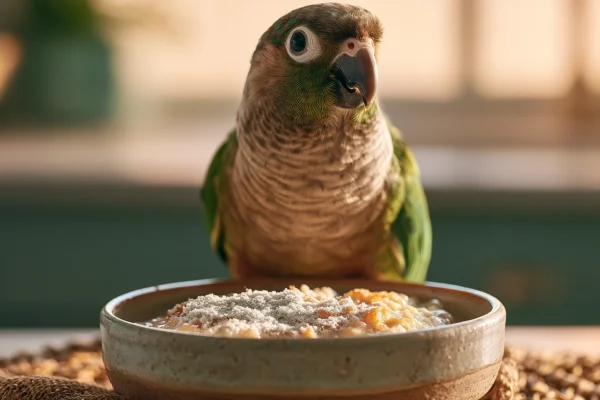
Medium parrots (cockatiels, green cheeks, caiques, small amazons): Small to medium pellet size. Any of the main brands in their medium formulations.
Large parrots (African greys, large amazons, eclectus, large cockatoos): Medium to coarse/large pellets. Roudybush Medium or Coarse, Harrison’s Coarse.
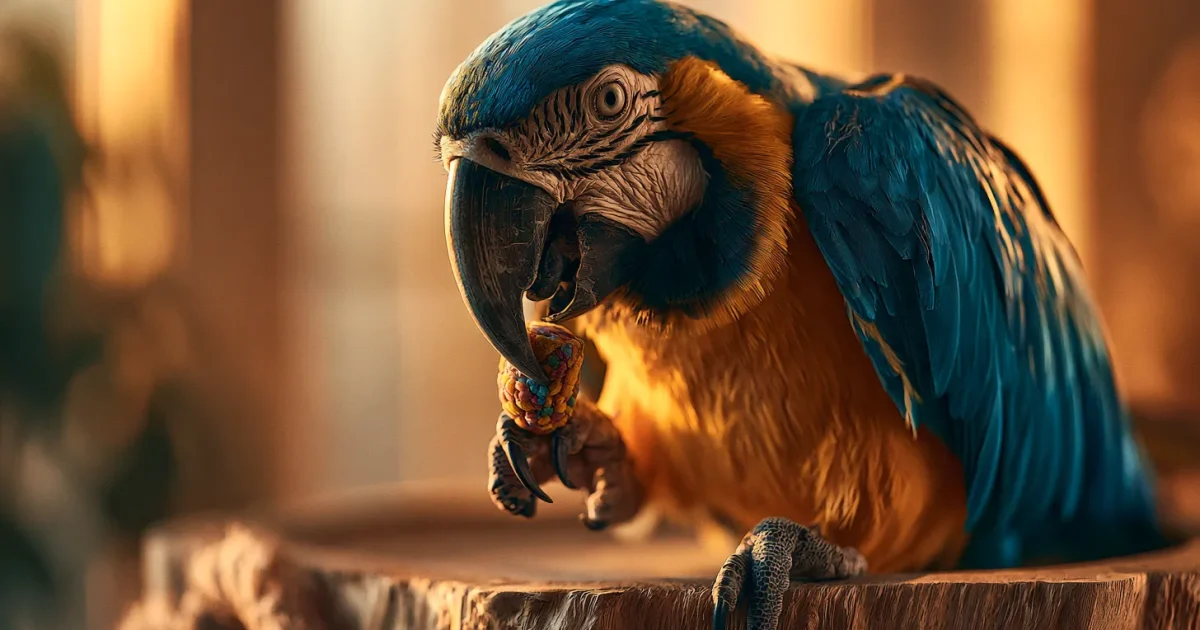
Extra large parrots (macaws, large cockatoos like Moluccan): Large formulations. Harrison’s High Potency Coarse, Roudybush Large.
The wrong pellet size is a genuine barrier to acceptance. A budgie presented with a large macaw pellet can’t eat it. A macaw given fine crumble pellets may not bother — it’s too much effort for too little food per bite.
Fresh Food: What Pellets Don’t Replace
Pellets are a dietary base, not a complete dietary replacement for everything.
Fresh food adds nutrients, enrichment, and behavioral variety that pellets can’t replicate. Dark leafy greens (kale, romaine, chard) provide natural vitamin A and phytonutrients. Bell peppers are almost universally accepted by parrots and provide vitamin C. Cooked legumes and grains add variety and texture.
The rule of thumb: 60–70% of total food intake from quality pellets, the rest from fresh whole foods. Seeds as occasional treats.
[PHOTO: realistic photography, a spread of parrot-appropriate fresh foods on a cutting board — dark leafy kale, sliced bell pepper in multiple colors, small pieces of sweet potato, blueberries — warm natural kitchen light, overhead shot, shot on Canon EOS R5 24mm lens, colorful and appetizing, no bird present –ar 16:9 –style raw –v 6.1 | Alt text: Fresh vegetables and fruits appropriate for parrots laid out on a wooden cutting board]
This is where eclectus parrots deserve a special mention: they process food differently from most psittacines and do poorly on a pellet-heavy diet. Eclectus need a predominantly fresh food diet with pellets in a much smaller proportion. If you have an eclectus, the standard pellet-first advice doesn’t apply to you.
How to Actually Get Your Parrot to Eat Pellets
The transition strategy that consistently works best involves several components:
Offer pellets first thing in the morning when the bird is hungriest. Remove seeds from the bowl overnight. In the morning, offer only pellets. After two hours, offer seeds. The hunger window makes birds more willing to try something new.
Never cold-turkey a seed-addicted parrot to pellets. Birds can and do refuse food to the point of losing dangerous amounts of weight. The transition should be gradual — 80% seeds, 20% pellets for two weeks, then 60/40, then 40/60, then 20/80, then pellets only.
Weigh your bird weekly throughout. Any consistent weight drop is a signal to slow the transition.
Eat the pellets yourself (or convincingly pretend to). Parrots are flock animals. Seeing their person eating something with enthusiasm activates curiosity and mimicry instincts.
FAQ
What’s the healthiest parrot food brand?
Harrison’s Adult Lifetime is the most nutritionally rigorous certified organic option. Roudybush is a strong alternative with better palatability for transitioning birds. The healthiest food is the one your specific bird will consistently eat — so palatability matters as much as the nutritional profile.
How much pellets should a parrot eat per day?
A general guideline is approximately 1 tablespoon per 100 grams of body weight, adjusted for activity level and species. African greys typically need slightly more than their body weight suggests. Macaws eat substantially more. Your avian vet can give species-specific guidance.
Can parrots eat seed every day?
Seeds as treats or training rewards — yes. Seeds as the primary diet — no. A seed-only diet over months and years leads to nutritional deficiencies and associated health problems. Most vets recommend seeds make up no more than 10–15% of total dietary intake.
Why does my parrot throw pellets out of the bowl?
Often because they’re foraging — a natural behavior where birds throw, sort, and inspect food before deciding to eat it. It’s not always rejection. Watch whether they eat some pellets after throwing others. If they’re consistently ignoring pellets completely, the brand, size, or texture may need adjustment.
Is ZuPreem FruitBlend safe?
The colored version is safe but not optimal — the artificial dyes are unnecessary and the sugar content runs higher than ideal. ZuPreem Natural is the same company with a better formulation. If your bird is already eating FruitBlend, gradually transitioning to ZuPreem Natural or Roudybush is a worthwhile upgrade