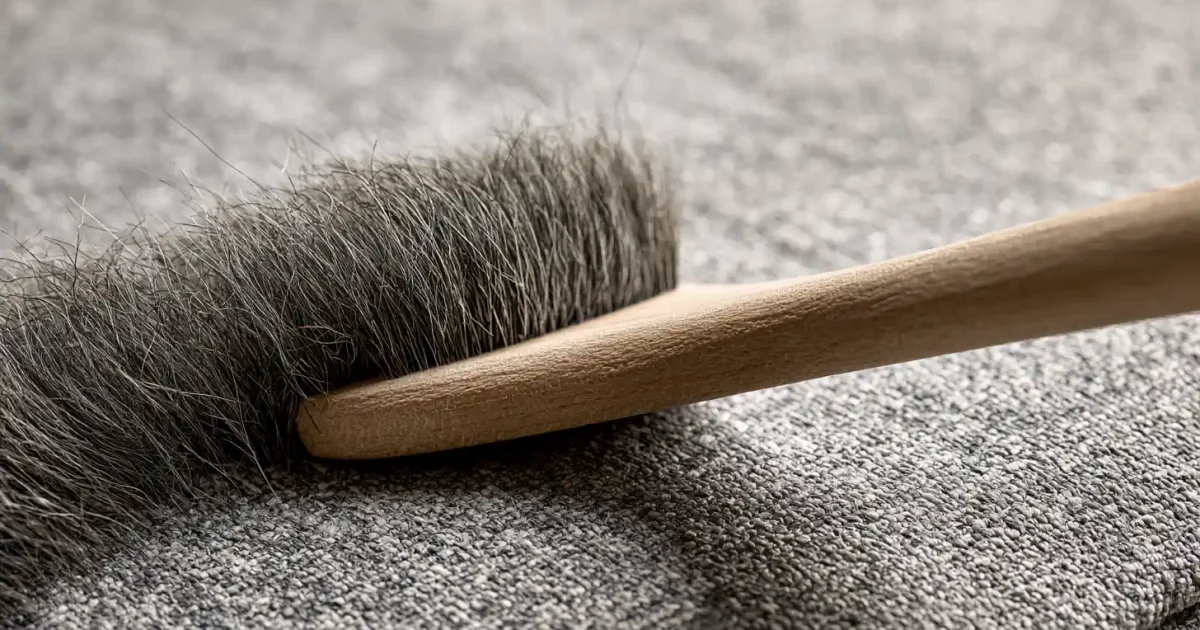

Pet hair doesn’t just sit somewhere waiting to be removed. It embeds in upholstery fibers, weaves itself into clothing fabric, survives washing machine cycles to redistribute throughout the load, and reappears on a freshly cleaned couch within 20 minutes of a cat sitting down. There is no single tool that solves all of this.
The right answer involves using different tools for different surfaces — and knowing which tool actually works on what. Because a standard lint roller is effective for pet hair on smooth fabrics but hopeless for embedded hair in textured upholstery, and the reverse is true for rubber brushes.
Pet Hair Remover by Surface Type
Upholstered furniture (couch, armchairs): rubber brushes and silicone squeegees outperform lint rollers on textured fabric. The static and mechanical action of rubber against fabric creates an aggregating effect that pulls embedded hair to the surface. A $6 rubber brush from a pet store removes more hair from couch cushions in 30 seconds than a lint roller manages in 3 minutes.
Smooth fabrics (cotton t-shirts, fleece, knit sweaters): lint rollers and standard tape rollers are fast and effective here. The adhesive picks up surface-level hair without embedding. Fabric-type matters — wool and chunky knits hold hair more deeply and need a rubber tool or the specialized FurZapper laundry ball.
Laundry (washing machine and dryer): hair that goes into the washing machine tends to redistribute and embed further. FurZapper and similar laundry-specific balls trap hair during the wash cycle. Dryer sheets help static (the mechanism that holds hair to fabric). The dryer is more effective than the washing machine for loosening pet hair — run a 10-minute low-heat dryer cycle before washing to loosen embedded hair.
Car interiors (fabric seats, carpet): rubber gloves (water-slightly-dampened), silicone squeegees, or purpose-built car pet hair tools. Car fabric is typically the most tightly woven and most hair-embedded surface — hair works its way down into the weave with traffic vibration.
Best Pet Hair Removers 2026: Quick Comparison
| Product & Model | Best For | The Big Win | The Catch | Price Tier |
|---|---|---|---|---|
| ChomChom Roller (Reusable) | Furniture; upholstered chairs and couches | No adhesive to replace; reusable indefinitely; excellent on upholstery; works on fabric surfaces well | Slower per stroke than adhesive lint rollers on smooth fabric; less effective on very short fine hair on smooth surfaces | Budget |
| Scotch-Brite Lint Roller (50-Sheet) | Clothing; smooth fabrics; quick daily use | Fast; cheap; available everywhere; effective on smooth fabric and light-colored clothing | Disposable sheets; not cost-effective for large surface areas; poor on textured upholstery | Budget |
| OXO Furlifter Furniture Brush (Reusable) | Furniture; reusable alternative to ChomChom | Double-sided self-cleaning design; works in both stroke directions; compact; good for upholstery | Less coverage per stroke than ChomChom on large surfaces | Budget |
| FurZapper (Laundry Ball) | Washing machine hair removal | Goes in washer and dryer; traps pet hair during cycles; reusable; tackles the laundry redistribution problem | Requires purchasing; some users report reduced effectiveness over time | Budget |
| Rubber Gloves (standard cleaning gloves, dampened) | Car seats; fabric car interiors; furniture; all surfaces | Free (you probably already have them); extraordinary effectiveness on all fabric surfaces when slightly damp; best bang-for-zero-cost | Single-pass coverage is narrow; best for targeted areas rather than large surfaces quickly | Budget |
| Bissell Pet Hair Eraser Handheld Vacuum | Heavy hair accumulation; furniture; stairs | Actual suction removes hair efficiently from large areas; no manual rubbing required; HEPA filter | Most expensive option; requires charging/outlet; overkill for light shedders | Mid-Range |
The Rubber Glove Trick: Why It Works
Slightly damp rubber cleaning gloves produce a static/mechanical combination that aggregates pet hair almost impossibly efficiently. Run water over the glove, shake off the excess, and rub against any fabric surface in a sweeping motion. Pet hair rolls into a ball you can pick off the glove and dispose of.
This works on couch upholstery, car fabric seats, clothing with embedded hair, and even textured carpeting. It’s the most cost-effective pet hair removal tool available assuming you own a pair of cleaning gloves, which most people do.
The limitation: you’re using your hand as the tool, which means slower coverage per minute on large surfaces than purpose-built tools like the ChomChom roller. For a large sectional sofa: a ChomChom or Bissell vacuum handles the volume more efficiently. For targeted spot treatment or car seats: the rubber glove is hard to beat.
The Laundry Problem: Why Washing Sometimes Makes It Worse
Pet hair in the washing machine has a tendency to distribute through the load rather than washing away down the drain. The agitation that cleans clothes also loosens embedded hair from one item and redistributes it across everything in the load. You put in hair-covered clothes and take out multiple items that each have some hair on them.
The solution has two parts:
Before washing: run the dryer on low heat for 10 minutes before washing. This loosens embedded hair, which then collects in the dryer’s lint trap. The hair-loosened clothes then wash with less redistribution.
During washing: add a FurZapper or similar laundry pet hair catcher to the drum. These flexible silicone pieces tumble through the wash and attract hair, reducing redistribution.
After washing: a second 10-minute dryer run (with a dryer sheet to reduce static) after washing collects any remaining loose hair. Clean the lint trap between these cycles — it will have significant hair in it.
The Vacuum Option: When Manual Tools Aren’t Enough
If you have multiple heavy-shedding pets and large furniture surfaces that need daily attention: a dedicated pet hair handheld vacuum (Bissell Pet Hair Eraser, Dyson V8 Animal) replaces manual tools with suction that handles volume more efficiently.
The trade-off is cost and the need to charge/power the vacuum. For light shedders: overkill. For someone with two Huskies on a fabric sectional: the handheld vacuum is a practical solution that saves significant time.
The Dyson V8 Animal’s mini motorized head specifically is one of the most effective pet hair removal tools on upholstery, but at $400+ it’s a different budget category than the tools in this guide.
FAQ
What’s the best reusable pet hair remover for furniture?
ChomChom Roller is the most popular reusable option for upholstered furniture and performs well on most fabric types. OXO Furlifter is a compact alternative. Both are indefinitely reusable and significantly cheaper long-term than adhesive lint rollers for furniture use.
Do lint rollers work on pet hair?
For smooth fabrics and clothing: yes, effectively. For textured upholstery where hair is embedded in the fabric fibers: poorly. A rubber brush or dampened rubber glove removes embedded upholstery hair more effectively than adhesive tape.
How do I get pet hair out of my washing machine?
Run an empty washing machine cycle after washing pet hair-heavy loads, with the machine wiped out and the lint filter cleaned. Pet hair that accumulates in the machine drum requires manual wiping to fully remove. Front-loading machines hold hair differently than top-loaders — check the door gasket where hair collects behind it.
Does dryer static reduce pet hair removal effectiveness?
Static makes pet hair cling more persistently to clothing. Dryer sheets significantly reduce static in fabric, which makes subsequent pet hair removal easier. For very hair-persistent fabrics: add a dryer sheet on the final dryer cycle after washing.
What’s the best pet hair remover for car seats?
A rubber pet hair glove (slightly dampened) or a silicone squeegee used with short strokes on car fabric seats. Car seat fabric is woven tight and hair embeds with traffic vibration — rubber’s aggregating effect works better than adhesive tools on this surface type