
- What is the best cat scratching post for most homes?
- Why cats scratch the couch instead of the post
- Best cat scratching post features that matter more than looks
- Best cat scratching post material: sisal, cardboard, carpet, or wood?
- Best cat scratching post reviews: my picks by cat type
- Best overall: tall woven sisal post
- Best cat scratching post for large cats: extra-tall heavy post
- Best cat scratching post for kittens: low post with play features
- Best cat scratching post to file nails: tall sisal fabric
- Best cat scratching post Amazon pick: choose by measurements, not star rating
- Best cat scratching post for indoor cats: more than one scratcher
- Best cat scratching post UK buyers should look for
- Best budget option: cardboard plus one real post
- The post your cat uses is usually in the “wrong” place
- How tall should a cat scratching post be?
- Vertical vs horizontal: your cat already gave you the answer
- Why “best cat scratching post 2025” and older lists can mislead you
- How to get your cat to use the new scratching post
- How many scratching posts does one cat need?
- Best cat scratching post brands worth checking
- Best cat scratching post features checklist
- Common mistakes that make cats ignore scratching posts
- FAQ
- What is the best cat scratching post for a cat that scratches the sofa?
- Is sisal or cardboard better for cats?
- What is the best cat scratching post for large cats?
- Can a scratching post file my cat’s nails?
- Why won’t my cat use the new scratching post?
A cat can ignore a $70 scratching post and destroy a $700 sofa in the same afternoon.
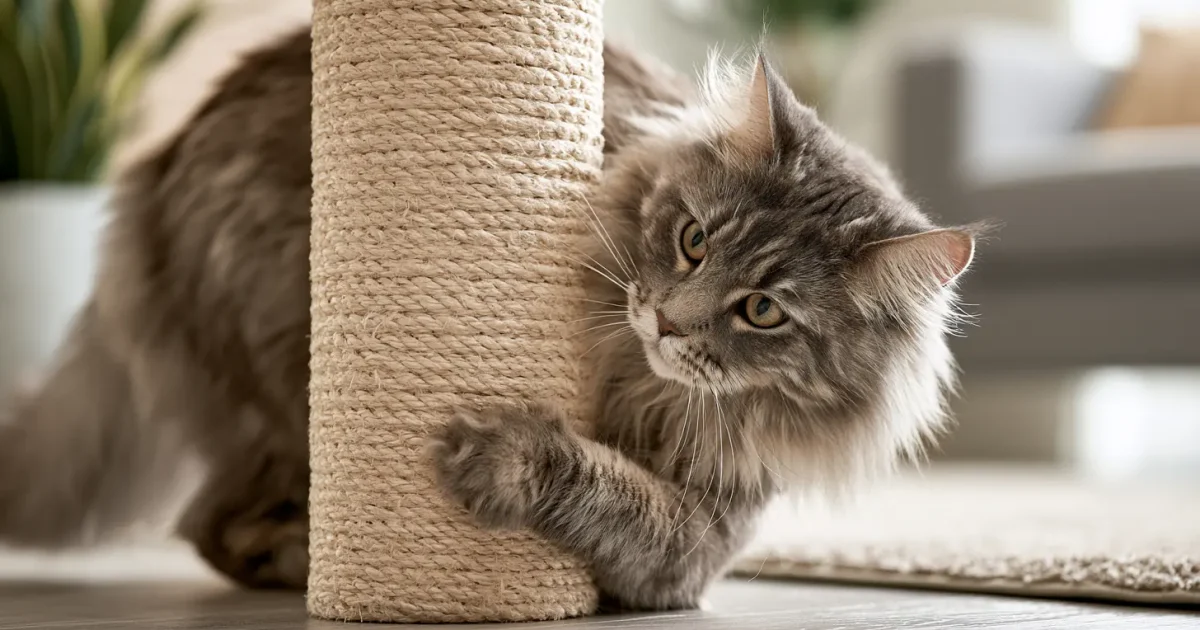
That sounds dramatic until you live with a cat who walks past the neat little post in the corner and digs both paws into the couch arm like they pay rent. The best cat scratching post is not always the cutest one. It is the one your cat trusts enough to lean into with full body weight.
That is the part most people miss.
What is the best cat scratching post for most homes?
For most indoor cats, I would start with a tall sisal post.
Not a tiny kitten post. Not a wobbly plush tower with three dangling balls and the balance of a wet noodle. A real post. Tall enough for a full stretch. Wide base. Rough surface. No tipping.
My personal “safe bet” style is something like the SmartCat Ultimate Scratching Post. It is tall, plain, sturdy, and covered in woven sisal. It does not look like a theme park. That is a plus.
A good first post should have:
- At least 30–32 inches of height for most adult cats
- A heavy or wide base
- Sisal fabric or thick sisal rope
- Enough surface for both front paws
- No sharp staples or loose parts
This is the kind of post that solves the most homes.
Not all homes. Cats enjoy making us humble.
Some cats love cardboard more than sisal. Some older cats prefer horizontal scratchers because standing tall hurts. Some kittens want a scratcher that doubles as a toy. But if someone asks me what is the best cat scratching post to buy first, I usually point to a tall sisal post before anything else.
It gives your cat the one thing your sofa already gives them.
Grip.
Why cats scratch the couch instead of the post
Your cat is not trying to ruin your day.
I know it feels personal. It feels very personal when they stare at you while scratching the armchair. But cats scratch for normal cat reasons. They stretch. They mark scent. They shed the outer layer of their claws. They release energy.
The couch just happens to be perfect.
It is tall. It is heavy. It does not slide. It smells like the family. It sits in the middle of the room, not in a sad little corner beside the laundry basket.
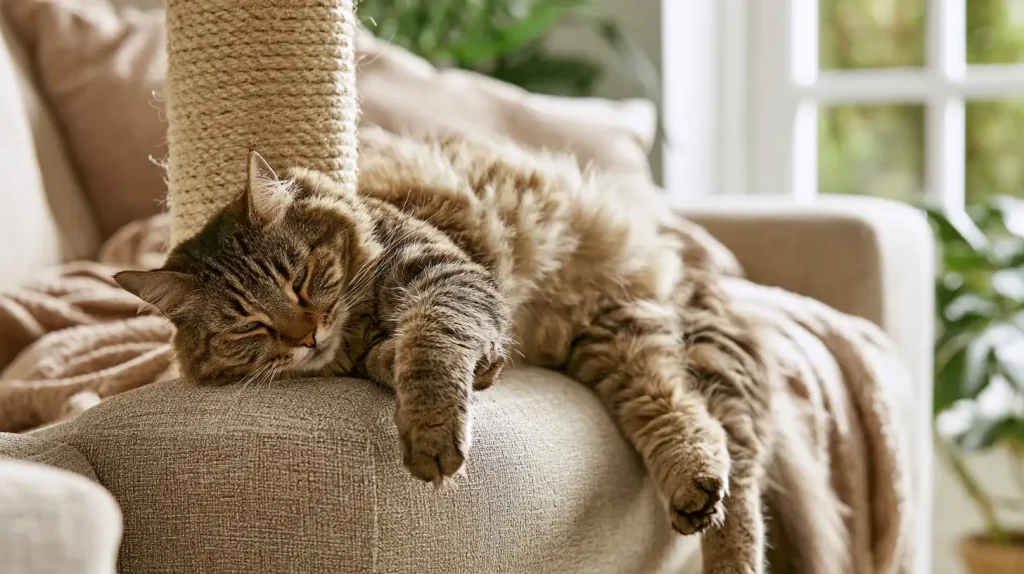
Now compare that to many scratching posts.
Short. Light. Hidden. Covered in carpet that feels nothing like the thing your cat already loves.
Which is frustrating. But also kind of makes sense.
The mistake I see all the time is buying the post humans like, then placing it where humans want it. Cats do not care about your room layout. They care about their route through the house.
Put the post where the scratching already happens.
Beside the sofa. Near the bed. By the window. Next to the hallway corner they keep attacking. Once your cat uses it often, then you can move it slowly. A few inches at a time.
I learned this the annoying way. I once had a nice scratcher tucked neatly beside a bookshelf. My cat treated it like tax paperwork. Then I moved it beside the couch arm he was ruining.
He used it that night.
Rude, but helpful.
Best cat scratching post features that matter more than looks
Pretty scratchers can work.
But pretty should come after sturdy.
I have a soft spot for nice-looking cat furniture. I really do. No one wants their living room to look like a cardboard recycling center with fur. But a scratching post has one job before anything else.
It has to stay still.
A cat needs to pull down with force. If the post rocks, slides, or tips, many cats quit. Some never give it a second chance. I do not blame them. I would not use a gym machine that fell over either.
Look for a base that is wide enough to handle your cat’s weight. For large cats, the base matters even more than the height. A tall post with a tiny base is just a bad idea wearing sisal.
The surface matters too.
Sisal fabric feels smoother than sisal rope because there are no gaps between the wraps. Sisal rope has deep grooves, which some cats love. Cardboard has a softer rip-and-shred feel. Carpet can work, but I am not a big fan of carpet-covered posts for most homes.
Here is my unpopular opinion: carpet scratchers can confuse cats.
Not always. But if your cat already scratches carpet, giving them carpet on a post may not teach a clear difference. Some cats get it. Some do not. I prefer sisal or cardboard because it feels different from the floor.
The post should also be tall enough for a full stretch. A small cat may be fine with 24 inches. A long adult cat needs more. A Maine Coon or big Ragdoll may need 36 inches or taller.
If your cat has to crouch to scratch, the post is too short.
Best cat scratching post material: sisal, cardboard, carpet, or wood?
The best cat scratching post material depends on your cat, but sisal is the best starting point for most homes.
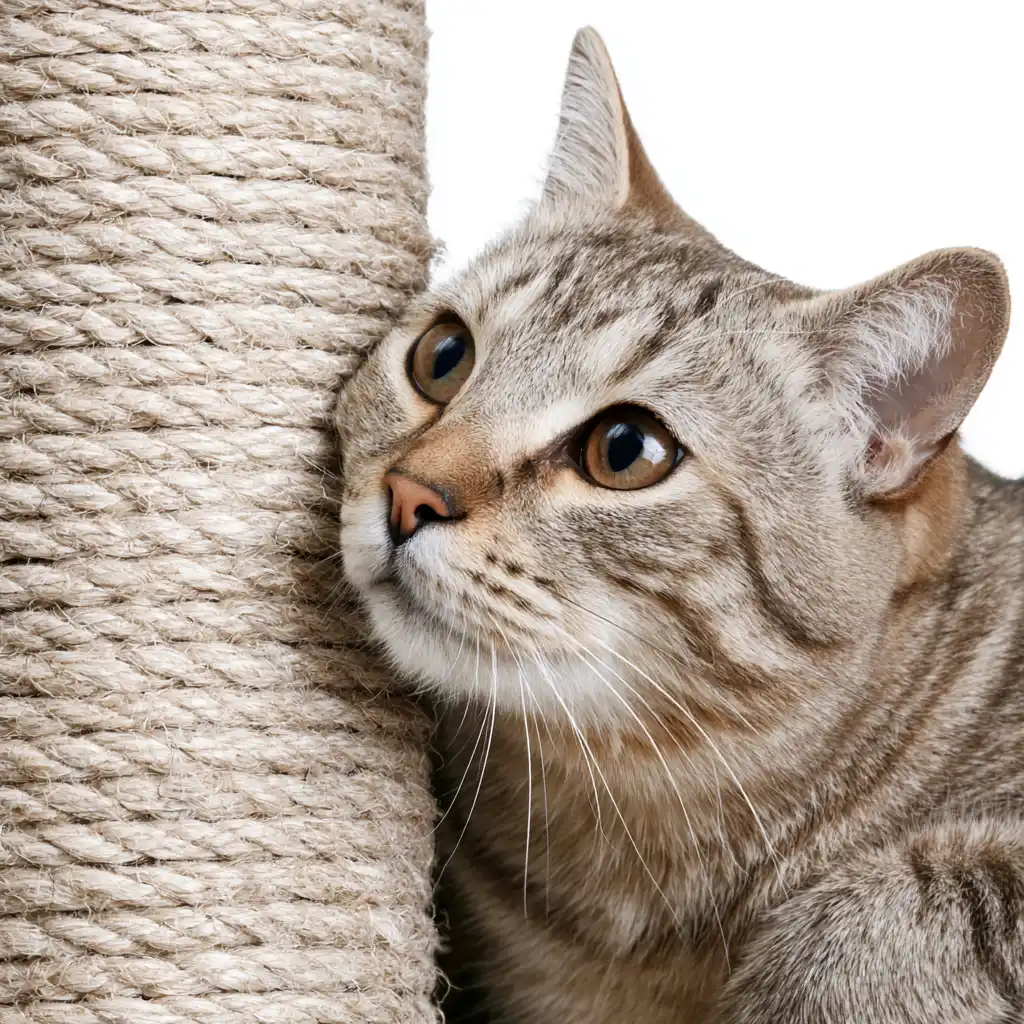
Sisal is rough. It holds up well. It gives claws something to catch. That is why so many best cat scratching post reviews keep coming back to it.
Sisal fabric is my favorite for a main post. It lets cats drag their claws in long strokes. Sisal rope is good too, but some cats dislike the bumpy gap between each wrap.
Cardboard is the messy crowd-pleaser.
Most cats seem to understand cardboard fast. It shreds. It sounds good. It feels fun. It also leaves bits everywhere, because of course it does.
Cardboard is great for:
- Kittens
- Cats who scratch rugs
- Cats who like to lounge
- Budget setups
- Testing a cat’s scratch style
Carpet is softer. Some cats love it. I would choose low-loop or flat carpet over fluffy carpet. Loose loops can catch claws, and that can scare a cat away.
Wood is underrated.
A plain wood scratcher can feel close to a tree trunk. It is tough and clean. The downside is that fewer ready-made wood options exist, and some cats need time to warm up to it.
My honest ranking for most indoor cats:
- Sisal fabric
- Sisal rope
- Cardboard
- Wood
- Carpet
But your cat may vote differently.
Cats are tiny judges with knives on their feet.
Best cat scratching post reviews: my picks by cat type
I would not call one product the best cat scratching post ever for every cat. That is how people end up with a post their cat ignores.
A better way is to match the post to the cat.
Best overall: tall woven sisal post
A SmartCat-style tall sisal post is the one I would buy first for most homes.
It works because it is simple. Tall post. Wide base. Scratch-friendly surface. No silly extras. It gives adult cats room to stretch and pull.
Best for: adult indoor cats, couch scratchers, first-time buyers
Skip it if: your cat only scratches flat rugs or cardboard boxes
Best cat scratching post for large cats: extra-tall heavy post
Large cats need height and weight.
A 32-inch post may work for many cats, but a big cat often does better with 36–41 inches. Look for a thick post, a wide base, and strong wrapping. The MidWest Feline Nuvo Grand Forte style is a good example because it is tall and made for bigger cats.
Best for: Maine Coons, Ragdolls, Bengals, heavy scratchers
Skip it if: you have very little floor space
A wall-mounted post can also work for large cats, but only if mounted well. Please do not trust weak adhesive strips with a 17-pound cat who launches like a furry bowling ball.
Best cat scratching post for kittens: low post with play features
Kittens do not need a giant tower on day one.
They need something easy, fun, and safe. A small sisal post with a dangling toy can work. So can a cardboard scratch pad with a ball track, like the Catit Play Scratch Pad Circuit style.
Best for: kittens, playful young cats, shy cats learning to scratch
Skip it if: your kitten is already climbing curtains like a tiny criminal
For kittens, I like having both a low cardboard scratcher and a small vertical post. It teaches both motions early.
Best cat scratching post to file nails: tall sisal fabric
No scratching post will replace nail trims for every cat.
That said, sisal helps remove old claw sheaths. You will often see little crescent-shaped nail covers near a well-used post. That means it is doing its job.
For nail care, I prefer tall sisal fabric over cardboard. Cardboard is fun, but it breaks down faster. Sisal gives more resistance.
Best for: cats with fast-growing claws, adult indoor cats
Skip it if: your cat hates rough textures
Best cat scratching post Amazon pick: choose by measurements, not star rating
Searching best cat scratching post Amazon can turn into a trap.
You will see cute posts with thousands of reviews. Some are fine. Some are too short. Some have bases that look wide in photos but slide on hard floors.
Before buying, check:
- Height
- Base width
- Surface material
- Weight
- Real customer photos
Amazon Basics tall sisal posts, MECOOL-style posts, SmartCat-style posts, and Frisco cardboard scratchers are all common options. I would rather buy a plain 32-inch post with a wide base than a fancy 22-inch post with five toys.
Toys do not fix wobble.
Best cat scratching post for indoor cats: more than one scratcher
Indoor cats need choices.
A single post in the wrong place will not save your furniture. For one cat, I like one tall sisal post and one horizontal cardboard scratcher. For two or more cats, add more.
Think of scratchers like litter boxes. One may work. More often works better.
Best setup for most indoor cats:
- Tall sisal post near the sofa
- Cardboard scratcher near a nap spot
- Small scratch mat near the bed or hallway
- Cat tree with built-in posts near a window
Best cat scratching post UK buyers should look for
If you are searching best cat scratching post UK, the rules stay the same.
Do not buy by shape alone. Look for a tall sisal post with a heavy base. UK brands and shops often carry Catit, Omlet, Trixie, and other common pet brands. Some stylish posts cost a lot, and a few are worth it if they have replaceable sisal sleeves.
That last part matters.
A replaceable sleeve means you do not throw away the whole post once the scratching surface gets shredded. Better for your wallet. Better for the bin.
Best budget option: cardboard plus one real post
A cheap cardboard scratcher is not a bad buy.
In fact, I keep one around even with taller posts in the house. Cats like to scratch in different moods. One minute they want a full stretch. The next minute they want to lie on their side and destroy cardboard like it owes them money.
If money is tight, start with:
- One tall sisal post
- One flat cardboard scratcher
That combo beats one cute mini tower almost every time.
The post your cat uses is usually in the “wrong” place
This section is short because the point is simple.
Place the scratching post where your cat already scratches.
Not where it looks nice.
Not where guests will not see it.
Where the cat already told you it belongs.
How tall should a cat scratching post be?
For most adult cats, aim for at least 30–32 inches tall.
For large cats, go taller. 36 inches is better. Some big cats need even more, especially if they love to hang from the post while scratching.
To test it, watch your cat stretch on a wall, couch, or door frame. Their front paws may reach higher than you expect. That is the height they want.
A post that is too short can still get used. But it may not stop couch scratching because the couch gives a better stretch.
Height is not the only issue. A tall post must be stable.
A 40-inch post with a narrow base is not better. It is just more dramatic when it falls.
Vertical vs horizontal: your cat already gave you the answer
You do not need to guess.
Look at the thing your cat scratches now.
If your cat scratches:
- Sofa arms
- Curtains
- Door frames
- Chair backs
Buy a vertical post.
If your cat scratches:
- Rugs
- Carpet
- Doormats
- Flat cardboard boxes
Buy a horizontal scratcher.
If your cat scratches everything, congratulations. You have a cat with range. Give them both.
Older cats may prefer horizontal scratchers because they are easier on the body. The same goes for cats with sore joints. I am not 100% sure every senior cat will reject a tall post, but I would always give them a flat option too.
They should not have to climb just to do basic cat stuff.
Why “best cat scratching post 2025” and older lists can mislead you
A lot of people search best cat scratching post 2025, best cat scratching post 2022, or even best cat scratching post 2020 because older roundup pages still show up.
Some older advice still holds up.
Tall is good. Stable is good. Sisal is good. Placement matters.
But product stock changes. Materials change. Prices change. A post that had great reviews years ago may now be made with cheaper board, thinner rope, or a smaller base. That is why I would treat older best cat scratching post review pages as idea lists, not final answers.
Read recent buyer photos.
Look for complaints about wobble.
Check if people with large cats say it tips.
That tells you more than the shiny product image.
How to get your cat to use the new scratching post
Do not drag your cat’s paws onto the post.
I know people still repeat this advice. I do not like it. Some cats tolerate it, sure. Others hate it. And now the new post feels like a weird human trap.
Try this instead.
Put the post beside the old scratching target. If your cat attacks the couch arm, the post goes right beside that arm. Annoying for your room layout? Yes. Better than buying a new couch? Also yes.
Rub a little catnip or silvervine on the post if your cat responds to it. Not all cats do. Kittens often ignore catnip until they are older.
Use play.
Drag a wand toy past the post so your cat grabs it and digs claws in by accident. That first scratch matters. Once they leave scent there, the post starts to become “theirs.”
Reward the behavior. Treat. Soft praise. A little play.
Do not yell when they scratch the couch. That can teach them to scratch when you are not watching. It can also make the whole room feel tense. Cats are petty enough without adding fear.
If the cat uses the post once, leave it alone.
Do not move it across the room the next day. Give it time to become part of the house.
How many scratching posts does one cat need?
More than one is better.
I would use at least two scratchers for one indoor cat. One vertical. One horizontal. Put them in different areas.
For two cats, I would use three or more. Cats may share, but they also use scratchers to mark space. If one cat guards the best post, the other cat needs another option.
Good places include:
- Near the sofa
- Near a favorite sleeping spot
- Near a sunny window
- Near a hallway corner
- Near a cat tree
A scratcher hidden in a spare room may never get used.
Cats scratch where life happens.
Best cat scratching post brands worth checking
I care less about brand and more about build.
Still, some best cat scratching post brands show up often because they make decent options across different budgets.
Brands and product lines worth checking include SmartCat, Frisco, Catit, PetFusion, Fukumaru, MECOOL, Amazon Basics, MidWest, Trixie, and Omlet.
That does not mean every product from those brands is good.
Read measurements. Look at the base. Check the surface. Look at real cat photos. A brand name helps, but your cat does not care about the logo.
Your cat cares if it can dig in without the thing moving.
Best cat scratching post features checklist
Before buying, use this quick test.
Can your cat stretch fully?
Will the base stay still?
Does the surface match what your cat already likes?
Can you place it where your cat scratches now?
Can you clean or repair it?
Does it fit your cat’s age and body size?
That is the real checklist. Not color. Not cactus shape. Not how cute it looks on the product page.
I am not against cute. I just think cute should earn its spot.
Common mistakes that make cats ignore scratching posts
The first mistake is buying too short.
Tiny posts are common because they look tidy and cost less. But many adult cats cannot stretch on them. They may bat the toy once, then go back to the sofa.
The second mistake is hiding the post.
A post tucked in a corner does not mark territory. Cats want scratchers in active areas. That is the whole point.
The third mistake is buying only one texture.
Some cats want sisal. Some want cardboard. Some want both depending on mood. A cat who ignores sisal may love cardboard, and that does not mean the cat is “bad.” It means you guessed wrong.
The fourth mistake is replacing a post too early.
A ragged post may look ugly to you. To your cat, it smells right and feels familiar. Unless it is unsafe, do not toss it just because it looks used.
That shredded look is the review your cat left.
FAQ
What is the best cat scratching post for a cat that scratches the sofa?
Choose a tall, sturdy sisal post and place it right beside the sofa spot your cat already scratches. The post should be tall enough for a full stretch. Once your cat uses it often, you can move it slowly if you need to.
Is sisal or cardboard better for cats?
Sisal is better for a main scratching post because it lasts longer and gives strong claw resistance. Cardboard is better as a fun extra, especially for cats who like flat scratching. I like having both.
What is the best cat scratching post for large cats?
Look for an extra-tall post, around 36 inches or more, with a wide heavy base. Large cats need room to stretch and enough stability to pull hard without wobble.
Can a scratching post file my cat’s nails?
It can help remove old claw sheaths, but it may not replace nail trims. A tall sisal post is the best cat scratching post to file nails in a natural way, but some cats still need regular trimming.
Why won’t my cat use the new scratching post?
The post may be too short, too wobbly, the wrong texture, or in the wrong place. Move it beside the item your cat already scratches. Add play, catnip, or silvervine. Then give it time.
The best cat scratching post is the one your cat chooses twice.
Once because it feels good.
Then again because it now smells like theirs.
So start with the boring stuff: tall, sturdy, rough, and placed where your cat already wants to scratch. The fancy version can come later.
Your couch will understand.