
- What Makes a Dry Cat Food Actually Good
- Best Dry Cat Food for Indoor Cats
- Best Dry Cat Food for Sensitive Stomachs
- Best Dry Cat Food for Senior Cats
- Best Dry Cat Food for Kittens
- The Grain-Free Question
- Best Dry Cat Food Brands Worth Trusting
- Best Dry Cat Food for Weight Loss
- What to Do If Your Cat Won't Eat the New Food
- FAQ
My cat Biscuit once ate the same grocery store kibble for three years. Then she started vomiting after meals a couple times a week. Switched her food. Problem gone. That’s when I realized how much the bag in your cabinet actually matters.
Finding the best dry cat food isn’t about buying the most expensive bag or whatever’s trending on pet forums this month. It’s about matching the food to your specific cat — their age, their gut, their activity level, and yes, their opinions. Cats have opinions.
This post covers the top picks for 2026, broken down by cat type. It also covers what to actually look for on the label, what the grain-free debate is really about, and why one bag won’t work for every cat.
What Makes a Dry Cat Food Actually Good
Before any product names, here’s what separates decent kibble from cheap filler with a nice label.
The first ingredient matters. It should be a named animal protein — chicken, turkey, salmon, duck. Not “poultry meal,” not “meat by-products,” not “animal digest.” Named. Specific. If the first ingredient is corn or wheat, put the bag down.
Protein percentage. Cats are obligate carnivores. That means their bodies require animal protein to survive — they can’t manufacture certain amino acids on their own. Look for at least 30% protein on the guaranteed analysis panel (the little chart on the back of the bag).
Taurine. This amino acid is non-negotiable for cats. Without it, cats can go blind or develop heart disease. Good news: every reputable commercial cat food is required to include it. But double-check it’s listed on the label. If a brand can’t confirm their taurine levels, that’s a red flag.
Moisture content. Dry food typically has around 10% moisture. Cats evolved as desert animals and have a low thirst drive — they’re built to get water from their food. This is the honest limitation of an all-kibble diet. It doesn’t mean dry food is bad. It means you should make fresh water very accessible, and maybe mix in some wet food a few times a week if your cat is prone to urinary issues.
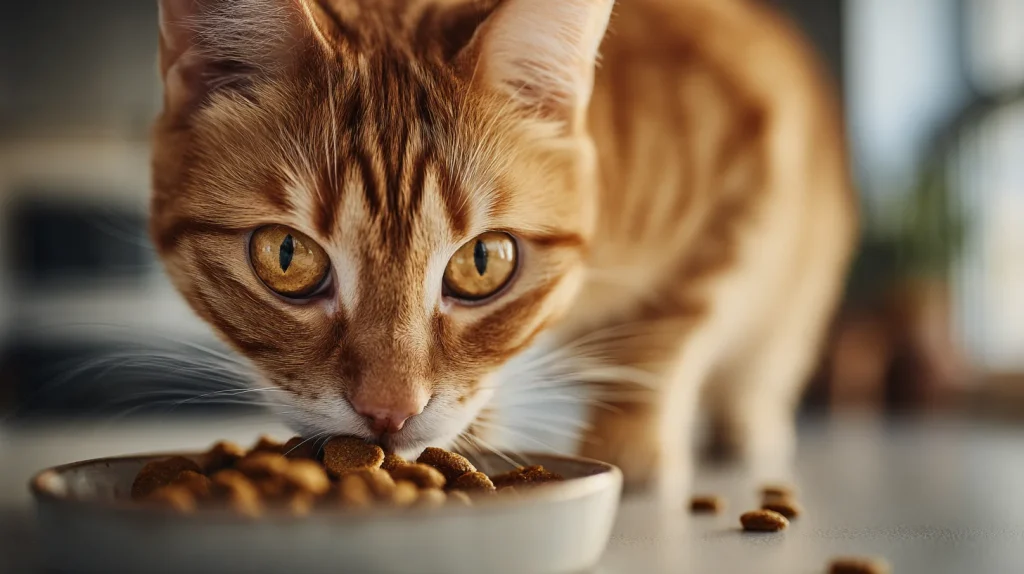
Fillers. Some carbohydrates in kibble are unavoidable — manufacturers need starch to hold the shape during the extrusion process (the machine that presses kibble into shape). But there’s a difference between a small amount of brown rice for structure and a bag that’s 50% corn. Check the first five ingredients. Protein sources should dominate.
Best Dry Cat Food for Indoor Cats
Most house cats live a very different life than their outdoor cousins. They sleep 16 hours a day. They don’t hunt. They don’t cover miles of territory. Their caloric needs are lower, and they’re prone to two specific problems: hairballs and weight gain.
The best dry cat food for indoor cats addresses both.
Purina Pro Plan Indoor Care is my top pick here, and I’ll stand behind that. It’s formulated with real chicken as the first ingredient and includes natural fiber to help move hairballs through the digestive tract. Purina’s nutritional research program is genuinely one of the most rigorous in the industry — this isn’t a company guessing at formulas. Most vets I’ve spoken to have no issue recommending their Pro Plan line.
Hill’s Science Diet Indoor is another strong pick, especially if your vet has specifically recommended the brand. It comes in adult and senior versions, both with controlled calorie content for cats that aren’t burning much energy.
For indoor cats specifically:
- Look for “hairball control” on the label — it means added fiber
- Choose adult formulas (not kitten) unless your cat is under 12 months
- Calorie-controlled means fewer calories per cup, which matters if your cat is already chunky
Best Dry Cat Food for Sensitive Stomachs
If your cat throws up after meals more than once a week, or has consistently loose stools, the food is often the first place to look. Not always — some vomiting is hairballs, some is eating too fast — but chronic digestive upset usually points to an ingredient problem.
The best dry cat food for sensitive stomachs usually shares a few traits:
- Limited ingredients. Fewer things in the bag means fewer chances to trigger a reaction. Limited-ingredient diets (LID) stick to one protein source and one carbohydrate source. Natural Balance L.I.D. is a well-known option.
- Single protein. If your cat reacts to chicken, you need to know that. A food with chicken, turkey, salmon, and duck makes it impossible to track down the culprit.
- No artificial dyes or preservatives. These aren’t the most likely causes of stomach upset, but they’re worth removing when you’re troubleshooting.
Royal Canin Digestive Care is the pick most vets reach for first. It’s not the flashiest label, but the formulation is backed by decades of clinical nutrition research. It’s worth knowing that Royal Canin is owned by Mars — same parent company as Pedigree — and some owners don’t love that. But the formulation quality stands up.
Purina Pro Plan Sensitive Skin & Stomach is the budget-friendly alternative with a solid track record. Salmon and rice formula. Easy to find. Works well for most cats with mild sensitivities.
One thing I want to be honest about: if your cat has severe, ongoing GI issues, dry food alone may not be enough. A vet consultation is worth it. Chronic vomiting can signal inflammatory bowel disease, pancreatitis, or food allergies — things that a bag switch won’t fix.
Best Dry Cat Food for Senior Cats

Cats are considered senior at around 7 years old. By age 10, most vets call them geriatric.
The nutritional needs shift. Senior cats often lose muscle mass, which sounds counterintuitive but means they actually need more protein, not less. Their kidneys start working less efficiently, so phosphorus levels in food matter. Their joints ache. Their teeth may be wearing down. Some eat less because smell and taste decline with age.
Hill’s Science Diet Senior 7+ is the gold standard here. It’s specifically formulated for age-related changes, with controlled phosphorus and quality protein. Many vets prescribe it specifically for older cats with early kidney concerns.
Purina Pro Plan Prime Plus Adult 7+ is a close second. Higher protein than many senior formulas, plus probiotics for gut support.
For cats 10 and older, I’d honestly recommend talking to your vet before picking kibble from a shelf. Some senior cats do better with a prescription diet. Some need kidney-specific food. At that age, the guesswork can cause real harm. A simple blood panel tells you a lot about what their body needs.
The best dry cat food for senior cats isn’t just a senior-labeled bag — it’s the right formula for where your specific cat’s health actually is.
Best Dry Cat Food for Kittens
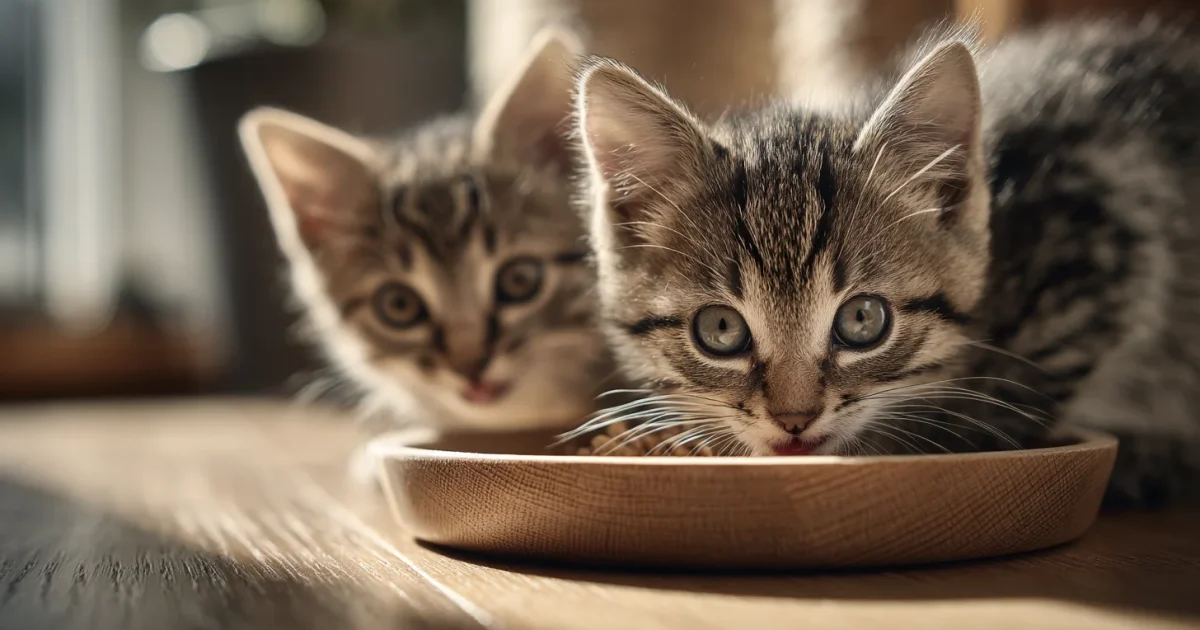
Kittens need more of almost everything. More protein, more fat, more calories, more DHA (an omega-3 fatty acid that supports brain and eye development). An adult formula fed to a kitten won’t cause immediate harm, but it won’t support the growth rate a kitten actually needs.
Royal Canin Kitten Dry Food is the most consistently recommended option. Shaped kibble that’s easier for small mouths to chew. Well-balanced for growth stages. Vets trust it.
Purina Pro Plan Kitten Chicken & Rice is an excellent alternative. High protein, added DHA from fish oil, and widely available.
Feed kitten food until 12 months for most breeds. Large or slow-maturing breeds like Maine Coons may need kitten food up to 18 months — check with your vet.
The Grain-Free Question
Every few months someone asks me whether they should switch to grain-free. The answer is genuinely: it depends, and anyone who tells you otherwise is oversimplifying.
Grain-free became popular because marketing framed grains as filler and “unnatural.” And in many formulas, grains are filler. But the grain-free movement replaced those grains with legumes — peas, lentils, chickpeas — and that swap comes with its own concerns.
In 2018, the FDA flagged a potential link between grain-free diets and dilated cardiomyopathy (DCM) — a type of heart disease — primarily in dogs. The concern for cats is smaller. Commercial cat food is required to supplement taurine directly, and DCM linked to taurine deficiency in cats has been rare since the 1980s. But a grain-free food that’s 40% legumes instead of meat is still not a step up. It’s trading one low-quality filler for another.
The honest rule: grain-free can be perfectly fine if the formula is primarily animal protein with a small amount of legumes for structure. It’s a problem when legumes dominate the ingredient list.
If your cat has no digestive issues, no skin problems, and a healthy weight on their current food — there’s no reason to switch to grain-free. If they do have issues, the quality of protein is almost always the first thing to investigate, not whether grains are present.
Best Dry Cat Food Brands Worth Trusting
Not every brand in the pet food aisle deserves shelf space. Here are the ones with the research and the track record:
Purina Pro Plan — My personal top pick for most cats. Rigorous nutritional science, vet-backed formulas, widely available. Ignore the fact that it’s Purina. The Pro Plan line is genuinely different from Purina One or Purina Cat Chow.
Hill’s Science Diet — Especially strong for life-stage specific needs. Senior, kitten, indoor, weight management. Their research programs are legit.
Royal Canin — Breed-specific formulas that actually account for jaw shape and coat type. Their veterinary lines are prescribed by vets for clinical nutrition reasons. Not the cheapest, but worth it for specific health needs.
Merrick — Strong ingredient quality, higher-end market, grain-free options that actually prioritize protein over legumes.
Wellness CORE — High protein, limited ingredient options. Good for sensitive cats.
I’d be cautious about boutique brands with flashy packaging and vague sourcing claims. The FDA’s DCM investigation flagged small, boutique brands disproportionately. That doesn’t mean all boutique brands are bad — but “small-batch” and “artisan” on a pet food label doesn’t mean it’s nutritionally complete.
Best Dry Cat Food for Weight Loss
About 60% of cats in the US are overweight. That’s not a small problem — obesity shortens a cat’s life and puts stress on joints, heart, and kidneys.
Hill’s Science Diet Perfect Weight is formulated specifically for weight management with controlled calories and high protein to maintain muscle while losing fat. It works. It’s boring. It works.
Royal Canin Satiety Support is a prescription-level option that helps cats feel full on fewer calories. If your cat is obsessed with food and acts like they’re always starving, this formula makes a real difference.
Portion control matters more than the bag. No weight management formula works if you’re free-feeding a cup at a time. Measure. Every. Time.
What to Do If Your Cat Won’t Eat the New Food
Cats are notoriously resistant to change. Unlike dogs, who will eat almost anything, cats can refuse food for days and develop a dangerous condition called hepatic lipidosis (fatty liver disease) from not eating. This is not drama. It’s a real medical risk.
When switching foods:
- Mix 25% new food with 75% old food for 3 days
- Move to 50/50 for 3 days
- Then 75% new, 25% old for 3 days
- Then fully switch
Some cats need two weeks. Some picky cats need a month. Slow is fine. Starvation is not.
If your cat goes more than 48 hours without eating anything, call your vet.
FAQ
My cat has been eating the same food for years. Do I need to change it? Not necessarily. If your cat is at a healthy weight, has good coat condition, solid stools, and no vomiting — the food is working. “Best” food is the one your cat does well on. There’s no universal upgrade required.
Is wet food better than dry food for cats? Wet food is better for hydration, which matters for cats prone to urinary issues or kidney problems. Dry food is more convenient and better for dental health in theory (though the dental benefit is debated among vets). Many owners do a mix — dry food for most meals, wet food a few times a week. That’s a solid approach for most healthy adult cats.
What does “complete and balanced” mean on a cat food label? It means the food meets the minimum nutritional standards set by AAFCO — the Association of American Feed Control Officials. Every reputable commercial cat food should have this on the label. If it doesn’t, it’s a “complementary” food, meaning it’s meant to supplement a diet, not replace it. Don’t feed complementary food as a primary diet.
Why does my cat vomit after eating dry food? The most common reasons: eating too fast, a food sensitivity, hairballs, or too much food at once. Try a slow-feeder bowl if speed is the issue. If the vomiting contains undigested food and happens within 20 minutes of eating, fast eating is likely the culprit. Vomiting bile or partially digested food hours later suggests a sensitivity. Chronic vomiting — more than once a week — warrants a vet visit.
Is cheap dry cat food really that bad? Budget foods aren’t automatically dangerous, but they tend to use lower-quality protein sources and more filler carbohydrates. A cat can survive on them. Whether they thrive is a different question. If budget is a real constraint, Purina Cat Chow is better than most store-brand generics — it’s not premium, but it’s complete and balanced. As budgets allow, moving toward Pro Plan or Hill’s makes a meaningful difference.
The best dry cat food is the one your cat actually eats, digests well, and stays healthy on. A bag with five-star reviews and a celebrity vet endorsement doesn’t matter if your cat turns her nose up at it or throws it up every other day.
Start with the basics: named protein first, taurine on the label, appropriate for life stage. Then watch your cat. They’ll tell you if it’s working.